Swipe through all 12 ideas
See every idea at a glance, then jump to the one you like.
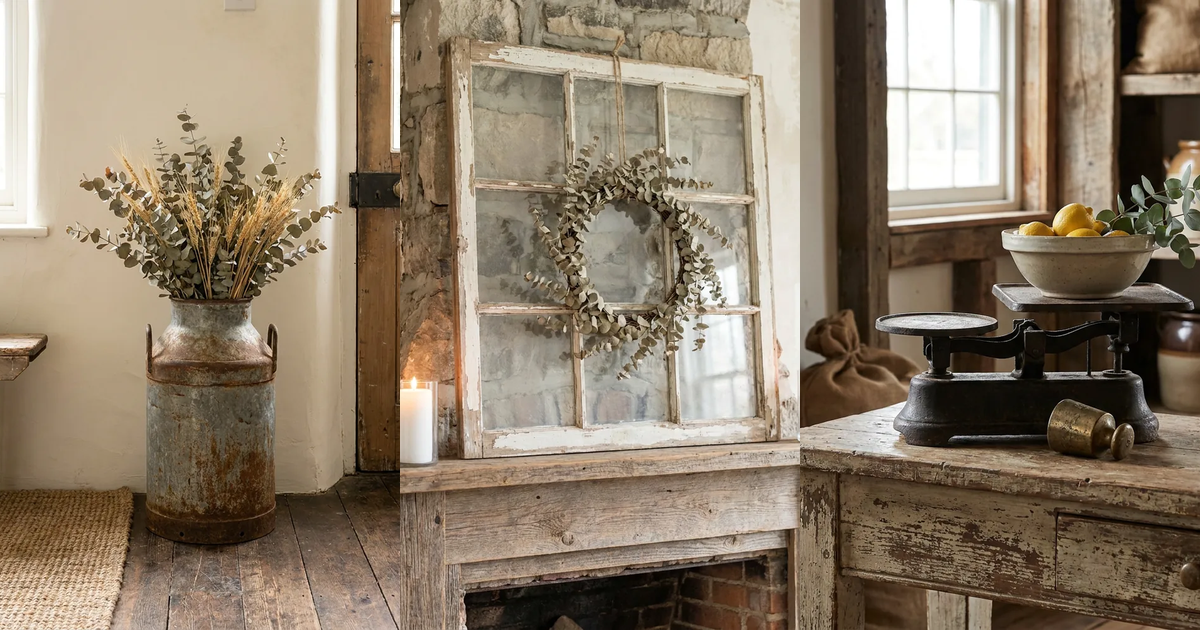
The quickest way to get antique farmhouse decor is to pick one old object that once did a job on a farm and give it a spot in a room that is otherwise calm. A milk can, a ladder, or a pair of corbels will do more for a room than a wall of signs. Below are twelve objects, how to style each one in a modern home, and one tip or caution for each. After that you will find where to look for real pieces and a five step way to keep it all from feeling cluttered.
Antique milk cans
 Save
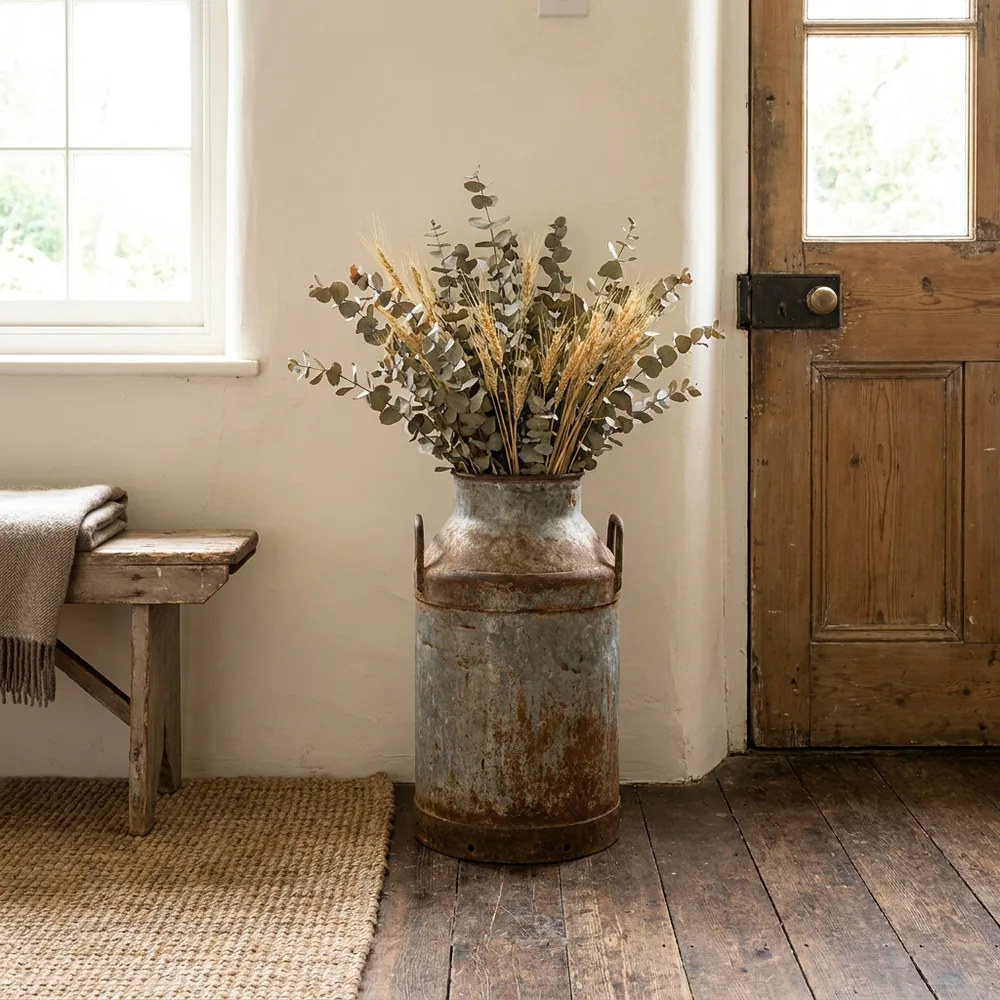
Dairy farms shipped milk in tall steel cans, first holding about twelve gallons and later ten, until tank trucks took over the pickup. The can never had a plunger and was never a churn, so it is simply a tall container. That makes it a good floor piece by a door, filled with dried grasses, eucalyptus, or a few rolled blankets. Cans like these carried the milk from a morning milking, which is part of the charm. Brush off loose rust flakes and set the can on a mat so it does not stain the floor. If yours is painted, treat the paint as an unknown and keep it out of reach of small children.
A vintage ladder shelf
 Save
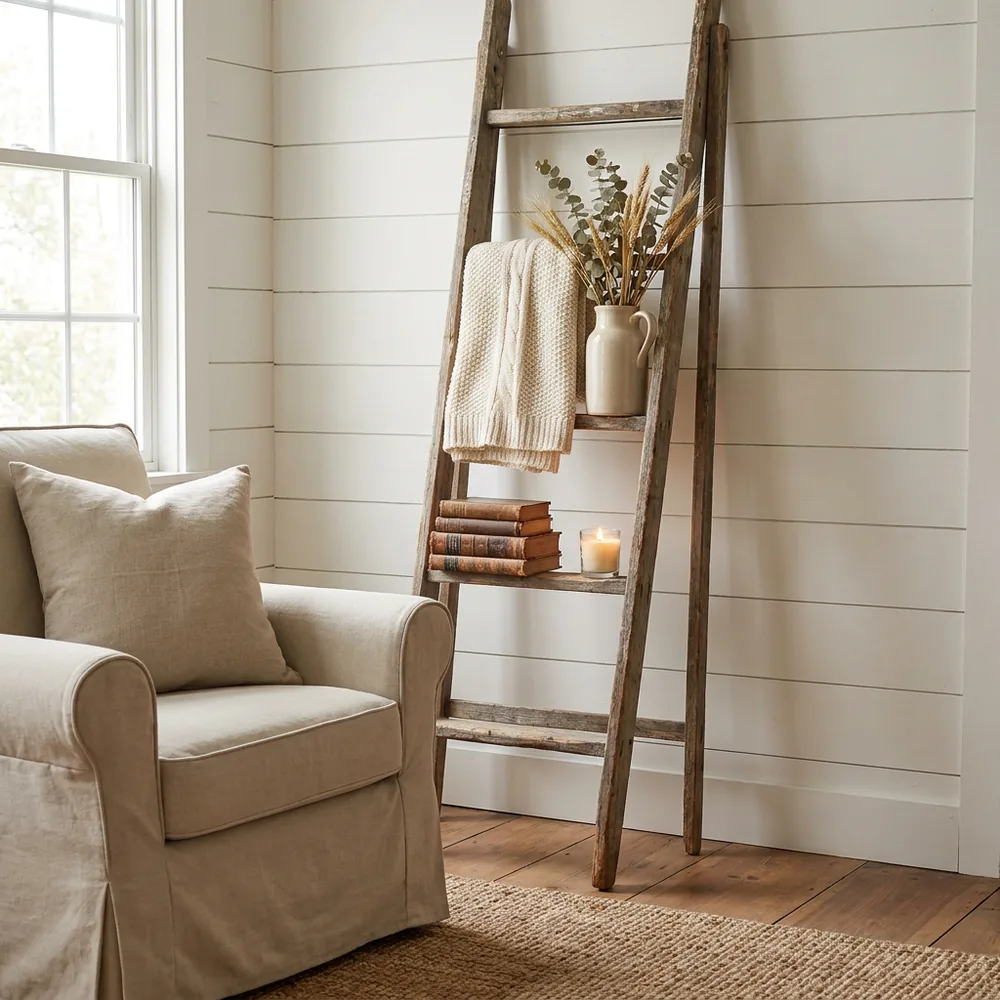
An old wooden ladder leans against a wall and becomes a shelf for a throw, a few books, and a pitcher of dried stems. I would lean one before I would hang one. A Reddit thread about an antique ladder suspended from a kitchen ceiling shows the work involved. The builder ran threaded studs through every rung, finished the wood with five or six coats of boiled linseed oil, and called the hanging a whole other project. Check each rung before you load it. Some vintage ladders are sold as decorative only, so do not climb one unless you know it is sound.
Carved corbels
 Save
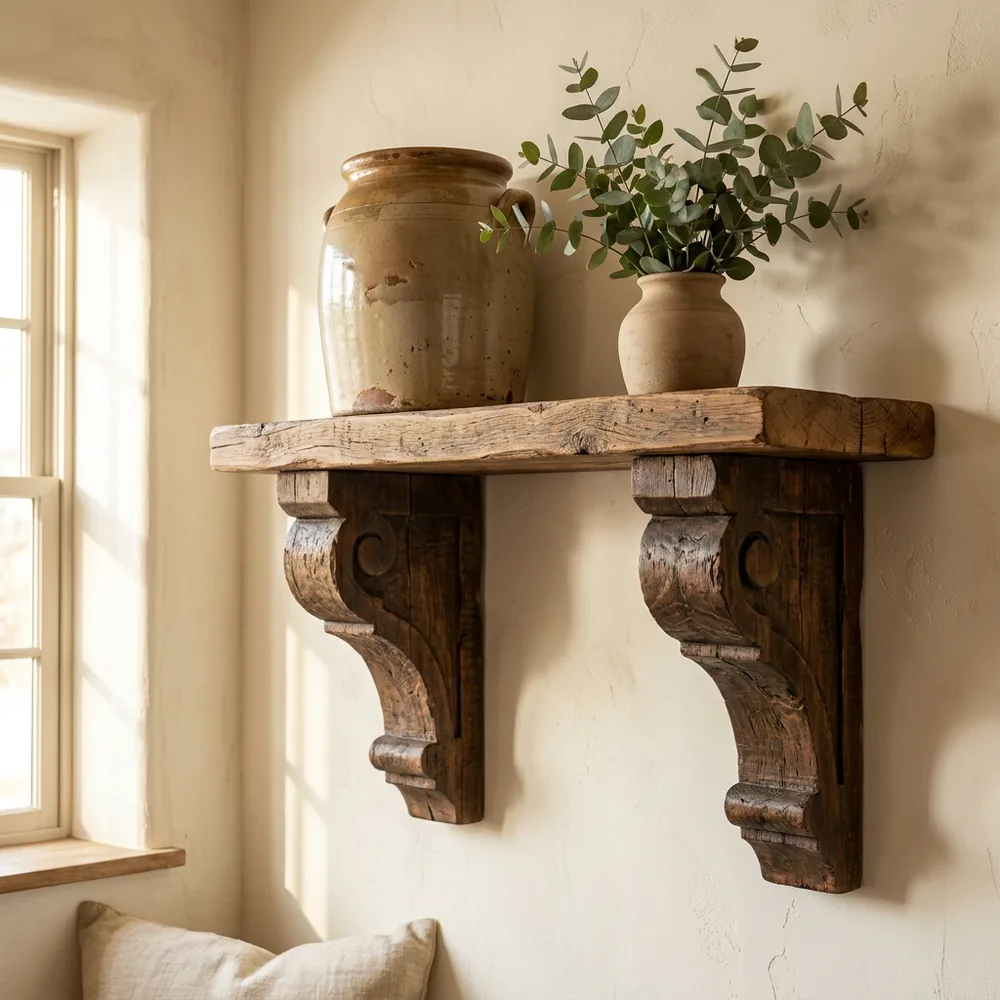
A corbel is a bracket that sticks out of a wall to carry weight. In old buildings they were stone, wood, or metal, and later ones were carved with leaves and scrolls. Indoors, a pair of salvaged wooden corbels can hold a thick board as a shelf, or one can hang alone as a small sculpture. Heavy carving does the talking, so I keep the styling to a crock and a sprig of greens. A craftsman who makes corbels for old brick buildings said they usually weigh little, but the shelf and what you stack on it do not. Find a stud, use proper anchors, and test any painted salvage for lead.
Antique scales
 Save
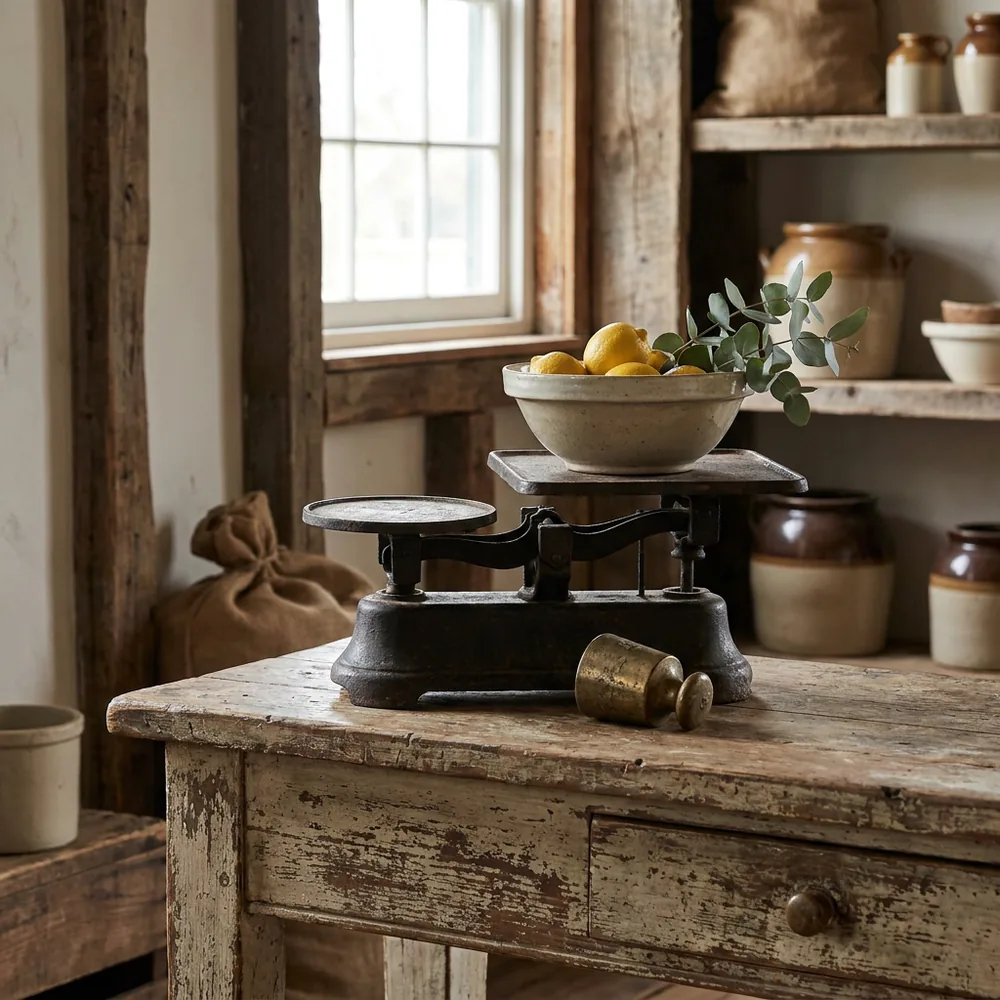
Old scales come in a few types. Store scales have one pan with the counterweights built in, spring scales show weight on a dial, and bronze balance scales give the classic apothecary look. On a sideboard or kitchen worktable, a cast iron scale holds a bowl of lemons or a folded linen towel in its pan. Collectors look for complete examples with all their parts, so keep the weights together with the scale. Treat it as decor and not as a kitchen tool. One Reddit owner of a scale that still works admitted it reads five pounds off, which is a good reminder that old does not mean accurate.
Old windows
 Save
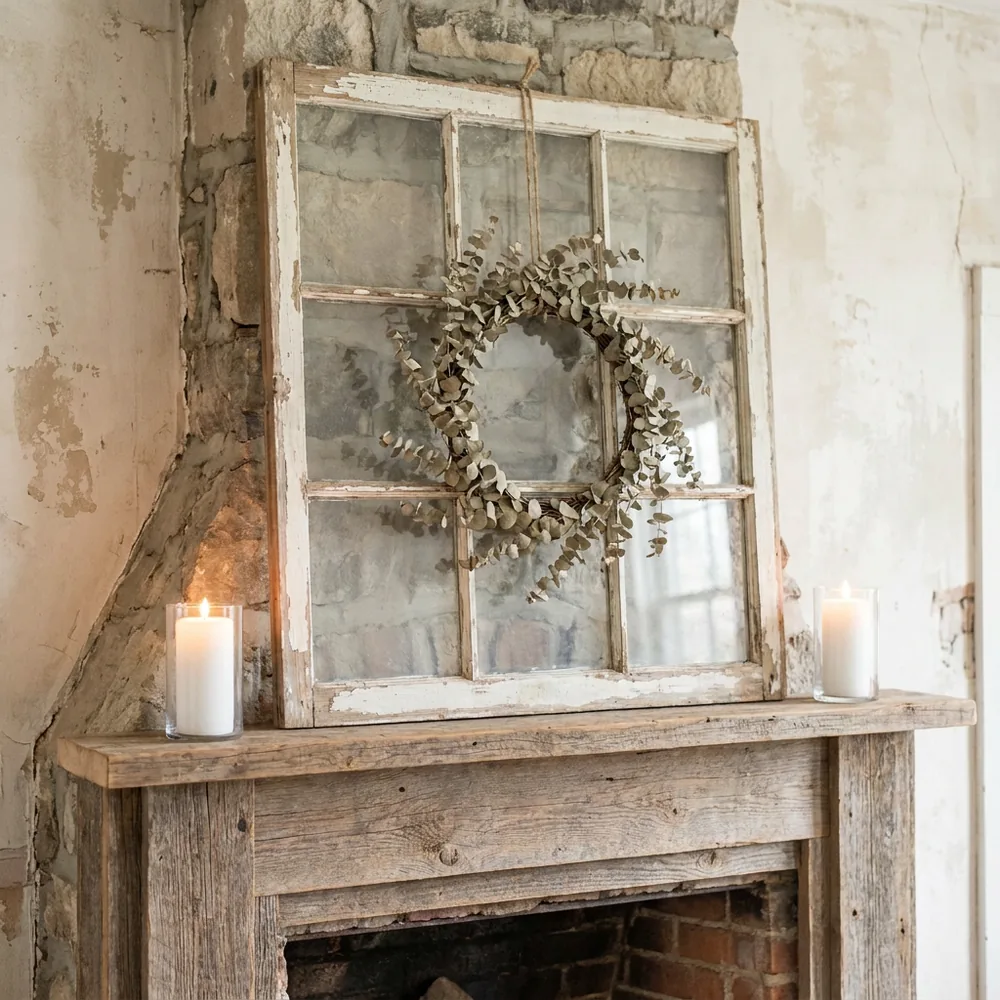
An old window sash can frame a wreath, a mirror, or nothing at all. Lean it on a mantel with a few candles, or hang it on a wall and let the chipped paint be the decoration. The caution here is real. The EPA says homes built before 1978 are more likely to have lead paint and points to friction surfaces like window sills, which is exactly where a sash rubbed for decades. I would test the paint with a lead swab before one comes indoors. If it tests positive, seal it or leave it somewhere children cannot touch, and do not sand it inside the house.
Washboards
 Save
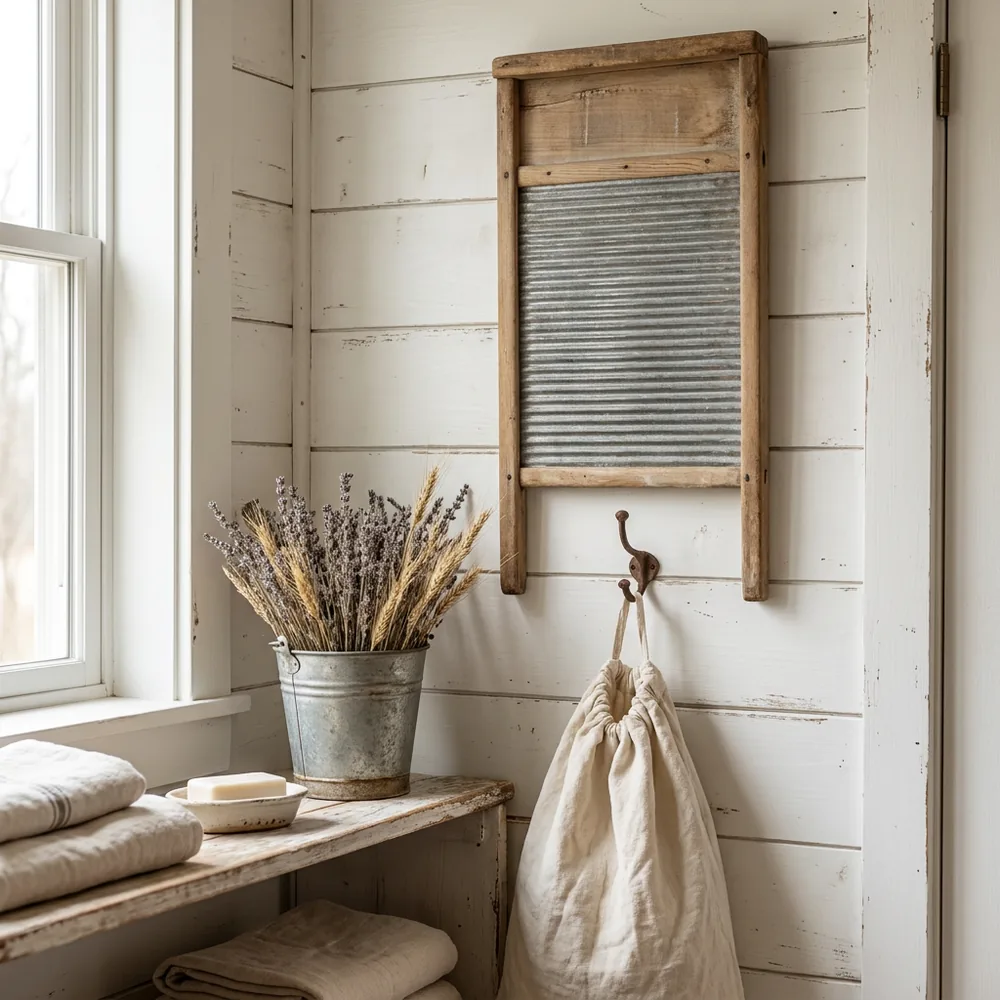
A washboard is a frame with ridges that you rub wet clothes against. Early boards had wooden ridges, zinc boards were made in the United States from the middle of the 1800s, and galvanized steel took over later. Hang one flat on a laundry room or mudroom wall with a hook beside it for a towel or a linen bag. They are narrow, so they suit tight walls where a framed print would feel too big. Wipe the metal with a soapy cloth and keep the patina. If the wooden frame is painted, treat that paint with the same lead caution as any old painted piece.
Grain sacks
 Save
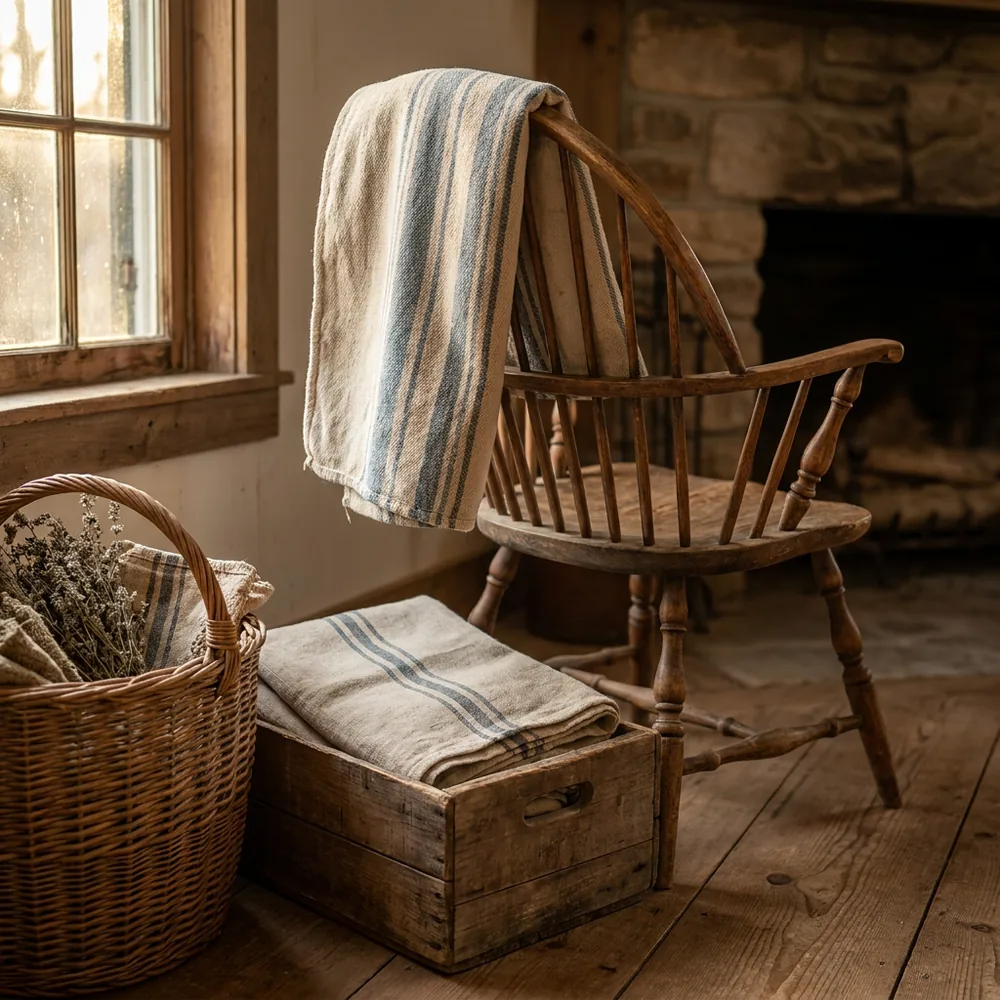
Cotton sacks replaced barrels for flour, sugar, feed, and seed in the mid 1800s. By the early 1900s many were printed, and farm families turned them into towels, curtains, and clothes. A striped sack looks right draped over a chair back, folded in a crate, or sewn into a pillow cover. The caution is authenticity. Quilters on Reddit judged one piece of cloth a reproduction because the weave looked too tight and even, and they asked whether the edge had the small sewing holes left by a bag seam. Handle old cloth gently and test a corner before you wash anything.
Butter churns
 Save
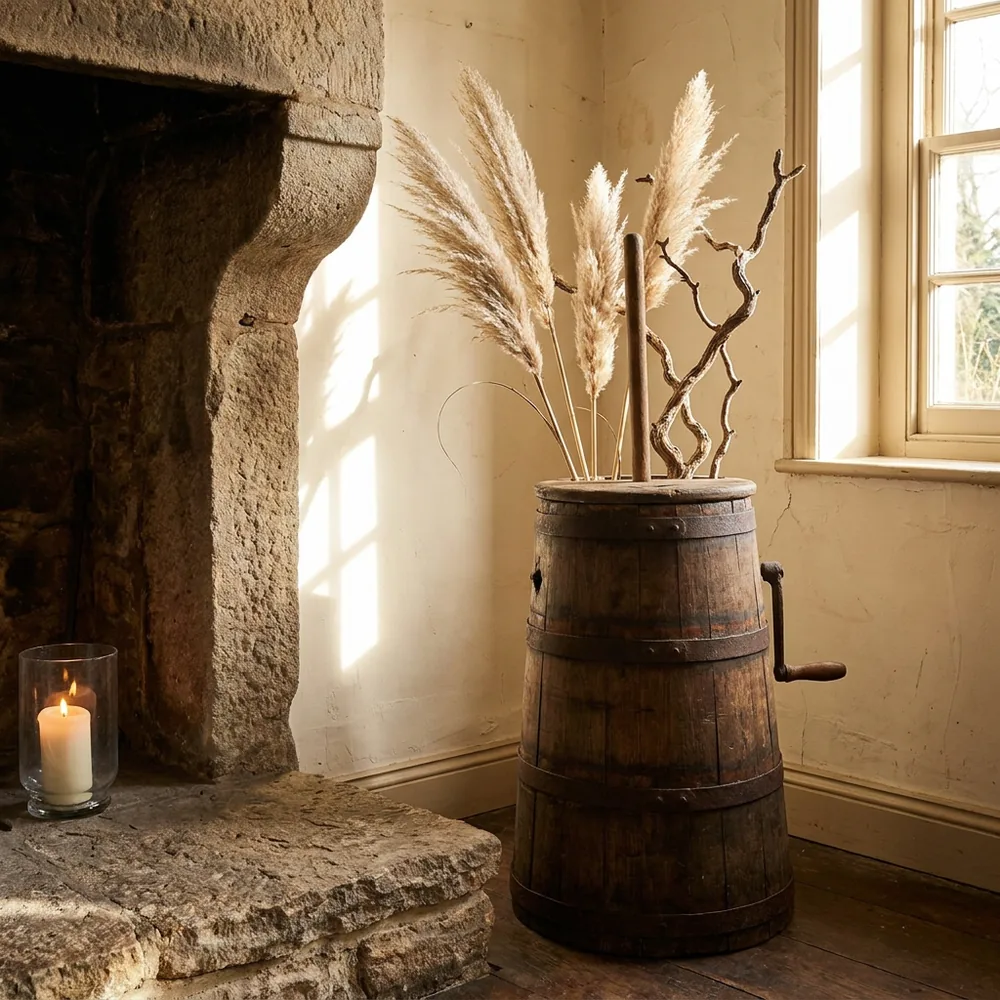
A butter churn turns cream into butter and buttermilk. The plunge type is a wooden container with a staff pushed up and down through the lid, and the barrel type is an oak barrel on a frame with a crank. Stand one in a corner by a fireplace and fill it with pampas grass or bare branches, and it reads as sculpture. The liquid that came out of a churn is old fashioned buttermilk, which is a different thing from the cultured buttermilk we make today. I would keep an old churn as decor, because dried out staves rarely hold liquid and are hard to clean.
Wooden toolboxes and tools
 Save
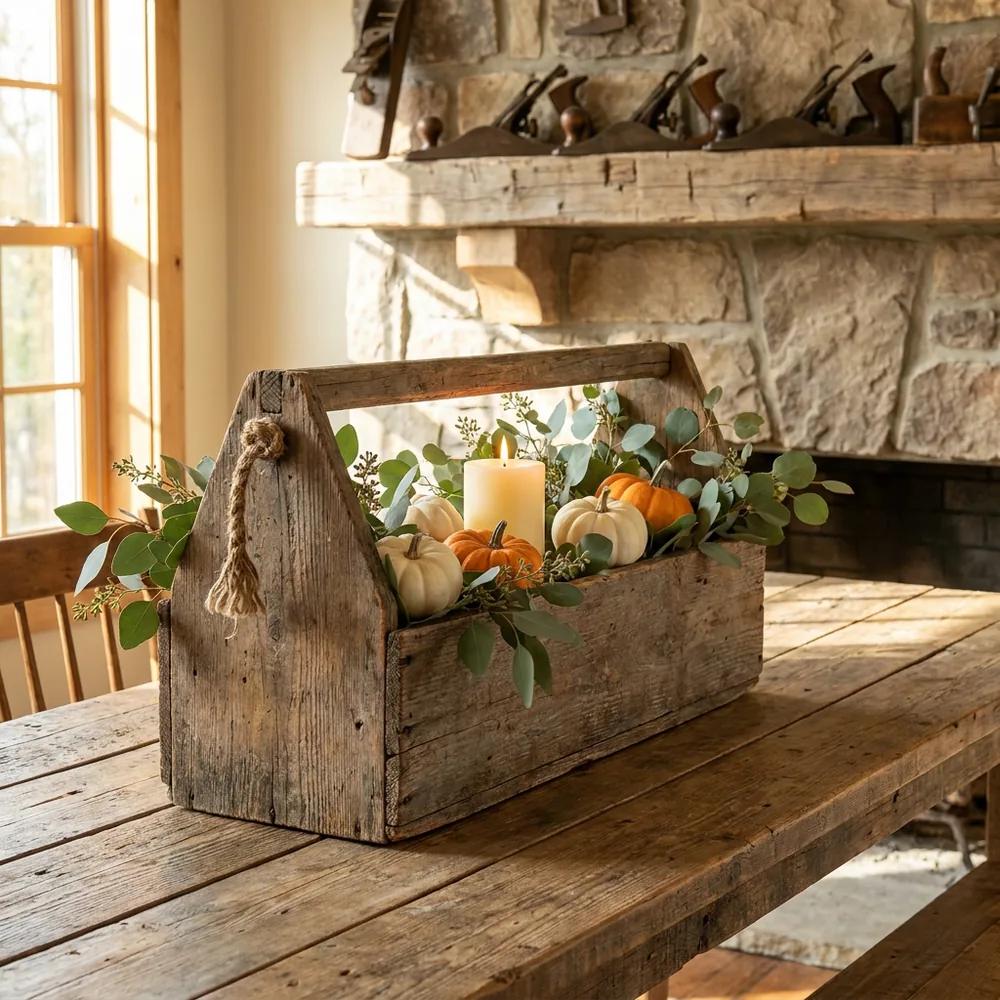
A carry toolbox with a center handle works as a centerpiece. Fill it with gourds and greens in fall, or with candles and pinecones in winter. Hand planes, wooden levels, and old hammers look good lined along a mantel or shelf. People who buy old boxes at yard sales and auctions often say the history is the draw, and one Reddit poster simply cleaned the box and oiled the hinges before using it. Do the same, and wipe off any rust before the box touches a table. Keep blades and sharp tools well above a child’s reach.
Embossed tin
 Save
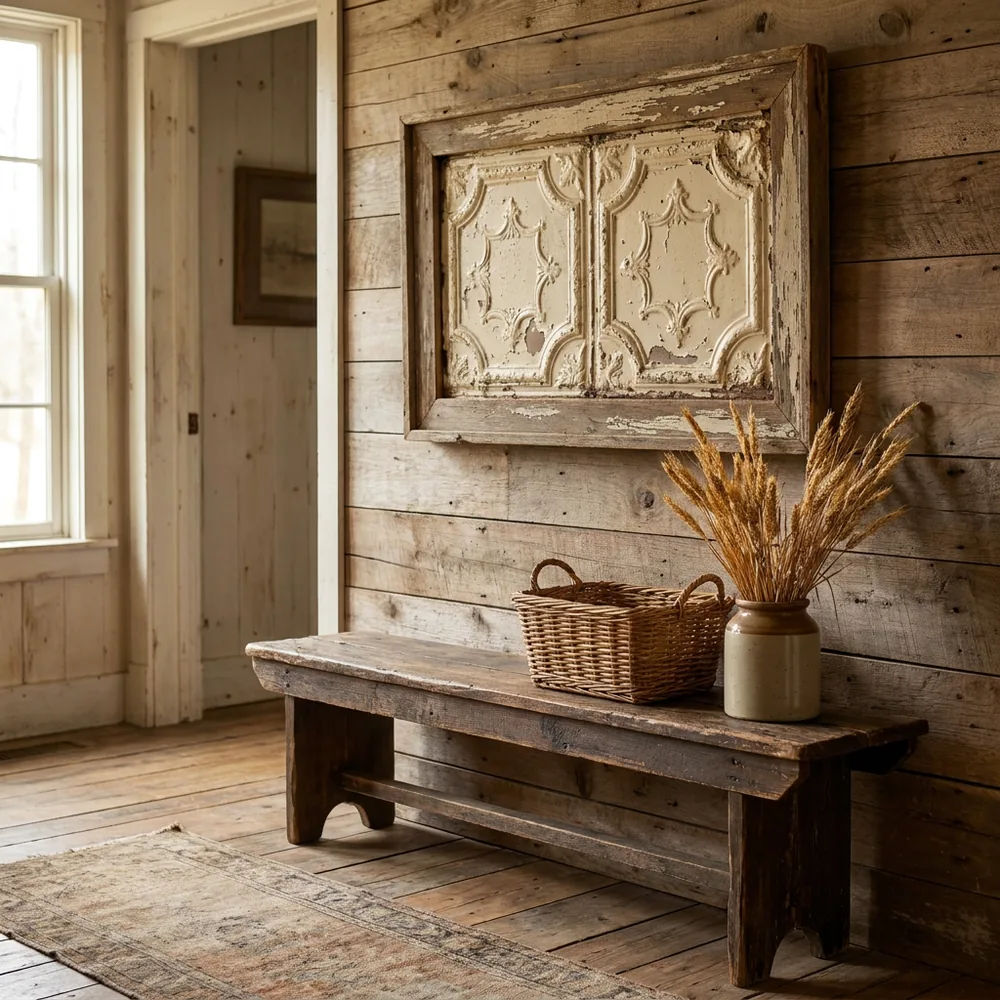
Pressed tin ceilings were popular from the 1880s to the 1930s. Thin metal sheets were stamped with patterns and usually painted white to look like plaster. A salvaged tile or panel makes a good piece of wall art. Frame it in rough wood so the pattern reads from across the room, and hang it above a bench or entry table. Thin metal bends, so use a backing board and picture wire, not a single nail. Tin from old ceilings has often been painted many times, and old paint may contain lead, so test it and cover the edges in a frame.
Tobacco baskets
 Save
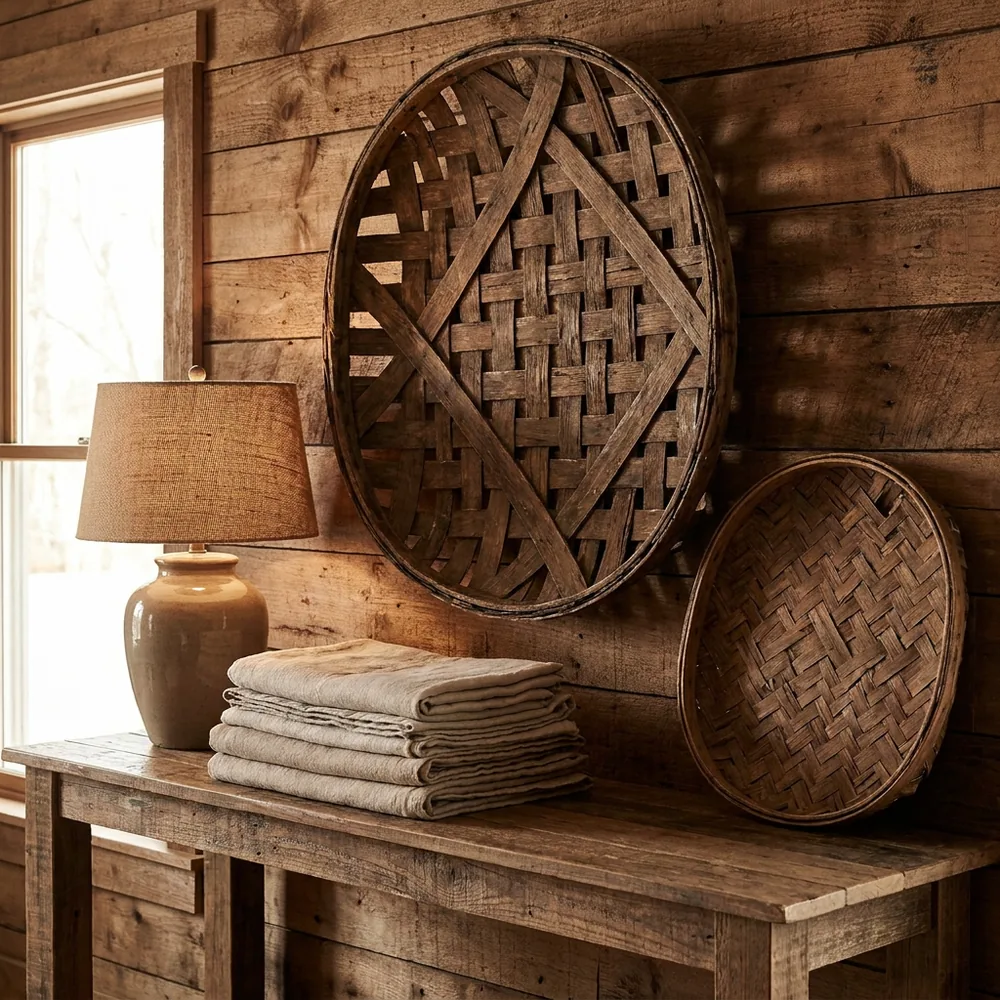
Farmers carried cured tobacco leaf to market in flat baskets woven from split oak strips. Kentucky made the first ones, and North Carolina became the main source, with Yadkin County calling itself the tobacco basket capital of the world. Today a basket is wall art. Hang a large round one on a wood wall and overlap a smaller one beside it, as in the picture. A few are still made new, so ask a seller how old a basket is. Older ones can split at the rim, so lift from underneath and use a hook rated well above its weight.
Galvanized metal
 Save
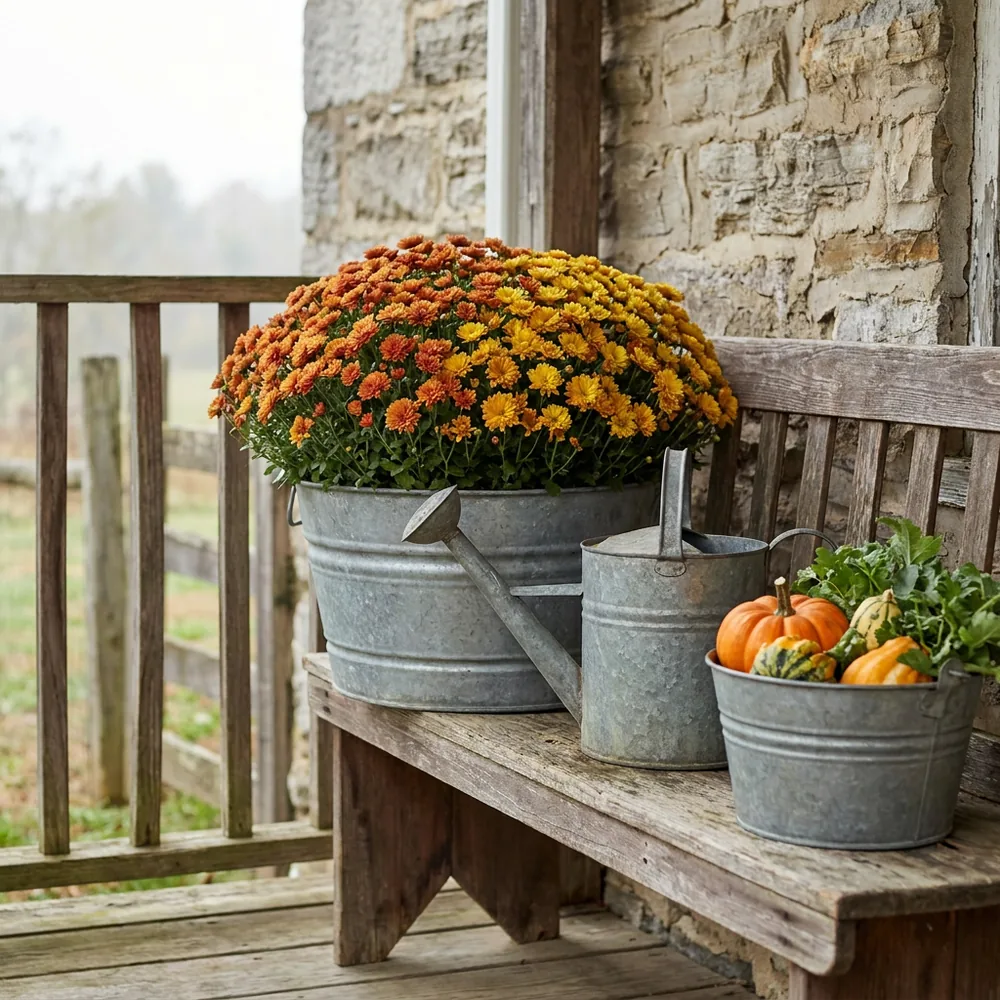
Galvanized metal is steel coated in zinc, and old tubs, buckets, and watering cans are the farmhouse favorites. A tub of mums on a porch bench is hard to beat in fall. Keep the patina by scrubbing loose flakes with soapy water and fine steel wool, then add a matte clear sealer if you want. Advice on vinegar conflicts, so test it on a hidden spot first. The caution is food. A University of Washington horticulture library page notes that zinc products can carry cadmium and that leaching may rise as the coating wears. Use old galvanized for ornamentals, and grow herbs and vegetables in wood or clay.
Where to find antique farmhouse decor
Real pieces are not hard to find, but they come from different places.
- Flea markets. You can haggle and the selection is wider. Bring small bills and a tape measure so you know a piece will fit before you carry it home.
- Estate sales. Sales run by reputable local companies tend to have clearer descriptions. Crowds are heaviest at opening, and some shoppers on Reddit say they skip the first hour or go back on the second day.
- Farm auctions. This is where complete, harder to find items tend to turn up, such as scales with all their parts and old tools with a toolbox.
- Salvage yards. I would start here for corbels, sashes, and tin, since those pieces come out of old buildings. Treat any painted salvage as lead paint until you test it.
- Antique stores and yard sales. Tobacco baskets, ladders, and washboards turn up in both.
Sellers use the words antique and vintage loosely. Antique generally means more than 100 years old and vintage more than 50, so ask for an age instead of trusting a tag.
How to mix antiques without making it look cluttered
- Choose one hero object for each room. A single old piece with space around it reads as a decision, not a collection.
- Stay in one color family. Browns, creams, and soft grays keep a flea market haul from looking like a flea market.
- Pair each old piece with something plain and modern, like a linen sofa or white walls. If you are starting with a bare room, our farmhouse decor ideas cover paint, pillows, and lighting first.
- Give every object a job. A milk can holds blankets, a ladder holds towels, and a toolbox holds candles. If it has no job, it is clutter.
- Edit often. Buy fewer, better pieces and leave bare wall. When it is fall, swap in gourds and a candle, as we did for our Thanksgiving table decor ideas, instead of adding more objects.
Antique farmhouse decor FAQ
What is the difference between antique and vintage farmhouse decor?
Antique generally means more than 100 years old, and vintage means more than 50. Sellers use both words loosely, so ask how old a piece is and where it came from.
Is antique farmhouse decor safe around kids and pets?
Most of it is fine. The concern is old paint. The EPA says paint on homes built before 1978 is more likely to contain lead, and that paint which chips or peels becomes the hazard. Test painted pieces, avoid sanding them indoors, and keep damaged ones out of reach.
How can I tell an antique from a reproduction?
Ask the seller for an age and look for wear that makes sense for the object. Reproductions exist for baskets and for feed sack cloth, and quilters on Reddit point to weave and seam holes as clues. Reproduction is fine if it is priced and labeled that way.
Can I plant herbs in an old galvanized bucket?
I would not. Extension guidance quoted by the University of Washington horticulture library says zinc products can carry cadmium and leaching may increase as the coating wears. Use galvanized for ornamentals and grow edibles in wood or clay.
How many antiques should one room have?
Fewer than you think. Hunker’s farmhouse guide advises focusing on a few special pieces and keeping the rest of the room calm. One strong object per wall is a good rule to start with.