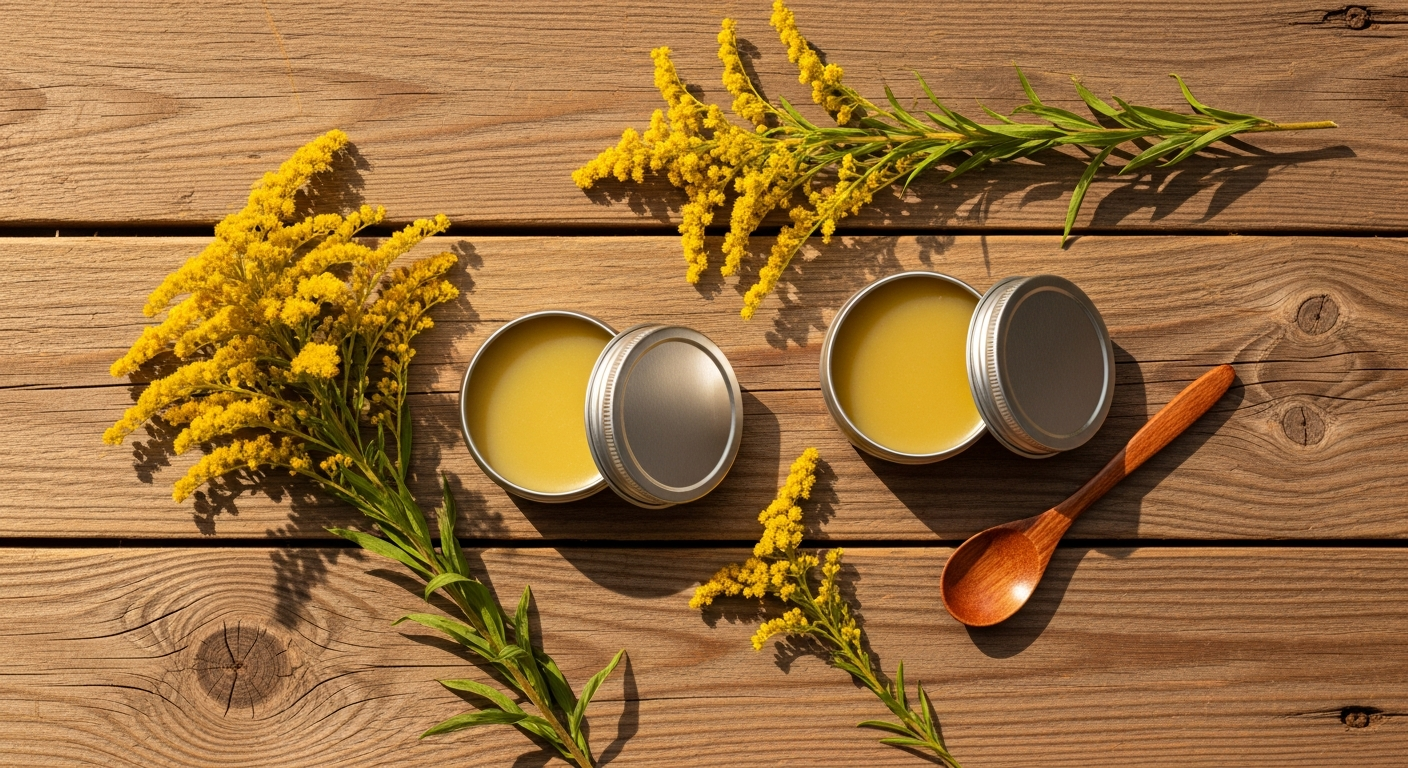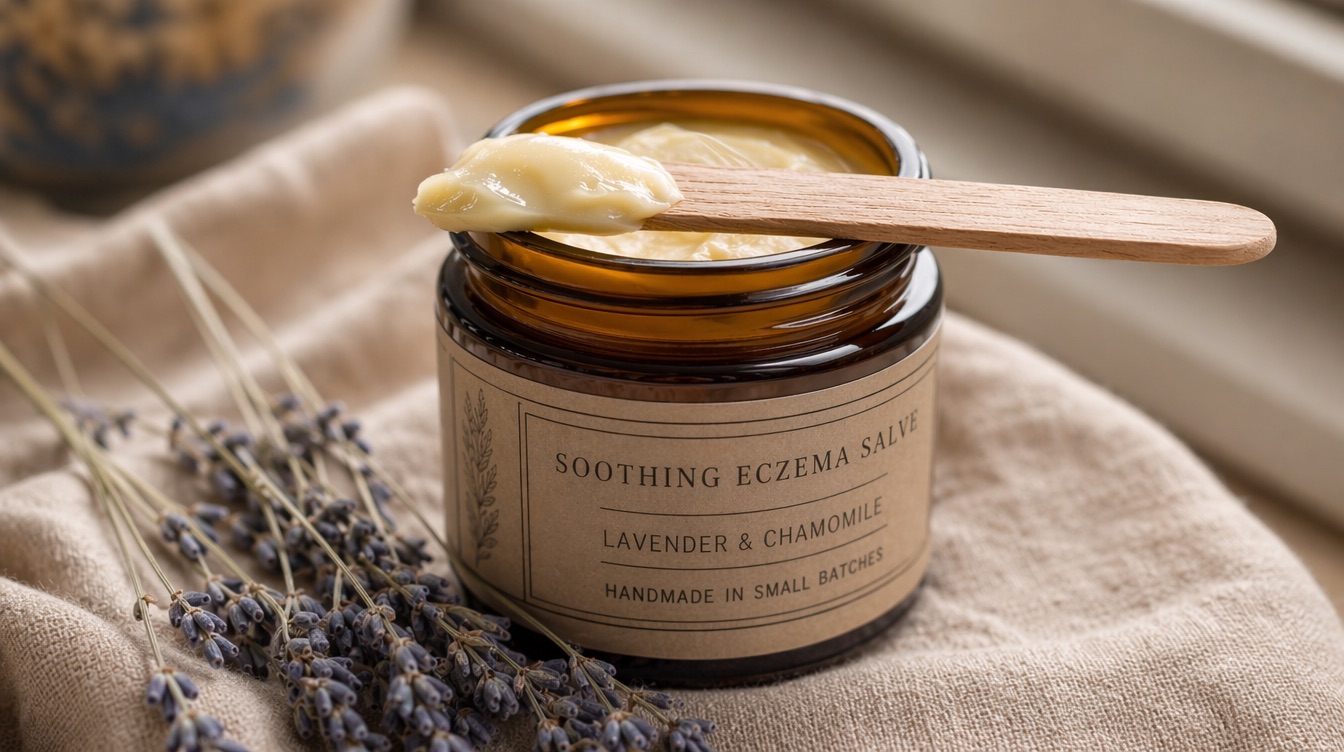
This homemade eczema cream uses three ingredients, shea butter, coconut oil, and colloidal oatmeal, and you can make it in about 15 minutes of hands-on time. It has no water, no essential oils, and no fragrance, which keeps it simple and leaves out the water that helps bacteria grow. It may soften dry, itchy skin, but it is a moisturizer and not a treatment, so read the safety notes below the recipe before you use it.
The 3-ingredient homemade eczema cream
I started making my own cream a few years ago when one of my kids had a rough patch that would not quit. We had tried every store brand we could find, and they either made things worse or barely helped. The patches were dry, red and itchy, and the itching was worst at night.
This version is a soft, rich balm. It has no water in it, so it is thicker than a lotion. That thickness is the point. The National Eczema Association says the best moisturizers for eczema skin are the ones that feel greasy. It ranks ointments as the highest in oil, then creams, then lotions.
- Set a glass bowl over a pot with 1 to 2 inches of simmering water. The bowl should not touch the water.
- Add the shea butter and coconut oil. Stir until both are fully melted.
- Take the bowl off the heat and let it cool for about 5 minutes. It should be warm, not hot.
- Stir in the colloidal oatmeal until no clumps remain.
- Pour the mixture into a clean, dry glass jar.
- Let it set at room temperature, undisturbed, for a few hours. Make it in the evening and it will be ready by morning.
These amounts are a traditional home recipe ratio, not a tested formula. No doctor or medical group has recommended them.
Colloidal oatmeal is not breakfast oats. It is oatmeal milled into a fine powder for skin use. The American Academy of Dermatology says colloidal oatmeal in a child’s bath can help relieve dry, itchy skin. The FDA also lists colloidal oatmeal as a skin protectant in store-bought creams for minor itch from eczema, and the National Eczema Association names oat as a soothing ingredient. Those are tested products, though, and no one has tested oatmeal stirred into a homemade balm. You can find it online or in the baby and skin care aisle, often sold for baths. If you only have rolled oats, you can blend them into a fine flour. That works as a gentle texture ingredient, but I cannot promise it does the same job, and the cream may feel slightly gritty.
 Save
Before you use any homemade eczema cream
Homemade does not mean harmless. Each of these ingredients can bother some people, and eczema skin reacts more easily than other skin.
- Patch test first. The National Eczema Association suggests putting a pea-sized amount of a new product on the inside of your wrist or the crook of your elbow. The American Academy of Dermatology says to apply it to the same small spot twice a day for 7 to 10 days. Watch for redness, itching, or swelling before you use it on a larger area.
- Skip the fragrance. The National Eczema Association, the American Academy of Dermatology, and the American Academy of Pediatrics all point people with eczema to fragrance-free moisturizers. That is why these recipes have no essential oils. A Cleveland Clinic dermatologist also warns that botanical ingredients can trigger allergic reactions in people with eczema.
- Do not use it on skin that looks infected. Weeping, crusting, or blistered skin needs a doctor, not a jar of balm.
- Do not use it in place of medicine your doctor prescribed. The American Academy of Pediatrics and the National Eczema Association both say to put prescribed medicine on the rash first, before any moisturizer. Ask your doctor whether the moisturizer should go over the medicine or only on the skin around it.
- If you have reacted to coconut, shea, or oats before, skip that ingredient and see the swaps below.
How to apply it
Apply the cream within three minutes of a bath or shower, while your skin is still slightly damp. The National Eczema Association and the American Academy of Dermatology both give this timing. Pat off the extra water, leave the skin a little damp, and use a thick layer. Reapply after washing your hands and whenever the skin feels dry or tight.
Use a clean, dry spoon or a clean fingertip to scoop it out. The FDA warns that dipping fingers into a product adds microorganisms, and water in the jar can do the same.
Homemade eczema cream for babies
My youngest had rough, rashy patches, and I wanted something where I did not have to second-guess every ingredient. The 3-ingredient recipe above is the one I use for that, because it has no essential oils and no added scent. I patch tested it on a small spot first, the same way this page suggests, before I used it more widely.
A few rules matter more with babies.
- Ask your pediatrician before you put any homemade product on a baby’s eczema, especially for a newborn or a baby under a few months old.
- Never add essential oils to anything you use on a baby. Fragrance is a common eczema irritant.
- Patch test on a small spot first, and watch it for several days for redness or a rash before you use more.
- Ask about the oatmeal too. A 2007 study in the journal Allergy of children with eczema found oat sensitivity was more common in those who used oat creams, and its authors suggested avoiding oat skin products for babies with eczema. A 2025 review disagreed, so ask your pediatrician whether to leave the oatmeal out. If you use it, choose colloidal oatmeal.
- Skip any recipe with water, aloe, or fresh ingredients. They spoil faster, and you do not want bacteria on broken skin.
- If the skin is weeping, crusted, or getting worse, call your pediatrician. Do not keep trying recipes.
A beeswax eczema salve for extra dry patches
A salve is the same idea with beeswax added. It sets firmer and stays put on the skin, which helps on extra dry patches such as hands, elbows, and shins.
- Melt all three ingredients together in a double boiler, stirring now and then, for about 5 to 7 minutes.
- Remove the bowl from the heat and pour the mixture into a clean, dry 4 ounce glass jar.
- Let it cool completely at room temperature before you put the lid on. This takes an hour or two.
The wax amount is a starting point from common salve ratios, not a tested or medically recommended formula.
Pastilles melt more evenly than a solid block of beeswax, so I buy those. If you want a scented salve, I would still leave the essential oils out, for the reasons in the safety section above.
 Save
Cream, salve, or balm
These three words get used loosely, and the difference affects how long your batch lasts.
A salve or balm is made from oils, butters, and wax, with no water. It is the thickest option. It is the quickest to make and less likely to grow bacteria.
A cream or lotion contains water, often from aloe vera gel or a hydrosol. Water lets bacteria and mold grow, so a water-based product needs a preservative. Without one, it can grow microbes, so it should be made in tiny batches, kept cold, and used up quickly.
Both recipes in this post are water-free, so they are soft balms. I call the first one a cream because that is what most people search for. If you want a true lotion with a preservative, that is a different project, and I would not try it without a proper preservative.
Do homemade eczema creams work?
They may ease dry, itchy skin, because moisturizing is a main part of eczema care. The National Eczema Association recommends moisturizing at least once a day and applying it liberally. The American Academy of Dermatology calls an eczema-friendly moisturizer one of the best treatments for eczema, and it recommends a gentle, fragrance-free one right after bathing.
That is the limit of what I can tell you. These recipes are not tested products, and no one has studied my exact recipes. They do not treat or cure eczema, and they will not replace the care a doctor gives you. Store-bought options that meet the same needs, such as plain petroleum jelly, also work well, and the American Academy of Dermatology says an ointment like petroleum jelly can relieve badly itchy skin better than a cream or lotion.
The overnight method
The American Academy of Dermatology suggests putting a cream or ointment on your hands at night and then covering them with cotton gloves. Its advice is for general hand care. A University of Washington dermatology handout gives the same tip for hand eczema. The same idea works with clean cotton socks on feet. The covering holds the moisturizer against the skin overnight.
A few cautions apply.
- Skip it on skin that looks infected or broken open.
- Do not wrap a baby’s skin this way without asking your pediatrician.
- If you use a prescription cream, ask your doctor before covering it. The National Eczema Association says wraps help steroid creams absorb into the skin, and it says to check with your doctor before you start wet wrap therapy.
- Stop if the skin gets hot, red, or itchier.
Ingredient swaps for sensitivities
Here is what to change if one ingredient does not agree with your skin.
- No coconut oil. Any ingredient can bother some people with eczema, and coconut oil is no exception. Sunflower oil is one plain liquid oil you could try instead, though no source I found tested it in this recipe. Skip olive oil, because a Cleveland Clinic dermatologist advises against it for eczema. The balm will come out softer, so add a little beeswax or use the salve version if you want it firmer.
- No shea butter. Mango butter and cocoa butter are both solid butters that melt in a similar way. Cocoa butter has a strong chocolate scent. Neither is a tested swap, so start with a small batch.
- No beeswax. Candelilla wax is a plant-based option. It is stiffer than beeswax, so start with about half the amount and adjust.
- No oatmeal. Leave it out. The cream still works as a plain moisturizer.
- No fragrance, ever. Do not add essential oils to these recipes. Fragrance and botanical ingredients can trigger reactions in people with eczema.
If your skin flares after you try a recipe, stop using it. Then test one ingredient at a time on a small patch, letting each spot clear before the next test, to find the trigger. Any ingredient can be the cause. If you cannot find it, ask a doctor about allergy testing.
How to store homemade eczema cream
Water-free balms are less likely to grow microbes than water-based creams, but they do not last forever. Oils can go rancid over time, and any water or dirty fingers can add bacteria.
- Pour the balm into clean, dry jars. Wash them well and let them dry fully first.
- Use small jars so you open each one less often. I fill 4 ounce amber glass jars, because dark glass protects the oils from light.
- Scoop with a clean, dry spoon, not wet fingers.
- Keep the jar sealed, away from heat and sunlight. A warm bathroom shelf in summer can melt it.
- Label each jar with the date you made it. I use a piece of masking tape on the bottom.
- Make small batches that you can use up fairly soon.
- Throw it out if it smells sour or stale, changes color, shows any mold, or has water droplets or a slimy film.
I do not give a shelf life. No one has tested this recipe, and the only numbers I found came from product makers and blogs, not from tests. Treat your nose and your eyes as the final check.
Troubleshooting a homemade batch
It is too hard. You used too much beeswax. Remelt it and stir in a tablespoon of extra oil.
It is too soft or greasy. Add a little more beeswax, about half a teaspoon at a time. Put a drop on a cold plate to check how it sets before you pour the whole batch.
It feels grainy. Shea butter forms small crystals when it cools unevenly or sits in a hot spot. Remelt it fully, then let it set undisturbed in a cool, shaded spot. Do not stir it while it sets.
It separated into layers. The batch likely sat somewhere warm while it set. Remelt and let it cool away from heat.
Your skin reacted. Stop using it and read the swaps section above.
When to see a doctor about eczema
Homemade creams are for mild dryness and itch. See a doctor when you notice any of the following.
- Signs of infection. The National Health Service in the UK says to get urgent help if eczema is blistered, crusty, leaking fluid, or has spots filled with pus. Get help too if it is painful, swollen, or warm, or if it comes with a high temperature or feeling unwell.
- Eczema that suddenly gets worse or spreads. The NHS says this, along with the signs above, can point to an infection or to a more serious condition called eczema herpeticum, which needs prompt medical care. The American Academy of Pediatrics also lists oozing, crusting, pus bumps, and blisters as reasons to call your child’s doctor.
- A reaction to your cream. Stop using it, and see a doctor if the rash is spreading or severe.
- No improvement. If your skin is not getting better, or keeps coming back, a doctor can offer treatments a jar of balm cannot.
- Eczema in a baby. Ask your pediatrician about any baby whose eczema is widespread, weeping, or hard to settle.
This article is general information from a homesteader and not medical advice.
Frequently asked questions
What is a good DIY eczema cream?
A thick, fragrance-free, water-free balm is a reasonable homemade place to start. The 3-ingredient recipe above uses shea butter, coconut oil, and colloidal oatmeal. Plain petroleum jelly and fragrance-free store creams are the products doctor groups name most often. Patch test any new product, and see a doctor if your skin is infected or getting worse.
Is there a homemade eczema cream for babies?
The same 3-ingredient recipe has no essential oils and no scent, so it has fewer things to react to. Ask your pediatrician before you use it, patch test it, and never add essential oils.
What is the difference between an eczema balm and a cream?
A balm or salve has no water and is thicker. A cream has water, so it spreads more easily but needs a preservative and spoils faster.
Is coconut oil good or bad for eczema?
It depends on the person. A few small studies reported that virgin coconut oil eased eczema, and a Cleveland Clinic dermatologist calls it a good moisturizer. Reviews still say more study is needed, and the National Eczema Association and American Academy of Dermatology pages I read do not name it. If your skin flares, stop using it and try the swaps above.
Can I make an eczema salve without beeswax?
Yes. Use candelilla wax, starting with about half the beeswax amount, or skip the wax and make the soft 3-ingredient version.
Does homemade eczema cream cure eczema?
No. A moisturizer can ease dry, itchy skin, but eczema is a long-term condition that a doctor can help you manage.