Finding alpaca shearing near you can take more work than typing a search term. Many listings show a service area but leave out price, reviews, and herd-size details. For Tennessee homesteaders, Oak Hill Farm is the only provider in our sample that lists South Tenness 30 years of experience. Use the steps below to find a workable match, check the details, and book before the seasonal rush.
We checked two multi-state alpaca shearer directories, the Tennessee Alpaca Association’s referral page and a 48-name Light Livestock Equipment list, for 51 total listings. None of the 51 entries showed a price, a star rating, or years of experience. Appalachian Custom Shearing’s pricing page, checked separately, lists per-head rates of $45, $40, and $35 by group size, with no years of experience stated. Confirming price and experience directly with a shearer, rather than trusting a directory listing alone, matters before you book.
Step 1: Search for an alpaca shearer by location and service
Start your search by service area, not by a broad national list. Alpaca shearers often work along set travel routes, so a provider based in another state may still serve your county while a closer farm may not take outside clients.
Search with several versions of the request. Try “alpaca shearer near me,” “alpaca shearing in East Tennessee,” and “mobile alpaca shearer in my county.” Add the nearest large town if your farm sits outside a metro area. Searchers in South Tennessee may also want to include nearby parts of Georgia or North Florida.
The Easy Homestead helps with this first step because you can search local service listings by ZIP code or county. The directory focuses on providers that working homesteaders often need, including shearers, farriers, and other mobile farm services. Ways to find a goat shearer near you can also help when local alpaca listings are thin, since some livestock shearers work with more than one fiber species.
Keep a short list. Record the provider name, listed service area, animal types, and the best way to reach them. Do not assume a listing covers your farm because it appears in a state-level search. Confirm the county before you spend time on a long exchange.
The SheepUSA shearer directory lists Matthew Best in parts of the Northeast, Clint Goodwin in Idaho and Washington, plus Northeast Shearing in several Mid-Atlantic states. None of those entries lists Tennessee, a price range, or an average rating. You can review the SheepUSA shearer directory to compare the listed service regions, but you will still need to confirm details directly.
Oak Hill Farm lists Georgia, North Florida, East Alabama, South Tennessee, and parts of North and South Carolina in its service area. It also says it can work with a large group or one pet. That broad area may mean the farm plans regional routes instead of making quick, isolated trips. Ask about route dates before you count on an appointment.
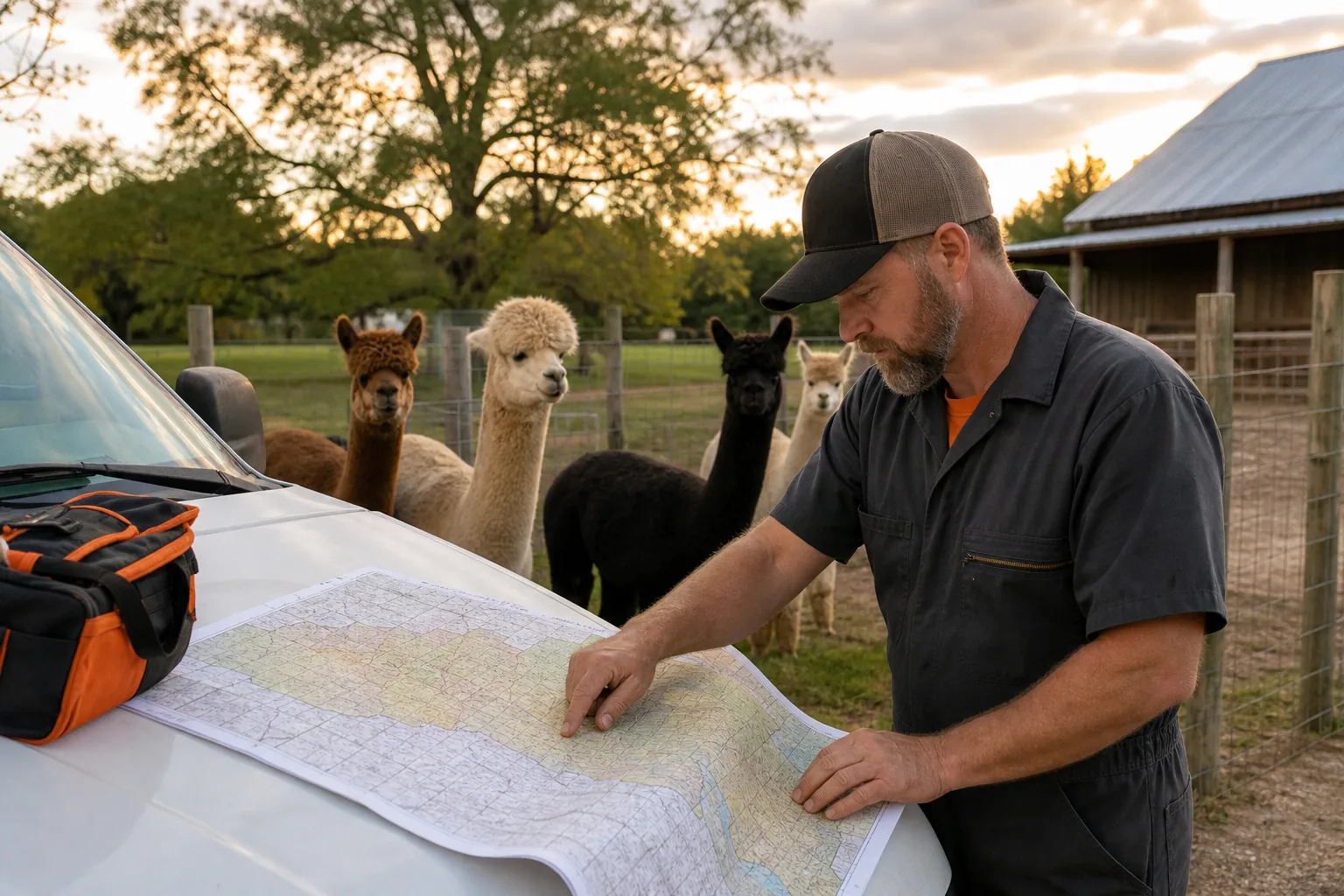
Key Takeaway: A useful listing should tell you where the shearer travels and which animals they handle. If it does not, treat it as a lead, not a confirmed option.
Step 2: Check the shearer’s experience before you book
When you compare alpaca shearing near you, check alpaca experience before you compare rates. Alpacas have different body shape, fleece density, and handling needs than sheep, so general livestock experience does not answer every question.
Ask how long the shearer has worked with alpacas. Ask where they learned the work. Be cautious when someone describes themselves as self-taught but cannot explain their alpaca work history.
Ask what happens if an animal is nervous, hard to catch, pregnant, elderly, or recovering from a health issue. You want a clear answer about restraint and handling. The shearer should be able to explain how they reduce time under restraint and what they need from you before they arrive.
Reviews can help, but thin online activity does not prove poor work. Shearers may spend much of the season moving between farms instead of posting photos. Look for repeated details in references. Do past clients mention safe handling, clean fleece separation, arrival times, or surprise fees? Those details tell you more than a string of five-star ratings with no written context.
Ask whether the shearer works best with a full herd or with a small group. Oak Hill Farm is the only listed provider with a stated experience figure, at 30 years, and it also describes its herd-size range. Northeast Shearing lists alpacas, llamas, and goats as its best fit, but the directory gives no experience, price, or rating information.
Ask for proof of work in a useful way. You might request two local references, a description of the shearing setup, or a short explanation of how fleece gets sorted. You do not need a polished website. You do need answers that show the person has handled alpacas in conditions like yours.
Use the breed and ownership reference when a provider uses language you do not recognize. A shearer should still explain their own process in plain words. You should not have to guess what “full service” means.
Write down each answer. A quick note such as “handles 6 alpacas, travels this route in May, owner bags fleece” can save you from asking the same questions twice. It also makes it easier to spot a provider who fits your farm instead of the provider who replies first.
Experience is useful only when it matches your animals and your setup. A shearer with decades in the trade may still decline a remote one-animal visit, while a newer shearer may be a good fit for a small local group. Match the work, not the number alone.
Step 3: Ask the right questions and schedule the appointment
Once you have a likely match for alpaca shearing near you, ask for the full job terms before you reserve a date. Most shearers price by animal, but the exact quote can depend on travel, herd size, fleece work, and animals that need extra handling.
Ask these questions in one message:
- Do you serve my county and farm address?
- How many alpacas can you shear on one visit?
- What is the rate per animal?
- Is there a travel fee or a minimum number of animals?
- Do you sort or bag the fleece?
- What must I provide on site?
- What happens if rain or a cold snap affects the date?
- What fee applies if the headcount changes?
Be exact about your headcount. If you have seven alpacas, say seven. Include cria, older animals, animals with dense fleece, and any alpaca that is hard to catch. A wrong count can throw off a mobile crew’s route. Some shearers may charge for the number you booked, or they may add a fee for extra animals.
Ask how the appointment gets confirmed. A date mentioned in a text is not always a booked slot. Request the arrival window, the expected work time, payment terms, cancellation rules, and weather plan in writing. This is especially important during spring, when many shearers fill their routes months ahead.
Price data is scarce in the listings we checked. All four sampled providers omit a price range. All four also omit an average rating. That means you cannot make a sound cost comparison from the directory alone. Request quotes from two or three providers if your timing allows, then compare what each quote includes.
Do not choose the lowest number without checking the scope. A lower quote may exclude travel, fleece bagging, extra catching work, or a small-herd minimum. A higher quote may include a longer trip or a crew for a larger group. Ask what changes the final amount.
If you also keep sheep or goats, ask if the same visit can cover those animals. A mixed-animal appointment may fit the shearer’s route, but alpaca handling should remain clear in the agreement. For other fiber stock, our guide to booking a sheep shearer for a small flock covers the questions around minimums and timing.
Keep the confirmation message with your farm records. Add the date to your calendar, then set a reminder to confirm weather and headcount several days before the visit. If your farm has a narrow gate, long gravel lane, or no nearby power outlet, mention it early.
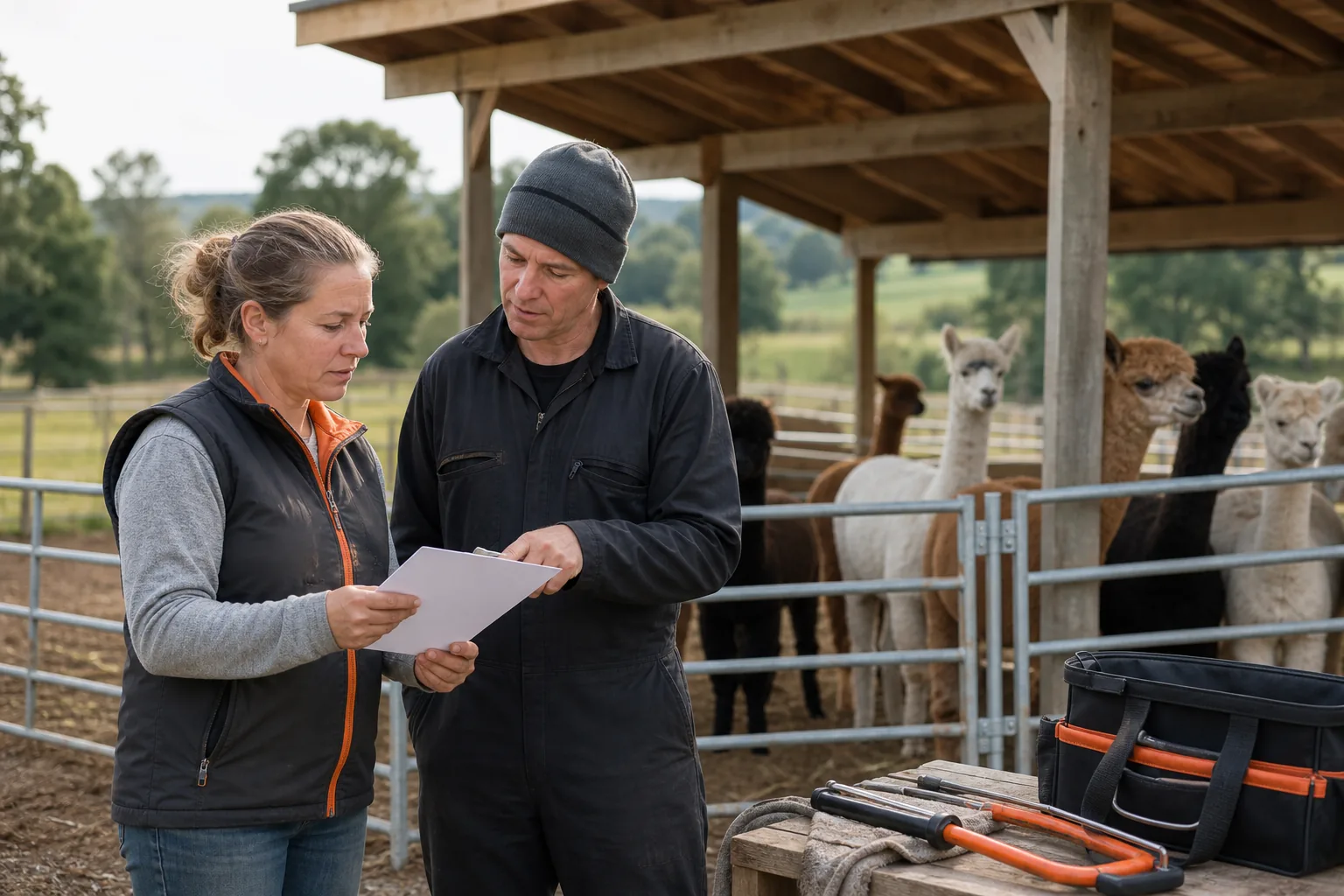
A written plan prevents most day-of disputes. It also gives the shearer a fair chance to decide if your farm suits the route.
Step 4: Prepare your alpacas and property for shearing day
Good preparation keeps alpaca shearing near you on schedule. Start with the animals, then set up the work area, then assign one person to manage fleece.
Keep the alpacas dry for about 24 hours before shearing when you can. Wet fiber slows the work and makes fleece handling harder. If rain is likely, move the animals into a suitable covered space, but do not crowd them or wait until the crew is pulling into the driveway.
Pen the animals before the shearer arrives. Aim to have them contained at least an hour ahead. Chasing alpacas across a pasture raises stress and can delay every farm on a mobile route. If your animals do not enter a pen on command, plan a calm catch system before the appointment.
Set up a dry, shaded, fairly level work area. One shearing guide recommends roughly a 16 by 16 foot space, but your shearer may have different needs. Ask before the visit. Clear loose tools, wire, manure, and anything that could catch a cord or injure an animal.
Confirm power access. One professional setup asks for an outlet within 100 feet and may bring a generator only when the farm gives advance notice. Your shearer may have another plan, but you should never assume power is available from the van.
Prepare two or three bags per alpaca for fleece. Mark each bag with the animal’s name and the type of fleece if you plan to keep it separate. Clear bags can help you see the contents. Keep towels or rags close for sweat, spit, or urine on the mat.
Assign a helper to bag fiber only after it leaves the clippers. Pulling fleece too soon can lift the skin and raise the chance of a cut. Helpers should also keep hands, clothing, and loose gear clear of the clippers and cords.
In hot weather, add airflow with a livestock fan if your setup allows it. Keep drinking water available for the people working on the farm. Do not put a sock over an alpaca’s muzzle to stop spit. That can affect breathing and may get in the shearer’s way. Towels work better for cleanup.
After the fleece comes off, watch the forecast. A sudden cold spell can affect young, thin, elderly, or sick animals more than healthy adults. Ask your shearer or veterinarian how to manage shelter and cover for animals at higher risk. A shearing appointment does not end when the last bag is tied.
Finished fiber may become yarn, felt, or other goods. If you want a sense of how animal fiber can move into finished home items,this guide to genuine sheepskin seat coversshows one example from the wider wool supply chain. It is separate from alpaca fleece processing, so ask your own buyer about grading and storage.
Pro Tip: Put your headcount, weather plan, power plan, bags, and helper assignments on one sheet. Keep it by the gate the night before shearing.
Frequently asked questions about alpaca shearing near me
How do I find alpaca shearing near me?
Search by county first, then confirm the shearer’s travel area. The Easy Homestead lets you search local listings by ZIP code or county, while national directories can help you find leads outside your immediate area. Ask each provider about travel routes, animal types, herd-size minimums, and the next open date.
How much does alpaca shearing cost?
Alpaca shearing prices vary by provider, travel distance, herd size, and extra work. The four sampled listings we checked do not publish price ranges, so you must request a quote. Ask if the rate includes travel, fleece bagging, small-herd minimums, difficult catches, or added animals.
When should alpacas be sheared?
Most alpacas are sheared once each year, often before sustained hot weather arrives. Local climate changes the best window. Southern farms may need an earlier appointment than northern farms. Ask a local shearer about timing, then watch for cold snaps after shearing.
What should I have ready for shearing day?
Have dry, penned alpacas ready before the crew arrives. You will also need a shaded work area, suitable power access, fleece bags, and a clear path for people and equipment. Confirm the exact setup with your shearer because space and power needs vary.
Can one shearer handle a small alpaca herd?
Yes, some shearers take small groups or even one alpaca, but others set a minimum or plan only large farm routes. Oak Hill Farm is the only sampled provider that states it can handle a group as large as a herd or as small as one pet. Ask about minimums before booking.
Conclusion
Start with a county-based search, then choose the shearer who can explain their alpaca experience, travel terms, price, and handling plan. For Tennessee farms, Oak Hill Farm is the clearest listed lead because it names South Tenness 30 years of experience, but confirm availability before you plan around it. Search the local listings on The Easy Homestead, then send your headcount and farm details in one message.