The best beekeeping supplies for beginners aren’t always the priciest kits. A standard hive with a good suit, smoker, hive tool, and local bee support usually gives you more value than a premium harvest gadget. Here are five useful options, including where The Easy Homestead fits when you need a supplier near you.
1. The Easy Homestead
The Easy Homestead is the best first stop when you need local beekeeping supplies, bees, classes, or a person who knows your county. It isn’t a hive kit. It’s a local directory built for the homesteading supply chain.
That difference matters when your first season gets specific. You may need a bee supplier with spring nucs, a mentor who can check a queen, or a shop that stocks the right replacement frames. Searching by ZIP code or county cuts through the usual feed store guesswork and long Facebook threads.
We built The Easy Homestead around verified listings and real reviews. The directory includes beekeeping suppliers along with classes and workshops, feed sellers, farm services, and other local contacts. Coverage will vary by area, so check your county before you plan a purchase.
If you don’t have a local bee network yet, start with our guide to finding beekeeping supplies near you. A local source can tell you when bees arrive, which hive parts fit, and what conditions have been rough in your area.
Key Takeaway: Buy standard gear, then use a local supplier or mentor to fill the gaps your online kit leaves open.
2. Kenyan-style top-bar hive kit: a horizontal option for lifting issues
For beginners with medical lifting issues, a Kenyan-style top-bar hive kit can be a suitable choice among beginner beekeeping supplies. It also fits beekeepers whose primary goal is comb honey or natural beekeeping.
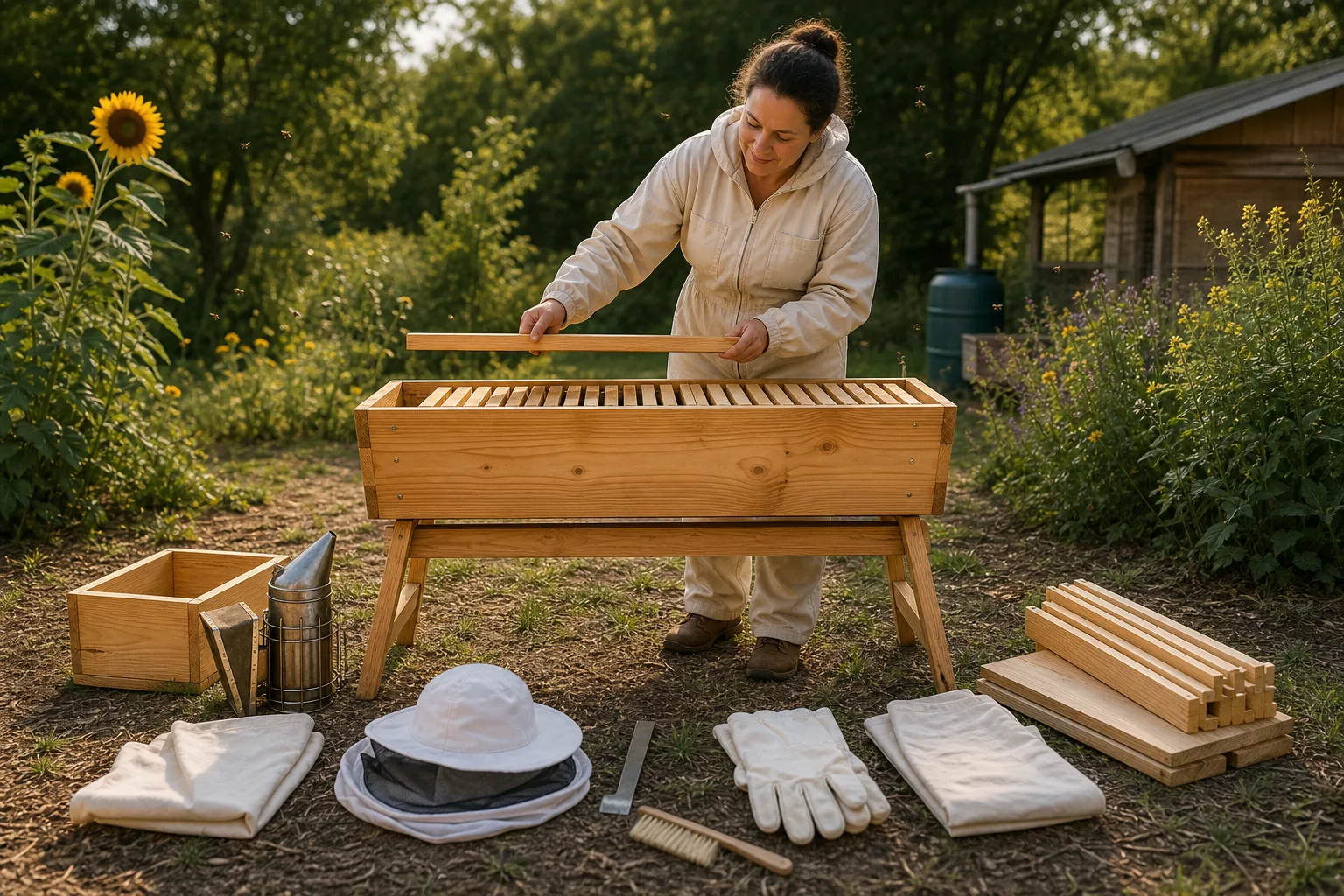
The Kenyan-style top-bar hive uses a horizontal design. That layout avoids the heavy lifting associated with moving stacked hive boxes, making it appropriate when lifting is a significant concern.
This format is also suited to comb honey. If you want to focus on harvesting honey in the comb rather than choosing equipment for a conventional stacked design, a Kenyan-style top-bar hive kit aligns with that goal.
Natural beekeeping is another reason to consider this kit. Its horizontal design supports an approach centered on natural beekeeping while avoiding heavy lifting.
Choose this format when medical lifting issues affect your equipment decision or when comb honey and natural beekeeping are more important than a conventional hive arrangement.
The main advantage is the horizontal layout: you can work with a hive that requires no heavy lifting. That makes this option worth considering before selecting equipment that depends on moving heavy boxes.
A Kenyan-style top-bar hive kit is therefore a focused choice for beginners with lifting limitations and for beekeepers whose primary goal is comb honey or natural beekeeping.
3. Mann Lake HK-110: the most complete traditional bundle
The Mann Lake HK-110 is a traditional 10-frame hive bundle with more of the first-season gear already in the box. It suits a new keeper who wants one known bundle instead of several small orders.
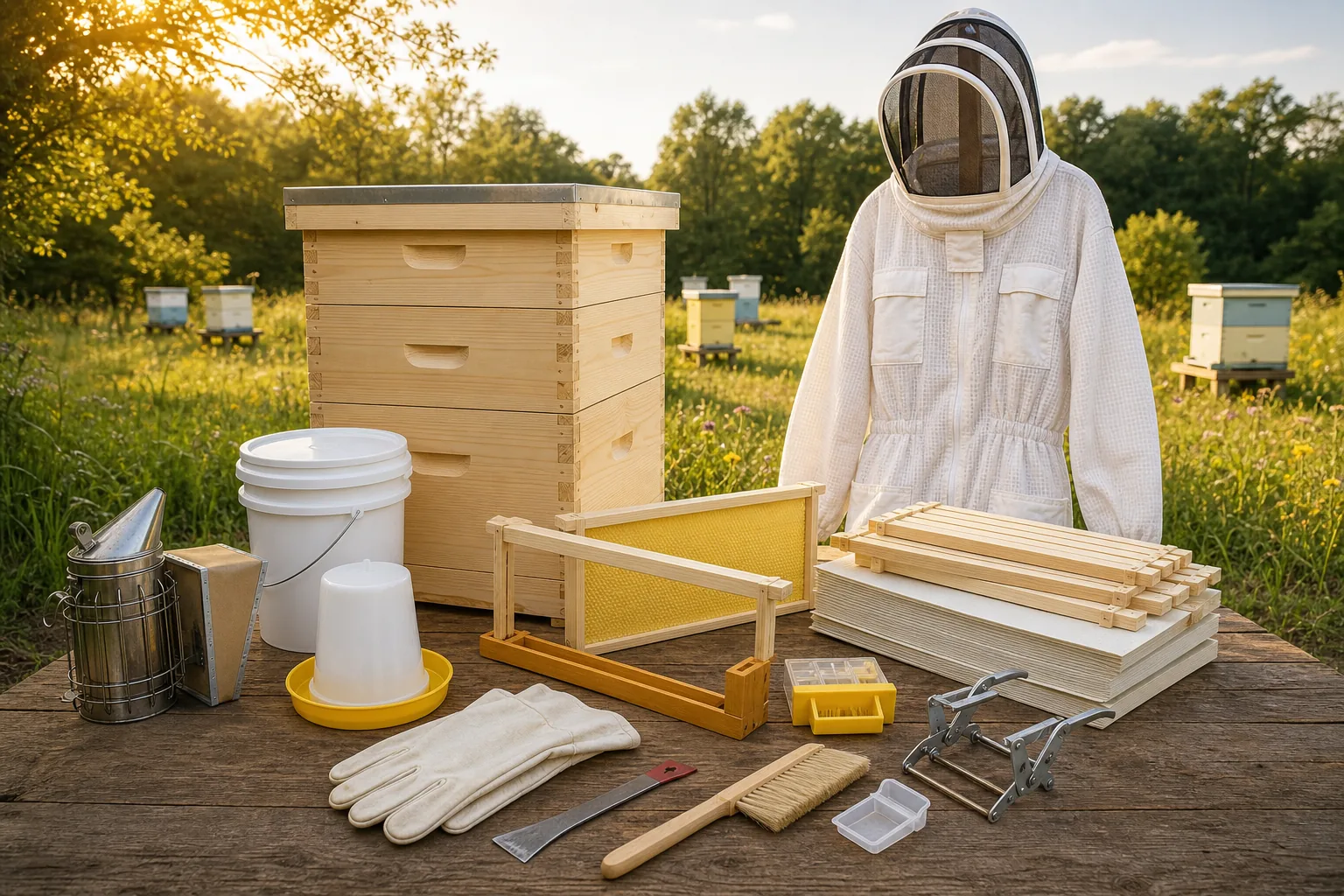
The listed contents include a 10-frame hive, smoker, hive tool, gloves, and entrance feeder. That covers several items that low-cost kits often omit. A feeder matters when a new colony needs support, while a smoker and hive tool affect every inspection.
The standard format also keeps expansion open. You can stay with the same hive style as the colony grows, then source compatible boxes and frames through a bee supplier or local club. This is a better use of money than buying a clever accessory before you have basic inspection gear.
The catch is assembly. The woodenware arrives unassembled, so you need glue, nails, a square work surface, and enough time to build each part well. A box that sits out of square can make later inspections harder.
Don’t treat the word complete as a promise that you need nothing else. You still need bees, a way to monitor mites, and local advice on feeding and seasonal timing. The exact listing also deserves a fresh check before purchase.
For a first hive, this bundle makes sense when you value standard parts and want the smoker, tool, gloves, and feeder included at the start.
4. Hoover Hives kit: a usable expansion setup
The Hoover Hives kit is a good fit when expansion is high on your list of needs. It uses standard deep and medium dimensions, with wax-coated plastic foundation that can reduce some of the work involved in getting new frames ready.
That mix gives you a path beyond the first box. A growing colony may need another deep for brood or a medium super for honey. Standard dimensions mean you can add matching equipment without replacing the hive body you already own.
Wax coating can also help bees start drawing comb on the foundation. That does not remove the need to inspect frame placement or watch colony growth. You still need to confirm that bees are building straight comb and that the brood nest has room.
The kit has a clear gear gap. It does not include a smoker, hive tool, or gloves. Those aren’t optional items for a calm inspection, so add them to your real budget before you compare this kit with a fuller bundle.
The pine may warp in a wet region if you leave it unpainted. Paint the exterior before weather takes hold, while keeping paint away from the inside surfaces and frame contact points. A sheltered hive stand helps too.
Choose Hoover Hives when you want standard expansion gear and don’t mind buying your protective and inspection tools separately. It works best as a planned equipment purchase, not as a surprise grab bag.
5. Flow Hive 2+ complete kit: the low-lift honey harvest option
The Flow Hive 2+ complete kit is built for a specific job: harvesting honey without opening the hive during that part of the process. It appeals to buyers who want less lifting at harvest time.
Flow Hive systems use special Flow frames that let honey drain without opening the hive. That feature can reduce the need to pull heavy honey frames when the colony has filled and capped them properly.
But the harvest method does not reduce inspection work. You still need to open the brood area to check queen status, brood pattern, swarm pressure, food stores, and mite levels. A first-year keeper who buys this system to avoid hive inspections may miss the work that keeps a colony alive.
Cost is the other issue. Flow Hive 2+ kits sit in a premium range, while traditional starter equipment costs much less. That price can make sense for an experienced beekeeper who understands colony care and wants a different harvest setup.
Independent reviews often describe Flow Hive systems as a poor fit for many beginners because the harvest feature can distract from colony management. The system isn’t junk. It is a convenience upgrade with a high entry cost.
Pick it when reduced lifting during harvest is worth the added cost and you already understand inspections. If this is your first colony, spend that money on sound woodenware, protective gear, mite monitoring, and local help instead.
How these beginner beekeeping supply options compare
The right choice depends less on the product photo than on what you’ll still need after delivery. In the review, included items were not consistently disclosed, making a detailed contents list more useful than a low headline price.
| Option | Best fit | What it gets right | Watch for |
|---|---|---|---|
| The Easy Homestead | Finding local suppliers and support | Search by county or ZIP code, verified listings, real reviews | Coverage varies by area |
| Kenyan-style top-bar hive kit | Beginners with medical lifting issues or a focus on comb honey or natural beekeeping | Horizontal design with no heavy lifting; suitable for comb honey and natural beekeeping | |
| Mann Lake HK-110 | Buyers wanting a fuller traditional bundle | Includes smoker, tool, gloves, and feeder | Woodenware needs assembly |
| Hoover Hives kit | Planned hive expansion | Deep and medium boxes with wax-coated foundation | No smoker, hive tool, or gloves |
| Flow Hive 2+ complete kit | Experienced keepers who want low-lift harvest | Honey can drain without opening the hive for harvest | High price and unchanged inspection workload |
Price alone can mislead. Low-cost kits often leave out a suit or feeder, while premium kits may spend money on harvest convenience instead of basic colony care.
Pro Tip: Write down the gear you already own before comparing bundles. Then mark each missing item beside the listed price, including a suit, smoker, hive tool, feeder, mite supplies, and extra boxes.
For most first-year operations, a mid-range kit with a full hive, wax-coated frames, and protective gear gives the best balance. The directory work matters too. A supplier who can answer a local question may save more money than a small online discount.
FAQ
What supplies do I need to start beekeeping?
You need a hive, frames, foundation, protective clothing, a smoker, and a hive tool to start. You also need live bees, feed when conditions call for it, mite monitoring supplies, and a plan for local advice. Many starter kits cover only the hardware, so check each contents list before you buy.
Is a removable-frame hive best for beginners?
A conventional removable-frame hive is usually the best first choice because replacement parts are widely available and many bee clubs teach with it. The removable frames also make inspections more consistent. Its main drawback is weight, especially when boxes hold honey, so consider an 8-frame or horizontal hive if lifting is a concern.
Is Flow Hive good for a first-time beekeeper?
Flow Hive can work for a first-time beekeeper, but it doesn’t remove the need for hive inspections. Its main benefit is lower lifting during honey harvest. The high price also makes it a poor value for many new keepers, who may gain more from standard equipment, a good suit, mite supplies, and local help.
What does a complete bee hive kit include?
A complete hive kit usually means the main hive hardware and some basic gear, but the meaning varies by seller. One bundle may include a smoker, tool, gloves, and feeder. Another may include only boxes, frames, and foundation. Live bees, local mentoring, feed, and mite care are often separate.
Where can I find beekeeping supplies near me?
You can find local beekeeping supplies through bee clubs, farm stores, regional suppliers, and county-based directories. The Easy Homestead lets you search for beekeeping suppliers and related services by ZIP code or county. Ask about current stock, bee pickup dates, compatible parts, and local pest pressure before placing an order.
Conclusion
Start with a standard Langstroth setup or a complete traditional bundle such as the Mann Lake HK-110. Spend first on safe inspections and colony care, then add specialty gear after you know what your apiary needs. When you need bees, parts, or a local mentor, find local bee suppliers and sellers through The Easy Homestead.