The best chicken coop for laying hens is built around daily work, not looks. If you cannot reach the nest boxes, lock the doors fast, or clear wet litter without a fight, the coop will wear you down.
Start with The Easy Homestead when you need local help. Then use the steps below to check size, layout, materials, airflow, predator control, and care features before you buy or build.
1. The Easy Homestead (Our Top Pick)
The Easy Homestead is our top pick when finding the right coop also means finding local hands, stock, or supplies. The directory helps working homesteaders search by ZIP code or county. That matters when you need a poultry supplier, feed source, fencing crew, or farm builder near the property.
A coop project rarely ends with the structure. You may need hardware cloth from a local feed supplier. You may need someone to weld a gate, move a tractor coop, or fix a sagging roof. The Easy Homestead brings those types of listings into one place, with verified listings and real reviews where coverage exists.
We like this route because it fits how a farm project works. You can compare local options before driving across several counties or asking the same question in three Facebook groups. Search by your area, check the listing details, then confirm that the provider handles poultry work before you commit.
A directory cannot replace your own inspection. Coverage may vary by county, and a listing does not tell you whether a builder understands your flock, soil, weather, or predator pressure. Treat the search as the first step, not the final check.
When you are buying a finished coop, ask the seller for clear dimensions and photos of the underside, run roof, hinges, vents, and latch points. When you are building, local farm construction listings can help with jobs that need more than hand tools.
Use this pick when you need a coop plan plus a local supply chain. You will make better choices once you know what your site demands.
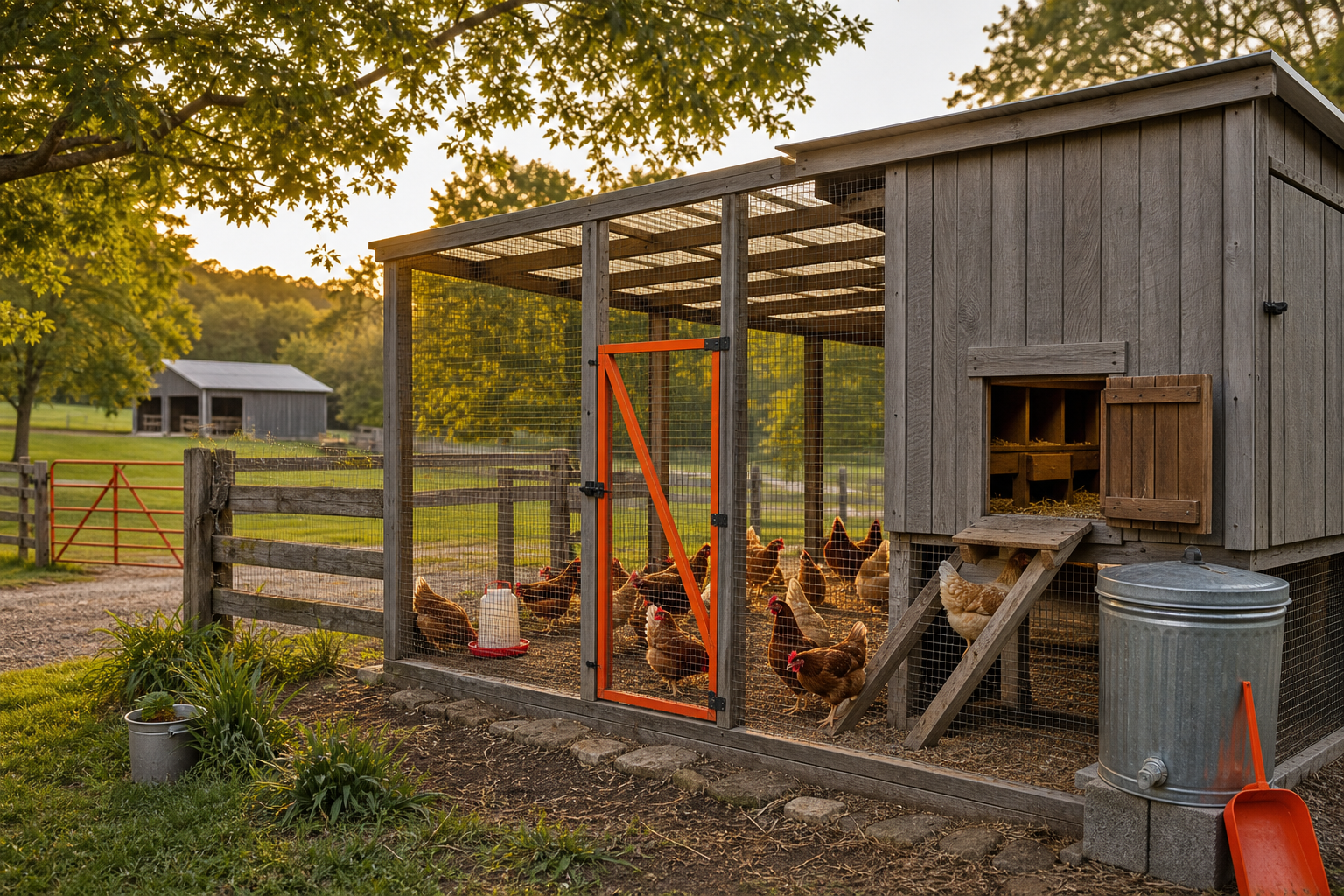
For a plain definition, a chicken coop is an enclosed shelter where poultry roost at night and lay eggs. Wikipedia’s definition of a chicken coop matches the basic use, but your buying choice needs to go further. The shelter must also support cleaning, flock checks, and safe access in bad weather.
Step 2: Choose the right coop size and layout
The best chicken coop gives each hen room to move without wasting space that you must clean. Start with the flock you have now, then account for the birds you may add later.
Measure the enclosed floor area first. A useful working range is 4 to 6 square feet per bird inside the coop, with 8 to 10 square feet per bird in the attached run. Six hens would therefore need about 24 to 36 square feet inside and 48 to 60 square feet in the run. Those figures are planning ranges, not a substitute for local rules or flock conditions.
Do not count nest boxes, feeders, or blocked corners as usable floor space. A narrow coop may have the right outside dimensions but still leave hens crowded around the door. Watch how the birds move. They need a clear path between the entrance, roost, nest boxes, and water.
Keep roosts higher than the nest boxes. Otherwise, hens may sleep in the boxes and foul the bedding. Use enough roost length for every bird to settle without piling up. Leave room below the roost for droppings to collect, then make that area reachable with a scraper or removable tray.
Give the run a roof where hawks are a concern. A covered run also keeps rain from turning the entry into a mud pit. If you move the flock across pasture, a tractor-style coop can work well, but it must stay light enough to move and strong enough to resist digging predators.
Our chicken coop plans with size and build details can help you compare fixed, raised, and tractor-style layouts. Use the measurements as a starting point. Adjust them for your breed, climate, flock behavior, and run access.
By now you should have a floor-area target, a run-area target, and a layout that lets you reach every part of the coop.
Step 3: Compare construction materials, ventilation, and predator protection
Materials decide how long the best chicken coop will hold up under wet bedding, strong wind, heat, and repeated cleaning. Look past the paint. Inspect the joints, floor, roof, vents, and wire.
Wood remains a common choice because it is easy to repair and modify. It needs a roof that sheds water and a floor that will not soak up every spill. A raised floor can help keep wood away from wet ground, while a ground-level design needs a well-protected perimeter.
Chicken wire keeps hens in, but it is not a strong barrier against many predators. Use half-inch hardware cloth over openings and along the run. Secure it to the frame with screws and washers, not a few weak staples. Extend the barrier below ground or lay a wide skirt outward along the soil so digging animals meet wire before they reach the wall.
Check the door at dusk. A good latch should close with one hand and resist a raccoon’s reach. Hook-and-eye hardware is a poor choice for an exposed coop. A bolt or carabiner-style lock gives you a stronger close, but it still needs a daily check.
Airflow needs balance. Vents should sit high enough to let warm, damp air escape without placing a cold draft across the roost. Do not seal the coop tight in winter. Moist air trapped inside can lead to wet bedding and poor flock health.
Shade also matters in hot months. A roof over the run helps, but you can add shade from a pergola, vine-covered frame, or reflective roof surface. Keep the air path open. A shaded coop with no airflow can still become dangerously hot.
| Feature | Good sign | Warning sign | Decision rule |
|---|---|---|---|
| Frame | Solid joints with no flex | Loose panels or soft wood | Reject it if you can shift the frame by hand |
| Wire | Half-inch hardware cloth fixed to the frame | Chicken wire on every opening | Plan to replace weak wire before birds move in |
| Door | Square fit with a firm latch | Gaps near hinges or a light hook | Test the latch with the coop closed |
| Ventilation | High vents with no roost-level draft | Sealed walls or low open gaps | Choose airflow over sealed insulation |
| Run roof | Full cover over the main bird area | Open top in a hawk-prone site | Cover the run when aerial predators are present |
Use Wikipedia’s poultry reference as a basic reminder that poultry housing must support the birds’ needs, not only contain them. Your local weather and predator load should set the final standard.
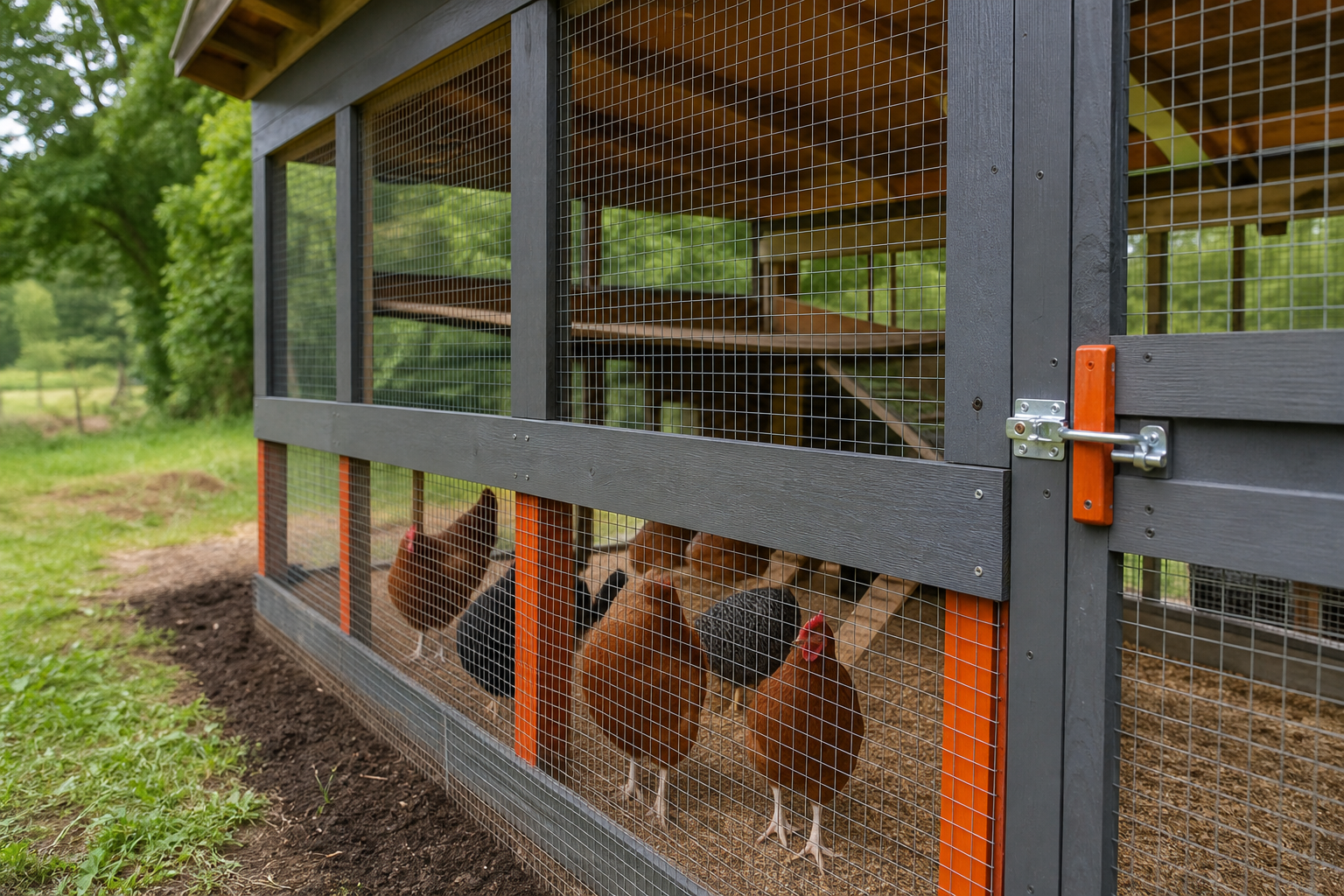
If a coop fails the wire or latch test, do not let a low price talk you into it. Repairs are harder after hens move in.
Step 4: Inspect the features that affect daily chicken care
The best chicken coop reduces the number of awkward jobs you repeat each day. Stand outside it and picture your morning round in rain, frost, and summer heat.
Nest boxes and egg collection
Nest boxes should sit in a darker, calm part of the coop. They need enough height for you to reach in without crawling through the run. A lift-up panel can save time, but check its hinges and support first. A panel that slams shut can injure a bird.
Keep nest boxes below the roosts. Add bedding that stays dry and replace it when it becomes soiled. If you collect eggs twice a day, place the access point where you can reach it while carrying a basket.
Cleaning and deep litter
Choose a coop you can sweep, scrape, or hose without taking half the structure apart. Removable droppings boards help when the roost sits above them. A deep-litter setup can work when the floor stays dry and you manage the bedding instead of letting it pack into a wet crust.
Start with dry bedding. Remove wet spots near waterers as soon as you find them. Stir or add bedding when needed, then clean down to the floor when the material stops staying dry. Compost the spent bedding only where local rules and your farm setup allow.
Feed, water, and winter access
Place feeders where rain cannot reach them. The feed should stay dry, and the container should be easy to refill without stepping into the roost area. Put water on a stable surface that will not tip when hens crowd around it.
In cold weather, water access can become the main chore. A heated waterer may help where power is safe and available. Low-voltage lights or a small solar setup can help you inspect the flock after dark, but keep cords protected from pecking and moisture.
Before you choose a costly setup, work out the full care routine. Our chicken-raising cost breakdown is about meat birds, but its housing and feed categories can help you think through ongoing farm costs. Laying hens still need a budget for bedding, repairs, feed, and replacement parts.
Make one last inspection at bird height. Look for sharp wire, exposed screws, damp corners, blocked vents, and spots where a hen could get trapped. Then check the route from your house to the coop. The best design is the one you will keep checking when the weather is poor.
Pro Tip: Open every access panel before you buy. If you cannot reach the far corner with your arm or tool, you will struggle to clean it later.
The Easy Homestead can also help you search for nearby poultry suppliers and farm construction providers when a repair calls for local help. Search by county, then confirm the provider’s service area and poultry experience.
FAQ
What is the best chicken coop size for laying hens?
The best chicken coop size depends on flock count, breed, weather, and how much time birds spend inside. A common planning range is 4 to 6 square feet per hen inside, plus 8 to 10 square feet per hen in the run. Measure usable floor space, not nest boxes or blocked corners.
Is chicken wire safe for a chicken coop?
Chicken wire can contain hens, but it is weak predator protection. Use half-inch hardware cloth across windows, vents, and run walls. Fasten it firmly to the frame, then bury the lower edge or add an outward-facing skirt. A secure door matters too, since many predators test latches at night.
How much ventilation does a chicken coop need?
A chicken coop needs steady high airflow without a draft across the roost. Place vents above where hens sleep so warm, damp air can leave. Do not seal the building tight during winter. Wet bedding and trapped moisture can cause more trouble than cool air.
What features make a coop easy to clean?
The best chicken coop for daily care has wide doors, reachable corners, removable droppings boards, and a floor that stays dry. Place water where spills are easy to spot. Deep litter can work, but only when you remove wet patches and add fresh bedding before the base turns damp.
Conclusion
Choose a coop that gives your flock enough usable space, dry air, strong wire, and fast daily access. Before you buy materials, search The Easy Homestead for local poultry suppliers or farm construction help in your county, then inspect the finished plan at bird height.
Recommended local resources
Find poultry suppliers and farm builders near you on The Easy Homestead.