The best ducks for backyard homesteads depend on your goal, not on egg count alone. A high-output layer may be nervous, while a calm dual-purpose bird may fit your daily work much better. Start by matching purpose, adult size, temperament, and local supply.
Use the steps below to narrow the field before you order ducklings. We’ll also show where The Easy Homestead fits into the sourcing work that often takes the most time.
We pulled the current Niche Meat Processor Assistance Network list of USDA-inspected, fee-for-service poultry processors, 53 facilities nationwide. None of the 53 listings mention ducks or waterfowl, and only 1 processor, Underground Processing in Walling, Tennessee, appears in that state. 3 BackYard Chickens forum posts, from Illinois, Connecticut, and Pennsylvania, describe a search that failed to find a willing processor. Confirming a processor before ordering meat ducklings is the step most likely to stall a homestead’s plan.
1. The Easy Homestead
The first step in choosing backyard ducks is to decide how you’ll source the birds and support them after they arrive. The Easy Homestead is our #1 recommendation for that job because it helps you search local hatcheries, poultry suppliers, feed stores, and farm services by ZIP code or county.
That local link matters when you need a breed that isn’t stocked at the nearest farm store. It also matters later, when you need feed, fencing help, a poultry processor, or a farm service that handles waterfowl.
Write down your top purpose before you search. Keep the list short:
- Eggs for your household or farm stand.
- Meat for your freezer.
- A flock that can do both jobs.
- Foraging and pest control.
- Natural brooding and flock replacement.
Then add your limits. How much ground can the flock use? Can you secure them at night? Do you have a place to process meat birds? Will a loud flock cause trouble with nearby homes?
Breed data can narrow the choice, but it can’t tell you which hatchery has birds ready in your county. That is where a local directory earns its place. The Easy Homestead is built for finding those suppliers and service providers without relying on a long chain of social posts.
Key Takeaway: Choose the duck’s job first, then use local listings to find the breed and support services that match your setup.
Step 2: Choose the best backyard ducks for reliable egg production
For egg production, begin with Khaki Campbell Ducks, Golden 300 Hybrid Layer Ducks, Golden Cascade Ducks, and Runner Ducks. The right pick depends on how much output you need and how much handling you can manage.
Khaki Campbell Ducks produce about 202.5 eggs per year and have an adult weight near 4 pounds. They’re efficient layers with a small body. Give them a secure laying area, especially during the morning when hawks may be active.
Golden 300 Hybrid Layer Ducks produce about 245 eggs per year. Their adult weight is about 5.125 pounds. They suit a household that wants a high egg count. Ask the hatchery what its current line is like before you commit.
Golden Cascade Ducks reach about 202.5 eggs per year and weigh about 9 pounds. That’s a lot of bird for a layer flock. They may fit a homestead that wants larger bodies, but they’ll need more feed and more room than a light layer.
Runner Ducks produce about 140 eggs per year, with an adult weight near 3.625 pounds. Their lower weight helps when space and feed use matter.
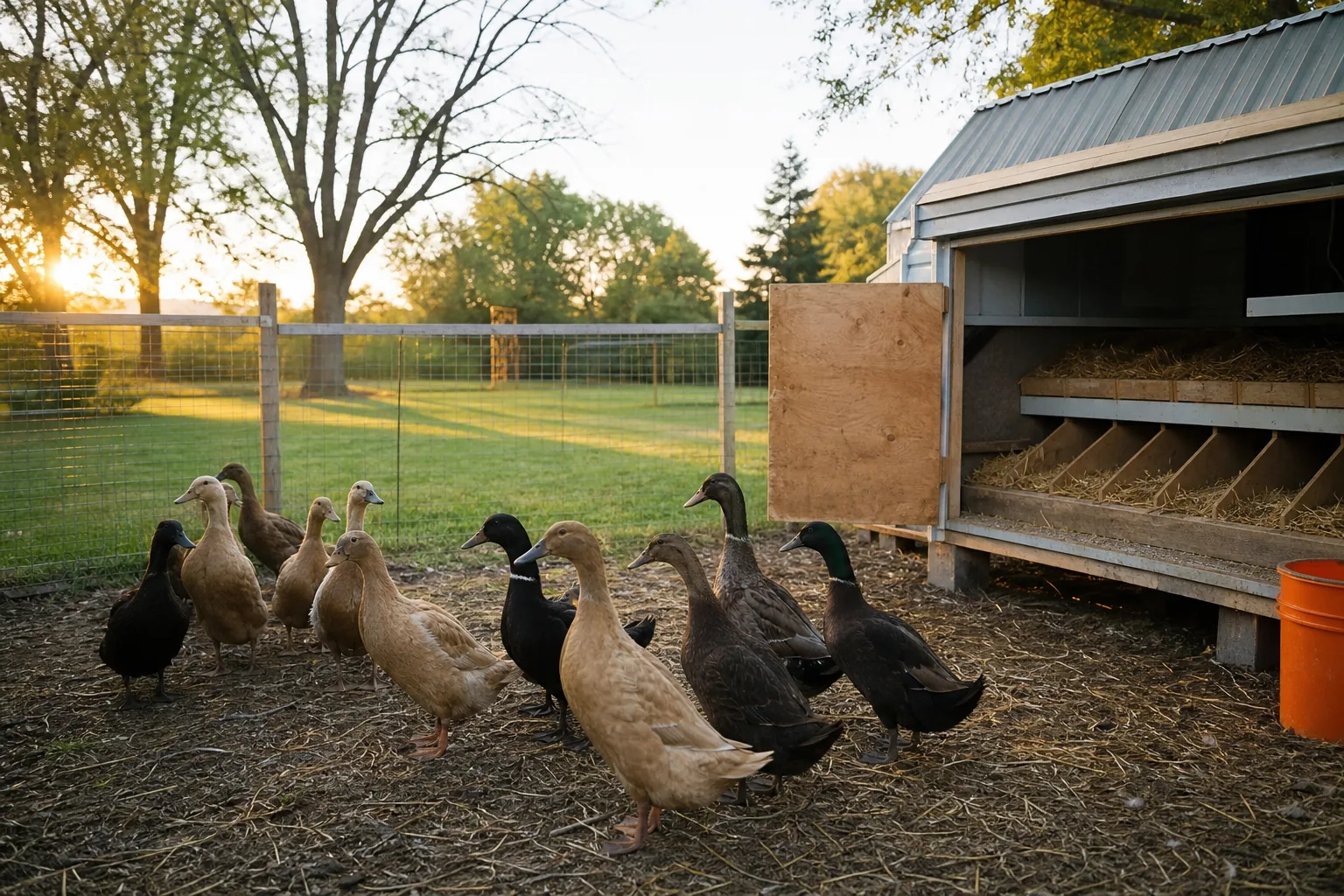
Use your own records once the flock starts laying. The signs that a duck is laying eggs can help you sort a true production issue from a bird that simply hasn’t reached lay.
Egg numbers are estimates, not a contract. Feed quality, daylight, stress, age, health, and the duck’s line all affect the count.
For a small flock, I’d choose Khaki Campbell Ducks when output comes first and a calmer dual-purpose breed when daily handling matters more.
Step 3: Pick meat and dual-purpose ducks by finished size
For meat, start with the finished bird you can feed, move, pluck, and process. The biggest duck isn’t always the best fit for a backyard homestead.
Pekin Grimaud Hybrid Ducks weigh about 10.125 pounds and produce 175 eggs per year. Their primary use is meat. Jumbo Pekin Ducks reach about 11.25 pounds, with roughly 157.5 eggs per year. Both make sense when your freezer plan matters more than a small feed bill.
Muscovy Ducks are listed at about 9.75 pounds and 125 eggs per year. They’re a separate species from mallard-derived domestic ducks. Their fence plan needs more thought.
For a dual-purpose flock, Buff Ducks and Cayuga Ducks each sit near 155 eggs per year. Buff Ducks weigh about 5.625 pounds. Cayuga Ducks weigh about 5.375 pounds. Rouen Ducks weigh more, at about 6.125 pounds, and reach about 160 eggs per year.
| Use case | Breed to consider | Listed eggs per year | Listed adult weight | Watch point |
|---|---|---|---|---|
| Egg-first flock | Golden 300 Hybrid Layer Ducks | 245 | 5.125 lb | Temperament is variable |
| Light egg flock | Khaki Campbell Ducks | 202.5 | 4 lb | |
| Meat-first flock | Pekin Grimaud Hybrid Ducks | 175 | 10.125 lb | Plan for processing space |
| Large meat birds | Jumbo Pekin Ducks | 157.5 | 11.25 lb | More body means more feed |
| Balanced flock | Buff Ducks | 155 | 5.625 lb | Threatened status is listed |
| Natural brooding | Muscovy Ducks | 125 | 9.75 lb | They can fly |
Small-farm meat production adds one hard question: who will process the birds? Waterfowl processors can be difficult to find, so confirm that service before buying meat ducklings.
Before ordering, ask the processor about bird size, age, appointment dates, and whether the facility handles waterfowl. If you plan to process at home, check your equipment against the final body size. A setup that works for chickens may feel undersized with a 10-pound duck.
Pro Tip: If you’ll keep females for eggs and butcher surplus males, choose a medium dual-purpose breed before moving to a heavy meat hybrid.
Step 4: Match the breed to your water, fencing, and processing setup
The best ducks for backyard space still need a dry night shelter, clean drinking water, and a plan for mud. You don’t need a pond, but you do need to control where water spills.
A hard plastic tub or livestock trough can work for bathing. Put it away from the coop door so the main traffic lane doesn’t turn into a deep mud pit. Drain or refresh it on a schedule that matches flock size. Ducks foul small pools fast.
Build the night shelter at ground level. Ducks don’t use roost bars like chickens. Focus on a dry floor, good airflow, and predator protection around the base. Raccoons can reach through weak mesh, while smaller predators may squeeze through gaps you would ignore for larger livestock.
Fencing needs vary by breed. Pekin and Rouen Ducks don’t fly well, so a secure perimeter may be enough. Muscovy Ducks can fly, especially females, and may need taller fencing or wing management. Call Ducks can also fly well despite their small size.
Temperament changes the handling plan. Khaki Campbell Ducks and Golden 300 Hybrid Layer Ducks may need calm, steady movement during checks. Buff Ducks, Cayuga Ducks, and Muscovy Ducks can suit a keeper who values a less frantic flock, though every line and bird differs.
Keep young birds out of swim water during the first weeks unless you can prevent chilling and exhaustion. Keep clean water available, provide safe heat, and allow enough feeder space while ducklings grow.
Plan manure flow before the first delivery. Place the shelter where you can move bedding out without crossing the garden. If you already manage chickens, don’t assume the same run will stay dry once ducks arrive.
For feed setup, raise the feeder as birds grow and keep water close enough for safe eating. Our notes on placing and sizing poultry feeders apply to the basic workflow, though ducks need equipment that suits their bills and wet habits.
Step 5: Find available ducklings and confirm local requirements before ordering
Availability can decide the breed before temperament or egg totals do. Search locally first, then compare hatchery dates against your brooder, feed plan, and processing calendar.
Use The Easy Homestead to search for hatcheries and poultry suppliers by county or ZIP code. You can also look for feed suppliers and farm services in the same search, which helps when a breed requires a special feed source or a nearby processor.
Ask each supplier five questions:
- Which breeds are available on the next hatch date?
- Are the birds purebred, hybrid, or mixed?
- How are the ducklings sexed, if sex matters to your plan?
- What is the minimum order?
- Can you provide care details for this line?
Hatchery availability changes throughout the year, and not every breed will be available in your area or on your preferred date. Local pickup can also change the shipping risk and the timing of your brooder setup.
Confirm local rules before you pay. Some towns limit poultry numbers or restrict livestock in residential areas. Meat sales may also require state inspection or USDA inspection, depending on what you sell and where you sell it.
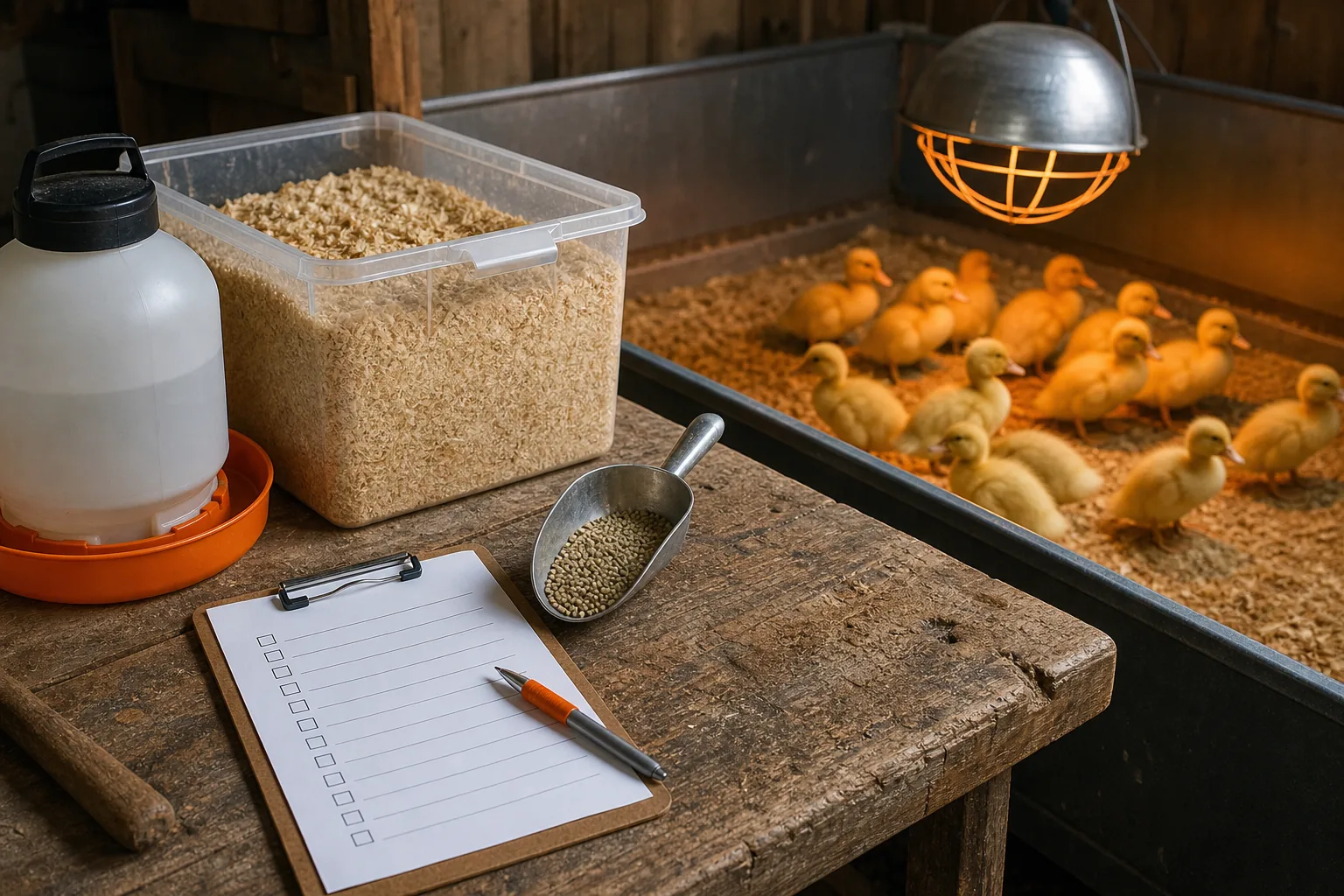
Prepare the brooder before arrival. Clean the space, set safe heat, place feed and water within reach, and keep the floor dry. Ducklings grow fast, so measure the brooder by the next stage, not by the size of the first box.
Keep a backup plan. If the preferred hatchery has no Khaki Campbell Ducks, you might switch to Golden 300 Hybrid Layer Ducks or a dual-purpose breed. If no processor will take Jumbo Pekin Ducks, a smaller meat bird may fit your system better.
That is the point of using a local directory. The Easy Homestead can help you find the person or supplier who fills the gap after the breed decision.
FAQ: Best ducks for backyard flocks
What are the best ducks for backyard eggs?
Khaki Campbell Ducks and Golden 300 Hybrid Layer Ducks are strong choices for backyard eggs. They produce about 202.5 and 245 eggs per year. Khaki Campbells are smaller. Golden 300s produce more.
What is the best duck breed for meat?
Pekin Grimaud Hybrid Ducks are a strong meat choice because an adult weight near 10.125 pounds and meat as their primary use. Jumbo Pekin Ducks are larger. Choose based on your feed budget, freezer space, and access to a processor that accepts waterfowl.
Do backyard ducks need a pond?
Backyard ducks don’t need a pond, but they do need clean drinking water and enough water to keep their bills and feathers clean. A sturdy trough or pool can work. Put it where spilled water won’t soak the sleeping shelter or turn the main gate into a mud track.
Which ducks are best for a small yard?
Call Ducks are small, weighing about 1.5 pounds, but they produce only about 37.5 eggs per year. Runner Ducks or Khaki Campbell Ducks may give a better output per bird, provided you can manage their activity and protect them from predators.
Where can I find ducklings near me?
You can find ducklings near you by searching hatcheries and poultry suppliers on The Easy Homestead by ZIP code or county. Ask about breed, hatch date, minimum order, and pickup or shipping. Confirm local poultry rules before ordering, especially if you plan to sell eggs or meat.
Conclusion
For most working homesteads, choose a breed by purpose first. Pick Khaki Campbell Ducks or Golden 300 Hybrid Layer Ducks for high egg output, Pekin hybrids for meat, or Buff Ducks and Cayuga Ducks for a balanced flock. Then search The Easy Homestead for a local hatchery, feed supplier, or processor that can support the choice you make.