Your hens’ feed is the single biggest lever you have on egg production. Get it right and a five-year-old hen keeps laying. Get it wrong and even a young pullet taps out early. Here are seven solid options, from a local-directory shortcut to homemade whole-grain mixes, ranked by what actually works for a working flock.
1. The Easy Homestead (Our Top Pick)
Before you settle on a bag off the shelf at a big-box store, it’s worth knowing what’s available within 20 miles of your ZIP code. The Easy Homestead is a local directory built specifically for working homesteaders. Search by ZIP or county and you’ll find verified listings for feed and seed suppliers that don’t show up anywhere else, including local mills that mix their own layer rations, often at lower cost than national brands.
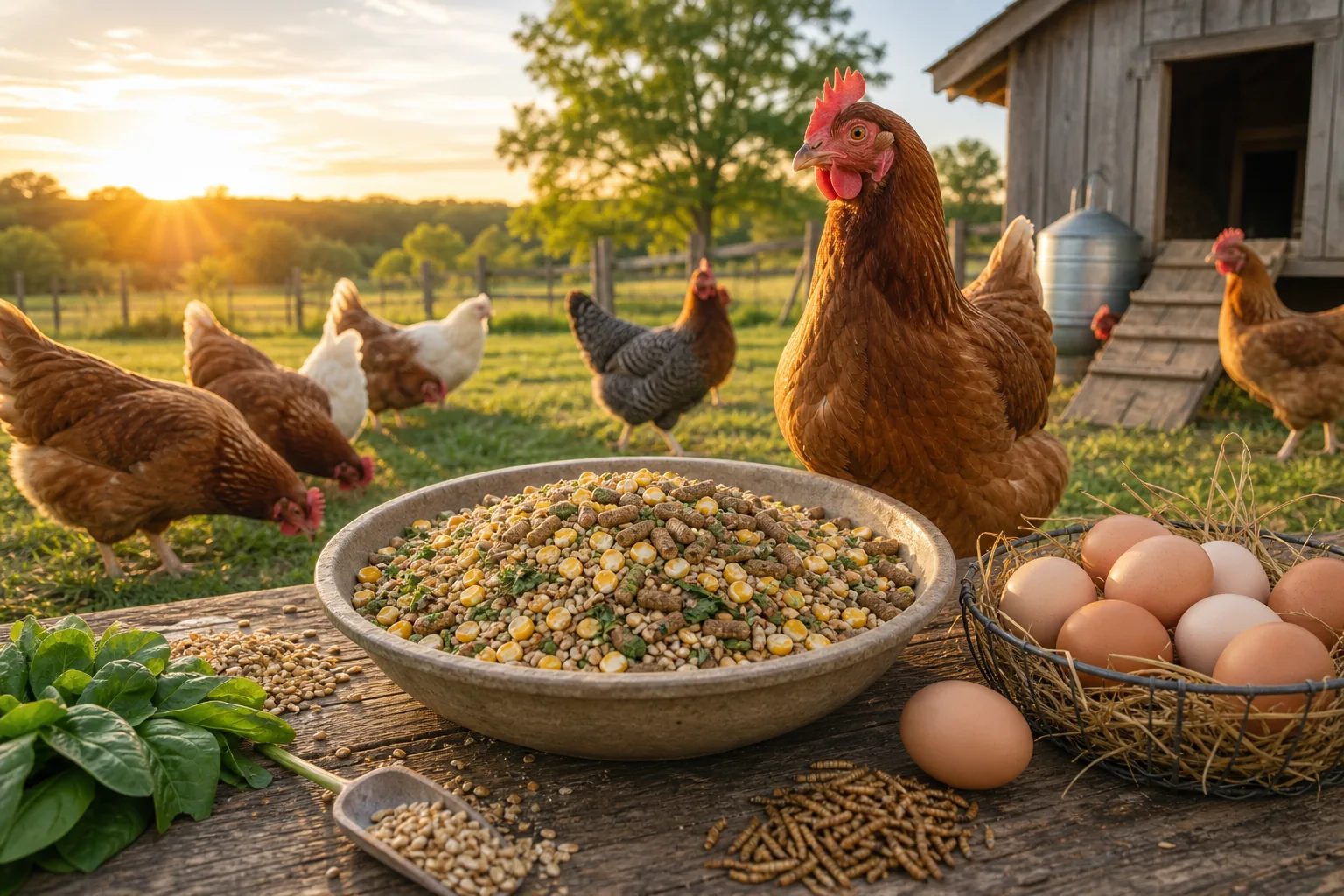
This matters because local feed mills can actually tell you the protein percentage, the calcium level, and whether the grain is non-GMO or organic. Those are the numbers that drive eggshell strength and consistent production. A verified listing on The Easy Homestead also comes with real reviews from other flock owners in your area, so you’re not flying blind on a supplier you’ve never used.
If you’ve ever spent three weeks in a Facebook thread trying to find out who has organic layer pellets in stock locally, you know exactly what problem this solves. The directory covers feed and seed as a launch category, which means it’s the part of the platform that gets the most attention right now.
The caveat: coverage varies by region. If your county is rural and listings are thin, you may need to pair the directory search with a call to your local farm co-op. But it’s the fastest first stop before you default to a national brand.
2. Purina® Layena®+Omega-3 16% Layer Hen Feed, enriched eggs without pasture access
If your hens don’t have real pasture access, their eggs are going to be low in omega-3s by default. Purina® Layena®+Omega-3 16% Layer Hen Feed addresses that directly, formulated to support improved omega-3 content in eggs for confined or limited-range flocks.
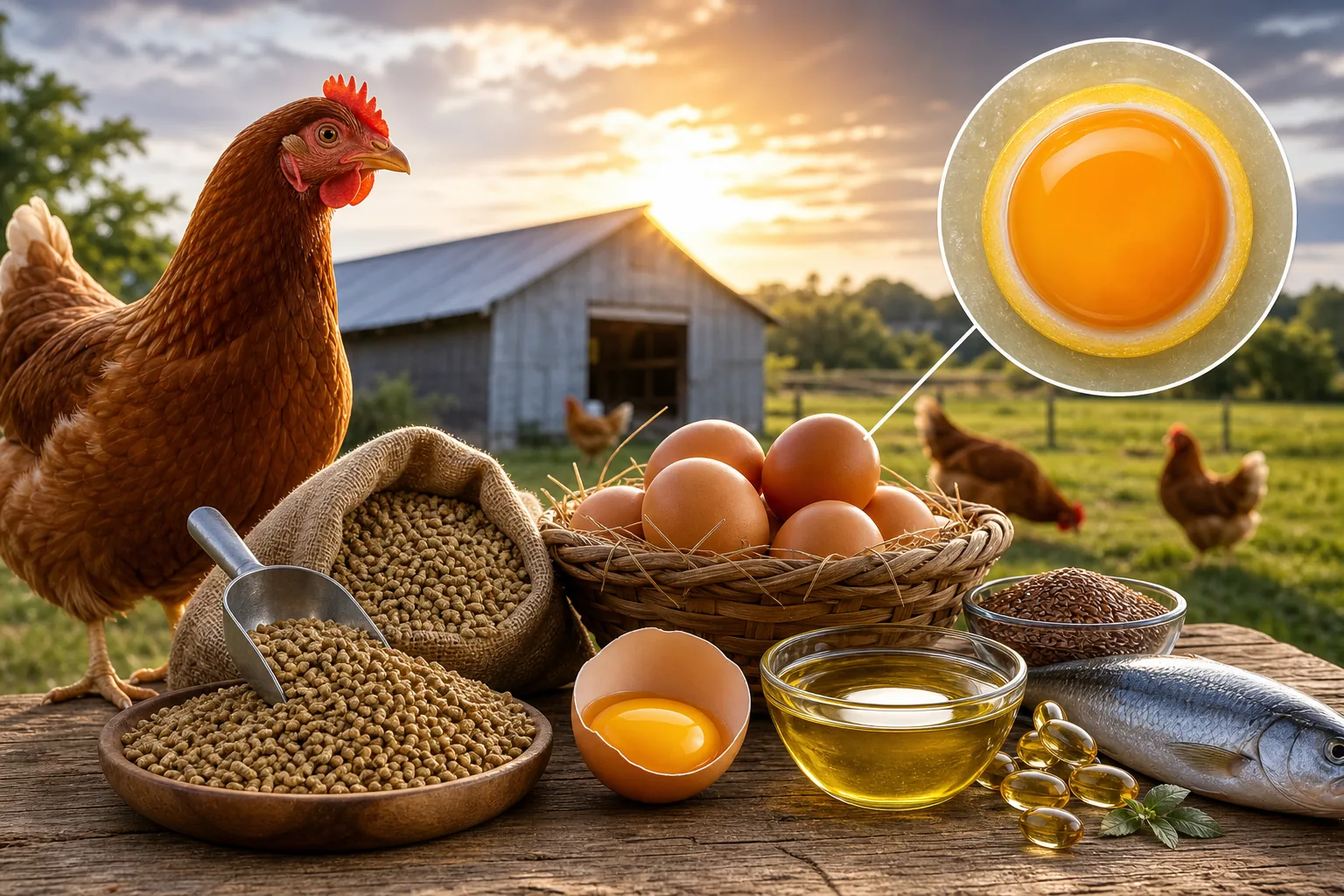
The formula runs at 16% protein, which sits right at the industry average. It includes Purina’s Oyster Strong System, a blend of oyster shell, vitamin D, and manganese designed to keep calcium available around the clock during shell formation. That’s the piece most commercial layer feeds quietly skip on the label. It also contains live probiotics, prebiotics, and plant extracts including paprika, fenugreek, and yucca.
One honest limitation: this feed is designed to be fed as 90% or more of the diet. If your hens free-range heavily and eat a lot of forage, you’re not going to see the full omega-3 benefit because the formula assumes it’s the primary input. For confined or limited-range flocks, it performs well. For heavy foragers, it may be more than you need to pay for.
3. Purina® Organic Layer Pellets or Crumbles, non-GMO for clean-label flocks
If organic certification is a requirement for your operation, this is the Purina option to reach for. Purina® Organic Layer Pellets or Crumbles are certified organic and non-GMO, available in both forms depending on flock preference. Protein sits at 16%, which is consistent with every organic-certified formula in the current market. Our research found that all four organic-certified layer feeds cluster at 16% protein. The higher-protein options (18% and above) don’t carry organic certification, so if you need both, you won’t find them in a single bag right now.
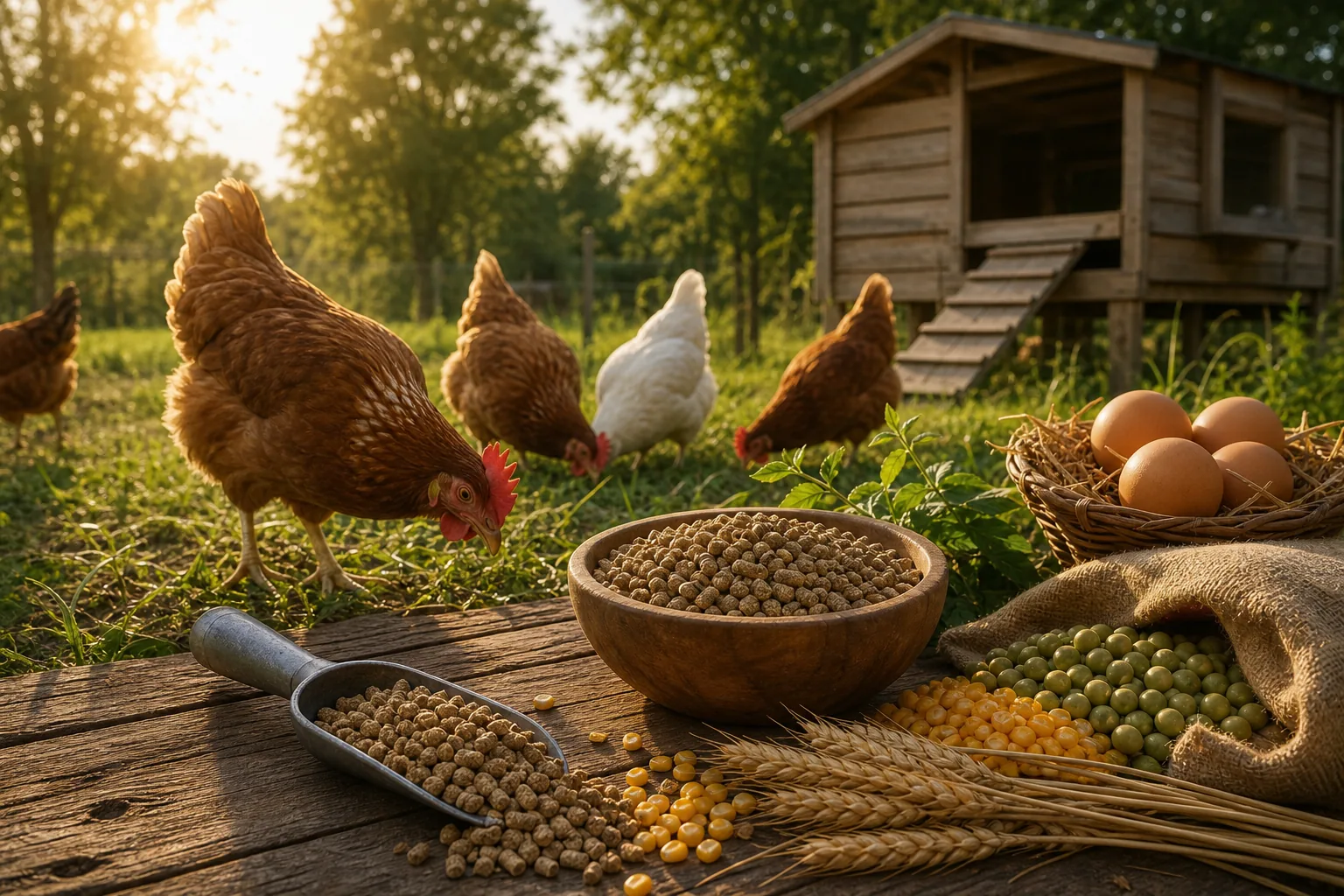
The pellet and crumble format split is worth paying attention to. Crumbles work better for smaller or younger hens who haven’t adjusted to pellets yet. Pellets tend to reduce waste because hens can’t sort through them the way they can with crumbles. A well-designed chicken feeder with a lip or trough style cuts waste further, which matters when you’re paying the premium that organic feed commands.
What you’re paying for here is traceability and certification, not extra protein. If you sell eggs at a farmers market and your customers ask about feed, having an organic label on the bag is a real answer. If you’re feeding a personal flock with no market pressure, a conventional 16% ration from a local mill may give you the same production numbers for less money.
Pro Tip: Switching from crumbles to pellets? Purina recommends a 7-10 day transition: sprinkle a handful of pellets on top of the existing feed on day one, then increase the ratio daily until the feeder holds only pellets. Sudden switches can drop intake for a few days and temporarily reduce egg production.
4. Purina® Farm to Flock® 18% Layer Hen Food, higher protein for heavy producers
Most layer feed sits at 16% protein. That is essentially the bare minimum to keep a hen alive and producing. Purina® Farm to Flock® 18% Layer Hen Food pushes that to 18%, which gives heavier-producing breeds and molting hens more room to work with. When a hen is growing new feathers during a molt, her body redirects protein away from egg production. An 18% ration keeps enough protein in the system that production doesn’t fall off a cliff.
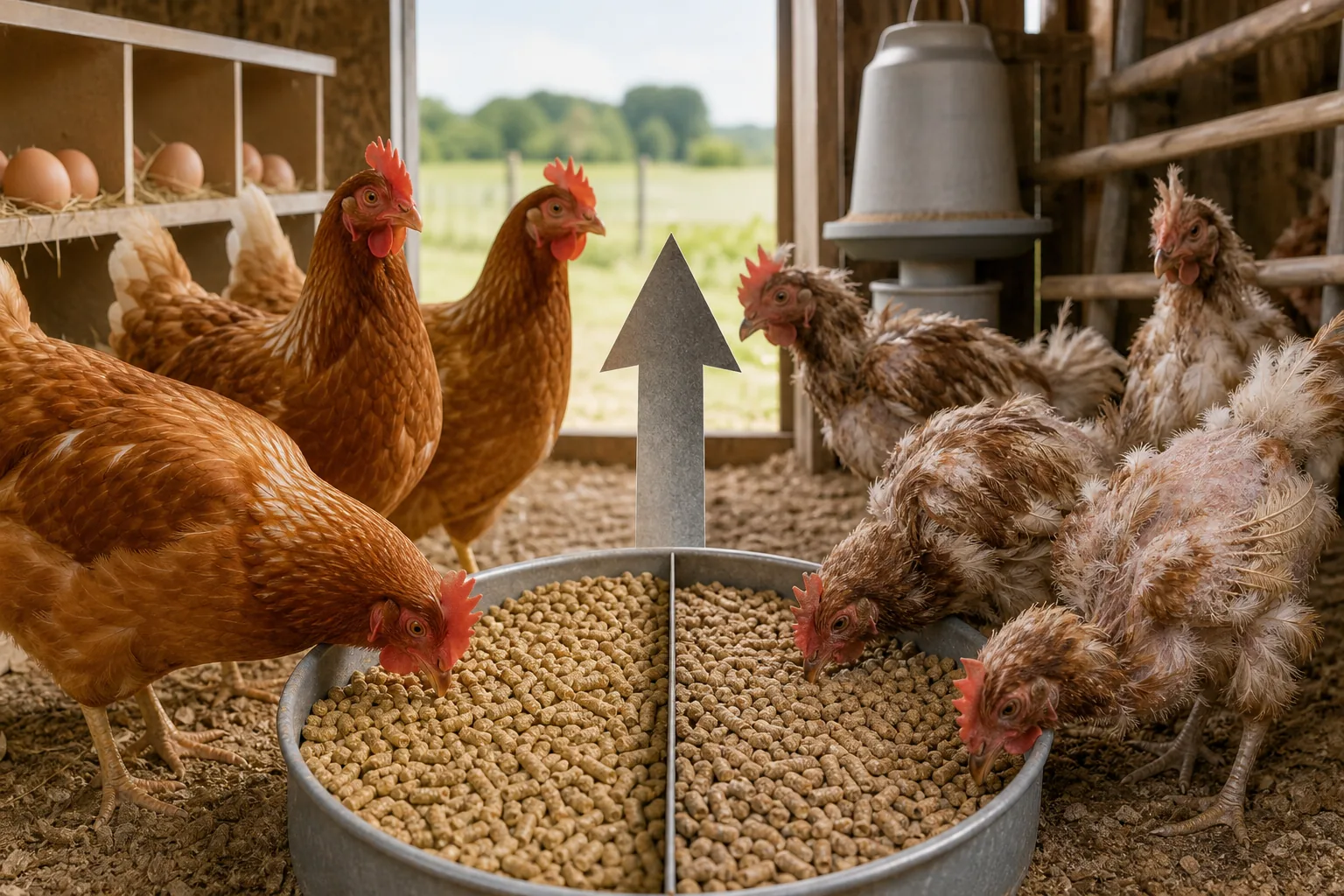
This is also the right feed to reach for if your flock is dealing with stress: new birds introduced, a predator scare, or a heat wave. Stress draws on protein reserves fast. The extra margin in an 18% formula means the hen doesn’t have to choose between feather maintenance and egg output.
The trade-off is that Farm to Flock® 18% carries no organic certification. If your clean-label priority is firm, this isn’t the option. But for a production-focused flock where you want consistent output through the molt and into winter, the higher protein justifies the switch. Pair it with free-choice oyster shell on the side, since calcium content is not listed on the product label and eggshell quality still depends on adequate calcium intake.
One note for hens that aren’t actively laying: very high calcium from layer feed during a non-laying period can stress the kidneys over time. If your whole flock goes through a hard molt simultaneously, some keepers temporarily switch to an all-flock 18-20% feed and offer oyster shell free-choice to active layers only.
5. IFA 16% Layer Feed , local co-op alternative to big brands
IFA is a regional farm cooperative, and their layer feed is a solid example of what local co-op sourcing looks like at a usable price point. For homesteaders in areas where IFA operates, this feed is often available in bulk, which brings the per-pound cost down significantly compared to branded bags at a national chain.
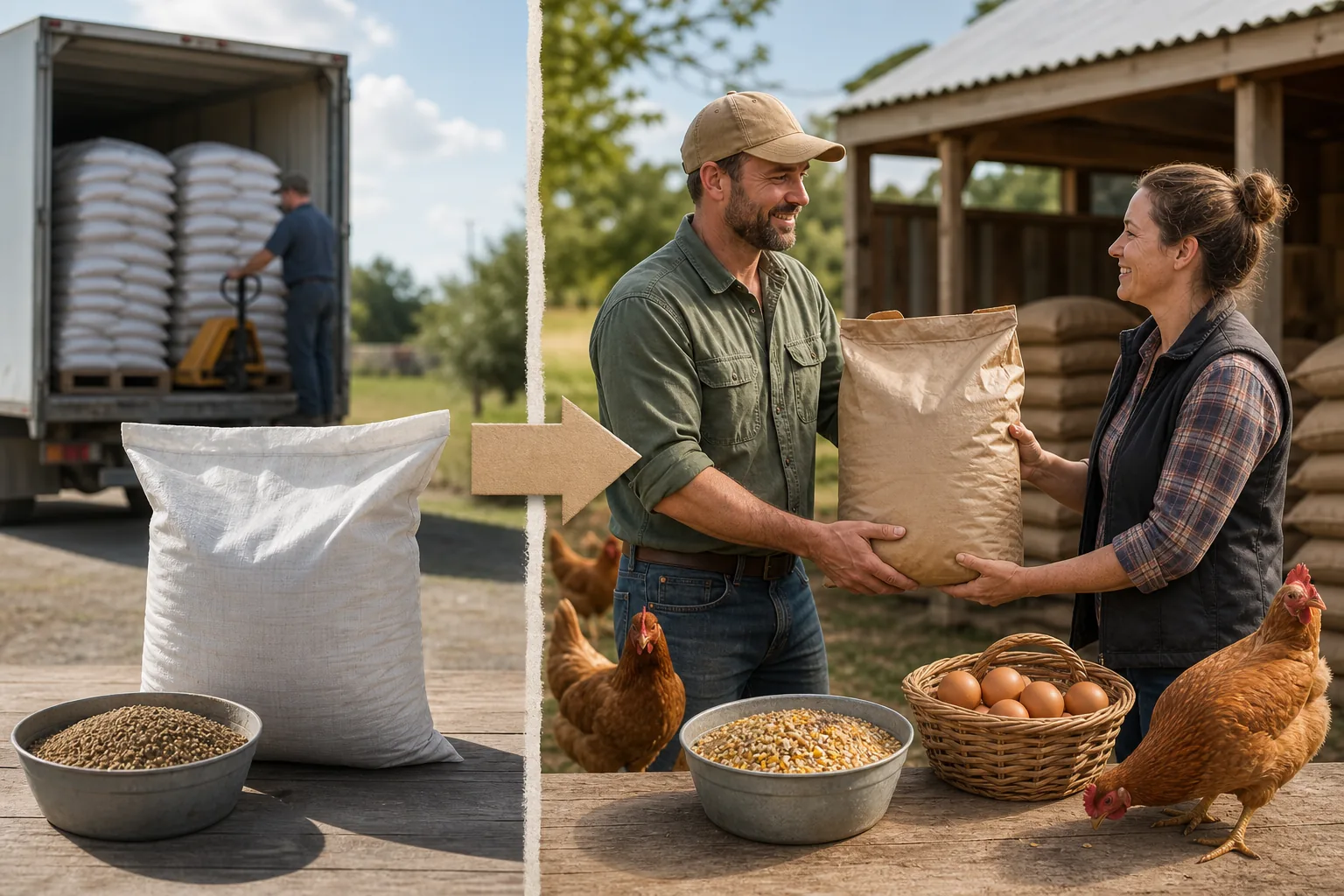
The protein level is formulated specifically for layers. What a co-op feed like IFA offers that a national brand can’t is a direct relationship with the source. You can ask your local IFA rep what’s in the mix, where the grain comes from, and whether a non-GMO option is available. That conversation is impossible at a big-box checkout.
The limitation is obvious: IFA isn’t everywhere. If you’re not in their service area, this option doesn’t apply. But the principle does. Local co-op and mill feeds with verified protein levels and known sourcing are often the best value for a working flock. The Easy Homestead directory is one of the few places you can actually search for feed and seed suppliers by county, which makes finding your local equivalent much faster than a Facebook thread ever will.
Check whether your local IFA or equivalent co-op carries medicated feed separately from layer feed. Medicated starter is fine for chicks, but laying hens should be on a non-medicated layer formula once they hit 18-20 weeks, when egg production typically begins.
6. Homemade whole-grain mix , oats, corn, sunflower seeds, and alfalfa
Several experienced flock owners have cut their feed cost in half by mixing their own whole-grain ration. A common base is one part oats, one part corn, and a half part black oil sunflower seeds. Sunflower seeds are small but high in fat and oil, which supports feather quality and cold-weather energy needs. Oats sprout easily if some land on the ground, which gives hens something to peck at. Alfalfa adds protein and carotenoids that deepen yolk color.
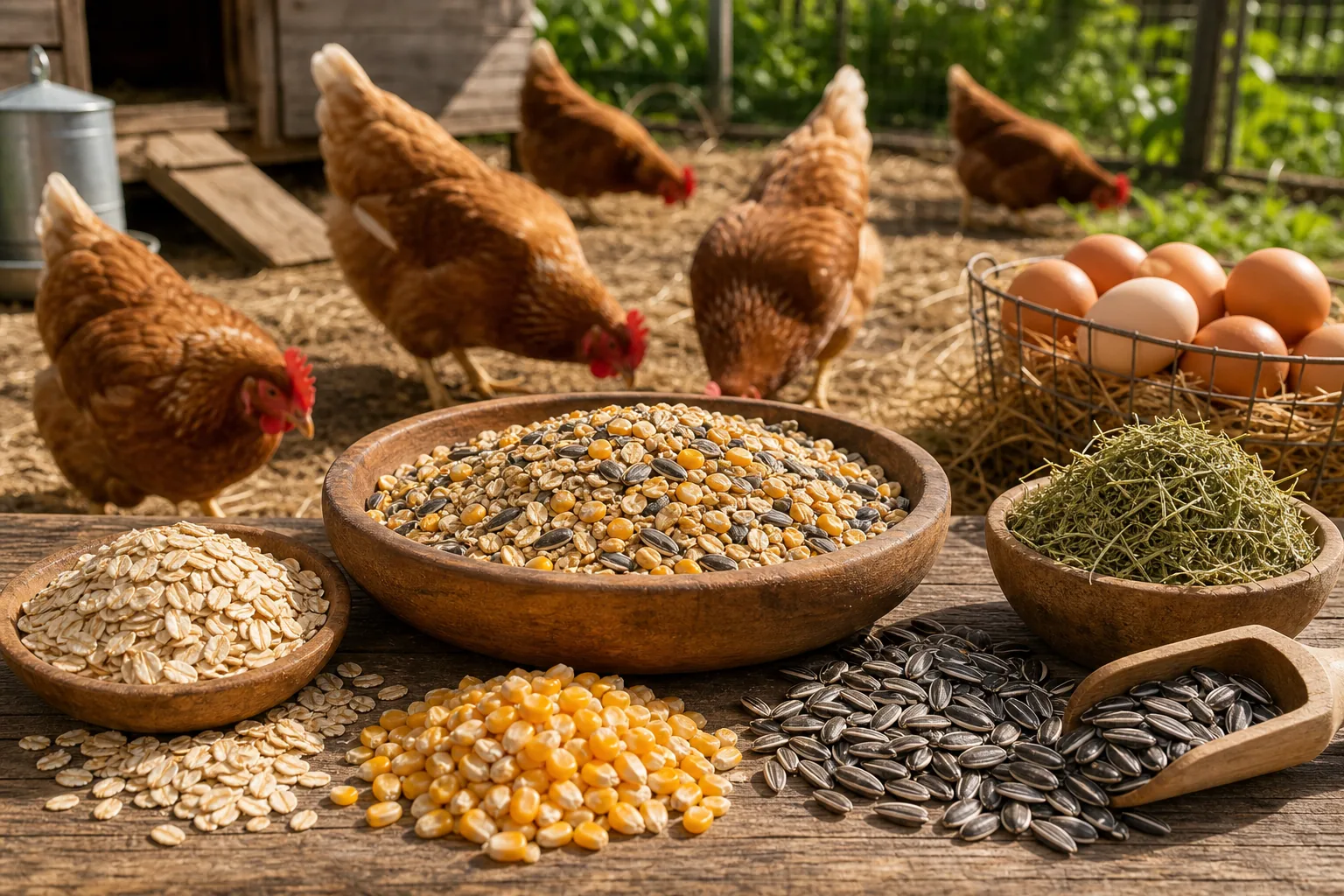
Manufactured complete feeds are formulated to provide optimal nutrition for each production stage. A homemade mix can match or exceed that, but it requires attention to protein balance. Straight grain mixes typically run 10-12% protein. Adding a protein source, whether it’s dried peas, fish meal, or a commercial protein supplement, is necessary to hit the 16-18% range that supports consistent egg production.
The other thing homemade mixes can’t do on their own is supply adequate calcium. Oyster shell offered free-choice alongside any whole-grain mix is not optional. Hens forming eggshells pull significant calcium daily. Without a separate calcium source, you’ll see thin shells, soft shells, or shell-less eggs within a few weeks. Insoluble grit is also necessary when feeding whole grains so the gizzard can grind them down properly.
Some keepers ferment their whole-grain mix for 48-72 hours before feeding. Fermentation softens the grain, increases nutrient availability, and supports gut health. It takes more daily management but the hens tend to eat less per bird because the feed is more digestible. If you want to try it, our guide to fermented chicken feed covers the rotation system in detail.
7. High-protein treat supplements , mealworms and black-soldier-fly larvae
These aren’t a complete feed. But they’re the closest thing to a superfood supplement for laying hens, and they work. Black soldier fly larvae and dried mealworms are dense in protein and fat. When production drops in winter or during a molt, adding a small handful per bird per day can help bridge the protein gap without switching your entire feed program.
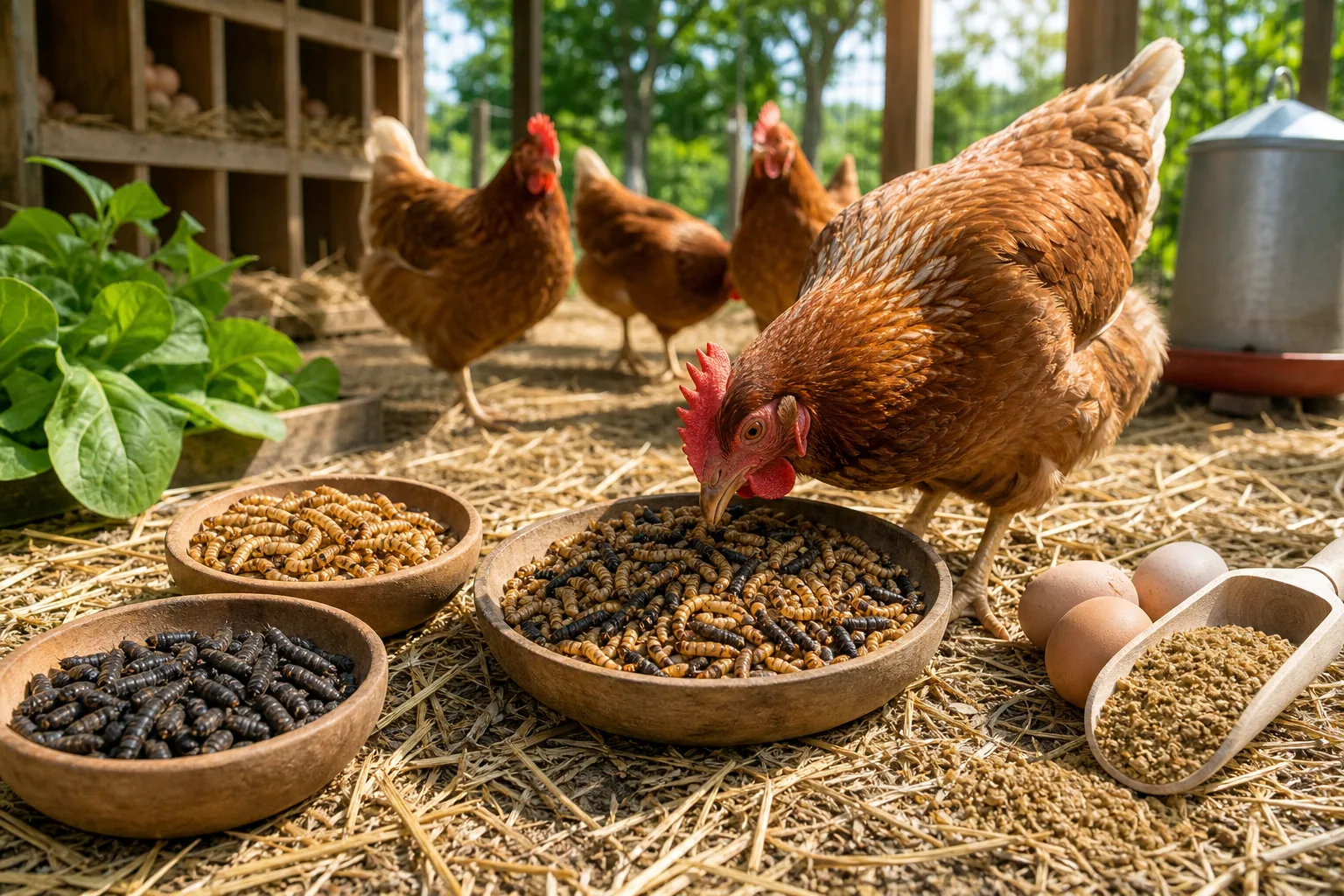
Black soldier fly larvae are especially useful because they contain a calcium-to-phosphorus ratio that’s closer to what hens need than most grain-based proteins. A self-maintaining worm bin using food scraps as inputs can produce larvae daily with almost no ongoing cost. The larvae climb ramps inside the bin and drop into collection compartments when they’re ready, making daily harvest low-effort.
Dried mealworms are easier to source and store. Most feed stores and online suppliers carry them. The key is quantity control. Treats, including high-protein treats, should stay under 10% of total daily intake. More than that and you start diluting the balanced nutrition in the base feed, which can actually work against you.
For hens that are just starting to lay, a small protein boost from mealworms during the transition period can support the body’s increased demand without overloading the digestive system. Keep the base layer feed as the foundation and use the larvae or mealworms as a daily top-up rather than a replacement.
Key Takeaway: High-protein treats like black soldier fly larvae work best as a supplement during molts or winter production dips, not as a year-round feed replacement. Keep them under 10% of daily intake.
What to look for when buying layer feed
One thing stands out when you compare layer feed labels side by side: calcium content is almost never listed. Our research across 14 product entries found zero products with calcium data on the label. Yet calcium is the nutrient that directly determines eggshell strength. Layer feed should contain 3-4% calcium lines. If the label doesn’t show it, ask your supplier or plan to offer oyster shell free-choice regardless of what the bag claims.
| What to check | Target range | Why it matters | What to do if missing |
|---|---|---|---|
| Protein content | 16-18% | Supports egg production and feather maintenance | Switch to a higher-protein formula or add protein supplements |
| Calcium content | 3-4% | Eggshell formation; bone health | Offer oyster shell free-choice alongside feed |
| Form factor | Pellets, crumbles, or whole grain | Affects waste and flock preference | Match form to flock size and feeder type |
| Organic / non-GMO status | Certified if needed | Traceability and market labeling | Organic options stop at 16% protein currently |
| Target life stage | 18+ weeks / laying | Wrong stage = wrong nutrition profile | Never feed broiler or meat-bird starter to layers |
| Grit availability | Insoluble grit separate | Grinds whole grains in the gizzard | Supply separately if feeding whole grains or scratch |
The protein trade-off is real and worth naming plainly. Every organic-certified layer feed in the current market sits at 16% protein. The 18% and higher formulas carry no organic certification. If your flock needs both, you’re choosing one or the other right now. That gap may close over time, but it’s the situation today.
Where you buy matters as much as what you buy. Local mills and co-ops often have better pricing on bulk orders and can answer sourcing questions that a bag label can’t. If you haven’t mapped your local feed options yet, that’s worth doing before you default to whatever’s on the shelf at the closest farm supply chain.
Frequently asked questions
What protein percentage should layer feed have?
Layer feed should have 16-18% protein for consistent egg production. Most commercial layer feeds sit at 16%, which is adequate for typical production. During molts, high-stress periods, or with heavy-producing breeds, stepping up to 18% gives hens more nutritional margin. Protein below 16% is associated with reduced egg output and slower feather regrowth after molts.
Why do my hens need calcium on top of layer feed?
Calcium content is almost never listed on layer feed labels, even though eggshell formation requires roughly 2 grams of calcium per egg. Offering oyster shell in a separate free-choice feeder lets hens self-regulate. Hens that need more calcium will eat it. Hens that don’t, won’t. This is safer than relying on a feed that may or may not contain adequate calcium for your flock’s output level.
When should I switch pullets to layer feed?
Switch to layer feed at 18-20 weeks of age, or when you see the first egg, whichever comes first. Starting layer feed too early exposes young birds to high calcium levels before their kidneys are ready to process it. Before 18 weeks, keep pullets on a grower or developer feed with lower calcium and slightly lower protein than a full layer ration.
Can I mix homemade feed with commercial layer pellets?
Yes, and many experienced keepers do. The safest approach is to keep commercial layer pellets as at least 80-90% of the diet, then add whole grains, high-protein treats, or fermented feed as a supplement. Replacing more than that with homemade ingredients risks shortfalls in trace minerals and vitamins that commercial feeds supply through a premix. Oyster shell and insoluble grit remain necessary regardless of the mix.
Is organic layer feed worth the extra cost?
It depends on why you want it. If you sell eggs at a farmers market and your buyers care about organic feed, the premium is justified because it’s a real selling point. For a personal flock, a non-GMO or conventional feed from a local mill at the same 16% protein level will produce nearly identical eggs. The organic certification on feed doesn’t change the egg’s nutrition in ways that are measurable in a home flock.
What’s the difference between layer feed and all-flock feed?
Layer feed is formulated for actively laying hens, typically 16% protein with added calcium. All-flock feed runs 18-20% protein with little or no added calcium, designed for mixed flocks of different ages or species. If you run an all-flock feed, laying hens need free-choice oyster shell to meet their calcium needs. All-flock is often the better choice if you have roosters, pullets, or non-laying birds eating from the same feeder.
What to do next
For most working flocks, a 16-18% layer feed from a verified local supplier, paired with free-choice oyster shell and occasional high-protein treats, covers everything your hens need to keep producing well. Start with your local options first. Find a verified feed and seed supplier near you on The Easy Homestead before you default to a national brand, and you may find better pricing and fresher stock than anything on a big-box shelf.