Most broiler feeds look different on the bag, but their protein numbers often match. In the product data reviewed for 2026, six of seven feeds list 22% protein, while one lists 19%.
That makes the best feed for meat chickens a question of stage, feed form, ingredients, and supply. Use these steps to compare three strong options and set up a feed plan that fits your flock.
1. The Easy Homestead
The first step is finding a supplier that can keep your chosen feed in stock. The Easy Homestead helps working homesteaders search by ZIP code or county for feed and seed suppliers, hatcheries, poultry suppliers, processors, and other farm services.
That local search matters when you have chicks arriving soon and your usual feed store is out of broiler crumble. You can check nearby listings before driving across two counties or posting another question in a local group.
We built The Easy Homestead for that exact gap. Listings include business details, real reviews, and local search tools. The directory covers the supply chain around meat birds, not only feed bags. You may also need a hatchery, a mobile butcher, or a processor with space during your target harvest week.
Feed availability can change by region. A supplier near Knoxville may stock a different line than one in western Tennessee. Ask each supplier about the exact feed name, protein level, feed form, current stock, and expected restock date before you make the trip.
Keep a short backup list. If your flock eats one complete ration from hatch to market, a sudden stock gap can force a rushed switch. A staged plan can create the same problem when you need a starter or finisher at a set age.
We also suggest planning the processing side early. Your feed schedule only works if the birds have a firm harvest date. Use our guide to buying meat chickens when you need to line up birds, housing, and feed before the hatch date.
The directory won’t replace your own label check. It gives you a better place to start when local supply is the problem.
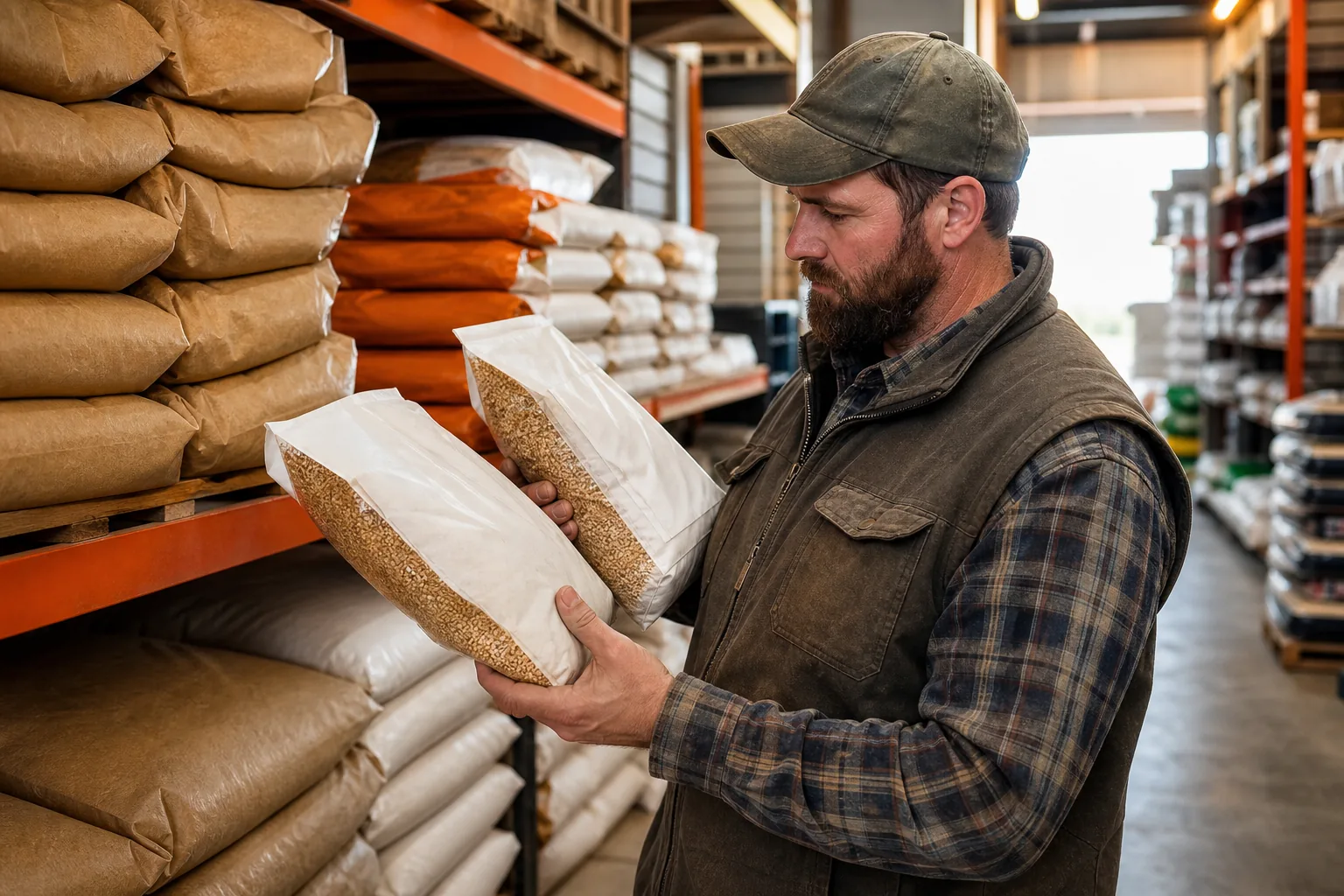
Step 2: Compare the three strongest feed options
The differences sit in the feed plan and added features, not in a higher protein number.
22% Start-To-Finish Meatbird Feed is an all-natural, complete feed. It can be fed as the sole ration from hatch until market weight and contains no animal protein products. It also includes probiotics.
Nutrena Country Feeds Meatbird 22% gives you the same protein target. It lists 22% protein, but the available details provide less information about stage and form. That gap matters if you need crumble for young chicks or want a product with a clearly stated feeding window.
NatureWise Meatbird Feed also lists 22% protein. Its features include essential oils from oregano, thyme, rosemary, and star anise. The feed also includes probiotics and yucca extract.
Read the feed details for 22% Start-To-Finish Meatbird Feed before you treat any feed as a single-ration plan. The label should agree with the intended use.
| Option | Protein | Stage information | Useful distinction | Watch point |
|---|---|---|---|---|
| Nutrena Country Feeds Meatbird 22% | 22% | Clear meatbird protein level | Confirm form and feeding stage before purchase | |
| 22% Start-To-Finish Meatbird Feed | 22% | Hatch to market weight | Complete feed with no animal protein products | Check local stock and the current label |
| NatureWise Meatbird Feed | 22% | Essential oils, probiotics, and yucca extract | Added features don’t mean higher protein |
Here is the key point. Feature labels do not change the protein figure listed here. The compared feeds all list 22% protein.
Special features may still affect your choice. Probiotics can appeal to growers who want a feed with added microbial cultures. Essential oils may matter to someone comparing ingredient panels. But you should treat those features as tie breakers after confirming the ration fits your birds.
Form is another hidden choice. The available details do not establish form for these options. If you prefer pellets or mash, ask before buying a full supply.
Protein is the first screen. It should not be the last one.
Step 3: Choose between starter-to-finish and staged feeding
The best feed for meat chickens depends on whether you want one complete ration or a phase plan. Your flock’s age, target weight, breed type, and harvest date should guide that choice.
A start-to-finish feed reduces handoffs. You buy one complete feed and keep it in front of the flock through the stated period. Some complete feeds cover the period from hatch until market weight when the label specifies that use.
This approach fits a small farmstead flock when you value supply control. It also helps when local stores carry one meatbird feed but don’t keep separate starter and finisher feeds. Still, you must follow the label. Do not assume every 22% product has the same stage coverage.
Staged feeding changes the ration as birds grow. A typical broiler program uses starter first, then grower, then finisher. Feed labels set the appropriate protein level for each stage.
That change can make sense for a longer grow-out or a heavier bird. It lets you match the ration to the bird’s current needs instead of using one feed for the whole cycle. The tradeoff is more label checks, more storage space, and a greater chance of being caught without the next stage.
Phase changes also need a date plan. Write the intended switch date on your flock record, then confirm the current feed label. Don’t switch early just because the birds look large. Their frame, growth rate, and final market goal all affect the right timing.
Feed costs deserve attention because waste adds up quickly across a flock. Track how much feed you buy and how much remains at each transition. Our meat chicken cost breakdown can help you include feed beside housing and processing costs.
Choose start to finish when supply and fewer transitions matter most. Choose staged feeding when you have reliable access to each ration and a clear target weight.
Step 4: Check the label before you buy
A feed label tells you more than the large protein number on the front. Check the guaranteed analysis, intended bird type, stage, form, and any medication statement before you load the bag.
Start with the words “complete feed” if you want the ration to supply the flock’s main nutrition. A complete feed is formulated to stand on its own when used as directed. Scratch grain, scraps, and treats can dilute that balance if they become a large part of the diet.
Next, confirm crude protein. The reviewed meatbird choices cluster at 22%, so a premium claim alone should not persuade you to pay more. If a feed lists 19%, confirm that it is meant for the stage you plan to use.
Look for a clear stage statement. Useful wording may say “from hatch to finish,” “starter,” “grower,” or “finisher.” If the bag leaves the stage unclear, ask the retailer or maker before purchase.
Check the feed form as well. Young chicks often manage crumble better than large pellets. Older birds may handle other forms, but the right choice depends on the product and your flock. Do not guess from the bag shape.
The all-natural complete feed contains no animal protein products and includes probiotics.
NatureWise lists essential oils, probiotics, and yucca extract among its added features. Those details may help you compare two feeds with the same protein number, but they do not replace the guaranteed analysis.
A broiler nutrition resource notes that feeding plans should match the target market and that fast-growing birds need careful nutrient control. That is a useful reminder for anyone raising a heavier bird or using a slower-growing strain.
- Confirm the feed is for meat birds, not laying hens.
- Write down the crude protein level.
- Find the stage or age range.
- Check whether the feed is complete.
- Note the form, such as crumble or pellet.
- Read medication and withdrawal directions.
- Record the lot date and keep the label for your flock notes.
Take a photo of the label before you leave the store. That gives you a record when you compare suppliers or need to repeat the order.
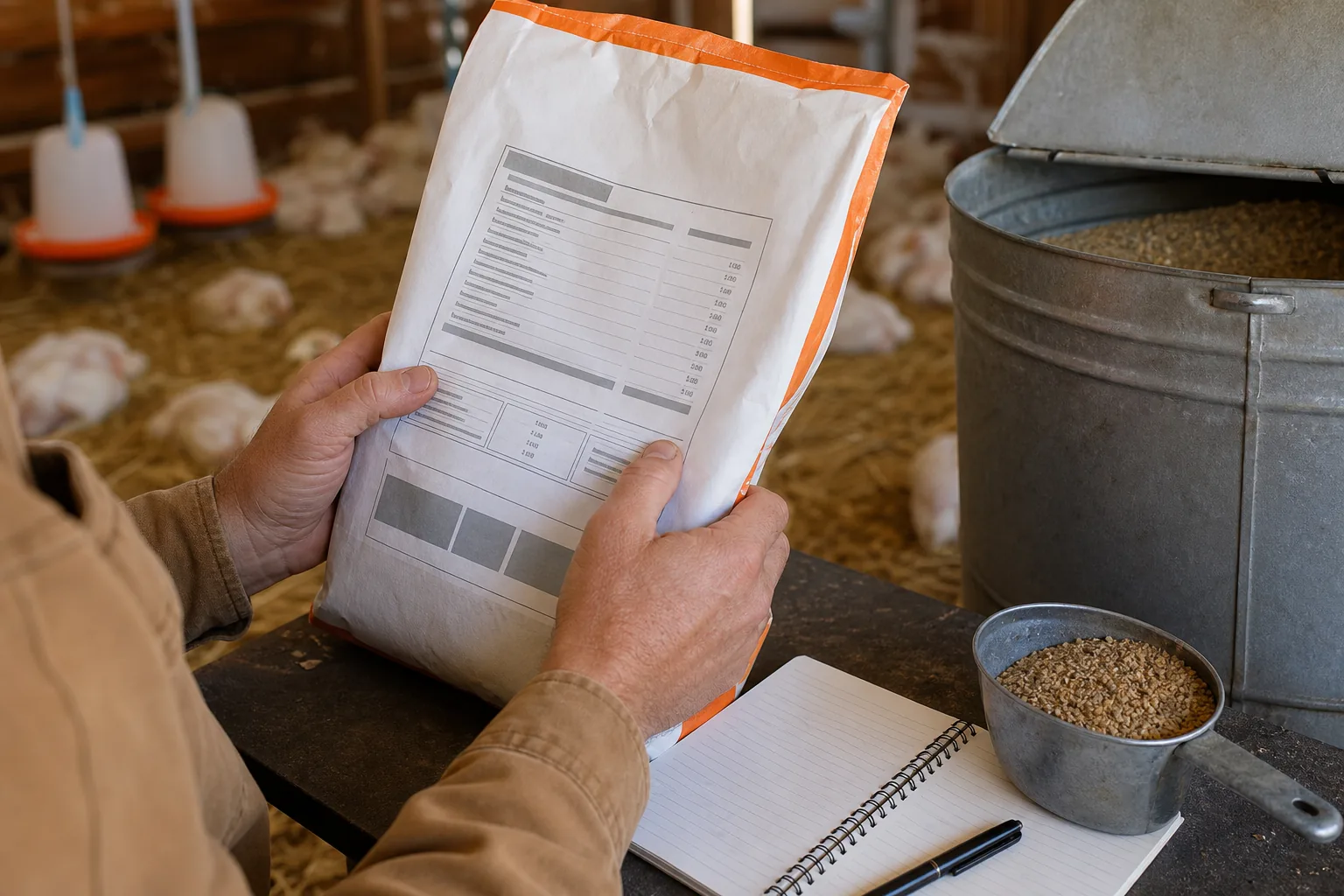
Step 5: Set up feeding and find a reliable local supplier
Good feed can fail as a plan if birds can’t reach it, water runs out, or the bag gets damp. Set up the feeding area before the chicks arrive.
Place the feeder where every bird can reach it without crowding. Raise it as the birds grow so they don’t rake feed onto the ground. Remove wet or fouled feed instead of mixing it into the clean supply.
Keep clean water available beside the feed. A bird that can’t drink may eat less, and a dirty drinker can spread problems through the flock. Check water at each morning and evening chore, with an extra look during hot weather.
Store unopened feed in a dry, cool place away from rodents. Use a sealed bin after opening the bag, and write the purchase date on the lid. Don’t combine old feed with a new bag if the old feed smells stale or shows mold.
Plan for the whole feed run. Count the birds, estimate the harvest window, and ask the supplier how much stock they can hold. You don’t need an exact forecast to avoid a last-minute scramble. You do need a backup store and a plan for a feed change.
When you search locally, ask these questions:
- Do you carry meatbird feed at the protein level on my list?
- Is it crumble, pellet, or another form?
- Does the maker state a starter, grower, finisher, or all-stage use?
- Can you reserve bags for a planned pickup?
- When will the next shipment arrive if stock runs out?
The Easy Homestead helps you find feed and seed suppliers by county or ZIP code. You can compare local options before the flock arrives, then keep the listing as part of your farm records. Reviews and listing details won’t replace a call or message to confirm stock, but they can cut the search time.
Feed supply and processing supply belong on the same calendar. If your processor is booked for the week you planned, holding birds longer changes your feed needs. We recommend checking both resources before you order chicks.
For a broader local supplier search, use The Easy Homestead’s directory rather than relying on one feed store or a single social media post. Find a verified feed and seed supplier near you, then confirm the exact product before pickup.
FAQ
What protein level is best for meat chickens?
A 21% to 22% protein starter ration is a common target for young broilers, and the reviewed commercial options mostly list 22%. Older birds may move to a lower-protein grower or finisher feed when the label calls for it. Match protein to the bird’s stage and market goal instead of choosing by marketing words alone.
Can meat chickens eat one feed from hatch to finish?
Yes, some complete meatbird feeds are made for use from hatch to market weight. The label must state that stage coverage. A product with 22% protein is not automatically a start-to-finish ration, so check the feeding directions before using one feed throughout the flock’s growth.
Is organic or all-natural feed better for broilers?
Organic or all-natural feed may fit your sourcing goals, but those claims don’t mean the feed has more protein. The reviewed all-stage feeds share 22% protein. Compare the ingredient rules, stage statement, form, price, and local supply before you decide that a premium claim earns the extra cost.
Should meat chickens get crumble or pellets?
Crumble is often a useful form for young meat chickens because small birds can pick it up with less trouble. The right form still depends on the product label and flock age.
How do I keep feed from being wasted?
Keep the feeder at a height that limits scratching, protect feed from rain, and refill it before birds run out. Check the ground below the feeder each day. If feed is scattered, adjust the height or reduce the fill level. A clean, dry feeder also helps you spot mold or spoilage early.
Conclusion
For most small farmstead flocks, start with a complete 22% meatbird feed whose stage and form are clearly stated. Choose the start-to-finish option when local supply is limited, or use staged feed when you can plan each transition. Before ordering chicks, search The Easy Homestead for a local supplier and confirm the exact feed is in stock.