If you want a flock that fills the egg basket without babysitting, breed choice does most of the heavy lifting. Some hens pump out 300 eggs a year. Others lay half that but shrug off a Tennessee cold snap or a brutal August. Here are the best laying hen breeds worth your money, who each one is actually for, and where to find verified hatchery stock near you.
1. The Easy Homestead (Our Top Pick for Finding Hatchery Stock)
Picking a breed is the fun part. Finding chicks of that breed near you, from a hatchery you can trust, is the part that turns into a three-week research project ending in a Facebook thread. The Easy Homestead fixes that. It’s a directory built for working homesteaders, with verified listings and real reviews, and you search by ZIP code or county.
So this isn’t a breed itself. It’s how you find the breed you land on below. We cover hatcheries and poultry suppliers as a launch category, alongside the stuff no other directory bothers with: meat processors, farriers, large-animal vets, feed and seed. The tagline says it plainly. Find who you need. Trust what you find.
Here’s why it earns the top spot. When you’ve decided on, say, an Australorp, you don’t want to drive two hours for straight-run birds of unknown sex. You want a hatchery within range that has pullets available, and you want to know other homesteaders had a good experience there. Our team verifies every listing, so you’re not gambling on a dead phone number. If you’re still narrowing down options, our full A-to-Z list of chicken breeds walks through dozens of types with lay rates and temperament notes.
The honest caveat: coverage depends on your region. Some counties have a long list of verified hatcheries already. Others are thin while we build out listings. If your area is light, tell us, and check back as it fills in. LocalHarvest and similar sites cover farms, but they skip the services and trades you actually call all year, and they don’t verify or carry reviews.
Browse hatcheries in your state on The Easy Homestead.
Pro Tip: Call your shortlisted hatchery in January or February. The best breeds sell out of spring pullets fast, and ordering early locks in the sex and quantity you want.
2. ISA Brown, the highest-output layer for the money
The ISA Brown is a hybrid bred for one job: laying eggs, and a lot of them. If your goal is filling cartons, this is the best laying hen breed dollar for dollar. A healthy ISA Brown lays around 300 large brown eggs a year, and she starts early, usually at 16 to 18 weeks.
Best for: anyone running an egg operation or feeding a big family who wants maximum output without fuss.
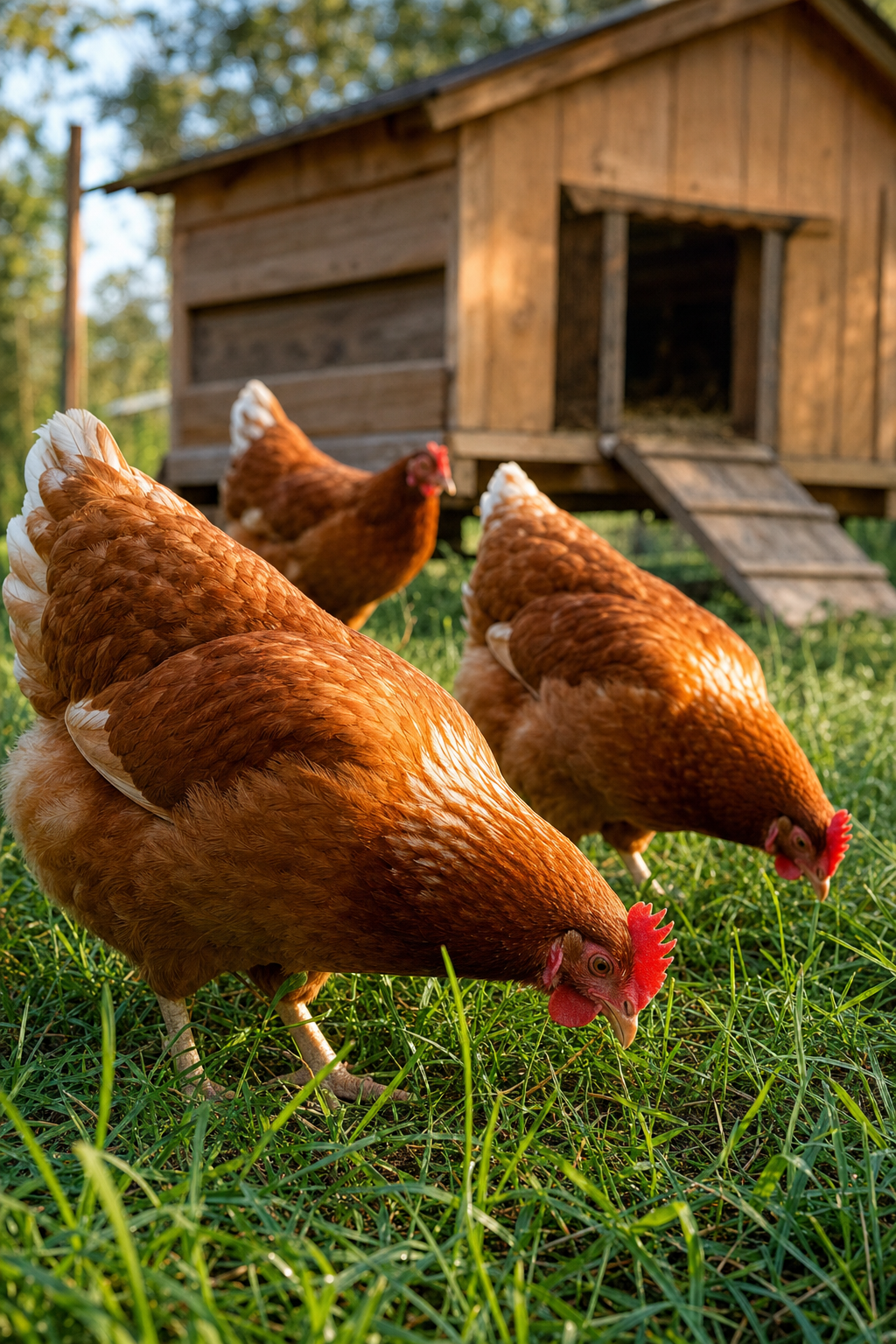
She’s calm, friendly, and handles confinement fine, which matters if you don’t free-range. She eats less feed per egg than most heritage breeds, so your cost per dozen drops. The Cinnamon Queen and Golden Comet are close cousins; if you’re weighing those, our guide to Cinnamon Queen chickens covers the same hybrid-layer territory with lay rates and quirks.

The catch with any production hybrid: she burns bright and short. ISA Browns lay hard for two, maybe three years, then drop off faster than a heritage hen. Some are prone to reproductive issues later in life from all that laying. You’re trading longevity for output. For a working flock where you cull and replace on a schedule, that’s a fair trade. For a hen you want around for eight years, look further down this list.
3. Rhode Island Red, the dual-purpose workhorse
The Rhode Island Red is the breed most people picture when they think “chicken,” and for good reason. It’s a dual-purpose bird that lays well and carries enough meat to matter. A good RIR hen gives you 250 to 300 brown eggs a year and keeps it up for several years.
Best for: homesteaders who want one breed that handles eggs and the occasional stewing bird.
RIRs are hardy in cold and heat, forage hard, and don’t need coddling. They start laying around 18 to 20 weeks. The breed traces back to Rhode Island in the late 1800s and is the official state bird, per the historical record on the Rhode Island Red. That long track record is why they’re still a backbone breed on working farms. If you’re timing your first eggs, our breakdown of when chickens start laying lists RIR and other breeds week by week.
One honest warning: roosters can get aggressive, and some hens have a bossy streak in mixed flocks. If you keep gentle breeds together, an RIR may run the pecking order hard. Keep an eye on it during introductions.
4. Australorp, steady winter laying and a record to back it
The Australorp is the breed I’d hand a new flock owner who wants reliable eggs through a real winter. It’s a calm, heavy bird developed in Australia from Orpington stock, and it holds a famous laying record: one hen laid 364 eggs in 365 days in a 1920s trial, as noted in the documented history of the Australorp.
Best for: cold-climate flocks that need eggs to keep coming when daylight drops.
You won’t hit 364 at home, but 250 to 300 large brown eggs a year is realistic, and Australorps keep laying through cold better than most. Their dense black plumage and steady temperament suit Tennessee winters and northern ones alike. They tolerate confinement and stay friendly, which makes them good around kids and easy to handle in the coop.
They start a little later, often 22 to 24 weeks, so don’t panic if they lag a production hybrid by a month. The tradeoff for that patience is a hen that lays well for four or five years instead of burning out. If you want a forgiving bird that earns its feed, the Australorp is hard to beat.
5. Leghorn, the white-egg machine for hot climates
The Leghorn is the bird behind most grocery-store white eggs, and it’s the best laying hen breed for hot weather. A White Leghorn lays 280 to 320 large white eggs a year, starts early at 16 to 18 weeks, and does it on less feed than almost any heritage breed.
Best for: hot, humid regions and anyone who wants max eggs from minimum feed.
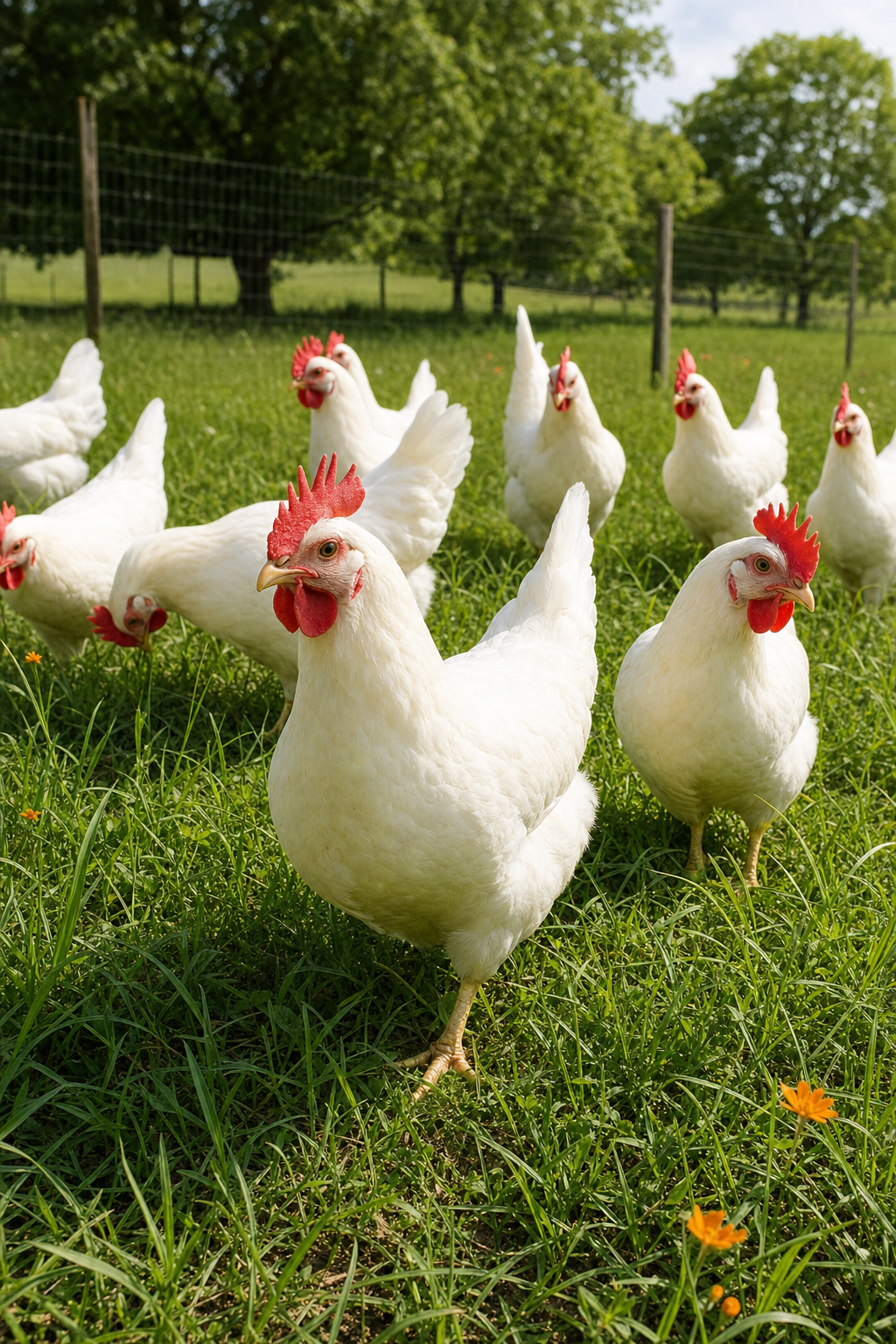
That big single comb isn’t just for looks. It dumps heat, which is why Leghorns handle summer so well while heavier breeds pant in the shade. They’re active foragers and lean, so they cut your feed bill on range. Hatcheries that carry them, like Myers Poultry’s White Leghorn listing, often offer optional vaccination at the hatchery, worth asking about when you order.
The honest downside: Leghorns are flighty and loud. They’ll clear a four-foot fence and they don’t want to be held. That same big comb is frostbite-prone in hard winters, so they’re a poor pick up north without a draft-free coop. If you want a lap chicken, this isn’t it. If you want eggs in July, it’s the one.
Key Takeaway: Match the comb to your climate. Big-combed birds like Leghorns shed heat for hot summers; smaller-combed, heavy birds like Australorps hold up better in cold.
6. Plymouth Rock, the calm, family-friendly layer
The Barred Plymouth Rock is the breed for a flock that lives close to kids and a busy yard. It’s a dual-purpose American breed that lays 200 to 280 brown eggs a year and has one of the gentlest temperaments on this list.
Best for: families, mixed flocks, and anyone who wants a docile bird that still earns its keep.
Rocks are sturdy, cold-hardy, and easygoing. They start laying around 18 to 20 weeks and keep going steadily for years without the burnout you see in hybrids. The barred pattern makes them easy to spot in a mixed flock, and they rarely cause trouble in the pecking order. They forage well but also settle into confinement without stress.
Their lay rate is a notch below a Leghorn or ISA Brown, so if pure output is the goal, they’re not the top pick. What you get instead is a steady, long-lived hen that’s pleasant to be around. For a homestead where the kids collect eggs, that calm streak is worth the slightly lower count.
7. Easter Egger, colored eggs and rugged foraging
The Easter Egger lays blue, green, or pinkish eggs, and it’s the breed to add when you want color in the carton without babying anything. It’s not a standardized breed but a mix carrying the blue-egg gene, and a good hen lays 200 to 280 medium-to-large eggs a year.
Best for: homesteaders who sell eggs at a stand or just want variety, and who free-range.
Easter Eggers are hardy in cold, tolerant of heat, and excellent foragers. Their pea combs resist frostbite, so they handle northern winters better than a Leghorn. They’re generally friendly and curious, and each hen lays one consistent color for life, so a small flock gives you a rainbow carton. That color sells. A roadside stand of blue and green eggs moves faster than plain brown.
The caveat is unpredictability. Because they’re not standardized, two Easter Eggers can look and lay nothing alike, and egg color is a surprise until the first one drops. If you want a guaranteed blue egg, you’d buy a true Ameraucana instead. For mixed color and easy keeping, the Easter Egger is the usable choice. Plenty of hatcheries also sell other prolific brown-egg hybrids like the Sapphire Gem if you want output alongside the colored layers.
How to match a laying breed to your setup
The best laying hen breed for you depends on three things: your climate, your space, and whether you care more about egg count or a long-lived flock. A hybrid like the ISA Brown wins on raw output but fades in a few years. A heritage breed like the Australorp lays a bit less but stays productive far longer and handles cold without complaint.
Climate is the first filter. Hot, humid summers favor big-combed lean birds. Hard winters favor heavy, small-combed breeds, and cold-hardy layers like the Australorp and Plymouth Rock keep producing when light drops, a point echoed in this rundown of cold-climate backyard layers. Space is the second filter: flighty foragers like the Leghorn need room or tall fencing, while calm breeds settle into a run.
| Breed | Eggs/year | Egg color | Best climate | Temperament |
|---|---|---|---|---|
| ISA Brown | ~300 | Brown | Mild to warm | Calm, short-lived layer |
| Rhode Island Red | 250–300 | Brown | Cold and heat | Hardy, can be bossy |
| Australorp | 250–300 | Brown | Cold | Calm, long-lived |
| Leghorn | 280–320 | White | Hot | Flighty, active |
| Plymouth Rock | 200–280 | Brown | Cold | Docile, family-friendly |
| Easter Egger | 200–280 | Blue/green | Cold and heat | Friendly, variable |
Whatever you pick, get the feed right or the eggs won’t come. Layers need extra calcium for strong shells, and free-choice oyster shell next to the feeder handles it. Keeping birds healthy is the other half of the equation; routine worming and a periodic check matter, and an at-home parasite screening kit can flag an internal load before it tanks production. Once you’ve chosen a breed and lined up feed, find the stock through a verified hatchery near you on The Easy Homestead.
Frequently asked questions about laying hen breeds
What is the best laying hen breed for beginners?
The Australorp and Plymouth Rock are the best laying hen breeds for a new flock. Both are calm, cold-hardy, and forgiving of mistakes, and they lay 200 to 300 brown eggs a year for several years. Unlike high-output hybrids, they don’t burn out fast, so you get a steady, long-lived flock while you learn the ropes.
Which chicken breed lays the most eggs per year?
The Leghorn and the ISA Brown lay the most, roughly 280 to 320 eggs a year. Leghorns produce white eggs and excel in heat, while ISA Browns lay large brown eggs and start early. Both are bred for output and eat less feed per egg than heritage breeds, though hybrids like the ISA Brown lay hard for only a few years.
What laying breeds handle cold winters best?
Australorps, Plymouth Rocks, and Easter Eggers handle cold best and keep laying when daylight drops. Their heavier bodies or smaller combs resist frostbite far better than a Leghorn’s large single comb. A draft-free, well-ventilated coop helps any breed through winter, but these three keep eggs coming when others slow down.
How do I find a hatchery near me for these breeds?
Search by ZIP code or county on The Easy Homestead to find verified hatcheries near you. The directory lists poultry suppliers with real reviews, so you can confirm a hatchery has the breed and pullets you want before driving out. Order early in the year, since the best laying hen breeds sell out of spring stock fast.
How long do laying hens keep producing eggs?
Most hens lay strongest in their first two to three years, then slowly taper off. Production hybrids like the ISA Brown peak hard and fade by year three. Heritage breeds such as the Australorp and Plymouth Rock lay a bit less but stay productive for four to five years, making them better value over a hen’s full life.
Picking your breed and finding the stock
If you want one safe pick that works almost anywhere, start with the Australorp: steady eggs, cold-hardy, calm, and long-lived. If you’re chasing maximum output, go Leghorn for hot regions or ISA Brown for brown eggs. Once you’ve settled on a breed, the next move is lining up healthy chicks from a hatchery you can trust. Search hatcheries by county on The Easy Homestead and order your spring pullets before they sell out.