Finding a butcher for a small farm is often harder than raising the animal. Local shops may be booked for months, while online listings rarely show turnaround time, minimum orders, or inspection details. Here are five useful options, starting with The Easy Homestead for finding a butcher near your county or ZIP code.
1. The Easy Homestead
The Easy Homestead is a local directory for finding meat processors and butchers near your farm. It fits working homesteaders who need a local lead, not another national meat box.
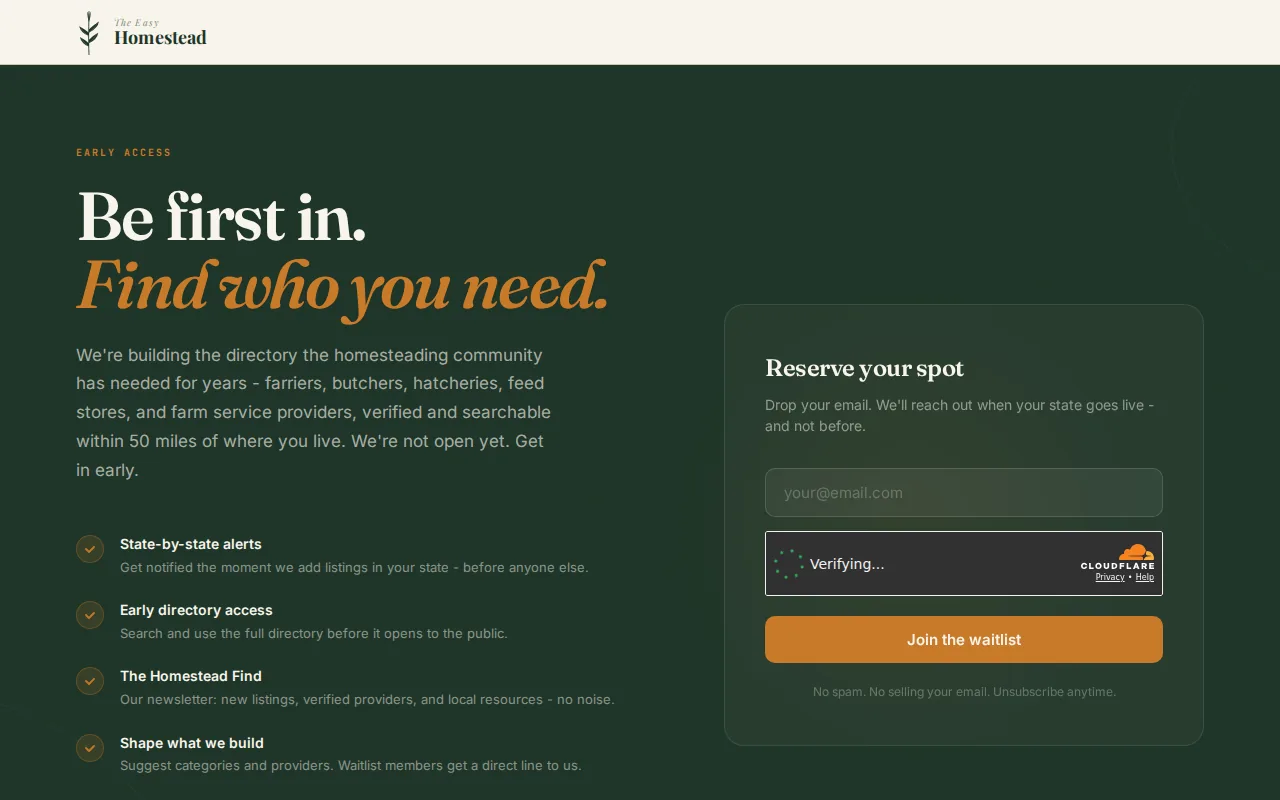
Search by ZIP code or county to find providers in your area. The directory also covers farm services such as farriers, hatcheries, feed suppliers, large-animal vets, and fencing contractors. That matters when your butcher search turns into a wider farm logistics problem.
We focus on listings that help you judge fit before you make contact. Look for service area, animal type, reviews, and whether the provider handles custom cuts or whole-animal work. A listing won’t replace a direct conversation, but it can cut down the three-week search that often starts with a feed-store question or a noisy social media thread.
Use the directory when you need a provider close enough for drop-off. It also helps when you need a backup before your regular processing guy retires or fills his calendar.
For a wider look at mobile units, state-inspected facilities, and USDA-inspected plants, our guide to local meat processor options for homesteaders covers the questions worth asking before you book.
2. The Ridge Butcher Shop: Grass-fed and pasture-raised meat in Tennessee
The Ridge Butcher Shop is in Columbia, Tennessee, and focuses on grass-fed and pasture-raised meats. It is a strong fit for farms in Middle Tennessee that care about how meat is raised as well as how it is cut.
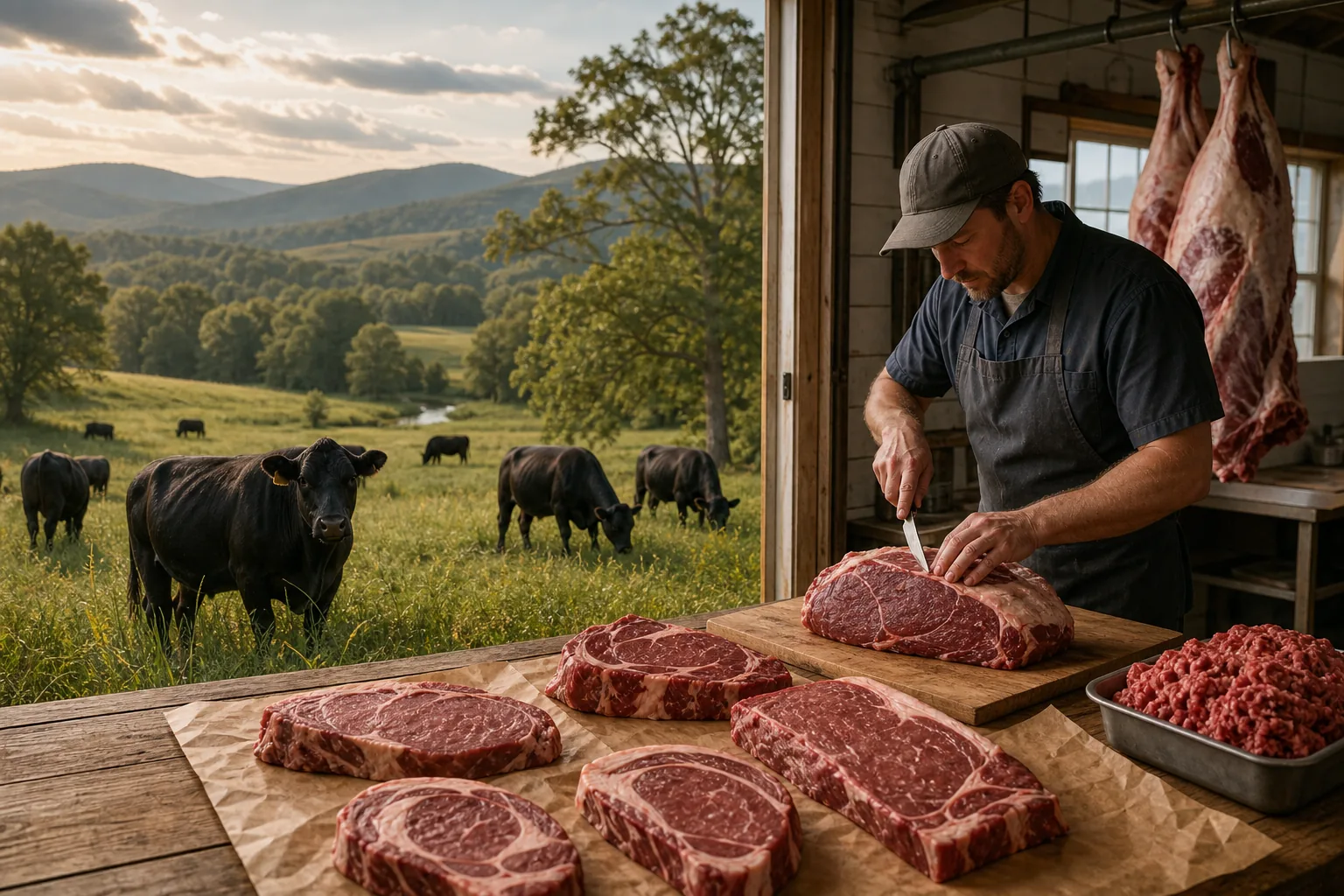
The shop’s listed standards include regenerative agriculture, pasture-raised production, and grass-fed meat. Its listing also names pesticide-free, vaccine-free, antibiotic-free, and hormone-free credentials. That level of detail is unusual in local butcher listings, where certification and production claims often go unreported.
For a small farm, the value is in the clear sourcing signal. If you sell or serve meat to family members who ask about feed and farm practice, you have a starting point for that discussion. You should still ask which claims apply to each animal and whether the shop handles customer-owned livestock.
The listing does not state a minimum order, processing schedule, turnaround time, or price. Those gaps matter if you are planning a hog date or moving a freezer full of cuts. Confirm the drop-off rules, cut sheet process, inspection status, packaging, and pickup window before you load a trailer.
Understanding how state inspection fits beside federal inspection can help when you are evaluating meat processing arrangements. Ask the shop which inspection system applies to the meat you plan to buy or process.
3. Standing’s Butchery: Custom cuts and local farm sourcing in Los Angeles
Standing’s Butchery is a Los Angeles shop with custom cuts, local farm sourcing, and delivery. It suits urban and suburban buyers who want farm-sourced meat without managing a whole-animal pickup.
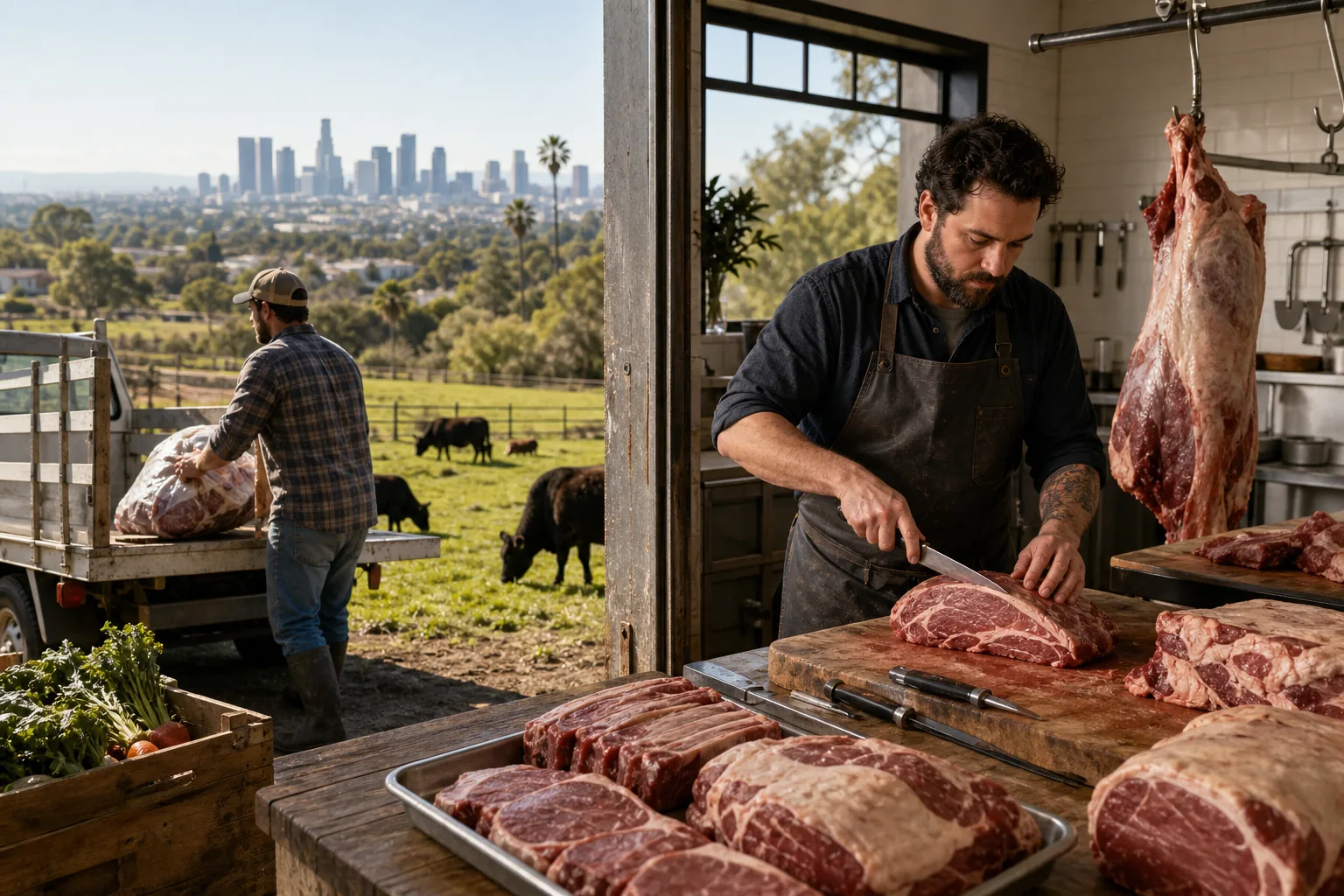
The shop lists grass-fed and grass-finished beef, pasture-raised pork, pastured poultry, and house-made sausages. That mix gives a small farm household more choice than a beef-only outlet. Custom cuts can also help when your freezer plan calls for unusual portions instead of a standard retail case.
Delivery changes the job. You may not need to haul a heavy order across Los Angeles, but you still need to confirm delivery zones, order timing, and whether meat arrives frozen. The listing gives a starting price cue of $$, yet it does not provide a numeric rate or minimum order.
Standing’s is better suited to buying farm-sourced meat than arranging slaughter for your own animals. If you need a processor for customer-owned pigs, goats, or poultry, ask that question first. Many butcher shops sell meat but do not accept live-animal processing work.
The standard definition of a butcher covers someone who prepares meat for sale, but that broad term hides major differences between a retail butcher, a custom processor, and a mobile unit. Match the provider to the job before you compare cut quality.
4. Walden Local Butcher Shop: New England farm meat and whole-animal cuts
Walden Local Butcher Shop is based in Boston and focuses on New England farm meats. It is a good choice for buyers who want regional sourcing with whole-animal cuts and delivery subscription service.
The listing names no antibiotics or hormones, pastured poultry, custom cuts, whole-animal service, and delivery subscriptions. Whole-animal work can help a farm use more of an animal instead of taking only popular steaks or chops. It also gives a buyer a better way to plan for ground meat, roasts, bones, and less common cuts.
A subscription may suit a household that wants a steady freezer supply. It is less useful if you need a one-time order after a slaughter date or if your household size changes through the year. Ask whether a subscription can pause, what arrives in each shipment, and how much control you have over the cuts.
The listing uses a $$$ price cue but gives no numeric price. It also leaves minimum order size and turnaround time unlisted. Those missing details make it hard to compare the shop with a local custom processor, especially when you are planning freezer space around a whole animal.
For farms outside the Boston area, location is the first filter. A strong sourcing claim does not help if cold delivery costs or service limits make the order unworkable. Confirm the delivery area before you spend time on cut choices.
5. Porter Road: Whole-animal butchery with in-house dry-aging
Porter Road fits buyers who care about in-house dry-aging and want a specialty butcher rather than a basic meat counter.
Whole-animal butchery points to a broader use of the carcass. That can mean more than selecting familiar cuts. It may also appeal to farms and buyers who want a better plan for trim, bones, and secondary cuts, though the available listing does not spell out its full service menu.
Dry-aging needs careful handling and time. If you are buying for a special meal, ask which cuts are aged, how the shop handles storage, and whether the meat ships frozen or chilled. Those answers affect both cost and how soon you can use the order.
Porter Road’s listing does not state a location, minimum order, turnaround time, certification details, or price. That limits a direct comparison with shops that publish a city and service list. Treat it as a specialty option to investigate, not as a confirmed local processor for your farm.
If your main need is custom processing for animals raised on your property, a nearby processor may still be the better fit. If your goal is buying carefully aged meat, Porter Road belongs on the shortlist.
Comparison table: which butcher fits your farm?
The table below separates the job each option appears best suited to handle. It also shows where the public information stops.
| Option | Best fit | Useful listed detail | What to confirm |
|---|---|---|---|
| The Easy Homestead | Finding a nearby provider | Search by ZIP code or county, verified listings, real reviews | Each provider’s inspection status, schedule, and animal limits |
| The Ridge Butcher Shop | Tennessee buyers focused on pasture-raised meat | Grass-fed, pasture-raised, and detailed production claims | Customer-owned animals, prices, minimums, and timing |
| Standing’s Butchery | Los Angeles custom-cut and delivery buyers | Custom cuts, local farm sourcing, delivery | Processing for farm animals, delivery zone, order minimum |
| Walden Local Butcher Shop | New England whole-animal buying | Whole-animal cuts, custom cuts, delivery subscription | Subscription terms, delivery limits, price, and timing |
| Porter Road | Specialty meat with in-house dry-aging | Whole-animal butchery and dry-aging | Location, inspection, order size, and shipping details |
The broader research found that every listed butcher had a sustainable specialty such as grass-fed, pasture-raised, heritage, or regenerative meat. That makes sourcing language common, but it does not make the providers interchangeable.
Only half of the 12 listings detailed services. Custom cuts paired with delivery appeared most often among those entries. Only Crowd Cow listed a three-protein Welcome Box and a concrete value figure of up to $1,560 per year, while the local listings mostly used $$ or $$$ price marks.
That contrast is useful. National services may publish order details more clearly. Local shops may give you more ways to handle custom cuts, farm sourcing, classes, charcuterie, or whole-animal work. You need to ask for the missing facts either way.
Questions to ask before you book
- Do you accept customer-owned animals, or do you sell meat only?
- Which inspection status applies to this service?
- What is the current turnaround time?
- Is there a minimum animal count or order size?
- When do you need the cut sheet?
- How are organs, bones, fat, and trim handled?
- What packaging and freezer labeling do you use?
Keep the answers in one note. When a shop is booked for months, that record helps you compare the next opening without starting over.
FAQ
How do I find the best local butchers for small farms?
The best way is to search by county or ZIP code, then confirm that each provider handles your animal and type of service. The Easy Homestead helps you find local listings and reviews. Ask about inspection status, turnaround time, minimums, cut sheets, packaging, and whether the shop accepts customer-owned livestock.
Do local butchers process animals from small farms?
Some local butchers process farm-owned animals, but you must confirm this before booking. A retail butcher may sell custom cuts without processing live animals. Ask about species, animal count, drop-off rules, inspection status, and the date your finished meat will be ready.
What is the difference between USDA inspected and state inspected meat?
USDA-inspected meat comes through a federal inspection program, while state-inspected meat comes through an approved state program. The exact sales rules depend on the program and location. Ask the processor which inspection applies to your order and where you may legally sell or distribute the meat.
How far ahead should a small farm book a butcher?
You should contact a butcher well before your planned slaughter date because turnaround times can fill months ahead. The reviewed listings did not publish timing, so public pages cannot answer this for you. Keep a backup option in your county and ask when the shop needs your cut instructions.
Are local butcher prices easy to compare?
Local butcher prices are often hard to compare online because many listings show only $$ or $$$. Fees may depend on hanging weight, cut choices, packaging, delivery, or specialty work. Request a written estimate that separates processing fees from the meat cost before you reserve a date.
Conclusion
Start with The Easy Homestead when you need a butcher close to your farm, then compare the provider’s inspection status and calendar before you commit. Search the directory by county or ZIP code, save two backup options, and ask for written answers on timing, minimums, and cut instructions. Find meat processing services near you before your next animal reaches the freezer stage.