A portable livestock trailer can cost far more than a basic utility trailer. The only dedicated listing found in our August 28, 2026 search was a 2027 Cimarron Norstar 5HLQ with a starting price of $208,994. That price changes the buying question. Start with your local needs, then verify every load, tow, and safety detail before you spend.
Use these steps to find the best portable livestock trailer for purchase without mistaking a high price for a good fit.
1. The Easy Homestead
The first step is finding people near you who can fill in the details that product pages leave out. The Easy Homestead is a local directory for working homesteaders. You can search by ZIP code or county for farm suppliers, mobile farm services, large-animal vets, farriers, and fencing contractors.
We don’t sell trailers. That is the point here. A local livestock vet may know which trailer layouts cause trouble with your animals. A farrier or mobile farm worker may know who hauls goats, pigs, or cattle safely in your area. A fencing contractor can also tell you if your gates and drive will handle a trailer before delivery day. Our guide to farm fencing contractors near you covers the access questions worth asking.
Search by county first. Then check the listing details and reviews. If you find a dealer, hauler, or farm service provider, ask a short set of questions:
- Which animals do you haul or work around?
- What trailer sizes do you see most often?
- Can the trailer reach a gravel lane or tight farm gate?
- Who handles repairs, parts, and brake work nearby?
This step can save a costly mismatch. A trailer that looks right on a dealer lot may fail when you turn into a steep drive or load a nervous animal through a narrow rear gate.
The Easy Homestead also helps with the network around the purchase. You may need a vet before a long haul. You may need a livestock-savvy fence crew before the trailer arrives. Those local details belong in the buying plan, not after the sale.
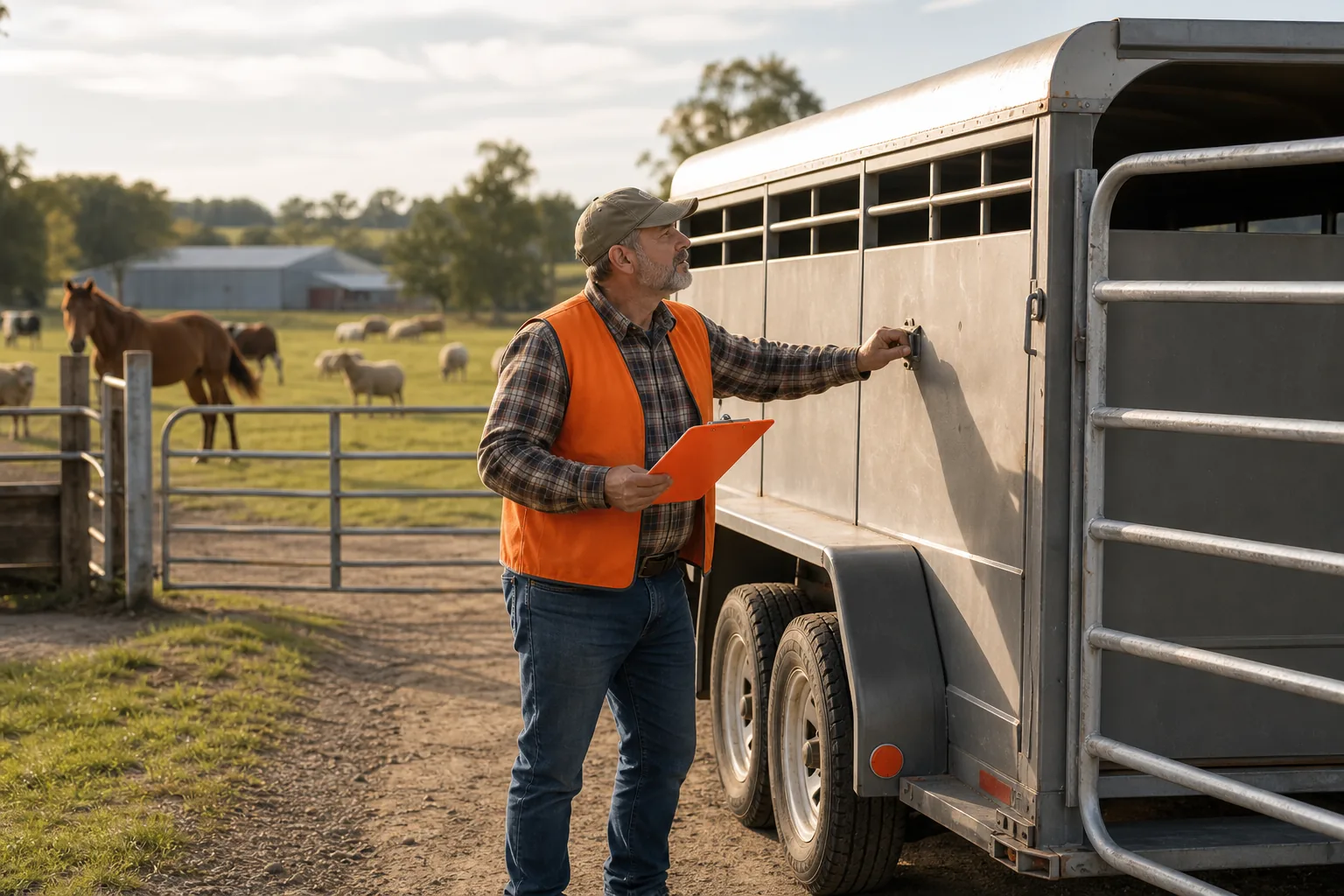
Key Takeaway: Start with local knowledge because access, repairs, and animal handling can matter as much as the trailer itself.
Step 2: Compare the features that affect loading and animal safety
The best portable livestock trailer for purchase is the one that fits your animals and loading routine. Do not begin with paint, trim, or a glossy walk-through. Begin at the gate.
Write down the animals you expect to haul in a normal year. A trailer for two mature pigs has a different job from one used for cattle or a mixed load of goats and sheep. Note the largest animal, the total live weight, and how often you expect to travel. Include seasonal jobs such as taking animals to a processor, auction, vet, or new pasture.
Study the loading path
Look at the rear opening first. You need enough room for the largest animal to enter without a sharp turn. A low-stress path can reduce balking and crowding. Check where the handler stands while the gate closes. You should not need to stand in a pinch point.
Then inspect the floor. Ask what material covers it, how it drains, and how you can clean it after a wet haul. Look for gaps that could catch a hoof. Check the wall height and the spacing of any rails. Small animals may push through spaces that seem safe for cattle.
Ask the seller to show each divider in use. A divider should move without forcing you to reach over an animal. It should also stay secure on rough roads. If you haul one species most of the time, a fixed layout may work better than a complex interior. If your loads change, flexible dividers may earn their space.
Ask for missing specs in writing
Make the seller answer these questions on the quote:
- What is the empty trailer weight?
- What is the legal payload?
- What axle and tire ratings apply?
- Which brake system does it use?
- How does the trailer load and unload?
- What floor care does the maker require?
The search result that triggered this article listed no public figures for maximum animal weight, trailer weight, loading method, or brake type. That is a buying risk, even at a premium price. You cannot compare tow needs or safe capacity until the dealer supplies the numbers.
Watch any walk-through with a critical eye. A video may show a similar unit rather than the exact trailer for sale. Treat it as a list of questions, not proof that your unit has the same layout.
For a farm with goats, pigs, and occasional larger stock, I would favor a layout that gives the handler a clean escape path. Fancy trim comes after that.
Step 3: Confirm road rules, payload, and towing safety before you buy
Your choice of portable livestock trailer must fit the truck, the road, and the animals. A trailer can be sound on paper and still exceed your tow setup once the load is aboard.
Start with the trailer’s loaded weight. Add the empty trailer weight to the live load, bedding, panels, water, tools, and any gear carried in the trailer. Ask the dealer to show how each figure was calculated. Do not treat the advertised empty weight as the number you will tow.
Next, compare that loaded figure with the ratings for your truck and hitch. Check the vehicle manual and the hitch label. Pay attention to tongue weight or pin weight, depending on the trailer style. A gooseneck shifts part of the load over the truck bed, but that does not remove the need to check ratings.
Confirm the brake setup before signing. Ask how the brakes work if the trailer becomes detached. Ask which controller the truck needs. Ask where replacement parts come from and who can service the system in your county.
Road rules vary by state and by the size of the rig. Check requirements for registration, lighting, safety chains, breakaway systems, width, and inspection with your state agency. Also ask about livestock transport rules if you cross state lines or take animals to a processor.
Plan the route before delivery. Measure narrow gates. Check low branches. Look at the turn into your loading area after rain, when soft ground can change the route. If you need new access work, a local contractor from The Easy Homestead can help assess farm fencing and gate access before the trailer reaches your property.
Pro Tip: Put the truck rating, trailer rating, estimated live load, and dealer-supplied payload on one sheet. If one number is missing, pause the purchase.
By now, you should have a target trailer weight, a target payload, and a route that works on your farm.
Step 4: Use the 2027 Cimarron Norstar 5HLQ as a operational benchmark
The 2027 Cimarron Norstar 5HLQ gives you a useful price benchmark, even if it does not give you enough data for a final buying decision. The listing describes it as a new horse and livestock trailer at Transwest in Frederick, Colorado. Its starting price is $208,994.
That figure is far above the range many buyers expect when they search for a portable livestock trailer. It signals that some high-capacity, premium units sit in a different market than basic farm trailers. You may be comparing specialty equipment with a small farm building, not choosing between two similar utility trailers.
Use the listing to build a dealer question sheet. The public page does not provide the maximum animal weight, empty trailer weight, loading mechanism, or brake type. Those missing fields block a fair comparison. Ask the dealer for a written specification sheet for the exact unit, not a similar model.
Ask these questions before treating the trailer as a candidate:
- What animals and live weight is the exact unit built to carry?
- What is the empty weight with the listed options?
- What loading system comes with this unit?
- Which brakes, axles, tires, and breakaway parts are installed?
- What service can the dealer provide after delivery?
- What does delivery include, and what costs remain outside the starting price?
The listed price is a starting price, not your full ownership cost. The source notes that title, registration, taxes, and other fees are not included in its financing calculation. Add delivery, hitch work, site changes, repairs, and insurance to your own worksheet.
There were no extra reviews or third-party videos for this model in the search sample. That leaves you with dealer documents, an on-site inspection, and a possible demonstration. At this price, I would not buy from photos alone.
If the dealer cannot supply the missing numbers, the price is not the only concern. The lack of data is itself a reason to wait.
Step 5: Inspect the trailer, compare the full price, and protect the purchase
Before you buy, inspect the exact portable livestock trailer you will own. A polished listing is useful, but the serial number, installed options, and paperwork must match the unit in front of you.
Use a repeatable inspection
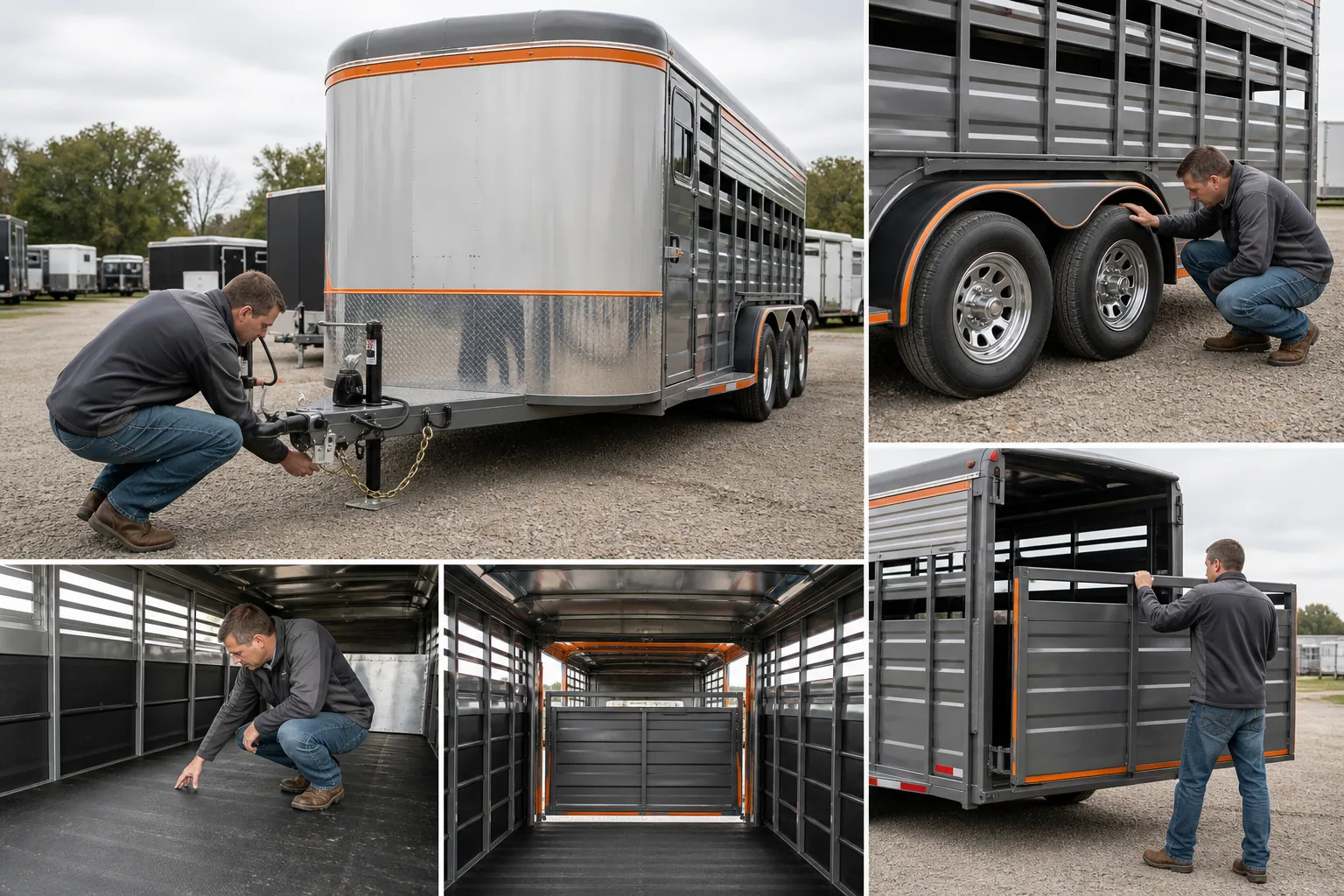
Walk the outside first. Look at the frame, welds, roof, hinges, lights, tires, jack, safety chains, and hitch or coupler. Check for fresh paint over rust or damage. Open every gate. Move each divider. Stand inside and look for sharp edges, loose hardware, poor drainage, or floor damage.
Ask to see the brakes operate. Check the breakaway setup and the wiring connection. Confirm that the tire date and load rating match the dealer’s paperwork. If you cannot inspect the trailer in person, pay for an independent inspection near the seller or require a clear inspection condition in the purchase agreement.
Compare the full cost
Request an itemized quote. It should separate the trailer, installed options, delivery, taxes, registration, financing charges, and any prep fees. Ask which parts the warranty covers and who performs warranty work. A low starting price can become a poor deal when service is far away or a key feature costs extra.
Get the payload and brake details in the signed documents. Keep the build sheet, inspection report, title paperwork, warranty terms, and payment records together. If the seller promises a repair or added part, put it in writing before the deposit becomes nonrefundable.
Your local network can help after the sale. A large-animal vet can advise on long-haul planning, while a nearby farm service provider may help with loading practice or access work. You can also use The Easy Homestead’s guide to finding a livestock veterinarian when you need care along your regular route.
Walk away if the seller won’t identify the exact unit, refuses an inspection, or leaves core safety figures blank. A trailer purchase is too costly for guesswork.
FAQ
What is the best portable livestock trailer for purchase?
The best portable livestock trailer for purchase is the one that matches your animal load, truck ratings, access route, and service support.
How much does a portable livestock trailer cost?
A portable livestock trailer can range from a basic farm purchase to premium specialty equipment. The researched 2027 Cimarron Norstar 5HLQ had a starting price of $208,994. That figure excludes some ownership costs, so compare the full written quote instead of relying on a headline price.
What specs should I ask for before buying a livestock trailer?
Ask for the empty trailer weight, legal payload, axle and tire ratings, brake type, loading method, floor details, and exact installed options. These specs decide whether the trailer fits your animals and truck. The best buying process gets each number in writing for the specific unit you may purchase.
Is a horse trailer suitable for livestock?
A horse and livestock trailer may suit your animals, but the name alone does not prove that it fits your load. Check the interior layout, gate width, divider setup, floor, ventilation, payload, and cleaning needs. Ask the dealer to show the exact model handling the species and weight you plan to haul.
How can I find local help with a livestock trailer?
You can find local help by searching The Easy Homestead by ZIP code or county. Look for large-animal vets, mobile farm services, farriers, fencing contractors, and suppliers who work around livestock. Ask each provider about the animals they handle and the roads or farms they regularly serve before relying on their advice.
Conclusion
Start with your animals, truck, route, and local service options. Treat the 2027 Cimarron Norstar 5HLQ as a price and data benchmark, not an automatic recommendation, because its public listing leaves core specs unanswered. Search The Easy Homestead by county, then request a written quote and inspect the exact trailer before paying a deposit.