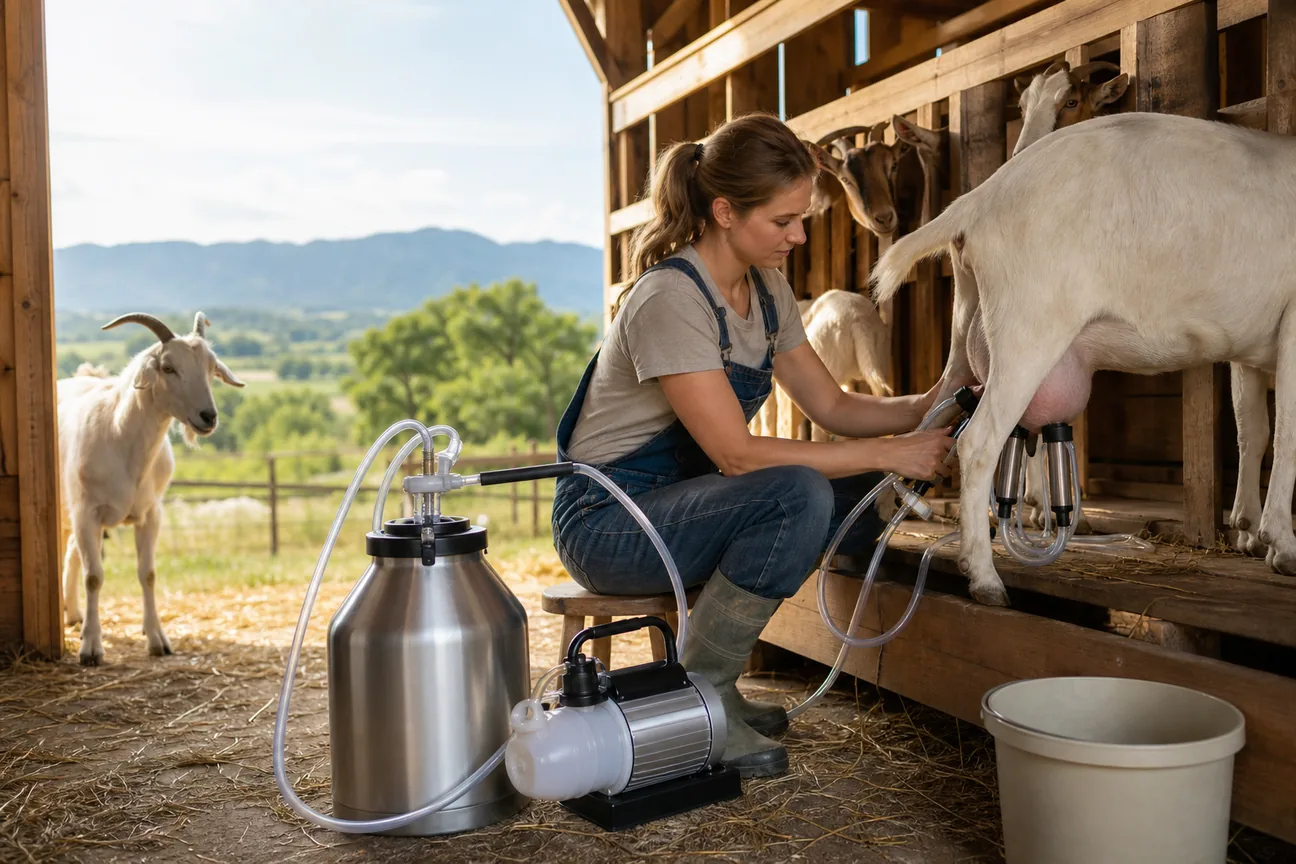
The best portable milking machine for goats depends on what you mean by portable. A handheld unit may weigh little but hold less milk, while a wheeled electric system can handle more volume but still needs an outlet. Here are the strongest options for small herds, colostrum, Nigerian Dwarf goats, and regular farm use.
1. Hantop Goat Milker, a usable fit for 1 to 3 animals
The Hantop Goat Milker is a strong fit for a small herd of one to three animals. It suits a homesteader who wants a rechargeable unit with a stainless steel pail and adjustable suction.
 Save
The available product details list a 6-liter stainless steel bucket, a battery-powered pump, adjustable speed and suction, and an automatic stop valve. The listed pulsation rate is 43 to 46 cycles per minute. It also includes silicone teat cups intended for miniature and standard breeds.
The quick-release design is useful when a hose, gasket, or other small part needs attention. The lid has a silicone gasket and multiple latches, which helps the bucket hold a vacuum during a milking session. Those details matter more than a flashy capacity claim when you clean the unit twice a day.
The trade-off is that battery operation still requires charging before milking. You should also confirm that the included teat cups match your goats before ordering. Manufacturers rarely disclose every detail about power and weight, so ask for those specs if the listing leaves them out.
For a working homestead with a few does, this is the kind of middle-ground option that makes sense. It has more structure than a hand pump without forcing you into a large farm system.
Milking machines depend on controlled suction and a repeating cycle. The general process is described in Wikipedia’s overview of milking, but the animal fit still decides whether a particular unit works well in your barn.
2. Udderly EZ Handheld Portable Milker, useful for colostrum and small teats
The Udderly EZ Handheld Portable Milker is best for colostrum collection and goats with small teats. Its handheld design makes it the most focused choice here for short jobs where carrying a full bucket system would slow you down.
Colostrum collection often calls for careful handling. The first milk a doe produces after kidding is thick, valuable, and time-sensitive. A compact handheld milker can help when you need to collect from one animal without rolling a larger machine into the stall.
It also makes sense for a small-teat problem. A standard cluster may not seal well on every goat. When the seal breaks, the pump loses suction and the job becomes slow. A handheld tool gives you a different way to work with a doe that does not fit the usual cup setup.
The limitation is output. This is a targeted tool, not the pick for milking a large group twice each day. Check how the collection container works, how parts wash, and whether replacement pieces are available before you treat it as your main system.
For a kidding kit or a backup tool, its small size may be the point. Keep it where you can reach it quickly, rather than buried with larger dairy gear.
3. Coburn Portamilker, a small-dairy option for regular use
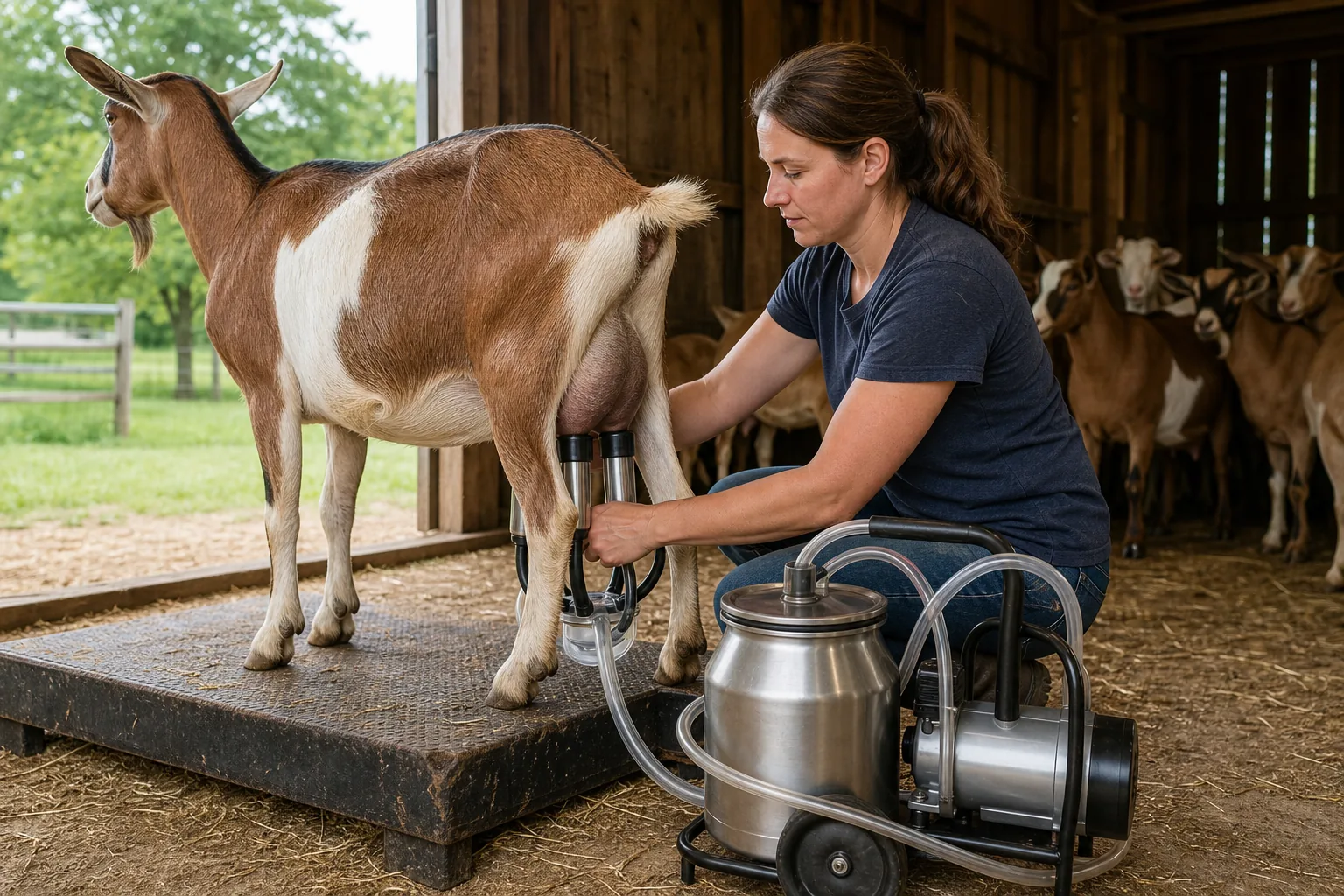
The Coburn Portamilker is aimed at small dairies that need a regular-use machine with room to expand. It is a better match for repeated milking than a handheld unit.
 Save
The listed setup includes a base unit, vacuum equipment, stainless steel buckets, pulsators, tubing, and milking clusters. The setup described for two animals uses two bucket assemblies. A later expansion can add another bucket and claw assembly if your herd grows.
That upgrade path is worth attention. If you milk one goat now but expect to milk two later, buying a system that can accept another assembly may cost less trouble than replacing the whole unit. The same listing describes configurations for goats, sheep, and cows, so the cluster choice must match the animals you plan to milk.
The machine uses an electric motor, which means you need a suitable power source near the milking area. It also ships as larger farm equipment, so plan for freight delivery and a place to store it. “Portable” here means movable around a farm, not something you casually carry in one hand.
Cleaning is another factor. More buckets and lines give you more capacity, but they also add parts that need a full wash after each session. If you only milk one doe, the larger setup may take more time to clean than a smaller pail system.
Choose the Coburn when regular use and future capacity matter more than a light load. It belongs in a small dairy work area, not in a travel kit.
4. Hoegger Milking System, designed specifically for goats
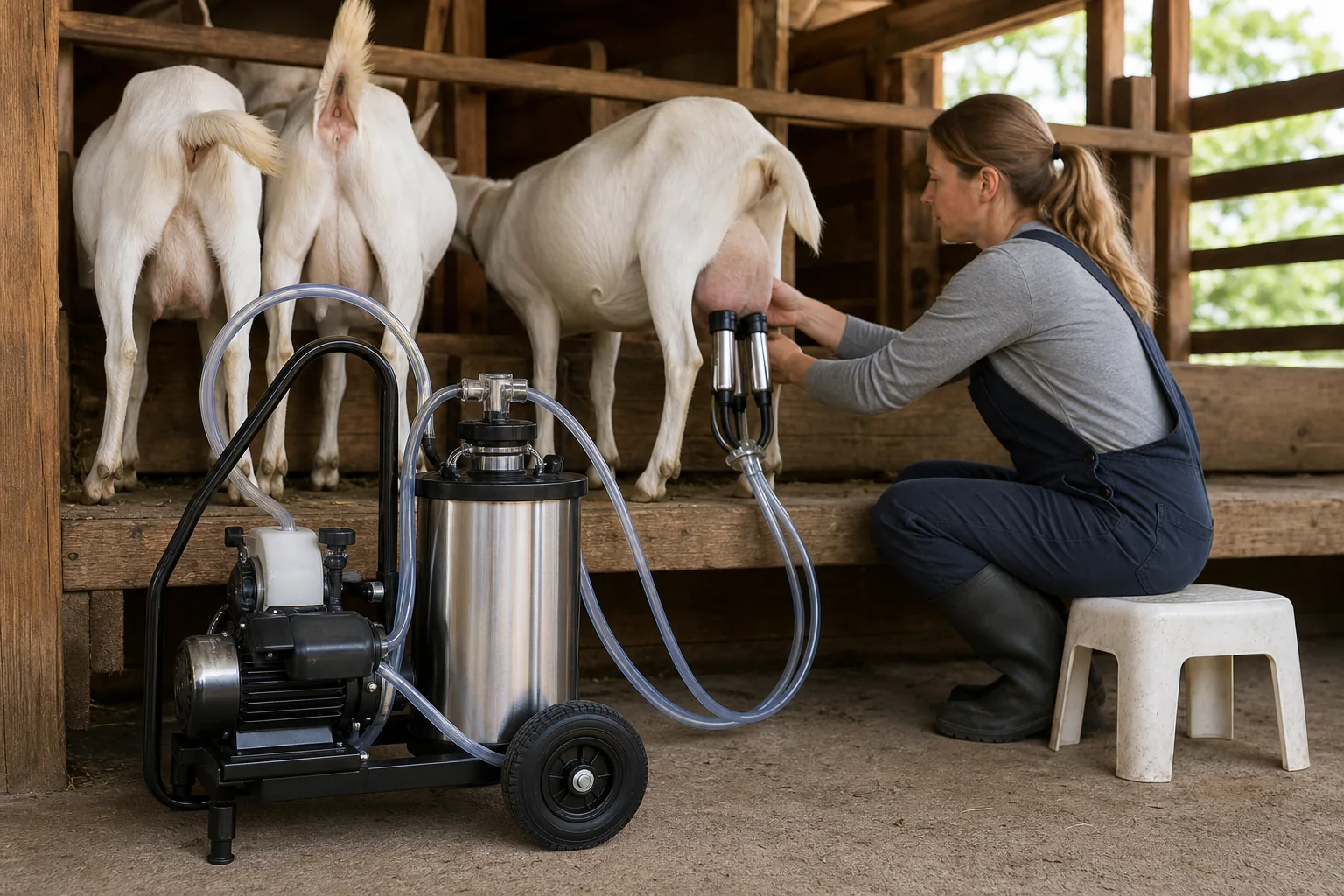
The Hoegger Milking System is designed specifically for goats and comes in single-goat and dual-goat configurations. It fits small to medium farms that want a goat-first setup rather than a cow machine adapted after the fact.
 Save
Its configurations include single and dual belly pails, plus larger 35-pound pail systems. The belly pail setup uses an 8-quart pail and avoids milk lines and claws. That can reduce the number of parts you need to wash after milking.
The larger pail systems suit a herd where emptying a small container would interrupt the work. The manufacturer says those systems can milk several goats before the pail needs to be emptied. Treat that as a setup claim, not a promise about your own herd. Goat size, production, and the pace of your routine will change the result.
The stainless steel design is useful in a dairy setting because smooth, non-porous surfaces are easier to inspect and wash. The system also has single and dual options, so you can match the machine to the number of goats you milk at one time.
The caveat is cost and setup choice. A belly pail may suit one or two goats, while the larger pail gives you more room but adds bulk. Decide how many animals you milk per session before choosing the configuration.
For goat owners who want equipment built around goat handling, this is one of the clearest matches in the shortlist. You can also use The Easy Homestead to find a livestock vet near you if udder health or a teat injury affects your milking plan. A goat vet near you can help separate an equipment issue from an animal-health issue.
5. GARVEE 25L Portable Cow Milking Machine, the higher-capacity mobile choice
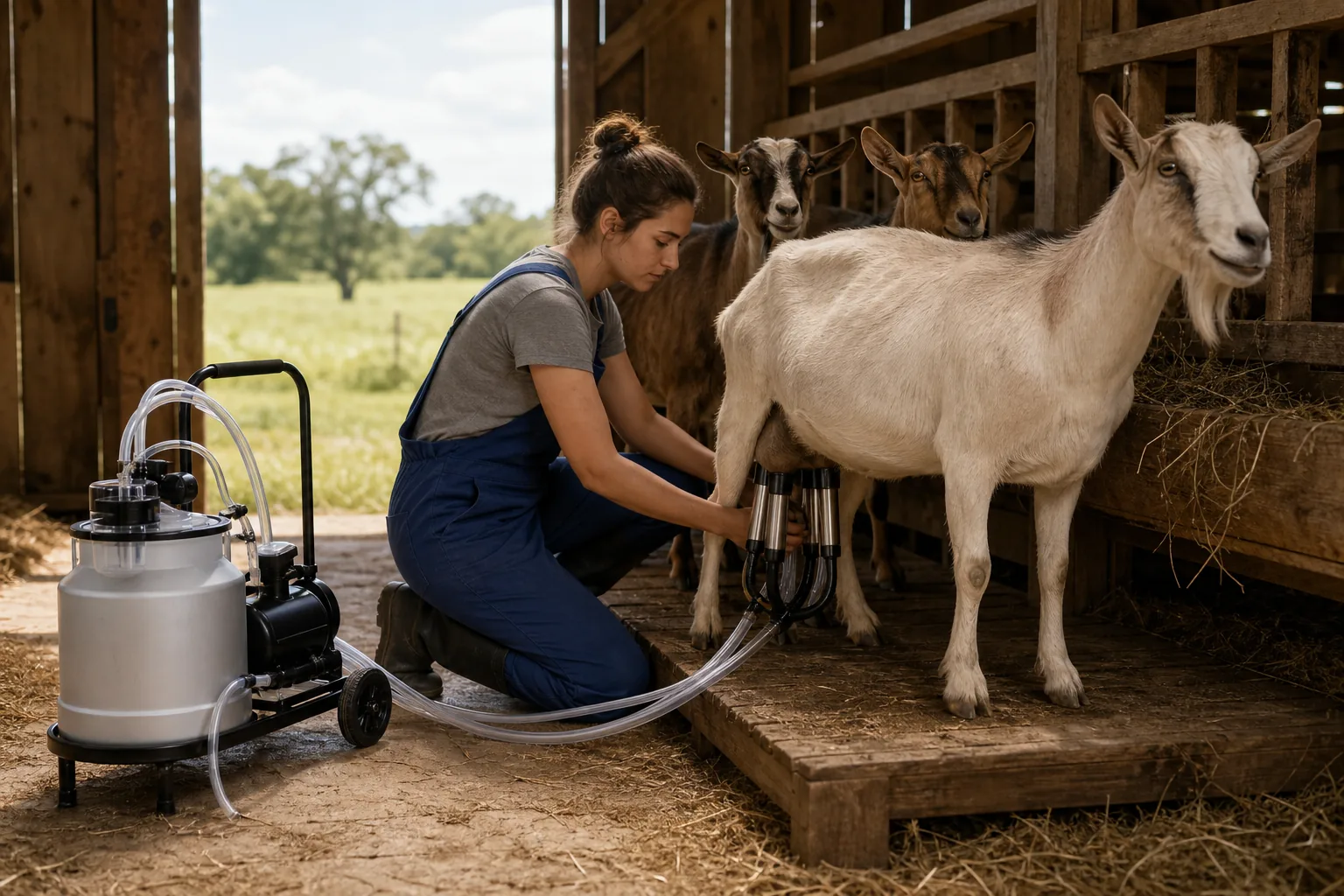
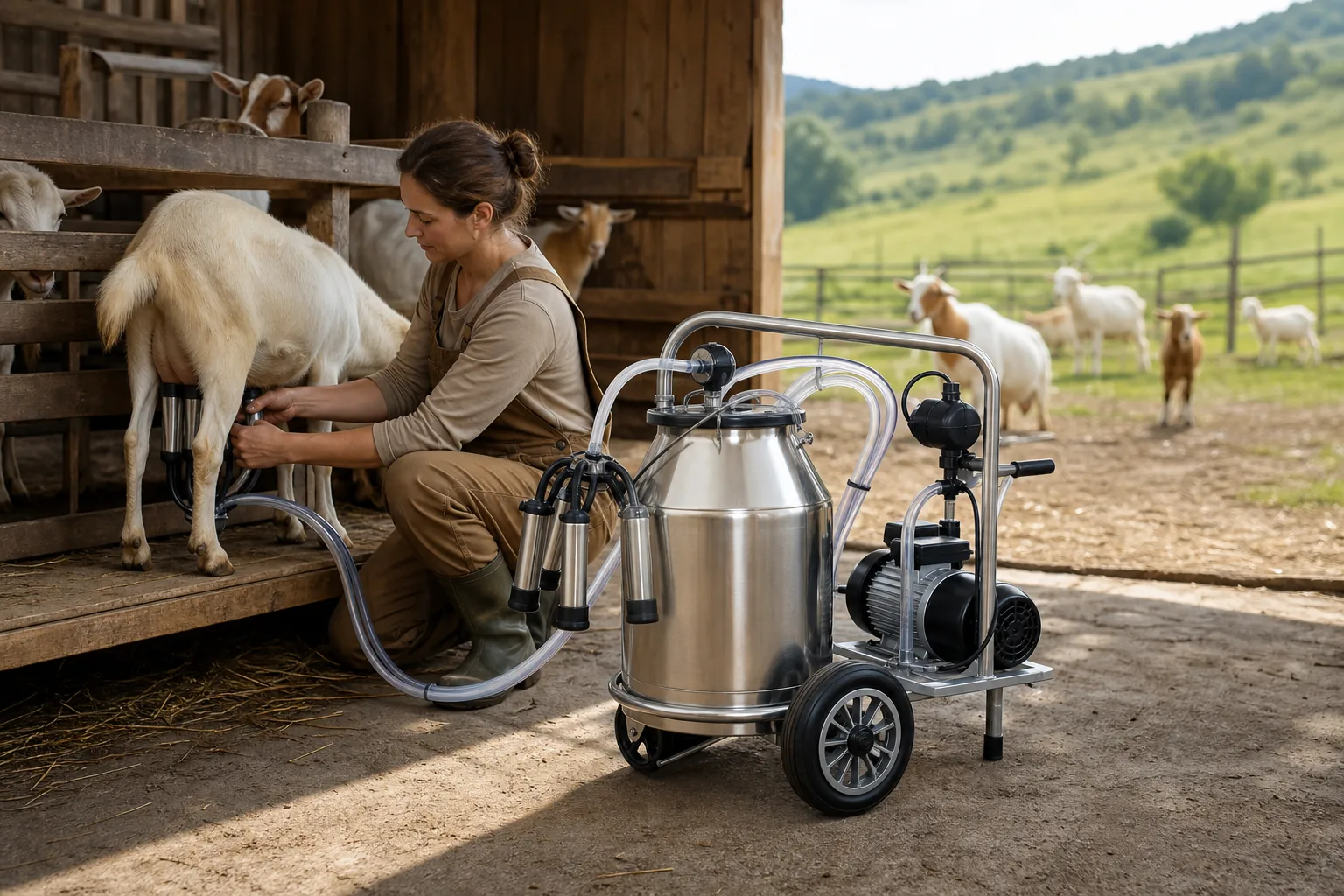
The GARVEE 25L Portable Cow Milking Machine is the higher-capacity choice for farms that may milk cows and goats. It uses electric power and has a 25-liter stainless steel bucket.
 Save
The listed portability features include a soft handle, wheels, and a compact design. Those features help you move the unit across a flat barn floor. They do not make it a hand-carried machine.
That is the hidden trade-off in this market. Research across 11 listed machines found weight data for only two units. The reported average was 101.9 pounds, pulled upward by this 197-pound GARVEE system. The small rechargeable option in the same set weighed 6.8 pounds and held 0.8 gallons.
Capacity and portability move in opposite directions. The small cordless unit is easier to carry but holds less. A 25-liter electric system gives you more room but needs an outlet, wheels, and a clear route through the barn.
| Use case | Best fit | Main trade-off |
|---|---|---|
| One to three goats | Hantop Goat Milker | Battery charging and smaller herd focus |
| Colostrum or small teats | Udderly EZ Handheld Portable Milker | Not suited to high-volume milking |
| Small dairy with regular use | Coburn Portamilker | Electric power and more parts to clean |
| Goat-first setup | Hoegger Milking System | Configuration choice affects size and cleanup |
| Large volume or mixed cows and goats | GARVEE 25L Portable Cow Milking Machine | Heavy unit that needs wheels and an outlet |
Pick GARVEE when capacity matters more than carrying weight. If you cannot move 197 pounds safely, the wheels and handle do not solve the whole problem. Measure the path from the outlet to the animals before buying.
FAQ
What is the best portable milking machine for goats?
The best portable milking machine for goats is the one that matches your herd size and power setup. Hantop fits one to three animals. Hoegger is built around goat-specific configurations. Udderly EZ suits colostrum or small teats. GARVEE makes more sense for higher volume, but it is a wheeled electric unit rather than a hand-carried machine.
What is the best goat milker for Nigerian Dwarf goats?
The best goat milker for Nigerian Dwarf goats should have teat cups that fit smaller animals. Hantop lists silicone cups for miniature and standard breeds. Udderly EZ is also listed for animals with small teats. Confirm the cup size and replacement-part options before ordering, since a poor seal wastes time and reduces suction.
Are portable goat milking machines battery powered?
Some portable goat milking machines use batteries, but many need an electrical outlet. Battery units are easier to use away from a barn outlet, yet they often have less bucket capacity. Electric machines can support larger containers, but you must plan for cords, outlet access, and safe movement around animals.
Can I use a cow milking machine for goats?
You can use some cow and goat milking machines for both animals, but the teat cups and cluster must match the goat. GARVEE lists use for cows and goats. Coburn also describes animal-specific cluster setups. Do not assume a cow-sized cup will seal correctly on every goat.
How do I find local help with a goat milking machine?
You can find local help through The Easy Homestead by searching listings by ZIP code or county. Look for large-animal vets, farm service providers, and suppliers who work with goats. Local support is useful when you need help with machine fit, udder health, repairs, or a replacement part.
Conclusion
For most small goat herds, start with Hantop or a goat-specific Hoegger configuration. Choose Udderly EZ for colostrum or small teats, and choose GARVEE only when higher capacity justifies a heavy electric unit. Before you order, search The Easy Homestead for a nearby livestock supplier or goat-savvy vet who can help you confirm the fit.