The best solar panel kits for homestead use aren’t always the biggest or most costly. The sharpest price jumps often buy more battery space and better expansion, not much more raw output. Start with your actual loads, then match the kit to your site and backup plan.
1. The Easy Homestead
The Easy Homestead isn’t a solar kit. It’s where you can find local help when your power plan reaches beyond a box on the porch.
For a working farmstead, the weak point may be the install. You might need a trench for buried cable, a safe place for the power station, or a contractor who understands a barn circuit instead of a tidy suburban outlet. You may also need help after a storm damages panels or wiring.
Use the directory to search by ZIP code or county when you need a local supplier or service provider. The Easy Homestead focuses on the homesteading supply chain, with categories such as feed and seed suppliers, fencing and farm construction, farriers, mobile farm services, and large-animal vets. Solar work isn’t listed as a core category, so check coverage in your area before you count on a match.
That honesty matters. A directory can’t help if it claims a local option that isn’t there. When listings are available, look for verified details and reviews before you hand over a deposit or schedule work.
You can also use the same local network for the chores that keep your backup plan useful. If your freezer stays powered but your meat processor is booked for months, the outage plan still has a gap. Our guide to local meat processor options for homesteaders and mobile meat processors near you covers the questions worth asking before you book.
Start by writing down the local help you may need. Then search by county rather than relying on a broad web search or a noisy Facebook thread.
Step 2: Match the kit to your power system and site
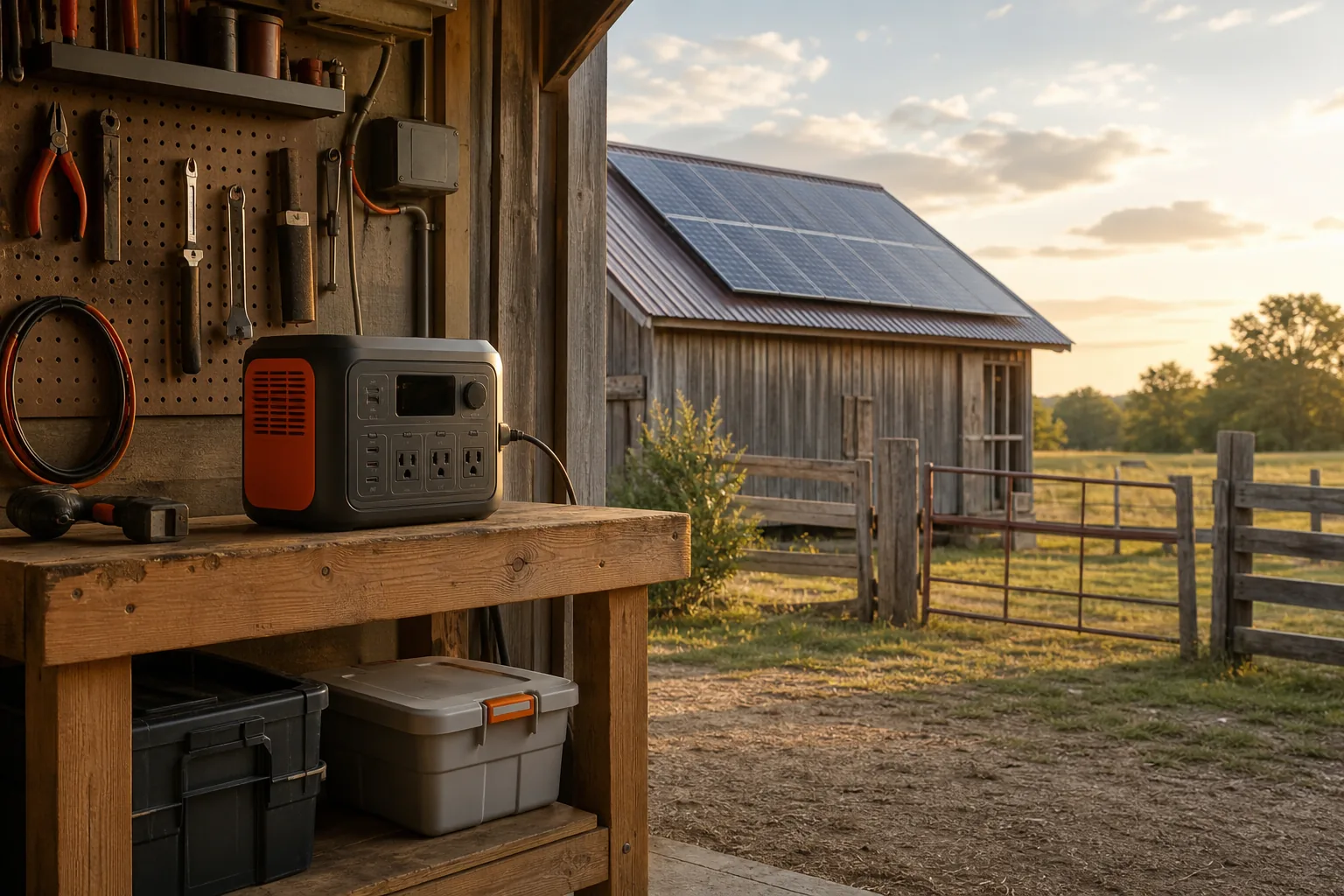
The best solar panel kits for homestead backup must fit your wiring plan, sun access, and storage spot. A portable power station may suit a freezer and a few lights. It won’t replace a whole-house system without the right transfer equipment and electrical design.
First, decide if you need portable backup or a fixed off-grid system. Portable kits keep selected appliances alive during an outage. A fixed system can feed a planned circuit panel, but that work may need permits and a licensed electrician.
Next, inspect the site at the hours when you expect to charge. Trees can leave a roof bright in the morning and shaded by lunch. A ground array may get better sun, but it needs protection from livestock, weeds, and equipment traffic.
Check four limits before you buy:
- Continuous output: This is the load the inverter can run for a longer stretch.
- Surge output: Pumps, freezers, and compressors may need extra power when they start.
- Solar input: This tells you how much panel wattage the unit can accept.
- Battery capacity: This tells you how long your loads can run after the sun goes down.
Don’t treat panel wattage as battery size. Panels refill the battery. They don’t tell you how long a freezer will run overnight.
For a fixed system, compare the battery voltage and inverter type with the rest of the design. A larger solar and battery system may combine panels, an inverter, and a rack battery. That is a different buying task from choosing a rollable power station.
Keep the battery in a dry place with room around it. Avoid a hot shed if the maker’s manual sets a lower temperature range. Protect cables from rodents and sharp sheet metal. You should have a clear path from the panels to the charge input, with no cable lying where a tractor or goat can reach it.
One useful rule is this: buy the smallest system that covers your priority loads, then leave room to add storage if the platform supports it.
Step 3: Compare the strongest kits for homestead backup
The strongest options in this comparison differ most in battery growth, panel input, and use case. A kit for a fridge and freezer has a different job than one meant to support a long off-grid week.
Our source review covered nine kits on August 30, 2026. The data had a major gap: battery capacity wasn’t reported across the full set. That means you shouldn’t choose from output and price alone.
| Kit | Best fit | What stands out | Watch for |
|---|---|---|---|
| The Easy Homestead | Finding local support | Search by ZIP code or county, with verified listings and reviews | It is a directory, not a solar power product |
| Jackery Solar Generator 2000 Plus Kit | Longer off-grid weeks | Pure sine wave inverter, five-year warranty, and strong expansion | Confirm the full battery plan before purchase |
| BLUETTI AC200L Solar Generator Kit | Budget-focused backup | Budget flagship performance | Check storage and panel limits in the current spec sheet |
| Anker SOLIX F2000 Solar Generator Kit | RV or garage use | Built for a rough-use setting | Its listed strength is portability, not whole-home service |
| Jackery Solar Generator 2000 Plus | Expandable appliance backup | 3,000 watts, pure sine wave, and capacity growth from 2 kWh to 12 kWh | Confirm which panels and add-on batteries are included |
The Jackery Solar Generator 2000 Plus earns attention when you expect your needs to grow. Its listed expansion moves capacity from 2 kWh to 12 kWh, and the pure sine wave inverter is a good match for sensitive electronics. The five-year warranty also gives it a stronger paper trail than many kits in the comparison.
The BLUETTI AC200L Solar Generator Kit makes more sense when the budget is tight and the main goal is outage backup. The Anker SOLIX F2000 Solar Generator Kit fits better in an RV or garage role, where you may move it often and don’t need a fixed farm power system.
A mid-range kit can be the smart place to shop when you want a balance between capability and cost. Compare the battery path, inverter output, solar input, warranty, and the demands of your intended use rather than assuming the largest system is the best fit.
Comparisons of portable kits also show why you need to separate inverter output from solar input. They are different numbers, and the relevant limits depend on the exact system and configuration.
Warranty details can vary by exact model and the source consulted. Save the warranty page and the exact model number before you order.
Step 4: Size the panels and battery for your actual routine
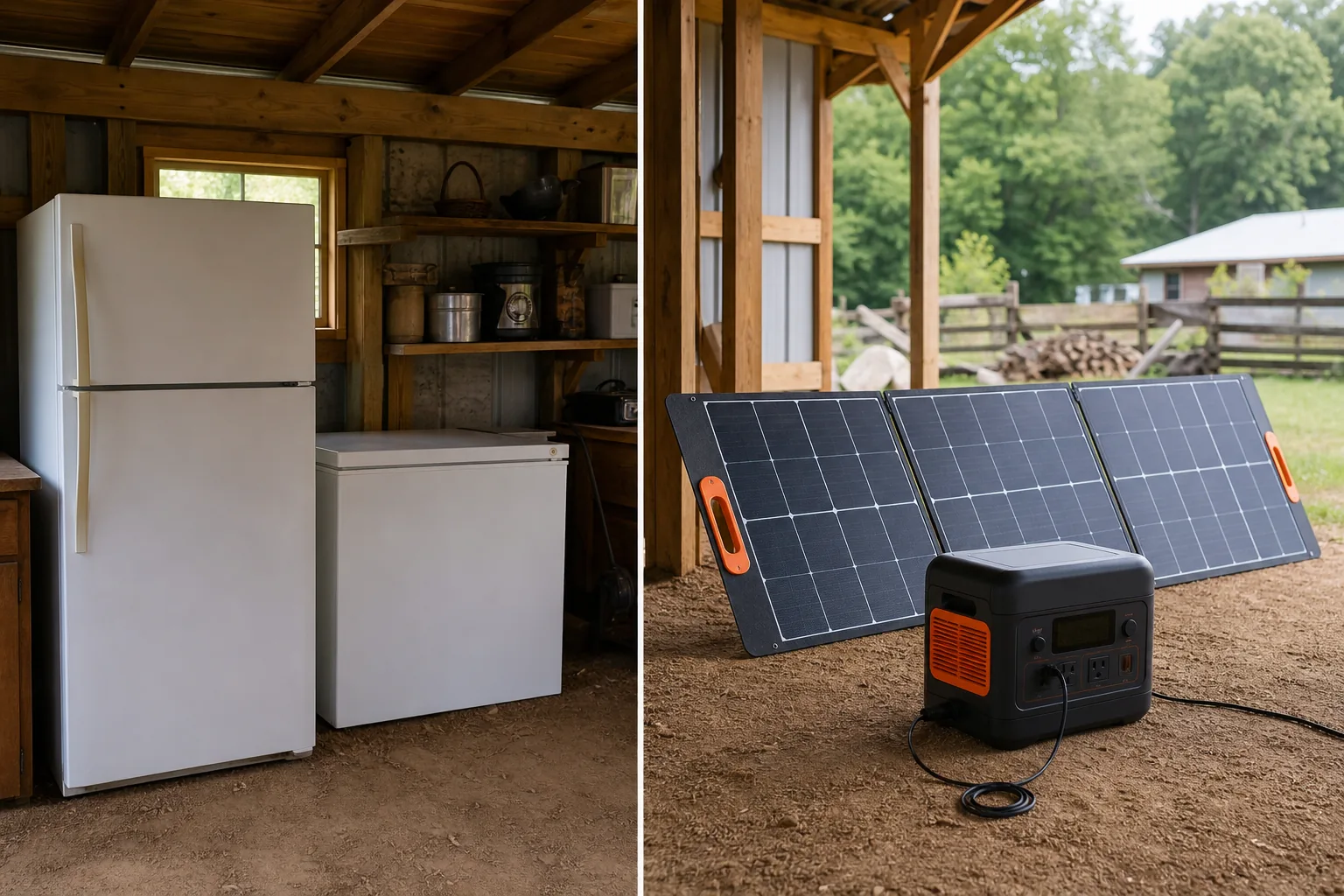
Panel size and battery size answer two different questions. Panels answer how fast you can refill the system. The battery answers how long your loads can run without fresh sun.
Make a load sheet for one normal outage day. Write down each appliance, its running watts, its startup demand if known, and the hours you expect to use it. Include the freezer, fridge, well pump, internet gear, lights, chest freezer, medical gear, and any tool you truly need.
Then split the list into priority groups:
- Must stay on: refrigeration, water, medical devices, and communications.
- Useful for short bursts: microwave, coffee maker, shop tools, or a small pump.
- Leave off during backup: electric heat, water heaters, dryers, and other heavy loads unless the system was built for them.
Add the running watts for items that may operate together. Choose an inverter with room above that total. A 3,000-watt class unit can suit several modest loads, but a fridge startup can still change the result.
For storage, multiply each load’s watts by its expected hours. Add the results as watt-hours. Then compare that number with the battery’s usable capacity, not only its headline capacity. If the maker does not publish battery capacity or usable capacity, treat that as a buying gap.
Finally, compare solar input with your daily refill need. A large panel array may refill the battery faster, but only if the power station accepts that input. The DELTA Pro example shows how far that limit can vary between kits.
Test the routine before an outage. Run the freezer during the evening, note the battery percentage, and see how much the panels add the next day. Your own numbers beat a sales chart.
Step 5: Install, test, and maintain the kit safely
Safe setup means following the manual, keeping water away from the power station, and knowing when the job needs an electrician. A portable unit can sit near a load. A system tied into house wiring needs far more care.
Place the power station on a firm, dry surface. Keep air vents clear. Route panel cables where animals, tires, and mower blades can’t reach them. Use the cable size, connectors, fuses, and disconnects specified for the system. Don’t mix parts because the plugs happen to fit.
Never backfeed a home outlet with a male-to-male cord. That can put power onto circuits someone thinks are dead. Use a proper transfer switch or a separate extension-cord plan that keeps the kit isolated from the house wiring.
Before the first storm, test each load by itself. Start with the fridge. Then add the freezer or well pump if the numbers allow it. Watch for a fault code, heat at a connector, or a sharp drop in battery level.
A small portable unit may be useful for a fridge or communication gear, but it isn’t a full-house answer. One product page states that its compact generator is designed for essential loads rather than whole-home service. That distinction should guide your plan, not the product’s headline watt number.
Keep a pa with the unit. Record the model number, warranty terms, and last test date. Clean dust from vents and inspect cables at the start of storm season. If the system feeds a fixed panel, have the electrical work checked by a qualified professional. A solar engineering and permitting firm represents the kind of service to consider when a homestead system needs design work beyond a portable kit.
Maintenance is dull until the freezer is full and the grid is down. Test the system while the stakes are low.
FAQ
What are the best solar panel kits for homestead backup?
The best solar panel kits for homestead backup match your priority loads and battery need. The Jackery Solar Generator 2000 Plus suits buyers who want expansion and a pure sine wave inverter. The BLUETTI AC200L fits a budget-focused backup plan. For a working farmstead, compare battery capacity before output alone.
How many watts do I need for a homestead?
You need enough inverter output to run the loads you expect at the same time, plus room for startup surges. Add the running watts for your fridge, freezer, lights, internet gear, and pump if needed. Keep heavy loads off unless the system was built for them. Your load sheet gives a better answer than acreage.
Are portable solar generators enough for off-grid living?
Portable solar generators can cover selected appliances, but they may not support full off-grid living. Check battery capacity, solar input, inverter output, and expansion limits. A portable kit can handle a freezer and key lights while a larger fixed system supports a broader load plan. Treat “whole house” claims with care.
Is a pure sine wave inverter worth it on a homestead?
A pure sine wave inverter is worth considering when you run sensitive electronics, motors, or appliances with control boards. Confirm the exact model’s specification before buying, because a similar product name may refer to a different unit.
How do I find local solar help for a homestead?
Start by searching your ZIP code or county for relevant farm and electrical services. The Easy Homestead can help you search its verified local listings when coverage exists, while a licensed electrician may handle fixed house wiring. Ask who will pull permits, install a transfer switch, and support the system after the sale.
Conclusion
For most working homesteads, a mid-tier kit is the sensible starting point. Choose one that covers your priority loads, has a clear battery plan, and can grow if your farm needs more power. Write the load sheet first, then search The Easy Homestead for local support in your county before you install fixed wiring.