The best way to find a local feed store is to start with a ZIP-code search, then confirm stock before you drive. Word of mouth still helps, but it can leave you chasing stale leads or stores that only carry lawn and garden goods. The steps below combine local listings, working-farmer advice, and one official record with a narrow purpose.
Step 1: Search The Easy Homestead by ZIP code or county
Start with a local directory search because distance is part of the answer. A feed store that is 12 miles away may work well for weekly bags, while a store across two counties may only make sense for a bulk order.
Open The Easy Homestead and search by your ZIP code or county. Look for feed and seed suppliers near your property. Read the listing details before you add a store to your route. Check the business type, service area, reviews, and any notes about the animals or supplies it serves.
This saves time when your needs go past one bag of layer feed. A working homestead may need goat ration, pig feed, poultry minerals, seed, bedding, or a source for seasonal bulk orders. A directory built for the homesteading supply chain is more useful here than a general map search because it is aimed at the kinds of local suppliers rural households actually use.
Use the directory search first, then compare the result with the Best Feed Store Near Me Options for Farm Supply | The Easy Homestead. That page can help you think through the differences between a local feed shop, a farm supply store, and a larger retail chain.
Coverage may vary by area. If your county has few listings, treat that as a signal to widen the search one county at a time. Do not assume that no result means no supplier exists.
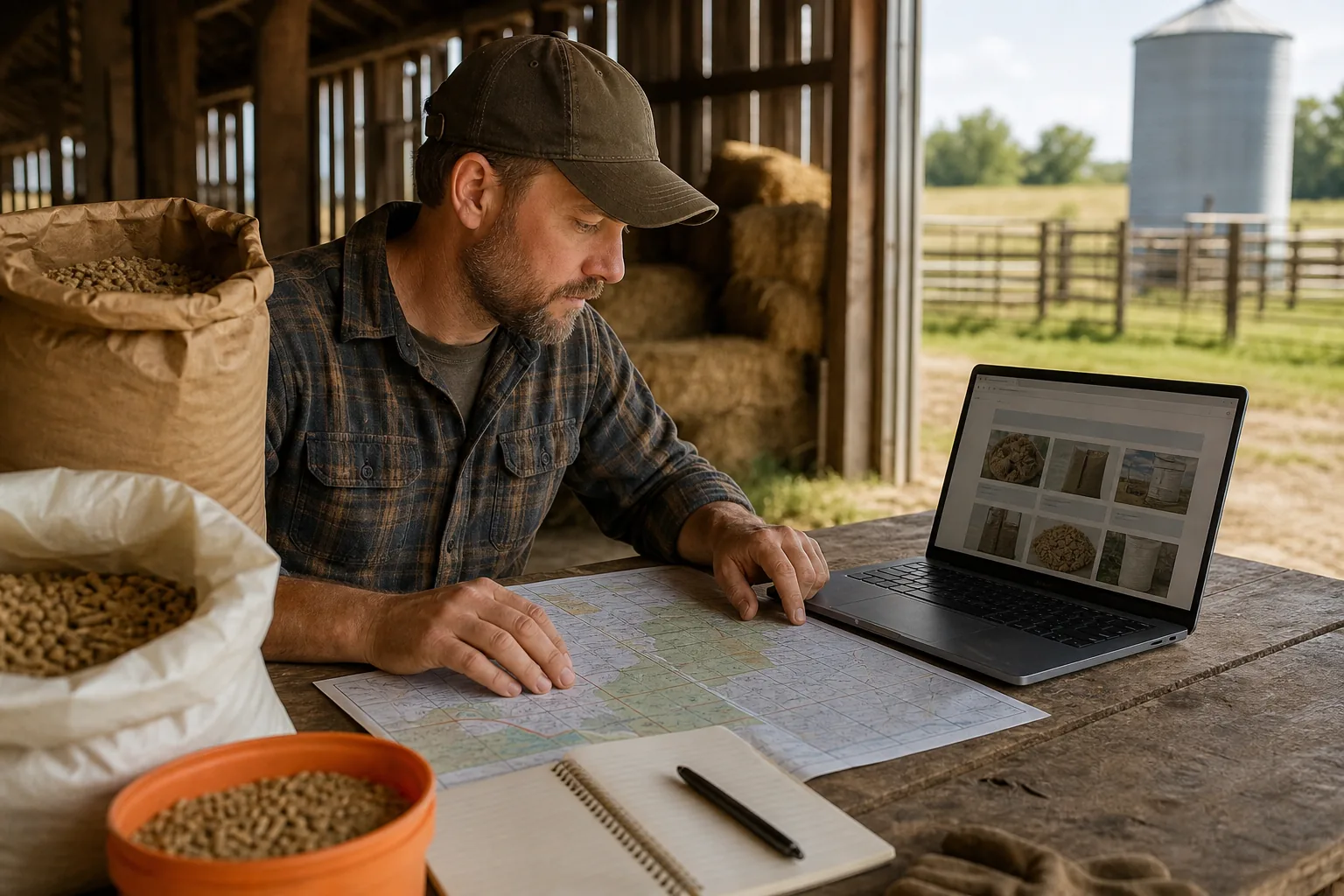
Key Takeaway: Use ZIP or county search to build a short local list before you spend time asking around.
Step 2: Ask working growers where they buy feed
Local growers can tell you which feed stores fit the rhythm of your area. Ask people who keep animals or grow at a scale close to yours, rather than relying on a review from someone buying a single bag for backyard birds.
A farmer’s market is a good place to ask. The growers there may know which shop keeps livestock feed on hand, which one brings in special orders, and which supplier is worth the extra drive. The value is the setting. You can explain what you raise and ask a follow-up question without trying to fit the whole problem into a search box.
Ask questions that reveal fit:
- Where do you buy feed for your goats, pigs, or layers?
- Does the store keep your feed in stock?
- Can they bring in a specific ration or mineral mix?
- How far do you drive for a normal restock?
- Do they sell by the bag, pallet, or another bulk option?
Gardening Facebook groups can fill the same role when you cannot attend a market. Post your county, the animals you keep, and the kind of feed you need. A clear question gets better replies than “Where is the best feed store?” Mention whether you need regular stock or a one-time order.
Still, treat social advice as a lead. People may recommend a shop because it is close to them, not because it carries goat feed or pig grower ration. A comment from several months ago may also describe a store’s old stock or old ownership.
Once you have a name, check it against Best Feed for Goats: A Usable Feeding Guide | The Easy Homestead if goats are part of your order. The right supplier depends on what your animals need, not only on which shop has the nearest sign.
Pro Tip: Ask growers what they bought there last month. That answer tells you more than a general claim that a store “has livestock supplies.”
Word of mouth works best as a second layer. Use it to spot stores that deserve a closer check, then verify the details yourself.
Step 3: Check distributor records when local search results are thin
Use an official distributor record when local search results leave a gap. It can uncover a business name or address that does not appear in your usual community groups.
The FDA maintains a VFD distributor notification list. VFD means veterinary feed directive, which applies to certain medicated feeds that require direction from a licensed veterinarian. The FDA says its list includes distributor names and addresses, and you can sort the spreadsheet by distributor name or state. The agency updates the list when it processes new notifications.
That list is useful, but do not mistake it for a full feed-store directory. It covers VFD-medicated feed distributors. A local shop that sells ordinary poultry feed, hay, minerals, or garden seed may never appear there.
| Search method | What it can tell you | Main gap | Best use |
|---|---|---|---|
| The Easy Homestead | Local supplier listings by ZIP code or county, plus available listing details and reviews | Some areas may have limited coverage | Build your first local shortlist |
| Farmer’s market | Neighbor-to-neighbor advice from growers who buy nearby | Advice is informal and coverage depends on who you meet | Find trusted local leads |
| Gardening Facebook group | Fast suggestions from people in a nearby area | Posts can be old, uneven, or hard to verify | Ask about stores outside your normal network |
| VFD distributor notification list | Distributor names and addresses, with sorting by state or distributor name | It covers VFD distributors, not every feed store | Check a thin search area for additional names |
To use the spreadsheet, filter by your state first. Then look at the addresses and compare them with your county search. A listed address is a lead, not proof that the business sells the exact feed you need today.
There is another missing piece across all three outside methods: none gives you a quick view of a store’s useful service area. That is why a local ZIP search should remain your main path. The official list adds a verification clue, while community sources add local context.
If the records disagree, favor the source that gives you current listing details and a clear way to confirm them. You are trying to plan a feed run, not build a perfect national database.
Step 4: Call before you make the drive
Call the store before leaving the farm because feed stock changes faster than online listings. This step is especially important when you need a certain protein level, a medicated ration, a mineral blend, or several bags at once.
Keep your questions short. Tell the staff what animal you feed and name the exact type of product you want. Then ask:
- Do you have it in stock today?
- What bag size is available?
- Can you hold the order until pickup?
- Can you bring it in if it is not on the shelf?
- Do you have a limit on the number of bags?
Do not ask only, “Do you carry chicken feed?” A store may stock chick starter but not layer feed. It may have a goat pellet but no loose mineral. Precise words help the staff give you a useful answer.
Ask about hours and pickup rules while you have someone on the line. Rural stores may have different hours on market days, holidays, or delivery days. If you need a pallet or a special order, ask how much notice the store wants.
Write down the answer. Note the product type, bag count, price if provided, and the name of the person who confirmed the stock. If you are driving a long way, repeat the order when you arrive so a mix-up does not follow you home.
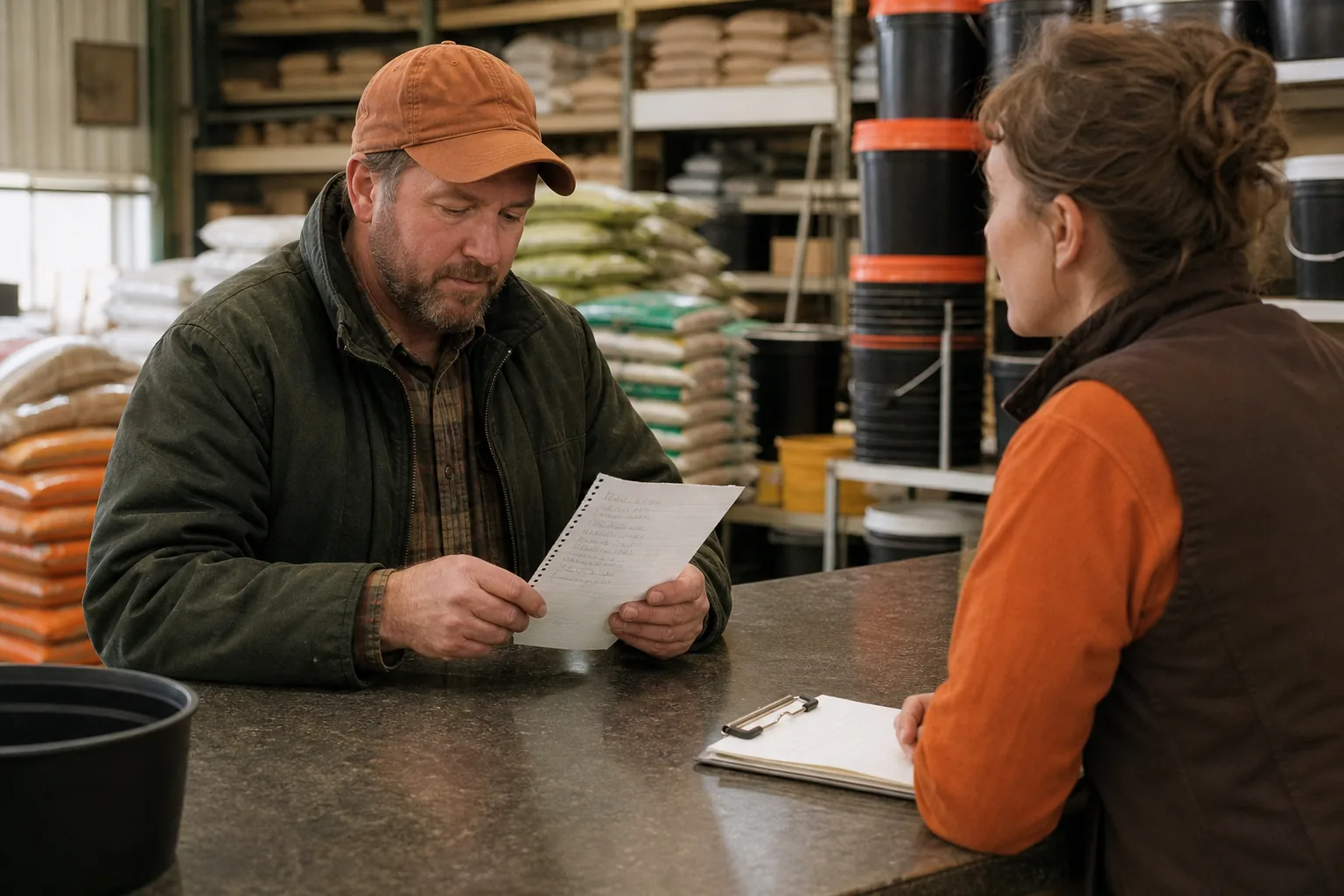
A store that answers clearly may become part of your regular supply plan. A store that cannot confirm basic stock may still be useful, but only for items you can afford to source elsewhere.
Step 5: Confirm the store fits your animals and buying schedule
The best local supplier fits your animals, order size, and restock schedule. A shop can be nearby and still be a poor match if it lacks the feed form or volume your homestead uses.
Make a small supply sheet before your first visit. List each animal group and the item you normally buy. Include the bag size, how often you restock, and any requirement that cannot change. For example, you may need a certain layer ration every week, a goat mineral source each month, and pig feed in larger seasonal orders.
Then compare the store against five working needs:
- Stock: Can you buy your usual feed without special ordering every time?
- Fit: Does the store carry supplies for your actual animals and life stages?
- Order size: Can it handle your normal number of bags or a bulk request?
- Storage: Do the feed bags look dry, clean, and protected from pests?
- Schedule: Can you reach the store during a route you already make?
Look at storage when you arrive. Feed should not sit where rain can reach it. Check that bags are intact and that the shop keeps old stock from lingering unnoticed. You can also ask how the store handles special orders and damaged bags.
For layers, compare the store’s available feed with the needs in Best Feed for Laying Hens: 7 Top Picks | The Easy Homestead. That keeps the purchase tied to flock needs instead of a shelf label. The same habit works for goats, pigs, poultry, and any animal group you feed on a set cycle.
Keep a backup source. A feed mill may close for a holiday, lose a shipment, or stop carrying a line. Your backup can be another local store, a supplier in the next county, or a neighbor who buys the same ration. The point is to make the plan before the bin is empty.
The Easy Homestead can help you keep those local options in one place. Search by county, save the suppliers that fit your route, and update your notes after each visit. That turns a one-time search into a supply plan you can use again.
FAQ
What is the best way to find a local feed store?
The best way to find a local feed store is to search by ZIP code or county, then verify stock by phone before driving. Use farmer recommendations and local groups to find leads that search results miss. The FDA’s VFD list can add names, but it only covers certain medicated-feed distributors.
How do I find a feed store near my ZIP code?
Search The Easy Homestead by ZIP code to the listing details, then check the drive time and service area. If the results are thin, expand to nearby counties and ask working growers where they buy feed for the animals you keep.
Can I use the FDA distributor list to find any feed store?
No, the FDA distributor list does not include every feed store. It covers distributors connected with veterinary feed directive, or VFD, notifications for certain medicated feeds. You can sort it by state or distributor name, but you still need to confirm whether a listed business sells your regular poultry, goat, pig, or livestock feed.
What should I ask a feed store before I visit?
Ask if the store has your exact feed type and bag size in stock. Then ask about the number of bags available, special orders, pickup timing, and store hours. These questions matter when you need a full restock or a product that small rural stores may carry only by request.
How can I tell if a local feed store is right for my farm?
A good match carries the feed your animals need on a schedule you can maintain. Check stock, storage, order size, drive time, and the store’s ability to bring in special items. Keep a backup supplier because one store may not have every ration or may run short during busy seasons.
Conclusion
Start with The Easy Homestead’s ZIP-code or county search, then confirm the feed and quantity before you leave home. Add advice from working growers and use the FDA list only as a narrow backup check. Search listings by county to build a dependable local feed plan.