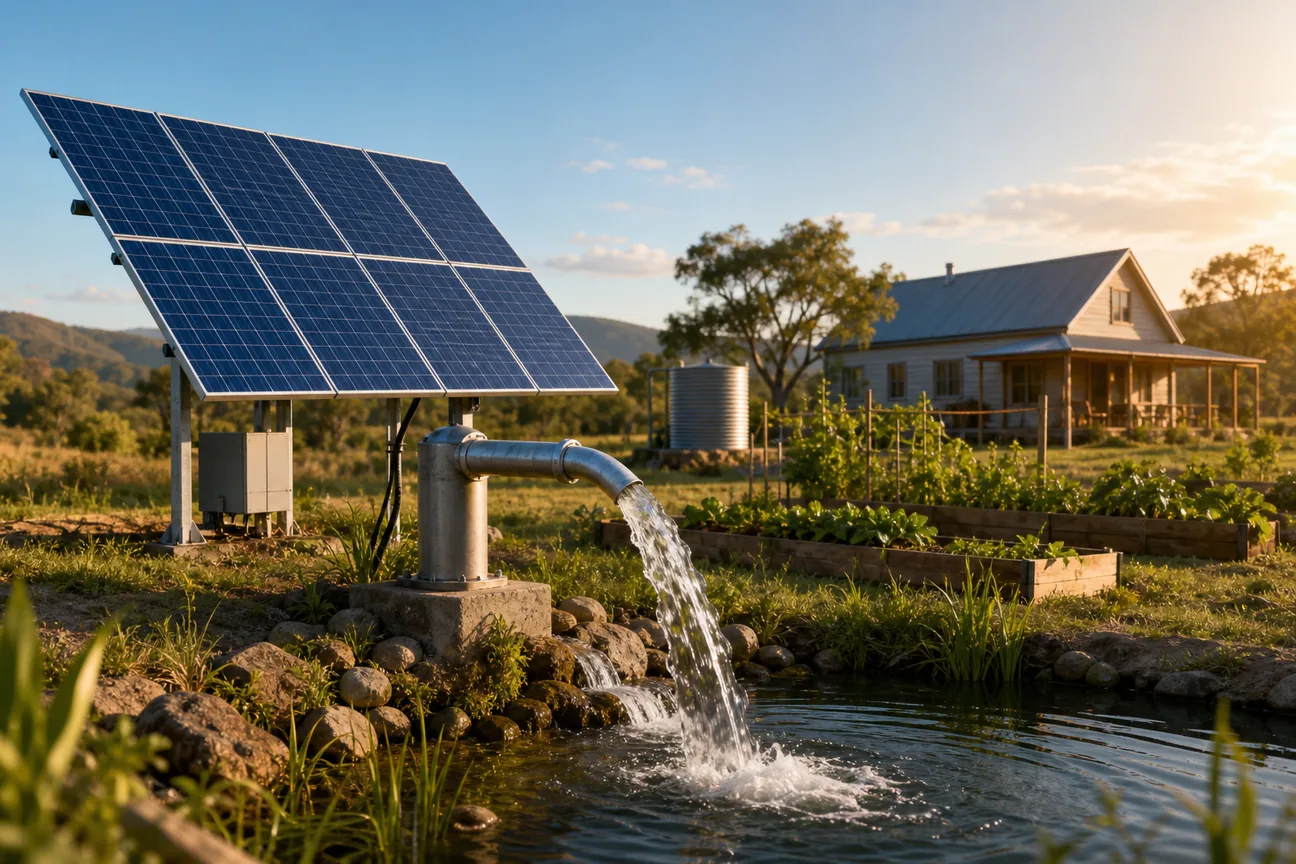
If you need water at a pasture, garden, or off-grid home, the right solar pump can cut out long pipe runs and daily hauling. But bigger wattage doesn’t always mean much more water. Compare three RPS pump models below, then check how the RPS 800 fits a deep well or an off-grid home. Those two use cases refer to the same model.
1. RPS 200, the compact livestock-watering option
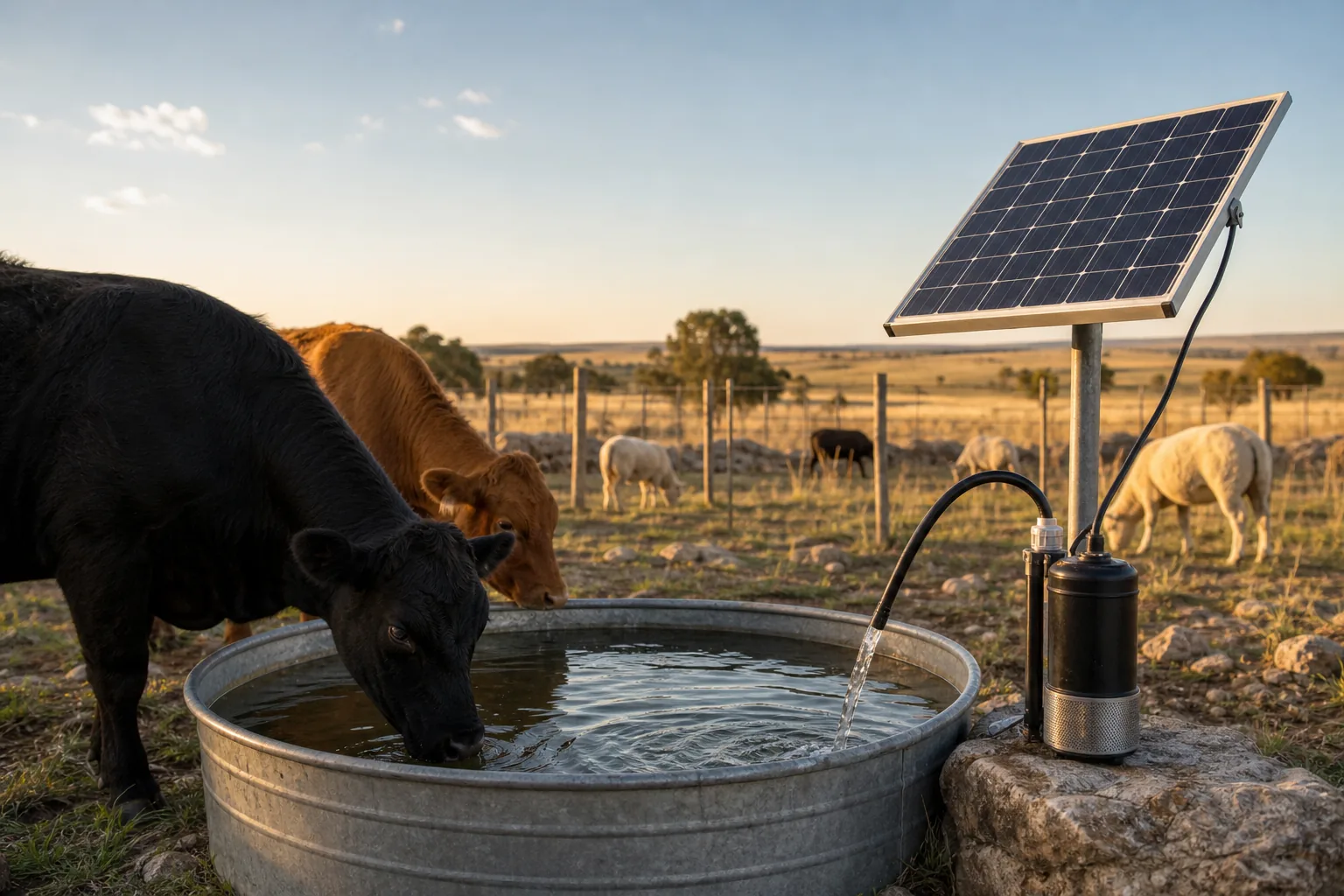
The RPS 200 is the smallest named option in this shortlist for livestock watering. Its published chart lists 5.1 gallons per minute at zero head with a 200-watt solar array.
 Save
That makes it a sensible starting point when the source is close enough and your daily demand is steady rather than sudden. A storage tank matters here. Solar pumps work while the array has useful sun, so the tank carries water into the evening or through a cloudy stretch.
The kit listing gives a two-year warranty. The manufacturer’s RPS 200 performance chart lists 2.1 GPM at 125 feet of head. Confirm your operating point before sizing a deep well, tall tank, or uphill run.
Before you buy, ask for the pump curve at your required head. Flow at the outlet is not the same as the headline flow rate. A pump may move 5.1 GPM at one lift and much less at another.
| Check | RPS 200 | Why it matters |
|---|---|---|
| Best use | Livestock watering | Works best when a tank can hold water for demand peaks |
| Solar input | 200 watts | Panel rating, not measured motor consumption |
| Listed flow | 5.1 GPM | Confirm the flow at your actual head |
| Solar panel size | 200 watts | Useful for a compact array |
| Warranty | 2 years | Ask what parts and labor the warranty covers |
| Published operating point | 2.1 GPM at 125 feet | Compare flow at your required head |
| Current price | Listed on the manufacturer page | Check the selected kit, panels, and delivery costs |
A storage tank can help low-flow systems serve short periods of heavy use; related pumping information is available.
2. RPS 400, the middle-ground livestock pump
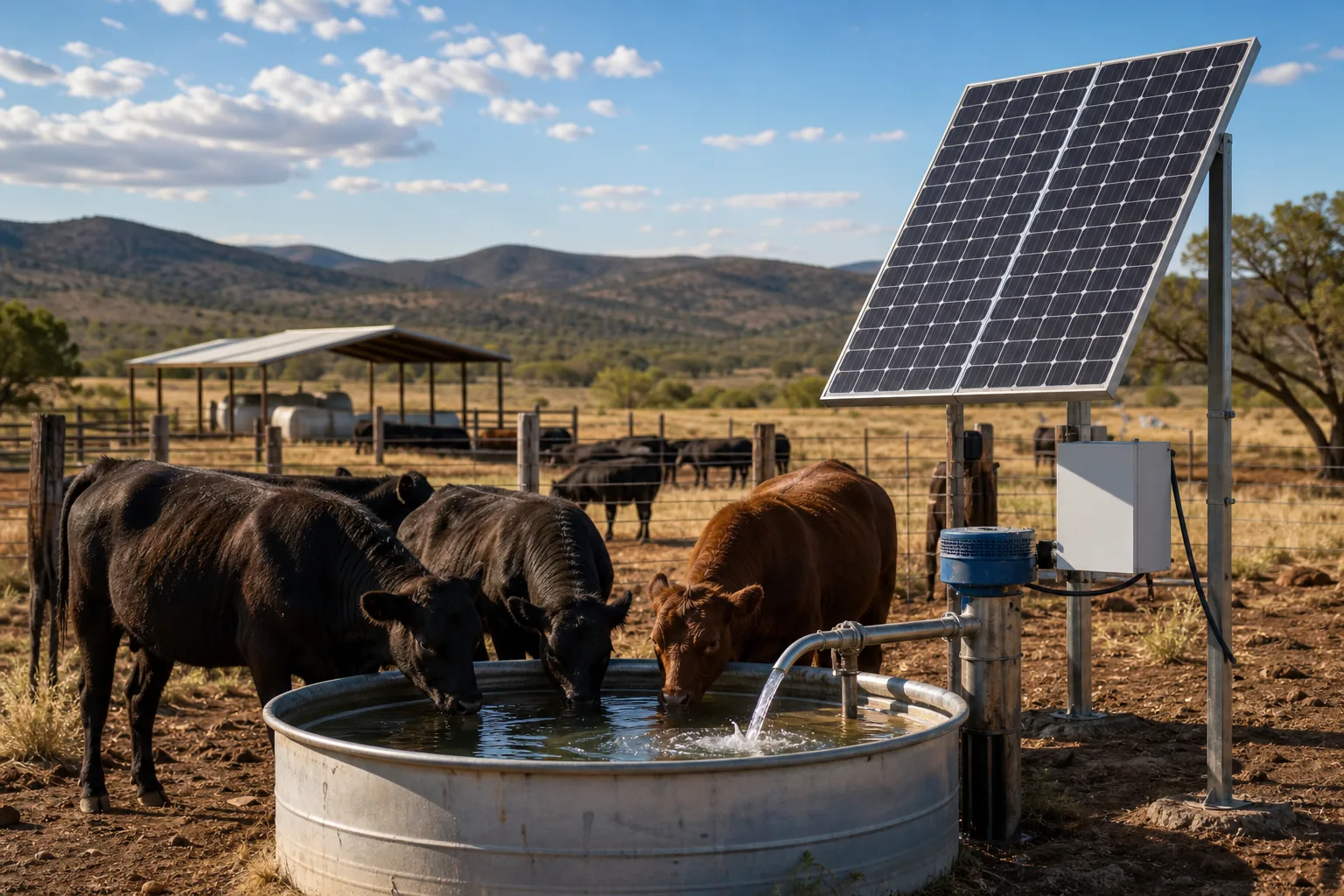
The RPS 400 is the middle choice for livestock watering. Its published chart lists 7.6 GPM at zero head with a 400-watt solar array.
 Save
That extra flow can help when several animals drink at once or when the tank sits farther from the source. Still, don’t assume twice the power gives twice the water. The listed flow rises from 5.1 GPM on the RPS 200 to 7.6 GPM here.
The RPS 400 product page lists a two-year comprehensive warranty, current pricing, and flow by head, including 2.9 GPM at 225 feet. Check the curve at your own head and confirm any optional battery setup with the manufacturer.
Plan the system around a float-controlled tank. The controller should stop the pump when the tank is full. A low-water sensor can also protect the source from running dry, if the kit and setup support that sensor.
For a property with two watering points, a larger holding tank may be a better upgrade than jumping to a much bigger pump. That choice reduces the need for high flow during a short drinking window.
3. RPS 800, the higher-flow livestock system
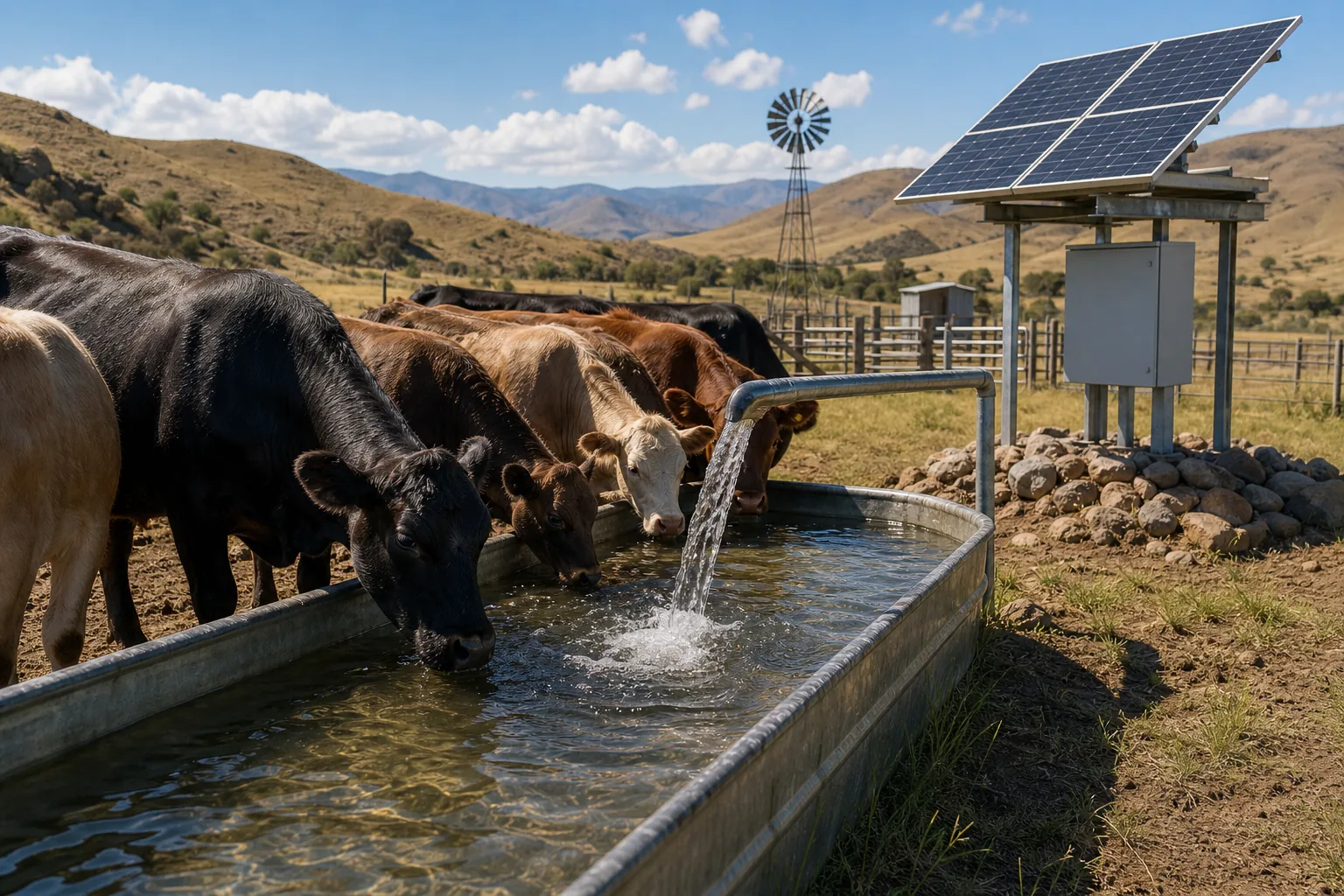
The RPS 800 lists 8.9 GPM at zero head with an 800-watt solar array.
 Save
That sounds like a major jump from the RPS 400, but the listed flow only increases by 1.3 GPM. The solar array doubles while zero-head flow rises by about one sixth. That comparison does not measure efficiency at your well: compare both models at the same required head before choosing.
The RPS 800 product page lists current pricing, a two-year comprehensive warranty, and a chart showing 4.5 GPM at 300 feet of head. Use the curve to check an uphill run, a distant tank, or a falling well level.
It may fit a large stock tank that needs fast recovery during the day. It may also be wasteful if the tank is small and the herd drinks in short bursts. In that case, storage and a float switch may solve the problem more cleanly.
A panel array near animals needs protection. Put the controller out of reach, guard exposed cable, and keep the array where cattle cannot rub against the mount. A local fencing provider can help protect the equipment without blocking service access.
Key Takeaway: Compare the RPS models at your measured head. Zero-head flow alone cannot tell you which kit will deliver enough water.
4. Using the RPS 800 for a deep well
This is the same RPS 800 discussed above, applied to a deeper well. Its published performance chart reaches 300 feet of head with an 800-watt solar array.
All three RPS model pages publish flow by head. To compare those curves with your well, you need the static water level, expected drawdown, elevation gain, pipe length, and pressure target.
Think of head as the total lift the pump must overcome. Water level below ground is only part of it. Add the rise to the tank, friction in the pipe, and pressure if the water enters a pressurized home system.
The kit has a two-year warranty. Do not compare this system on wattage alone. Ask for expected flow at your actual head, not the best-case figure.
Direct product pages deserve a close look. Third-party listings may show power while leaving out head and system details.
For a deep well, storage is still valuable. The pump can fill an elevated tank during sun hours, then gravity can feed troughs or a pressure system later. When you are comparing tank sizes and costs, review these rainwater collection system cost options alongside the pump’s storage requirements. Batteries may help in some setups, but a tank often solves the water problem with fewer parts.
5. Planning RPS 800 storage for an off-grid home
An off-grid home is another possible use for the same RPS 800. Confirm storage needs for the house before choosing a battery bank.
RPS says the system can run directly from solar and that a battery bank can be added when needed. Confirm the battery voltage, capacity, controller compatibility, and household demand with the manufacturer; water storage may cover overnight demand without a battery.
Match the pump to the home system you actually plan to run. A house may need water for sinks, toilets, showers, laundry, and an outdoor hose. Those loads often arrive in bursts, so a pressure tank or improved storage tank can reduce pump cycling.
Do not treat the two-year warranty as proof that the system fits your well. You still need the pump curve, head calculation, pipe size, controller details, and freeze plan. Ask what happens when the well level drops or the battery reaches its low limit.
Mount the panels where winter shade won’t cut the array’s output. Keep the controller dry and accessible. Add a disconnect so you can work on the wiring without leaving the array energized.
If the home also needs backup electricity, compare the pump with your wider off-grid plan. A separate generator may cover cloudy weather, but it adds fuel, maintenance, and another machine to service. The best setup is the one you can inspect and repair before a storm.
How to choose your solar water pump
Start with the water source and the tank location. A pond, spring, shallow well, and deep well each create different suction, lift, and filtration needs.
- Calculate total head. Measure the lowest expected water level. Add elevation to the tank, pipe friction, and pressure needs.
- Set daily demand. Count livestock demand, irrigation blocks, household use, and dry-weather reserve.
- Choose storage. Use a tank or trough when the pump’s daytime flow won’t match evening demand.
- Check the array. Confirm panel wattage, mount space, cable distance, shade, and snow exposure.
- Protect the system. Look for low-water shutoff, tank-full control, a disconnect, and a clear freeze plan.
- Ask for missing specs. Get max head, flow at head, price, warranty terms, replacement parts, and support details.
The RPS 200, 400, and 800 pages each provide current pricing and performance information. Check the exact kit configuration, flow at your head, warranty terms, and any battery requirements before ordering.
For panel planning, compare the solar panel kits for homestead power options alongside the array, battery, and inverter needs without mixing those needs into the pump choice.
Pro Tip: Ask the seller to write down expected GPM at your measured head. A headline flow rate without head is not enough to size a well system.
Ready to find the local help around your water project? Search by county for fencing, farm equipment, feed suppliers, and other services that can support the install.
Solar water pump FAQ
What size solar water pump do I need for a homestead?
You need a pump sized for total head and daily water demand, not property size alone. Measure the lowest water level, add the rise to the tank, then account for pipe loss and pressure. For anyone planning to buy a solar water pump for homestead use, the seller should confirm expected flow at that full head.
Can a solar water pump run without batteries?
Yes, many solar pumps can run directly from panels while the sun is available. A storage tank can hold water for night use and cloudy periods. Batteries add another way to store energy, but they also add cost and parts. RPS supports optional battery banks, but capacity must be sized for your setup rather than assumed from a model name.
Is a higher-watt solar pump always better?
No, higher wattage isn’t always better. The RPS 200 and 800 list different zero-head flow rates and solar array sizes, but those figures do not establish efficiency at your well. Compare flow at your required head and the gallons you need each day.
What does pump head mean?
Pump head is the total lift and pressure the pump must overcome. It includes the lowest water level, elevation to the tank, pipe friction, and household pressure when applicable. A deep well is not sized by drilled depth alone. Ask for max head and flow at your expected operating point.
Do solar water pumps need maintenance?
Yes, solar pumps need routine checks. Inspect panel mounts after severe weather. Look for damaged cable, blocked intakes, leaks, sediment, and changes in tank fill time. Keep the controller dry. If flow drops, check the water level and pipe first before assuming the pump motor failed.
Conclusion
For livestock, start with the RPS 200 or RPS 400 only after confirming head. For a deep well or off-grid home, check the RPS 800 curve against your measured head and household storage needs. Before you order, write down your water level, tank height, pipe run, and daily demand. Then search The Easy Homestead for local farm trades that can help protect and install the system.