You just put a deer on the ground, and now you need a processor who won’t ruin it. The clock is already running. Heat is what spoils meat, so the real work starts before you even pick a shop. Here’s how to find a good processor near you, what to ask before you hand over your deer, what the work costs, and when it’s worth cutting it up yourself.
How to find a deer processor near you (and what to ask before drop-off)
Start with your state wildlife agency. Most run a processor directory you can search by county, and it’s the fastest way to get a short list of names near you. The catch is those lists often give you a name and a phone number and nothing else. The directories we’ve pulled up frequently list only a handful of processors across an entire state, and only one of them actually tells you what they do or what it costs.
So the directory gets you the names. You still have to do the calling. Ask at the feed store too, because the counter staff usually knows which shop is booked solid and which one turns out clean venison. Facebook hunting groups work in a pinch, but they’re noisy and the recommendations come from three counties over half the time. That gap is exactly why we built The Easy Homestead as a searchable directory of meat processors and local butchers with real reviews, so you’re not starting every search from scratch.
Once you have a couple of names, call before you drive over. Processors book out fast in season, sometimes months ahead, and a wasted trip with a warm deer in the truck helps nobody. Ask these questions on the phone:
- Are you taking deer right now, or are you booked out?
- Do you charge a flat rate or by the pound, and what’s included?
- How long is your turnaround once I drop off?
- Do you do specialty products like summer sausage, snack sticks, or jerky?
- How do you want the deer when I bring it, gutted, skinned, quartered, or whole?
A good shop isn’t afraid to look you in the eye and turn down a deer that’s spoiled. That honesty matters. A processor who’ll refuse a bad carcass is one who cares what ends up on your family’s table. The condition of your carcass also decides how much meat you get back, so a dirty or poorly handled deer means more trim and fewer packages in the freezer.
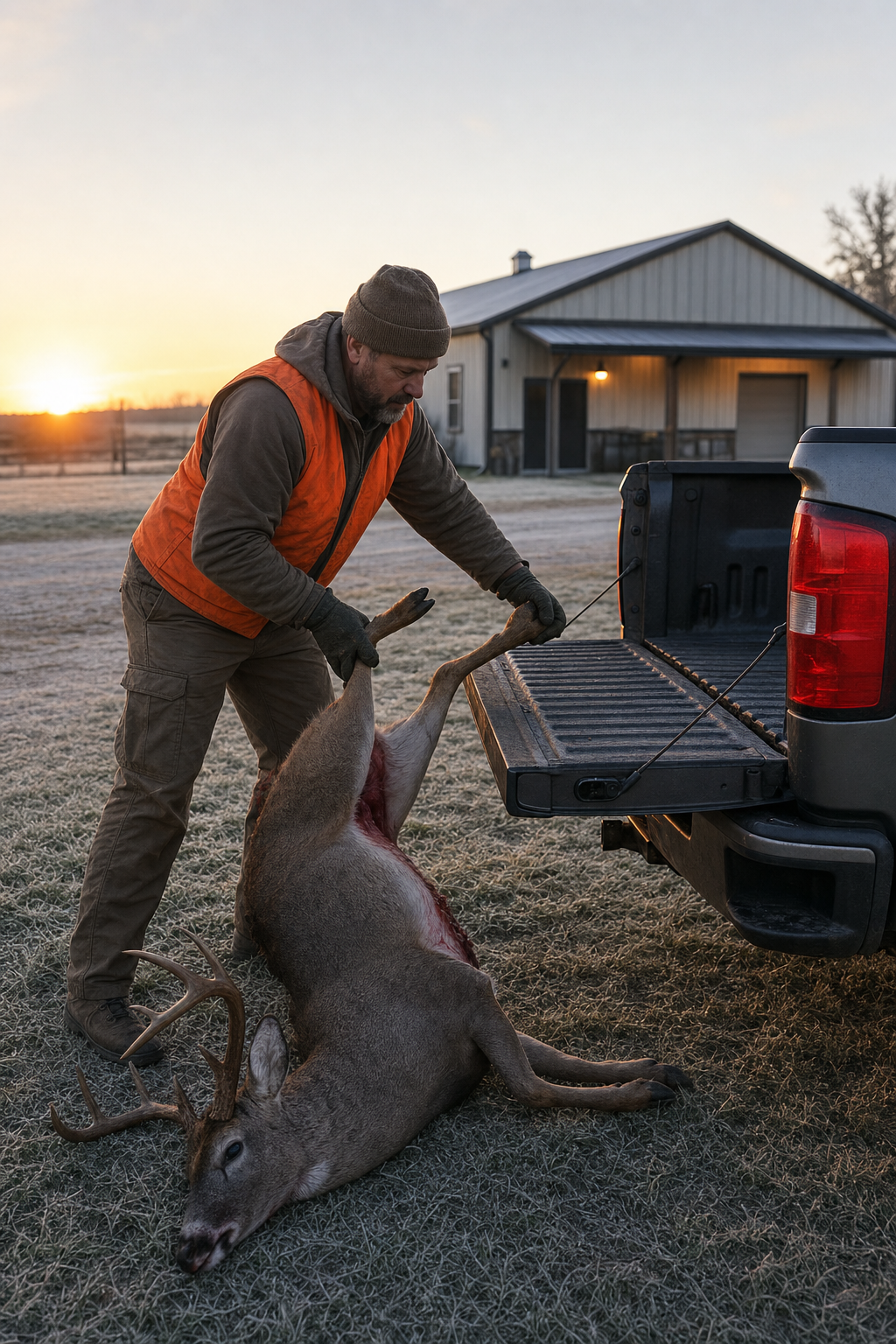
Why cooling the carcass fast matters more than which processor you pick
The best processor in three counties can’t fix a deer that got warm. Cooling the carcass fast is the one thing that decides whether your venison tastes great or tastes off, and it’s on you, not the shop. Heat is what spoils meat, so the clock is ticking. Get the hide off and get the meat cool. That’s the job.
Here’s the science worth knowing. After a deer dies, the muscles go into rigor mortis within a couple hours, and they stay tight and tough for 12 to 24 hours before relaxing again. Cut and freeze a deer while it’s still in rigor and that meat stays tough. Wait for rigor to pass and cool the carcass, and enzymes start breaking down the collagen between the muscle fibers. That’s aging, and that’s what makes venison tender.
Aging is not rotting. The difference is temperature. The ideal range to age a deer is 36 to 40 degrees F, and many butchers aim for 36. Below freezing, you’re not aging, you’re freezing, and a freeze-thaw cycle hurts the meat. Above 40 for any part of the day and you’re handing bacteria an open door.
Pro Tip: If it’s too warm outside to hang a whole carcass, skin the deer, break it into seven pieces, and age it in a spare fridge set to 36 F. Wrap the meat in plastic so it doesn’t dry out. It works just as well as a hanging carcass.
Proper temperature control is also why some folks who set up a home processing area pay attention to insulation and cooling. A well-sealed, temperature-controlled room is the same idea a commercial outfit relies on, and insulated cold-storage work is what keeps a processing space holding a steady chill. Aim for three to four days of aging in that 36 to 40 range and most deer come out tender. Younger deer need less, older bucks need more.
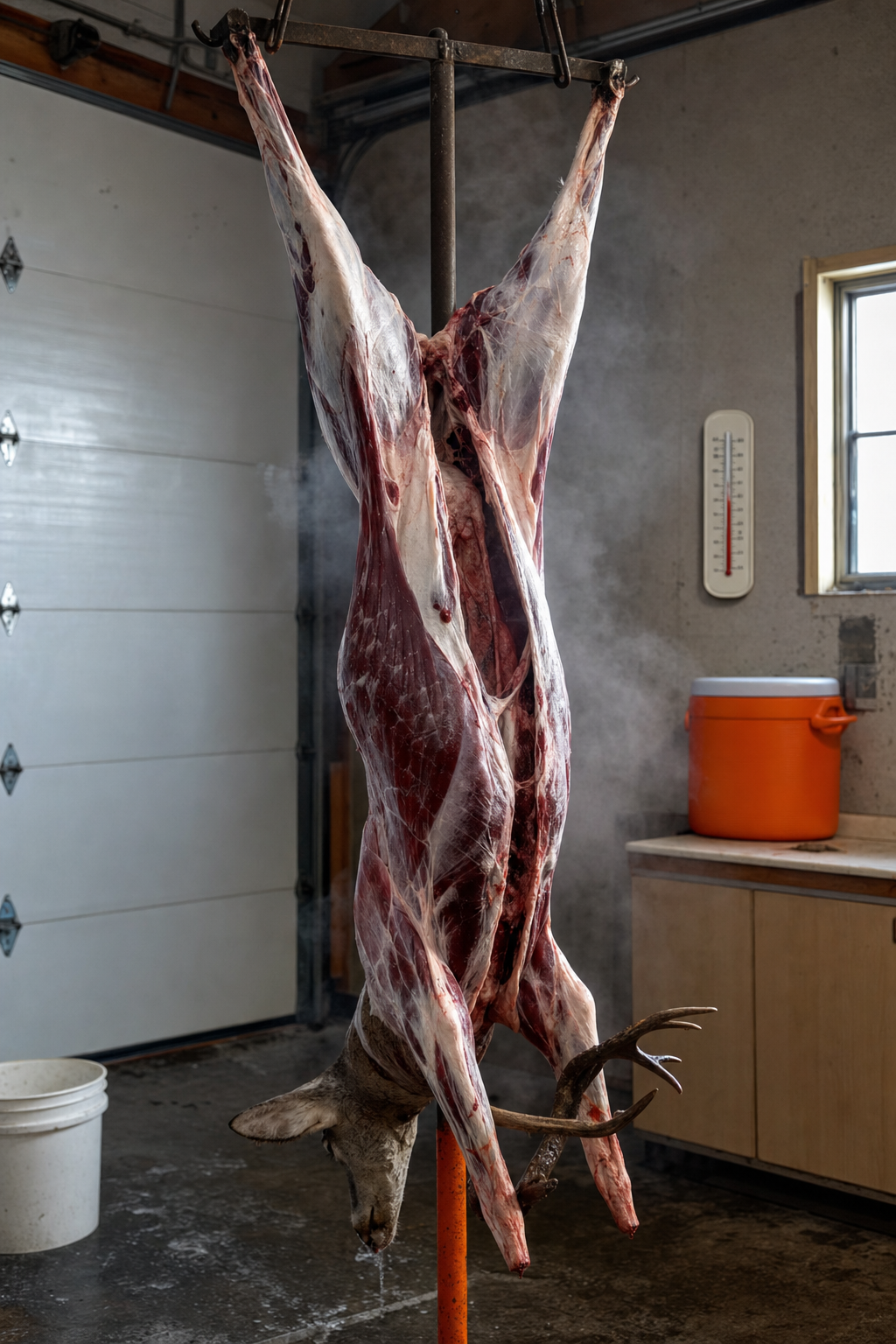
What deer processing services actually include: skinning, deboning, cutting, packaging
A full-service deer processor takes your whole animal and hands back labeled, frozen packages. The work breaks into four jobs that nearly every shop does, plus extras you can add on.
Skinning and quartering
Most shops will skin your deer, hang it, and quarter it for a small fee even if you plan to finish the cutting yourself. This is the messy, time-consuming part, and it’s why a lot of hunters who’d happily cut steaks at home still pay someone else to skin. The cleaner your deer comes in, the less the skinner has to trim away. A deer caked in dirt, blood, or dog drool costs you meat.
Deboning and cutting
Once the carcass is broken down, the cutter separates the major muscle groups and turns them into the cuts you actually cook. Backstraps and tenderloins become steaks. Hindquarters become roasts or get sliced and cubed. Front shoulders and necks usually go to roasts or the grind pile. A good cutter trims the fat and the silver fascia off each muscle, because that’s where a lot of the wild, gamey taste lives.
Grinding and specialty products
Whatever you don’t keep as whole cuts gets ground for burger, or made into something better. This is where shops earn their reputation. Summer sausage, snack sticks, jerky, brats, and smoked products all start as grind. Many processors blend in pork or beef fat because venison is so lean it falls apart without it. If you’ve got a knack for cured and ground meats, the same skills carry over to projects like a homemade liver pudding recipe back in your own kitchen.
Packaging and labeling
The last step is wrapping. Better shops vacuum-seal everything and label each package with the cut and the date. Vacuum sealing keeps meat fresh longer than butcher paper and stacks flat in the freezer. When you pick up, a good processor sends you home knowing exactly what’s in each bag.
One thing worth checking: none of the four Georgia processors we looked at were listed as USDA-inspected. That’s normal for custom game processing, but it means you can’t assume any shop meets federal inspection standards. If that matters to you, ask whether they’re state-inspected or USDA-inspected before you drop off.
Deer processing pricing and turnaround times you can expect
Standard cut-and-wrap on a whole deer usually runs in the $65 to $100 range, and the price depends mostly on whether you skin it or the shop does. One commercial shop posted $85 for a regular-cut deer and $100 for a large one. Pricing for specialty products is separate and almost always charged by the pound.
Real numbers from posted price sheets help set expectations. The table below shows how a few shops structure their charges and how that affects what you do before drop-off.
| Service or scenario | What it typically costs | What it means for you |
|---|---|---|
| Standard cut, you skin the deer | Around $65 flat | Cheapest option if you’ll skin and quarter yourself |
| Standard cut, shop skins the deer | Around $75 to $85 flat | Worth it if you don’t have space or time to skin |
| Caped for mounting | Around $90 | Tell the shop before they start if you want a shoulder mount |
| Quartered meat, per quarter | Around $11 per quarter | Good if you only want part of the animal handled |
| Late pickup fee | $5 or more per day | Pick up promptly once they call; storage isn’t free |
| Insides not removed at drop-off | $10 added fee | Field-dress before you bring it in |
Those late-pickup and not-gutted fees are real. Some shops add a per-day charge if meat sits more than a few days after they call, plus an added fee if the insides weren’t removed before drop-off. Specialty products carry their own minimums. A processor making summer sausage or kielbasa often wants a 20-pound minimum per flavor and lets you add fresh pork to lean it out, with cooked products shrinking around 25 percent during smoking.
Turnaround is the part hunters underestimate. Don’t drop off Saturday night and call before church Sunday expecting it ready. It takes a few days minimum to hang, cut, and package. Custom shops that focus on specialty work, like one butcher that only accepts clean, boneless venison and only in January, quote a two-week rule of thumb. Budget a week or two and you won’t be disappointed.
Key Takeaway: Expect $65 to $100 for standard cut-and-wrap, a one to two week turnaround, and per-pound pricing with minimums on any sausage or jerky.
Doing it yourself: cutting up a deer at home, step by step
You can cut up a whole deer with one good knife and no saw. A 6-inch semi-stiff boning knife runs about $25 and does almost the entire job. The trick is that nearly every cut comes apart along natural seams between the muscles, so you’re separating, not sawing. Here’s the order that wastes the least meat.
Step 1: Pull the tenderloins first
The tenderloins, sometimes called the fish, are the most tender cut on the animal and they sit inside the body cavity along the spine. Pull them first so you don’t nick them later. Cut at the base of the pelvis, run your knife along both sides of the spine, and they pretty much fall out. Don’t age these. They’ll dry out and you’ll lose yield.
Step 2: Take off the front legs
The front legs aren’t held on by any joint, just muscle. Grab the leg, pull it away from the body, and follow the seam with your knife until it comes free. From there you can bone out a shoulder roast or trim the whole thing for grind. Trim off the fat and any gland you find.
Step 3: Remove the backstraps
The backstraps run along both sides of the spine on top, and these are your prime steaks. Start at the neck end, draw your knife down along the feather bones of the spine, then come back behind the finger bones to free the whole loin in one long piece. Improve your time here. This is the best meat on the deer.
Step 4: Work the hindquarters
The hindquarters hold the most meat. Cut around the pelvic bone, find the ball-and-socket joint, and free the leg. The whole hind leg comes apart into the top round, bottom round, sirloin tip, and shank. Separate those by their seams. The shanks, full of connective tissue, are great for slow braises or bone broth.
Step 5: Grind, package, and freeze
Cube everything that isn’t a steak or roast into inch chunks for grinding. Pressing ground venison into thin, one-pound vacuum-sealed packs is worth the effort because they stack flat and thaw fast. Label each pack with the cut, the date, and which deer it came from. Focus on what you actually cook. If you never make roasts, turn those into grind for jerky or sausage.
You don’t have to do it all in one sitting either. As long as the meat stays cool, break it up over a day or two. Set the right pace and home butchering is genuinely satisfying, the same way working through a first-timer skill like learning how to milk a cow pays off once the routine clicks.
DIY versus a professional shop: which makes sense for you
The honest answer depends on three things: your time, your gear, and whether you want sausage. If you only want steaks, roasts, and burger, and you have a cool space to work, DIY saves real money and you control exactly how clean each cut comes out. If you want summer sausage and snack sticks, a shop with a smoker and a sausage stuffer beats anything you’ll do with a starter kit.
| Factor | DIY at home | Professional shop |
|---|---|---|
| Cost per deer | Gear pays off over a few seasons; near-zero per-deer after that | $65 to $100 standard, more for specialty |
| Time | 2 to 4 hours, can split over days | One to two week wait, no labor for you |
| Gear needed | Boning knife minimum; grinder and vacuum sealer for the full job | None |
| Specialty products | Hard without a smoker and stuffer | Sausage, sticks, jerky done right |
| Control over cleanliness | Total; you trim every muscle yourself | Depends on the shop’s standards |
For homesteaders weighing whether to invest in a grinder and vacuum sealer versus paying a shop every year, the math usually favors buying gear if you take more than one or two deer a season. The startup cost is real, though, and some folks finance equipment for a processing setup when they’re building out a small operation. A middle path works too. Pay the shop to skin and quarter, then cut and wrap at home.
Frequently asked questions
How much does deer processing cost near me?
Standard deer processing usually costs $65 to $100 for cut-and-wrap on a whole deer, depending on whether you skin it yourself or the shop does. Specialty products like summer sausage, snack sticks, and jerky are priced separately by the pound, often with a 10 to 20 pound minimum per flavor. Caping a deer for a mount adds around $90.
How long does a deer processor take?
Most deer processors take a few days to two weeks, depending on their workload and what you order. It takes at least a few days to hang, cut, and package even a basic order. Specialty shops doing sausage and smoked products often quote a two-week rule of thumb. Don’t expect same-day pickup, and grab your meat promptly once they call to avoid daily storage fees.
How do I find a deer processor near me?
Start with your state wildlife agency’s processor directory, which lets you search by county. Ask at the feed store, since counter staff know which local shops do clean work. The Easy Homestead also lists verified meat processors and butchers you can search by ZIP code with real reviews, which beats sorting through noisy Facebook group threads.
Do I need to gut the deer before taking it to a processor?
Yes, field-dress the deer before drop-off. Many processors add a fee, often around $10, if the insides aren’t removed when you bring it in. Get the hide off and the carcass cooling fast too, because heat spoils meat. The cleaner and cooler your deer arrives, the more usable venison you get back in your freezer.
Is aging a deer the same as letting it rot?
No, aging and rotting are different processes separated by temperature. Aging happens in a cool 36 to 40 degree range, where enzymes break down collagen and tenderize the meat without bacteria getting started. Rotting needs warmth for bacteria to grow. Keep the carcass below 40 degrees the whole time and you’re aging; let it rise above 40 and you risk spoilage.
Putting it together
Cool the meat first, then find a processor who’s honest enough to turn down a bad deer. Call ahead, ask about price and turnaround, and field-dress before you drop off. If you’ve got the time and a cool space, cutting steaks and grinding burger at home is well worth learning. Ready to skip the three-week Facebook search? Search verified meat processors near you on The Easy Homestead and book before the season fills up.