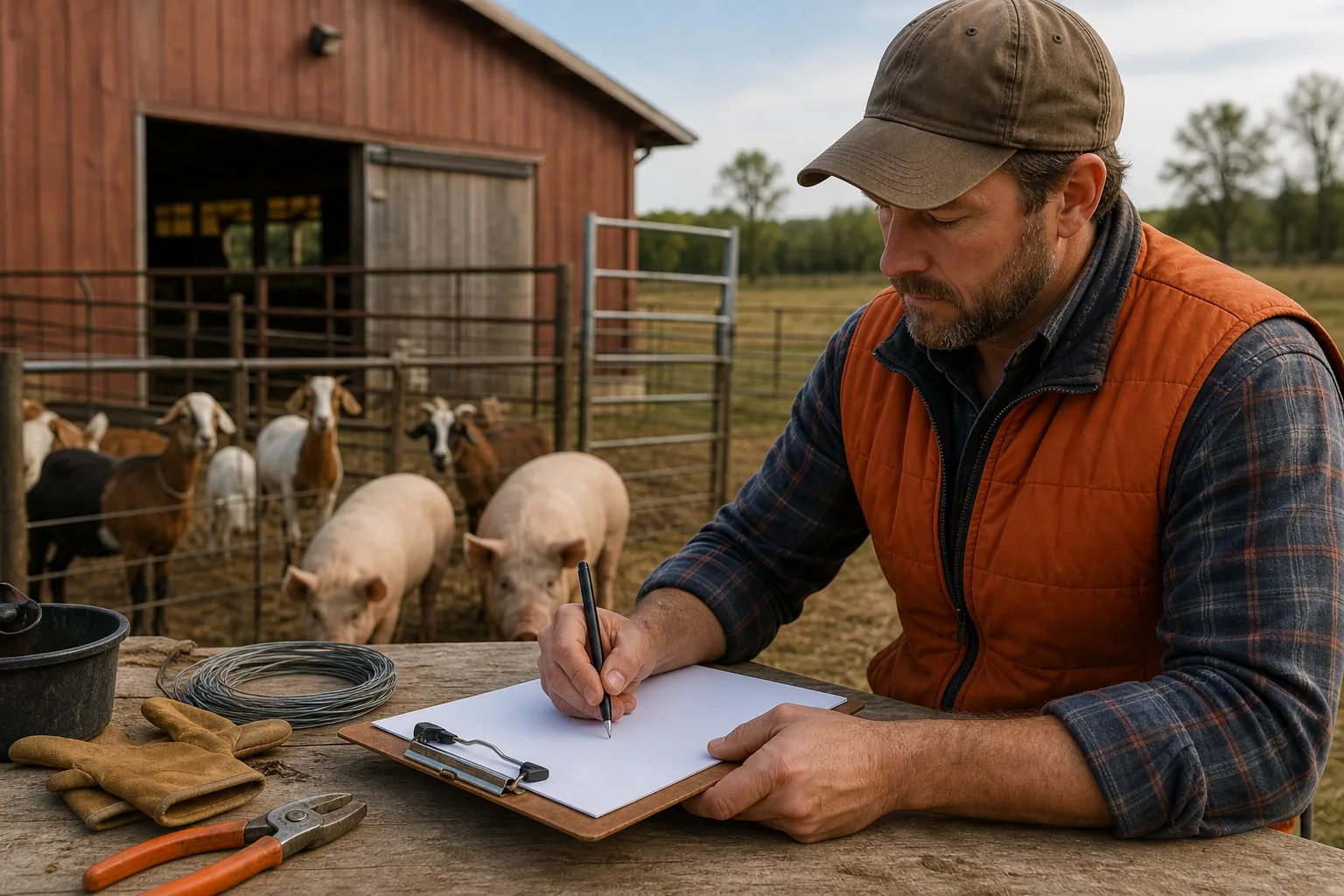
If your processor is booked for months or your usual farrier stops taking new farms, word of mouth can leave you stuck. A farm service provider directory cuts the search down to one place, but only if you check what each listing actually covers. Use these five steps to find a provider, screen the fit, and keep useful local contacts for the next season.
Step 1: Define the farm job before you search
A clear job description helps a farm service provider directory return useful results instead of a long list of near matches. Write down what needs to happen, which animal or crop is involved, and when the work must be done.
Start with the service type. “Meat processor” is more useful than “someone who works with pigs.” “Mobile farrier for two goats” is more useful than “hoof care.” The same rule applies to fencing, feed, poultry stock, and farm equipment work.
- Animal or product: Include the species, breed if it affects the job, and the number of animals.
- Work needed: State the task in plain words, such as custom cuts, slaughter transport, hoof trim, shearing, vaccination, or fence repair.
- Service location: Note your county, ZIP code, gate access, road limits, and whether the provider must travel to you.
- Timing: Add the date range, harvest window, kidding season, or urgency.
- Rules or inspection needs: For meat, decide if you need a state-inspected or USDA-inspected facility before you contact anyone.
Do this before searching because providers often serve a narrow radius. A large-animal vet may see horses and cattle but not poultry. A shearer may travel for a flock but not one sheep. A processor may take whole hogs yet have no space for your preferred date.
If goats are part of the job, our guide to Where to Buy Goats Near Me: A Usable Guide | The Easy Homestead can help when the service need starts with finding stock. Keep the task separate from the purchase. You may need two different providers.
For animal care, check the provider’s stated species list and service area before you spend time on a long message. Large-animal providers may serve some livestock species but not others, so species fit belongs in your first search notes.
By now you should have one short job brief. Keep it nearby. You will use the same details when you compare listings and ask for a quote.
Step 2: Search by ZIP code, county, and service category
Use location and service filters together when you search a farm service provider directory. A provider ten miles away may be a better fit than one in the same state, but only if that provider handles your job.
Search your ZIP code first. Then repeat the search by county. ZIP searches can miss providers who describe their service area by county, while county searches can return a wider list than you can reasonably use.
Next, search the narrowest category that matches the work. Try “mobile butcher” instead of “farm services.” Try “large-animal vet” instead of “veterinarian.” Try “hatchery” or “poultry supplier” instead of “livestock.” Use a broader term only when the narrow search comes up empty.
Location filters vary a lot between directories. The OAK Find-A-Farm Directory lets users search by ZIP code or county, then narrow results by crop, protein offering, certified organic status, or CSA. Those filters focus on farms and products, so they may not help when you need a farrier or fence crew. You can see the search fields on the OAK Find-A-Farm Directory.
Only a few combined location with business type or service type. One directory included filters for product, business type, state, and ZIP code.
The Easy Homestead is built around the search problem working homesteaders actually face. You can search by ZIP code or county, then choose a category such as meat processor, farrier, hatchery, feed and seed supplier, beekeeping supplier, large-animal vet, or fencing contractor.
Run several searches instead of trusting one result page. A processor may appear under meat processing, custom butcher, or mobile unit. A person who shears sheep may list under mobile farm services rather than shearing. Search terms differ because many local providers rely on referrals instead of a full website.
Make a short list of three to five possible matches. Record the distance and category beside each name. If there are only one or two listings in your area, say so plainly and widen the radius in small steps. A thin result is useful information. It tells you to start booking earlier or ask nearby counties.
If your search is for a food product rather than a service, a local source may still be the right path. Our resource on Where to Buy Raw Milk Near Me: 10 Trusted Sources | The Easy Homestead shows how product searches need different checks than service searches.
Key Takeaway: Search narrowly first, then widen the location range. A broad search can hide the one provider who fits your animal, job, and date.
Step 3: Check the listing before you call
A directory listing is a starting point, not proof that the provider can improve your job. Before you contact anyone, check the listing for signs that the information is current and specific.
Look for a named service category, a stated service area, the species or products covered, and a recent review. A profile that says only “farm help” gives you little to work with. A profile that names mobile hoof care within three counties gives you a better first screen.
Check the provider’s status in the directory. The Easy Homestead focuses on verified listings and real reviews because scale alone does not tell you whom to trust. None reported a positive verification rate.
That difference matters. One national directory reports more than 30,000 family farms and farmers markets but lists no verification method. A smaller list with clear checks may save more time than a huge list that leaves every claim to you.
Read reviews for details, not stars alone. Look for comments about arrival windows, animal handling, cut instructions, cleanup, communication, or the condition of returned goods. A review that names the work gives you more than praise with no context.
Check the date of the latest review or profile update when the directory shows it. Providers change service areas. They stop taking certain species. They fill a season and forget to update an old listing. Treat stale information as a reason to verify, not as a reason to assume the provider is unavailable.
For a processor, inspect the listing for inspection language. “Custom processing” does not tell you whether the facility is state inspected or USDA inspected. It also does not tell you if the provider handles slaughter, cutting, smoking, curing, packaging, or only one part of the job.
For a farrier, look for the type of hoof work listed. Routine trims, corrective work, barefoot care, and shoeing can require different skills. For fencing, check if the provider works with livestock fencing rather than only residential yards.
Watch the video below for another way to think through a provider search. Then return to the listing and compare what it says with your job brief.
By now you should have a short list with fewer weak matches. Keep two or three backups if the work is seasonal. Meat processors and mobile farm services can fill their calendars long before the work date arrives.
Step 4: Contact providers with the details they need
A good first message helps a provider answer without asking five follow-up questions. Use the same job brief from Step 1, but turn it into a short note.
State your county first. Then include the service, animal count, preferred date, and whether you need travel to the farm. Add access details only when they affect the job, such as a steep lane, a narrow gate, or no room for a large trailer.
- “I need a mobile farrier for two goats in Blount County.”
- “I have three hogs for custom processing in late November.”
- “I need a large-animal vet who sees goats and can make farm visits.”
- “I need woven wire fencing for a 12-acre livestock pasture.”
Ask questions that settle fit and cost early. Ask what the provider handles, where the work takes place, how far they travel, and what dates remain. For meat, ask about inspection status, minimum loads, cut sheets, packaging, pickup, and the point at which your booking becomes firm.
For animal care, ask if the provider handles your species and if routine visits differ from urgent visits. Regulatory material is worth checking alongside a provider search. You can also review this small-farm resource page.
Do not send sensitive farm records in a first message. Share only what the provider needs to judge the job. If they request permits, animal records, or ownership details, ask how they want those documents sent.
Pricing is another place to be direct. Ask what the quote includes. A farm call may differ from labor. A mobile unit may have travel terms. A processor may charge separate amounts for slaughter, cutting, packaging, storage, or special work. Do not compare two numbers until you know what each number covers.
Set a reply deadline for your own planning. If you need a processor for a fall harvest, waiting a week can close your options. If the provider does not answer, move to the next listing while keeping the first contact open.
That is also where a directory can help. The Easy Homestead gives you a place to search across niche categories instead of rebuilding the same list through scattered posts each season.
Step 5: Save the provider and report what you learn
A farm service provider directory becomes more useful after the first job. Save the provider’s profile, your notes, and the details you will need next time.
Record the service area and the exact work completed. “Good farrier” will not help much six months later. “Trimmed two goats, handles small ruminants, prefers flat access, books six weeks ahead” will.
Save the quote and final terms in the same place. Note the date of service, the animals involved, what you supplied, and what the provider supplied. For a processor, keep the cut instructions and pickup plan with the provider note. For fencing, save the fence type and gate layout.
Use a private farm record for details that should not appear in a public review. A public review should focus on facts another homesteader can use, such as the service performed, the county served, communication, and whether the work matched the listing.
For program and policy reminders, see USDA Farm Service Agency program and policy reminders.
Leave a review when you have enough information to be fair. Say what the provider did. Mention the general timing and fit. Avoid posting private details, exact access instructions, or anything that could put a farm or animal at risk.
Report outdated listings too. Tell the directory if a provider changed counties, stopped offering a service, or has an incorrect category. Good directories need this feedback because local work changes faster than a static list.
The Easy Homestead is designed for that ongoing local network. You can find providers by ZIP code or county, check verified profiles, and return to the same categories when the next need comes up. If you keep bees, you may also need a nearby supplier rather than a general farm store. Our guide to Beekeeping Supplies Near Me | Skip the Hunt | The Easy Homestead covers that narrower search.
Save at least one backup for services with long wait times. Your first choice may be booked, outside its travel range, or unavailable during your harvest window. A second trusted contact is worth more than another page of untested names.
 Save
Pro Tip: After every completed job, write one sentence about what you would repeat and one sentence about what you would ask next time.
FAQ
What is a farm service provider directory?
A farm service provider directory is a searchable list of businesses and people who help with working farm tasks. Depending on the directory, you may find processors, farriers, vets, hatcheries, feed suppliers, shearers, or fence crews. The useful details are location, service type, coverage area, reviews, and any stated verification method.
How do I find a local farm service provider?
Search by ZIP code or county, then choose the narrowest service category that fits your job. Check the provider’s species, travel area, reviews, and availability before you contact them. The Easy Homestead lets working homesteaders search these local categories in one farm service provider directory.
How can I tell if a farm directory listing is trustworthy?
Look for a named provider, a clear service area, specific services, recent reviews, and a stated verification process. A large listing count does not prove that profiles were checked. Ask the provider to confirm details that affect your booking, such as inspection status, species served, travel terms, or current availability.
What should I ask a farm service provider before booking?
Ask if the provider handles your exact job, animal, or product. Confirm the service location, date, price structure, travel terms, and what you must supply. For meat work, ask about inspection status and each processing stage. For mobile services, confirm road access and any minimum job size before you reserve a slot.
Is The Easy Homestead free for service providers?
The Easy Homestead has free listings for providers, with paid options for enhanced placement. Readers can search by ZIP code or county and look through categories built around the homesteading supply chain. Coverage may vary by area, so check the results for your county and report gaps when you find them.
Conclusion
Start with the exact farm job, search by county and service type, then verify the listing before you book. Save the provider after a good job and add a useful review so the next homesteader has better information. Search The Easy Homestead when you need a local processor, farrier, vet, hatchery, supplier, or farm trade.