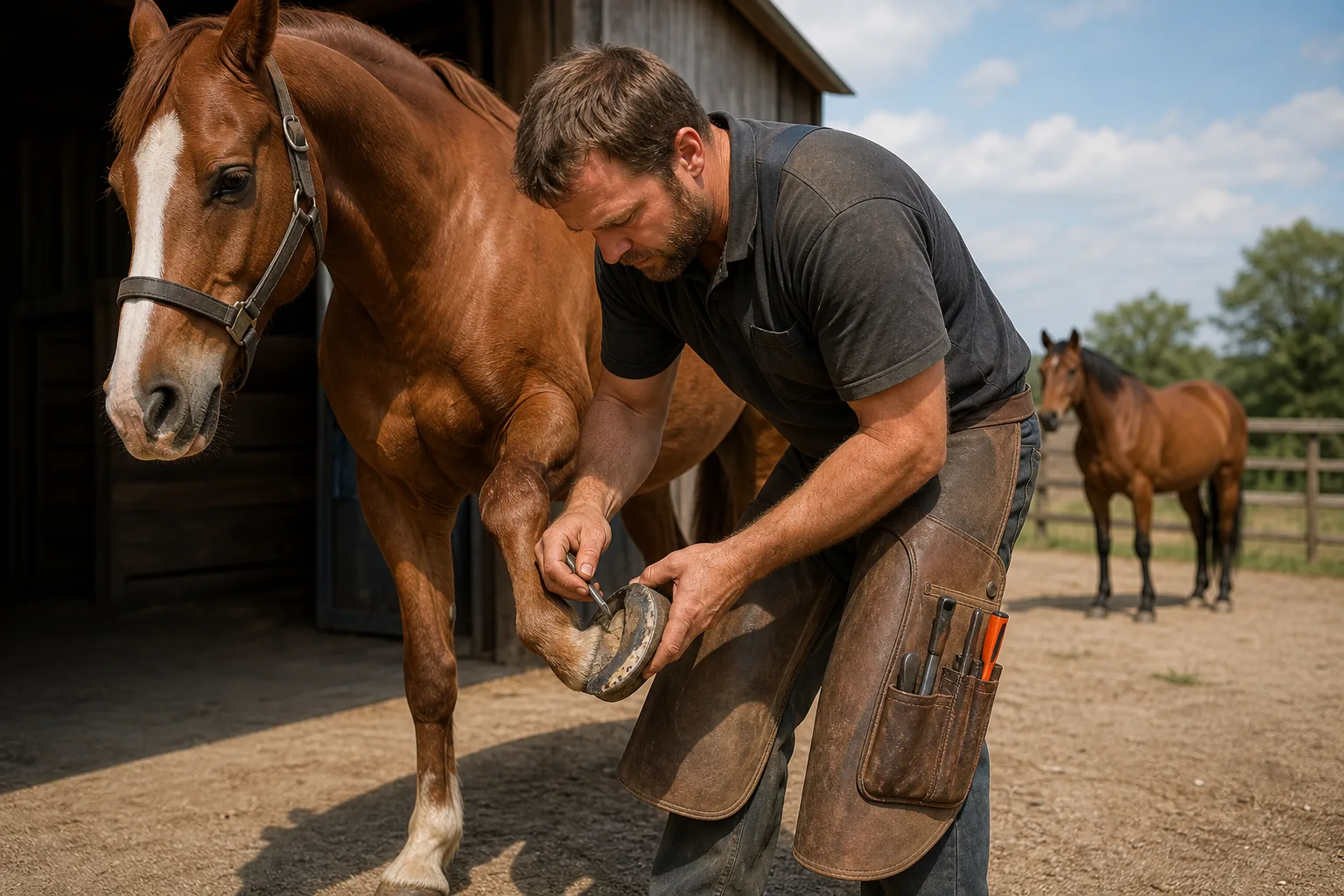
A farrier handles the hoof. A veterinarian handles disease, injury, and diagnosis. But hoof pain can need both, so the right choice depends on what changed and how fast your horse needs help.
Use this five-step guide to sort routine hoof care from a medical problem, then find a local farrier or equine vet before the next crisis.
1. The Easy Homestead
Start with the local search, not the emergency. The Easy Homestead helps working homesteaders find verified farrier and large-animal vet listings by ZIP code or county. You can compare the provider’s listed credentials and reviews before you reach out.
That matters when you don’t have a long-standing horse network. Asking at the feed store can still work, but word-of-mouth leads may be booked for months or may not fit the kind of work your horse needs.
Use The Easy Homestead to build two contacts:
- A farrier for planned trims, rasping, shoeing, and hoof balance.
- An equine vet for lameness, illness, injury, and health checks.
The directory’s value is speed at the search stage. Individual providers may list their own services, but you still have to find them, check their fit, and keep track of who covers your county. A local directory puts those choices in one place.
When you search, don’t type only “farrier.” Add your county and the work you need. Search for routine trim, corrective shoeing, therapeutic work, or mobile service. For veterinary care, look for equine or large-animal coverage instead of assuming a small-animal clinic treats horses.
The roles differ clearly. Farriers focus on mechanical hoof work, while equine veterinarians diagnose lameness, prescribe mechanical horseshoes, and handle overall equine health. You can read the role overview for that distinction.
For a first search, our own guide to finding a farrier near you covers county searches, certification questions, references, and mobile visits. Save the providers who look like a fit. You don’t want to begin this search while your horse is already in pain.
A farrier’s schedule also shapes your plan. Routine trims often follow a four-to-six-week cycle, though the right interval depends on the horse, hoof growth, work, and soundness. Put the next visit on your calendar before the current one ends.
Key Takeaway: Keep a farrier and an equine vet in your local contact list. They solve different problems.
Step 2: Match the urgency to the right professional
In the farrier versus vet question, urgency comes before preference. A scheduled hoof trim can wait for the farrier’s route. Severe pain, sudden lameness, or signs of disease need veterinary guidance.
Choose the farrier first when the issue is mechanical and your horse is otherwise well. That includes a lost shoe without major injury, overgrown walls, routine trimming, standard shoeing, or a planned change in balance.
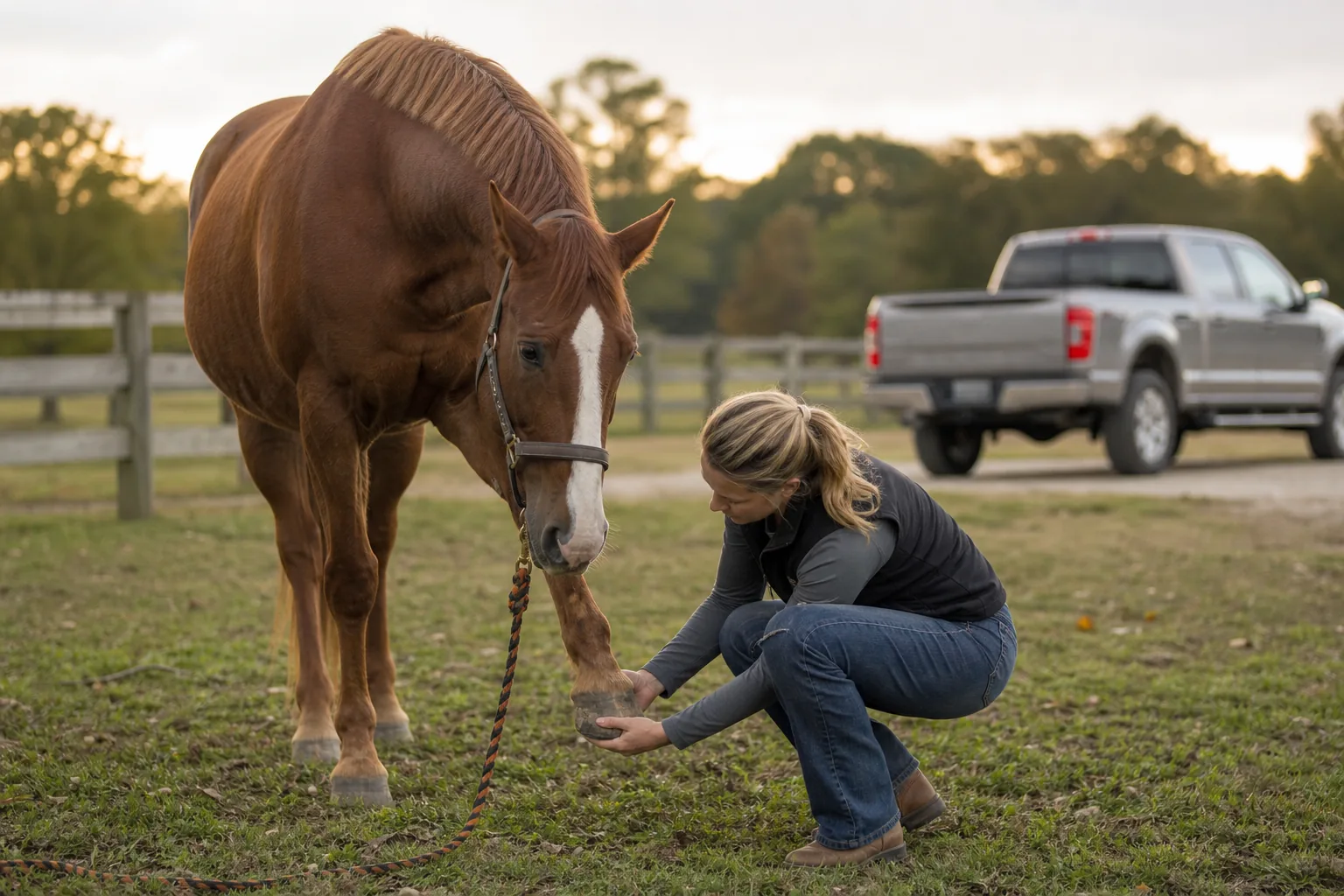
Choose the veterinarian first when your horse has sudden or worsening lameness. Do the same for a wound, swelling, heat, fever, suspected fracture, severe pain, or a horse that won’t bear weight. The vet can examine the whole animal and decide if imaging or treatment is needed.
Laminitis sits in the overlap, but treat suspected laminitis as urgent. Warning signs can include a bounding digital pulse, persistent hoof heat, a shifted stance, unusual weight shifting, or a change in hoof growth rings. A horse may show tissue damage before obvious lameness appears.
Don’t wait for a classic stance if your horse seems wrong. Check what is normal for that horse, note the time of the change, and contact the veterinarian. Keep the farrier informed because later hoof support may form part of the care plan.
A strong digital pulse can point to foot pain, but it doesn’t prove laminitis. Heat can also rise after sun exposure or exercise. Those details help the vet, but they don’t replace an exam.
The same rule applies after a leg injury. A horse that protects one limb may overload another limb. That can create a second hoof problem, so ask the vet how to manage movement and weight bearing while you wait for care.
When you make the call, give useful facts instead of a long guess at the cause:
- When did the change begin?
- Which limb seems affected?
- Will the horse bear weight?
- Does the hoof feel warmer than the other side?
- Has the digital pulse changed from normal?
- Did the horse recently lose a shoe or suffer an injury?
Take a short video of the horse walking only if movement is safe. Don’t force a painful horse to walk for a better clip. Your vet can tell you what to do next.
Pro Tip: Save the vet’s emergency instructions with your farm records. Write down your horse’s normal digital pulse and resting heart rate when the horse is calm.
Step 3: Know when the farrier and vet need to work together
Some hoof cases can’t be solved by choosing one professional. Farrier versus vet becomes a team question when pain, disease, conformation, or movement affects the hoof plan.
The veterinarian brings diagnosis and medical care. The farrier applies hands-on hoof mechanics. That may include trimming, shoe placement, support, or a change in how the hoof meets the ground.
Ask the vet and farrier to share the same plan when your horse has laminitis, ongoing lameness, a hoof wall defect, a complex injury, or poor response to prior shoeing. Give both professionals the same history. Include old radiographs if you have them.
A coordinated farrier-and-veterinarian workflow can begin with an evaluation of hoof health, conformation, gait, and medical history before a plan is made. The farrier may then work with the veterinarian and use diagnostic imaging when the case calls for it. Read the shared workflow description for an example of that process.
Ask who will make each decision. The vet should explain the medical problem and limits on exercise. The farrier should explain what hoof work is possible and what changes to watch after the trim or shoeing. You should leave with a clear date for the next check.
| Situation | First contact | Likely handoff |
|---|---|---|
| Routine trim or planned shoeing | Farrier | Vet if pain or lameness appears |
| Lost shoe with no wound and normal movement | Farrier | Vet if the hoof is damaged or the horse is lame |
| Sudden lameness or refusal to bear weight | Veterinarian | Farrier after diagnosis and treatment plan |
| Suspected laminitis | Veterinarian | Farrier for support and hoof mechanics |
| Long-term corrective shoeing | Veterinarian and farrier | Scheduled reassessment by both |
Write down the agreed plan after the visit. Include the trim or shoe changes, stall or turnout instructions, and signs that mean you should call again. A clear written handoff prevents one professional from working from an old version of the case.
Don’t ask a farrier to diagnose a medical problem, and don’t expect a vet to replace a skilled farrier for every routine hoof task. The best plan gives each person a defined job.
Step 4: Compare training, scope, and the service you need
Training is one of the clearest differences in a farrier versus vet comparison. A veterinarian earns a Doctor of Veterinary Medicine degree. Farriers build skill through apprenticeship, certification, and repeated hoof work.
That difference doesn’t make one person better at every task. It tells you what question each professional is trained to answer. The vet asks what disease or injury is causing the change. The farrier asks how to alter hoof mechanics within the treatment plan.
Look at the actual service listed, not only the job title. A farrier may handle removing shoes, scraping packed dirt, trimming, rasping, shaping, standard shoeing, or corrective shoeing. Some have added training in therapeutic or mechanical shoeing.
An equine vet may assess lameness, prescribe mechanical horseshoes, order diagnostic imaging, and manage the horse’s wider health needs. The vet is the right lead when you need a diagnosis or medical treatment.
Some providers combine skills. A Certified Farrier with a DVM degree may suit complex laminitis management, but you still need to confirm what the provider currently does in your area.
Ask these questions before booking:
- What cases do you handle most often?
- Do you work with horses that have lameness or laminitis?
- Can you follow a veterinarian’s written shoeing plan?
- Do you provide mobile service in my county?
- What should I do if the horse worsens before the visit?
For farrier work, ask about training and references from horses with similar needs. For veterinary care, ask if the practice treats horses and whether it handles farm calls or emergency cases. A small-animal clinic may not be the right resource for a horse, even if it is close.
State rules also affect what a person may do, so don’t assume a provider can diagnose, prescribe, or perform every task you request. If a hoof change follows illness or injury, start with the vet and ask for a farrier referral if needed.
When comparing providers, match the case to the skill. Routine work needs a dependable schedule. A complex case needs communication, records, and a plan for follow-up.
Step 5: Find the right local farrier or equine vet before you need one
Make your local list while the horse is sound. The Easy Homestead lets you search by ZIP code or county, which helps when your farm sits outside a large town and the closest provider works across several counties.
Start with your service area. A provider may look perfect until you learn that your farm lies outside the regular route. Ask about travel range, farm-call terms, appointment lead time, and emergency coverage before you book.
Then check fit. s with a narrow question in mind: does this person handle the work your horse needs? A farrier who focuses on routine trims may not be the right choice for corrective shoeing. A vet who treats cattle and goats may not provide equine lameness work.
Keep the search focused on working needs. You may need care for a draft cross that does farm work, an older horse with thin soles, or a pony that keeps losing shoes in wet ground. Tell the provider the horse’s use, current hoof plan, and any past issue that affects the visit.
Before the first appointment, prepare a safe work area with firm footing and enough room to handle the horse. Have the horse caught and ready. Share the horse’s records, recent changes, and the name of the other professional involved in care.
For veterinary visits, ask how the practice handles after-hours problems. The answer may affect whether you need a second contact. Routine coverage and emergency coverage are different services.
Plan for cost as well as access. A federal animal-care policy used in one setting lists a maximum payment of $1,000 for veterinary services per case, regardless of the animal’s market value. That rule doesn’t set every private bill, but it shows why you should ask about payment terms and keep an emergency fund. See the veterinary services policy for the stated cap.
Don’t wait until an emergency to learn that your farrier is four weeks out or your vet doesn’t cover your road. Save one primary provider and one backup for each role. Update the list when someone changes routes or stops taking new clients.
When you need a mobile equine provider, search the local listings first. You can also use our guide to finding a mobile farm vet near you to check species coverage, county range, credentials, and farm-visit terms.
Key Takeaway: The best time to compare providers is before the hoof problem starts. Save the names, service area, and emergency limits in your farm records.
FAQ
Should I call a farrier or vet for a lame horse?
Call the veterinarian first for sudden or unexplained lameness. A farrier can help with hoof mechanics after the vet checks for injury, disease, or another medical cause. If the lameness is mild and clearly follows a routine hoof issue, you can contact the farrier, but worsening pain or refusal to bear weight changes the urgency.
Can a farrier diagnose laminitis?
A farrier can spot hoof changes that may suggest laminitis, but the veterinarian should lead diagnosis and medical care. Laminitis can cause damage before clear lameness appears. Tell both professionals about heat, a bounding digital pulse, weight shifting, or changes in hoof growth.
Do horses need both a farrier and a vet?
Most horses need both at different times. The farrier handles routine hoof maintenance and shoeing. The veterinarian handles medical problems and lameness assessment. Horses with laminitis, chronic pain, or corrective shoeing often need both professionals to share one treatment plan.
How often should a horse see a farrier?
Many farrier visits follow a four-to-six-week cycle, but the right schedule depends on hoof growth, work, terrain, and the horse’s soundness. Ask your farrier to set the next visit before leaving. A horse with a hoof disease or corrective plan may need a different schedule.
How do I find a large-animal vet near me?
Search by county or ZIP code, then confirm that the provider treats horses and covers your farm. Ask about farm calls, emergency hours, and after-hours instructions. The Easy Homestead can help you compare local listings before you need urgent care.
Conclusion
Call the farrier for planned hoof work, and call the vet for pain, lameness, injury, disease, or suspected laminitis. When the case is complex, use both. Start your local search now on The Easy Homestead, then save a primary provider and backup before your horse needs either one.