Finding fresh eggs for sale near me should not mean chasing old social posts or driving to an empty farm stand. The best source is a named local flock with clear stock, pickup details, and egg handling notes. Start with farm listings, narrow the search by ZIP code or county, then confirm the carton is ready before you leave.
We read the 6 guide and directory pages currently ranking for searches close to “fresh eggs for sale near me,” checking each for five specific details a buyer would need. Only 1 of the 6 mentioned an egg collection or pack date, and just 2 of the 6 advised calling or checking availability before driving out. Two of the 6 let shoppers search by ZIP code or county rather than scrolling a general list. Most of these pages point readers toward local eggs in general terms but skip the stock and freshness checks that prevent a wasted trip.
Step 1: Search the places that actually sell local eggs
For fresh eggs for sale near me, start with places that sell food eggs directly. Search farm stands, farm stores, CSA add-ons, local delivery routes, and backyard chicken keepers. A grocery store may have a local label, but it rarely tells you much about the flock or collection date.
Use search terms that match how farms sell. Try “farm eggs near me,” “pastured eggs near me,” “unwashed eggs near me,” or “duck eggs near me.” Add “pickup,” “delivery,” or “farm stand” when you need a specific handoff.
Then check each result for the details that affect your trip:
- Distance from your home or route.
- Current stock or a recent availability note.
- Pickup times and farm stand hours.
- Delivery days and service area.
- Egg type, such as chicken or duck.
- Collection date and washing practice.
“Farm fresh” is a broad sales phrase. “Pastured” refers to outdoor pasture access. “Unwashed” usually means the natural bloom remains on the shell, though handling rules vary by state and sales channel. Ask the seller what those words mean on their farm.
For a faster local search, learn which laying hen breeds produce the eggs you want. Breed matters more when you want unusual shell colors, larger eggs, or a steady supply for a working kitchen.
The Easy Homestead helps you search local homesteading suppliers by ZIP code or county. Its listings cover the kind of small farms that may sell through a cooler, a farm gate, or a weekly pickup instead of a full online shop.
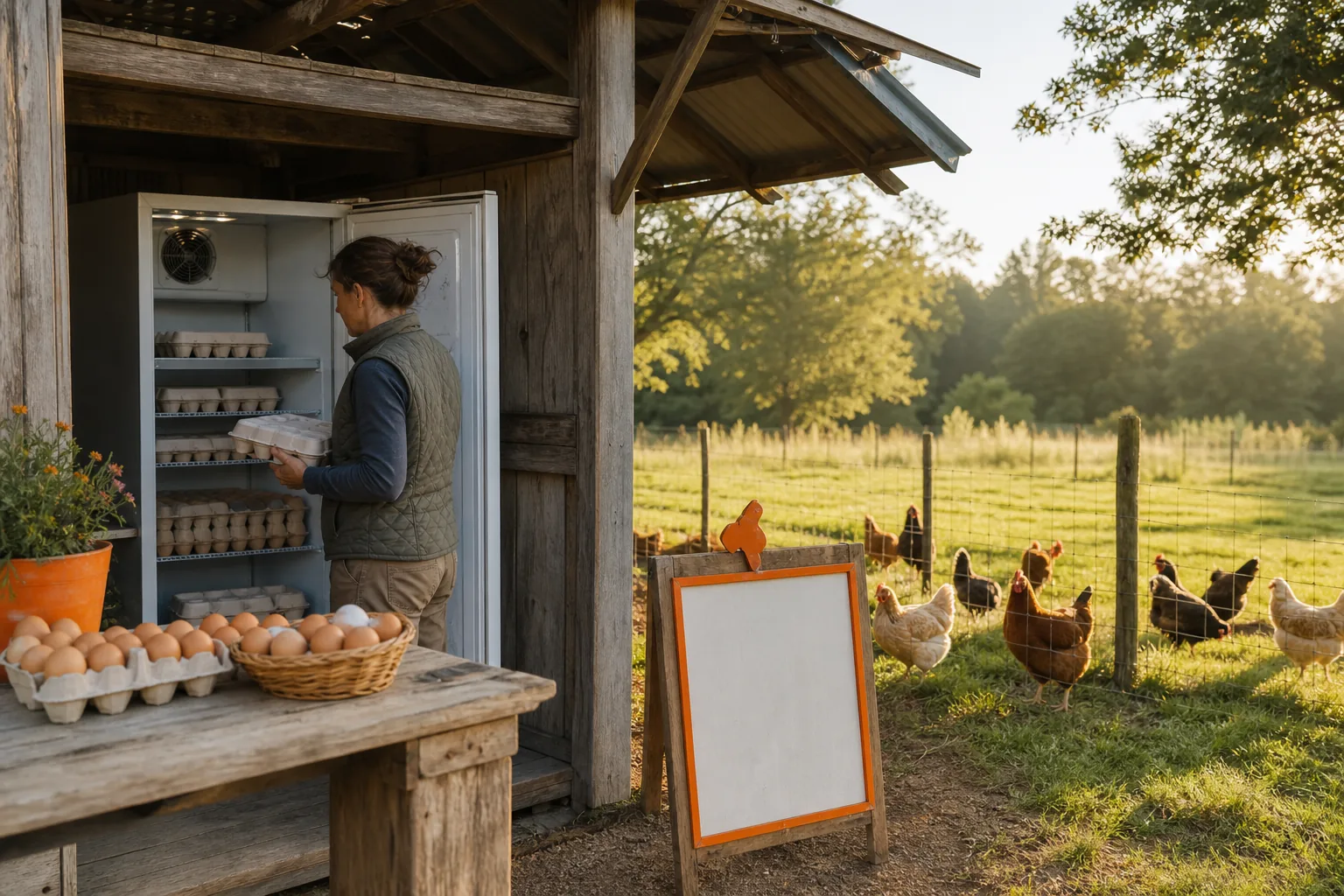
For same-day eggs, check farm stand hours first. Never assume “open now” means eggs are still in stock.
Step 2: Use your ZIP code or county to narrow the search
ZIP and county searches turn fresh eggs for sale near me into a short list you can act on. Begin with your ZIP code, then set a distance that fits your normal errands. A farm 15 miles away may be a good choice if it sits along your feed-store route. A closer farm may not help if pickup hours clash with your workday.
Search by both ZIP code and county. Some farms list a mailing address in one town but sell at a stand in another. County searches also help when you live outside a small town and map results miss farms on rural roads.
Sort the results by the way you plan to buy:
- Pickup: Best when you want fresh cartons on a set day.
- Farm stand: Useful for flexible stops, but stock can change fast.
- Delivery: Better when the farm already runs a route near you.
- CSA add-on: A good fit if you already collect produce or meat.
Read the full listing before you choose. Look for a farm name, location, egg type, sales method, and a current update. If the page has no recent stock note, treat it as a lead rather than a confirmed order.
The Easy Homestead is built around this local gap. Working homesteaders often know what they need, but they lack the local network to find the right farm quickly. Search by county when you need a supplier outside your immediate town, such as a farm with duck eggs or a regular delivery route.
Some directories show broad regional supply without proving that a farm has eggs today. For example, a state page may list farms across several towns, while each farm still has its own hours and seasonal limits. Use the map to find candidates, then verify the farm card before you drive.
That last check saves more time than widening the search. If the first page gives you no usable result, expand the radius by a few miles. Then search nearby counties instead of opening dozens of unrelated social posts.
Step 3: Confirm availability, pickup, and flock details before you drive
Fresh eggs for sale near me can disappear between breakfast and lunch, especially when a farm has a small flock. Confirm the carton before you load the truck. A short message can prevent a wasted trip.
Ask five direct questions:
- Do you have eating eggs available today?
- What date were they collected?
- Are they washed, and do they stay refrigerated?
- Where is pickup, and what time does it close?
- Do you sell by the dozen, tray, or another carton size?
Ask one more question when the listing uses vague terms. If it says “fertile eggs,” “hatching eggs,” or “duck eggs,” confirm that the eggs are for eating. Hatching eggs may have different storage and handling needs.
Ask how the hens live if outdoor access matters to you. “Pastured,” “free-range,” and “cage-free” don’t mean the same thing. The seller should be able to explain where the flock spends its time and what feed the hens receive.
At pickup, inspect the carton before paying. Reject cracked eggs unless the seller clearly separates them for another use. Check for heavy dirt, damp shells, or a strong smell in the carton.
Egg color does not prove freshness. Brown, white, blue, and green shells can all be fresh. Collection date and handling practice give you better information than shell color.
If you buy each week, ask when the farm usually restocks. A farm may collect eggs every day but sell only on two pickup days. Match your routine to the farm’s schedule instead of hoping a cooler has stock whenever you pass by.
Step 4: Check egg handling, storage, and local sale requirements
Egg handling affects how you store fresh eggs for sale near me once they reach your kitchen. Ask whether the seller washes the shells, when refrigeration begins, and how the cartons stay cool during pickup or delivery.
The bloom is a natural coating on an unwashed shell. It helps block the shell’s pores. Washing can remove it, so farms that wash eggs usually refrigerate them. The key is consistency. Follow the seller’s storage advice and keep refrigerated eggs cold.
The USDA’s egg safety guidance recommends keeping eggs refrigerated and handling them with food safety in mind. Use the coldest stable part of the refrigerator rather than the door, where temperatures change more often.
Do not wash eggs with soap or bleach at the kitchen sink. If an unwashed egg has a small bit of dry dirt, brush it off before storage. If an egg has a crack, slimy film, or bad smell, set it aside and discard it if it fails inspection.
Store eggs pointy end down in a clean carton. This keeps the air cell at the wider end, which helps protect the yolk as the egg ages. Put the collection date on the carton when the seller does not provide one.
For more storage detail, these egg shelf-life tips explain how room-temperature and refrigerated storage differ. Use the approach that matches the egg’s washing history and your local rules.
Sale rules vary by state and county. Requirements may cover washing, refrigeration, carton labels, grading, flock size, and where a farm may sell. General egg-safety guidance gives handling information, but it does not replace your state’s agriculture rules.
If you sell eggs from your own flock, check with your state agriculture department or county extension office before opening a roadside stand. If you buy from a farm, ask what rules apply to that seller’s channel. A farm stand, farmers market, restaurant sale, and direct pickup may follow different requirements.
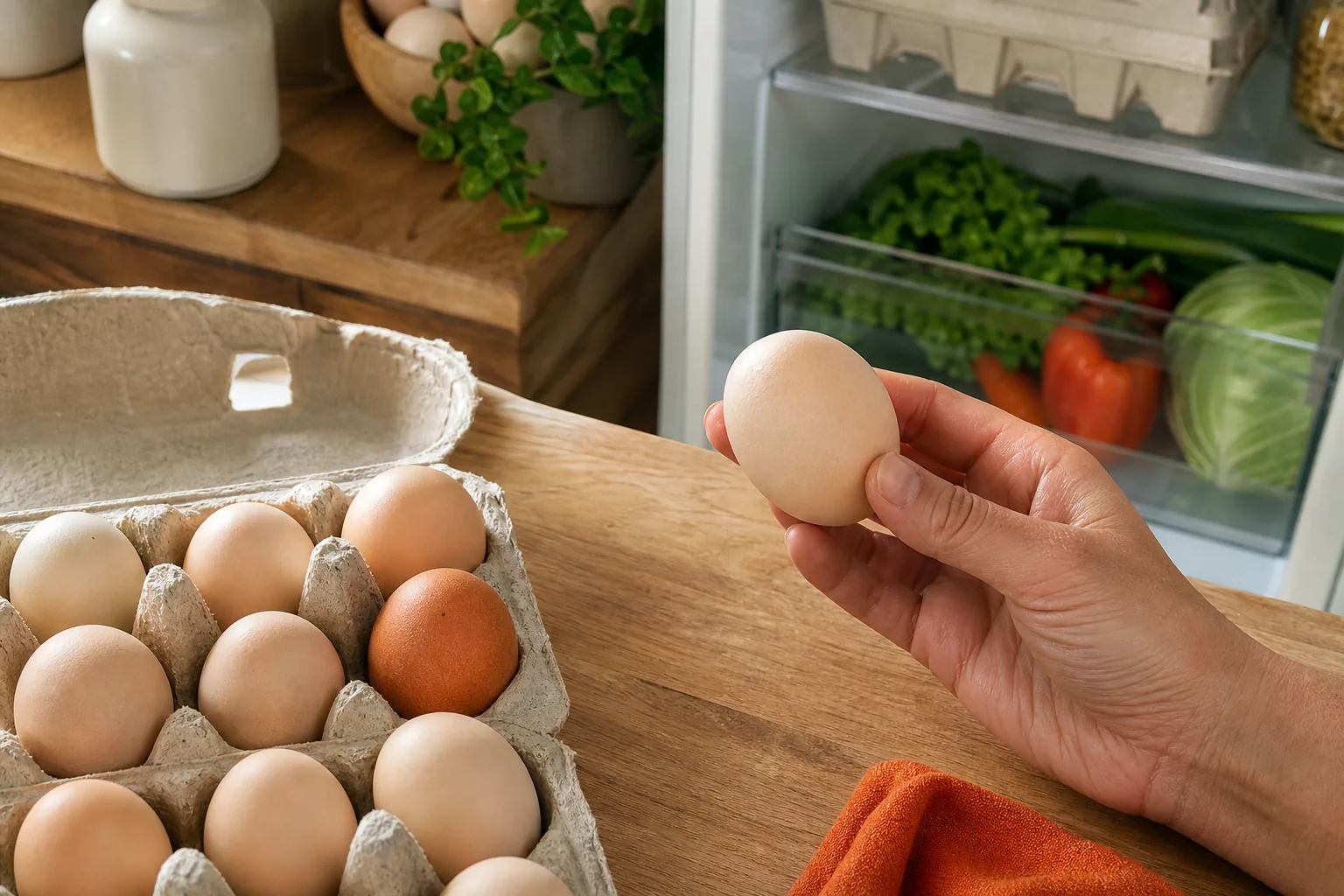
Good handling should be clear enough that you can repeat it at home. If the seller cannot explain whether eggs are washed or chilled, choose another source.
Step 5: Choose the seller that fits your weekly egg needs
The best source of fresh eggs for sale near me is the one that fits your actual week. A farm with excellent eggs is still a poor match if pickup takes an extra hour or stock runs out before your normal stop.
Start with your weekly use. Count breakfast eggs, baking eggs, packed lunches, and any eggs you share with family. Then decide how much backup you need. If your household uses one dozen each week, a standing pickup may be enough. If you bake often, ask about larger cartons or a recurring order.
Compare sellers on the points that affect your work:
- Distance: Can you combine pickup with another farm errand?
- Supply: Does the flock meet your weekly demand?
- Timing: Does pickup fit your schedule?
- Handling: Do the storage instructions suit your kitchen?
- Trust: Does the seller answer clear questions?
Price matters, but price per dozen is not the full cost. Add the fuel, time, delivery fee if there is one, and the risk of arriving after stock is gone. A slightly higher price may make sense if the farm holds your order and sits on a route you already drive.
Choose one primary seller and one backup. Keep the backup in a nearby county if local supply changes with heat, molt, winter light, or flock health. You don’t need ten options. You need two sources you can reach and trust.
The Easy Homestead can help you keep that search local. Look for listings with clear seller details and search by ZIP code or county. Coverage can vary by area, so use the directory as a starting point and confirm each farm’s current stock.
For a household with changing demand, buy one carton first. Test the pickup handoff, storage advice, and egg quality. Then set a weekly pattern if the farm meets your needs.
FAQ
Where can I find fresh eggs for sale near me?
You can find fresh eggs for sale near me through local farm stands, farm stores, CSA add-ons, delivery routes, and backyard chicken keepers. Search by ZIP code or county, then check the listing for current stock. Confirm pickup hours before driving because small farms may sell out before the posted closing time.
How do I know if farm eggs are fresh?
Fresh farm eggs usually have a clear collection date, clean intact shells, and no bad smell. Ask when the eggs were collected and whether they were washed. A float test can show age, but it cannot replace safe handling. Crack an older egg into a separate bowl before adding it to food.
Are unwashed farm eggs better?
Unwashed farm eggs keep their natural bloom, but “better” depends on your storage plan and local rules. Ask the seller how the eggs were handled. If the farm washes them, keep them refrigerated. If the bloom remains, follow the farm’s storage advice and check your state requirements.
Can I buy duck eggs from a local farm?
Yes, some local farms sell duck eggs, but you need to confirm stock and intended use. Ask if the eggs are food eggs or hatching eggs. Duck egg availability may be less steady than chicken egg supply, so a farm that takes advance orders may fit your needs better.
How far should I drive for local eggs?
Drive only as far as fits your weekly routine and the seller’s supply. A nearby farm is useful when it has reliable pickup. A farm farther away may work if it sits along your feed or supply route. Compare travel time with carton size, availability, and whether the seller holds your order.
Conclusion
Start with The Easy Homestead, search by ZIP code or county, and shortlist two farms that match your schedule. Before your first trip, confirm stock, collection date, washing practice, and pickup time. Then buy one carton and test the routine. If it works, make that seller your weekly source.