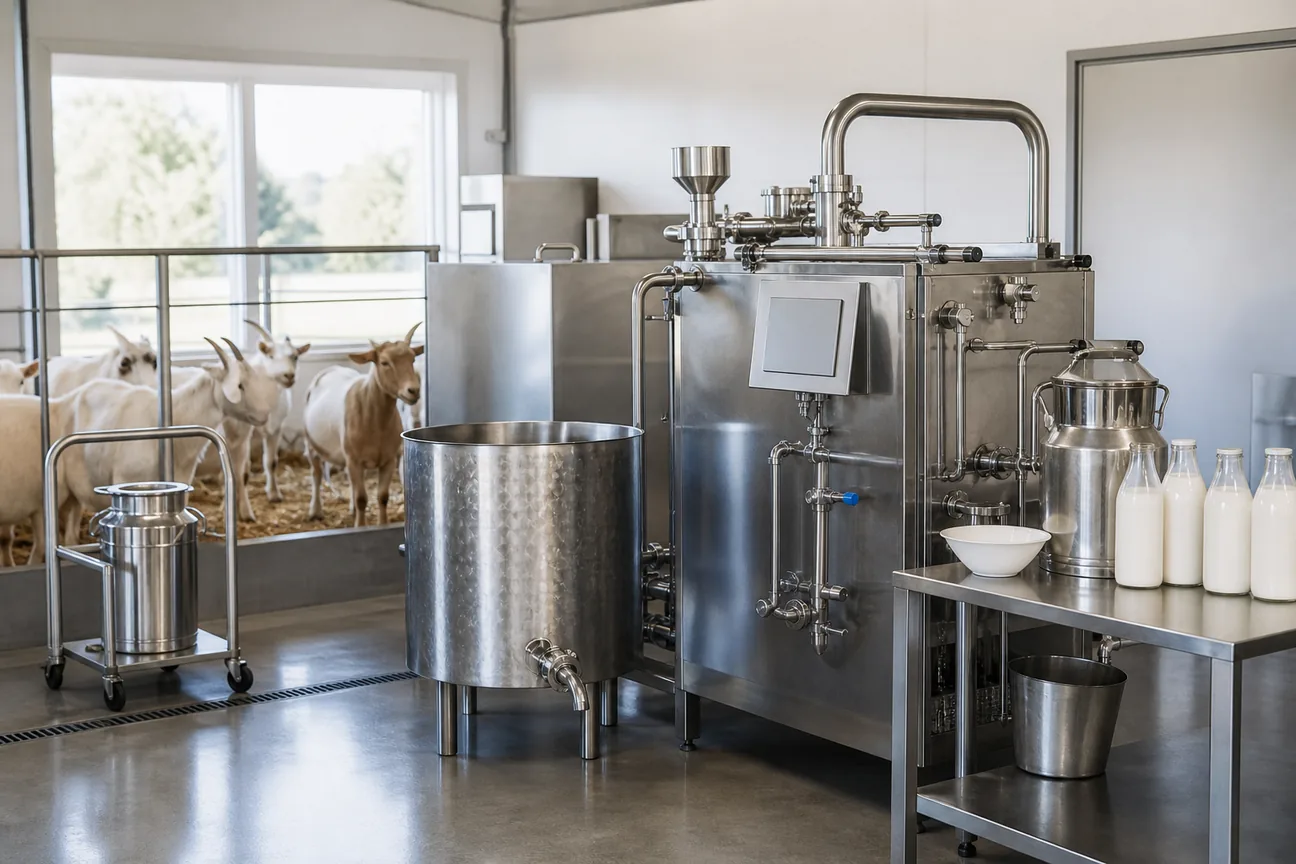
A goat milk pasteurizer can save a batch from scorching on the stove, but the wrong size becomes a costly counter-top obstacle. The best choice depends on your herd, batch volume, power setup, and whether you make milk, cheese, yogurt, or more than one product. Here are several equipment categories and the kind of farm setup each one suits.
1. Small-batch pasteurizer, a small batch option for home dairies
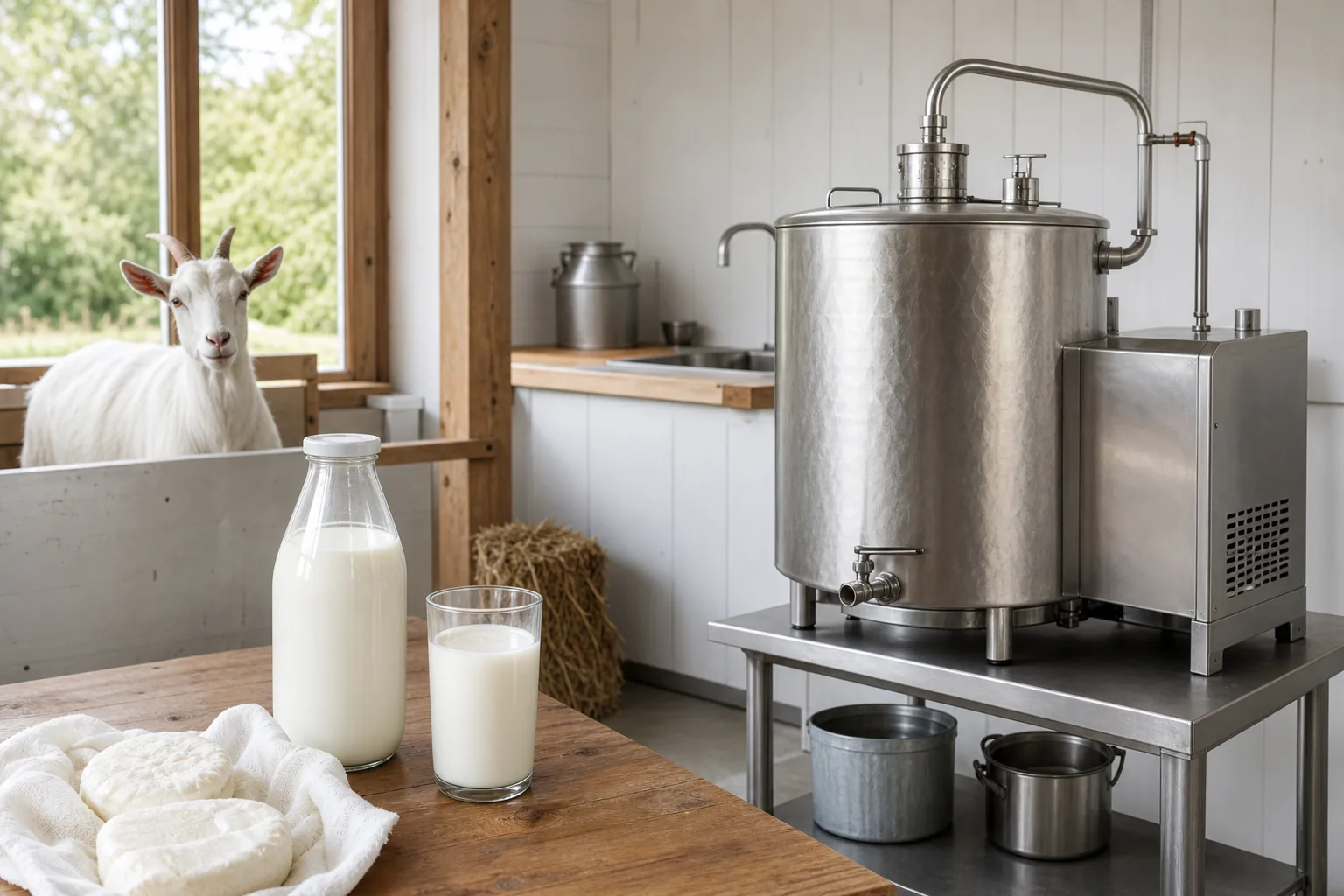
A small-batch pasteurizer is an option for a home dairy or micro-dairy that wants set temperature and time controls.
 Save
Small models are available in the 3 to 7 gallon range, with larger units for farms that need more capacity. The small format makes sense when your doe group produces modest daily volume and you process milk soon after milking rather than storing several days’ output.
Look for a removable milk container. It makes the handoff from heating to washing less awkward, especially when you clean equipment in a utility sink instead of a commercial wash bay. A water layer between the heater and milk container can also reduce the risk of scorching compared with a pot placed straight on a burner.
This type of machine can support more than milk, including cheese, yogurt, and some juice work, but you should check the manual before treating it as a general food processor. Different products may need different temperatures, stir rates, or cooling times.
Warranty and delivery terms deserve close attention. Some product ranges list a two-year warranty and a 30-day return policy, while larger models may have different terms or regional limits. Read the exact listing for the unit you want. A warranty on one model does not automatically apply to another.
Power is another usable check. Confirm that the unit matches your farm’s outlet before you order. A compact machine is a poor fit if it needs an electrical change in the milk room.
If your herd is small and your batches stay below the machine’s stated fill limit, this is the kind of countertop pasteurizer worth pricing first. If you regularly fill several large cans, skip the small format and compare the larger units instead.
2. Compact pasteurizer for regular batches
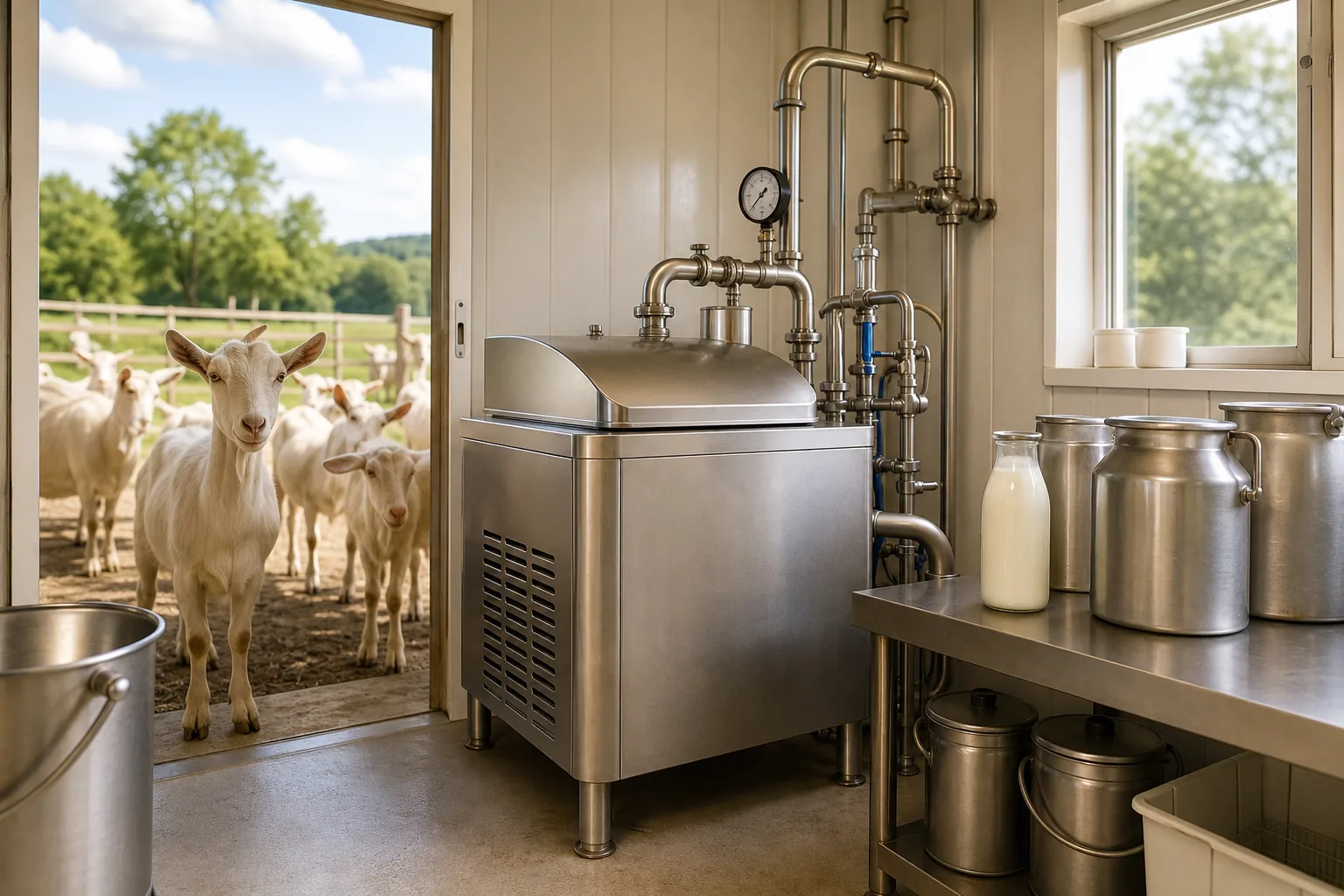
A compact pasteurizer is a practical option to investigate when you process milk on a regular schedule but don’t need a large farm vat.
 Save
Ask the seller for five written answers before you compare the offer:
- What is the working fill volume, not only the tank’s total volume?
- Can you set both the target temperature and the hold time?
- Does the milk container lift out for washing?
- What parts need replacement after repeated use?
- What happens if the temperature probe fails during a batch?
Those questions matter more than a polished product photo. A machine that holds less than expected can force you into several batches. That adds wash time and makes it harder to keep the same process each day.
Also ask about noise and movement. A compact unit may still be heavy when full, and a pump or stirrer can be loud in a small milk room. If you carry milk from the barn to the house, plan the route before you buy. Wet floors and full stainless tanks are a bad mix.
Best use: Put a compact pasteurizer on your quote list when you need a smaller machine and can confirm its specifications directly. Do not pay a premium for unknown capacity.
3. Small-batch pasteurizers, for makers who need repeatable processing
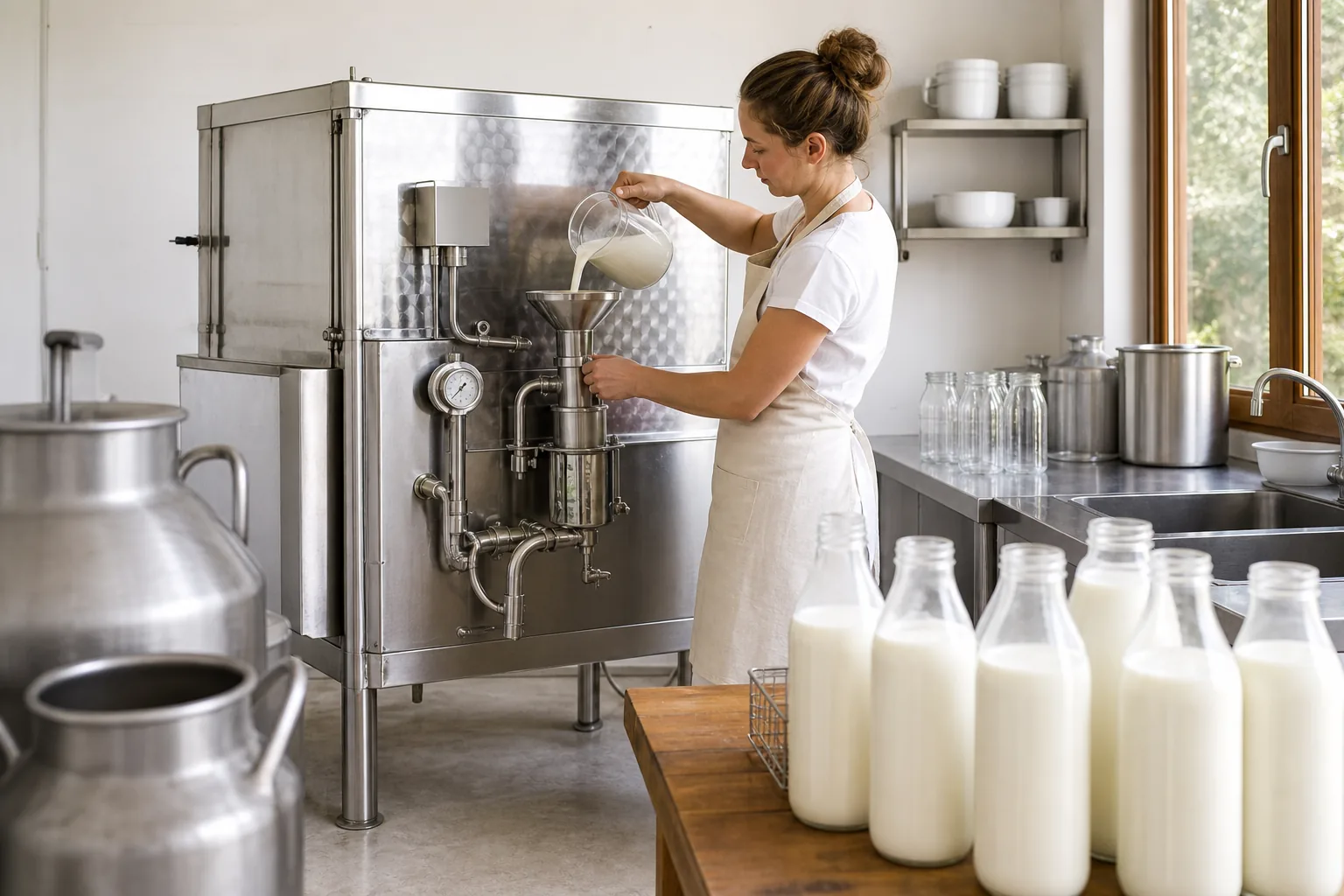
A small-batch pasteurizer fits the shortlist for makers who care about repeating the same batch process without standing over a stove.
 Save
Ask for the usable volume and the control range. A tank that holds a certain amount on paper may need extra headspace for stirring or safe movement.
Repeatability starts with the controls. You want a clear way to set the target temperature and hold time. You also want to know whether the unit stops heating at the set point, keeps stirring, or needs you to monitor the batch by hand.
Cleaning deserves equal weight. Milk fat can collect around a lid, valve, gasket, probe, or stir shaft. Ask which parts come off without tools. Find out whether replacement seals are standard parts or must come from the seller.
If you make cheese, cooling control may matter as much as heating. A unit that heats well but leaves you waiting for the next step can slow the whole batch. Write down your process before you compare machines. Include the time needed to fill, heat, hold, cool, drain, and wash.
Farm makers may also use other small processing tools. For example, a producer who makes botanical products may compare dairy equipment with other small processing equipment. The tools are different, but the same questions apply: batch size, heat control, cleanup, parts, and safe storage.
Choose a small-batch unit only after the seller answers those questions in writing. A mini unit can work well for steady small batches, but it won’t fix a workflow that needs more capacity.
4. Higher-volume small dairy pasteurizer options for farm processing
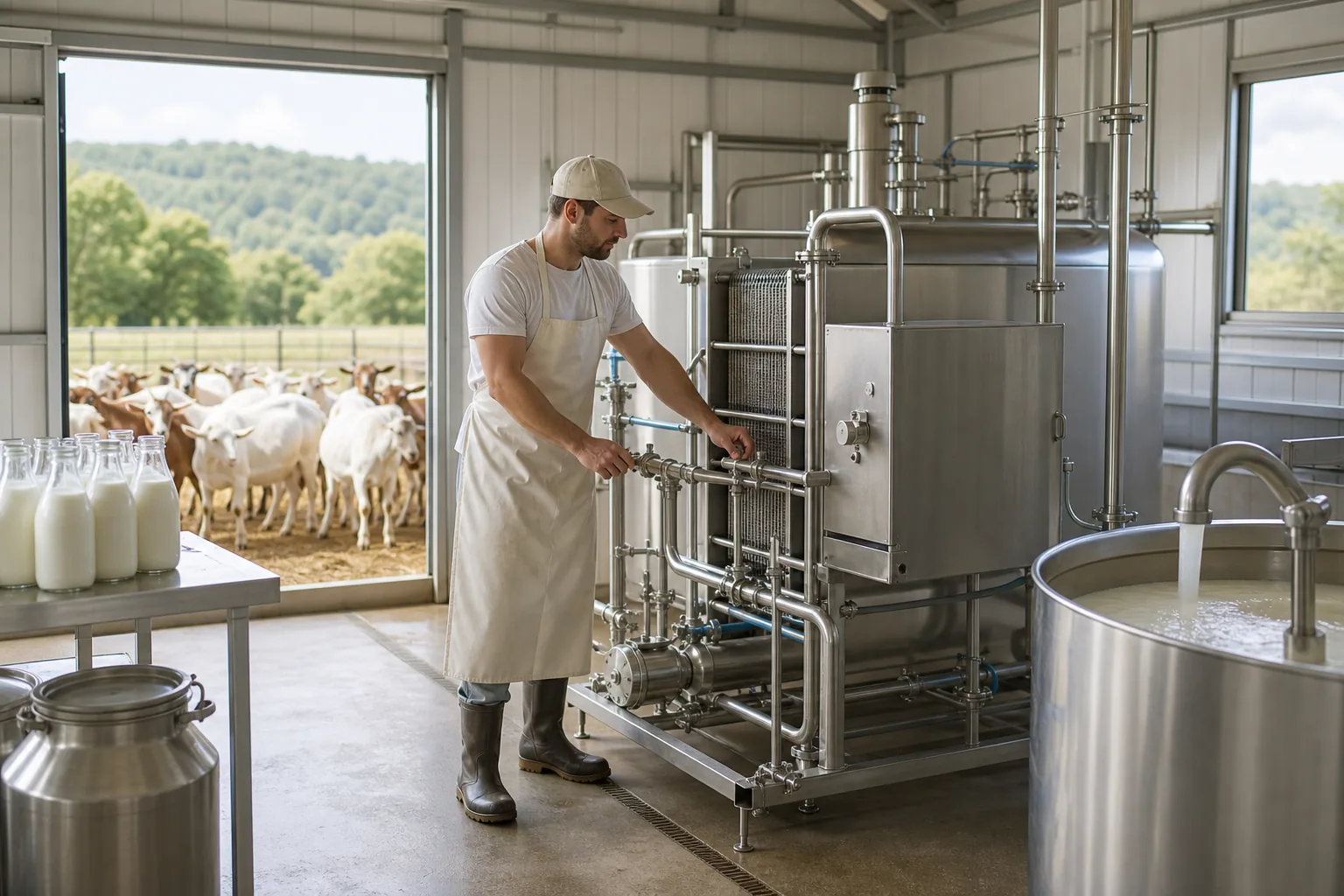
A higher-volume small dairy pasteurizer belongs on a quote list when a countertop model may leave you running too many batches.
 Save
Confirm the tank size, working fill level, heating source, voltage, cooling method, stir function, and warranty before you compare it with smaller options.
Higher capacity changes the whole milk-room setup. You may need a stronger floor, more room around the tank, a drain nearby, and a plan for moving heated liquid. The unit’s footprint is only one part of the decision. Measure doorways and the route from delivery point to the processing room.
Ask whether cooling is built in or requires separate equipment. Some systems combine mixing, heating, pasteurization, and pre-cooling in one tank, but a standard system may not include a refrigeration compressor. A jacketed tank can exchange heat, yet it may not reach the cooling temperature your process needs without added equipment.
That is the kind of detail that changes the budget. A lower equipment price can become a larger project if you need a chiller, upgraded wiring, or a custom drain.
For a working farm, capacity should match the amount you can milk, cool, clean, and sell within your schedule. More tank space is useful only when the rest of the process can keep up.
Before placing an order, request a complete equipment sheet. You need the electrical load, drain details, service plan, delivery terms, and parts list in the same conversation.
Goat milk pasteurizer comparison, capacity, controls, cleaning, and support
A goat milk pasteurizer for sale should be judged by the work it must do every week. Capacity comes first, but controls and cleaning decide whether the machine earns its space.
A higher-volume machine also combines mixing, pasteurization, and pre-cooling, though the standard setup does not include a refrigeration compressor. See the higher-volume pasteurizer specifications for that distinction.
| Decision point | Small batch model | Compact farm model | Higher-volume model |
|---|---|---|---|
| Best fit | Small herd or occasional processing | Regular batches with limited room | Farm sales or repeated large batches |
| Capacity question | Can it handle one milking? | Can it handle your normal weekly peak? | Can your cooling and wash system keep pace? |
| Control question | Does it set temperature and hold time? | Does it manage the same batch each time? | Does it include mixing and cooling? |
| Cleaning question | Does the container lift out? | Can you remove probes, seals, and valves? | Can you reach every tank surface and drain? |
| Support question | Are parts easy to order? | Is there a clear warranty contact? | Who handles service after delivery? |
| Main risk | Outgrowing the tank | Paying for features you don’t use | Underestimating installation and cooling needs |
Do not confuse maximum temperature with a complete pasteurization program. The unit still needs a verified time and temperature process that fits your milk and local rules. A control panel can hold a setting, but it cannot replace clean milking practice or accurate measurement.
Local rules also matter if you sell milk, cheese, or yogurt. Requirements can differ by state and by product. Before you buy, ask your state dairy regulator what equipment records, testing, labeling, and inspection status apply to your planned sales.
For a small goat herd, start with your largest normal batch rather than your best day. Add room for a little growth, but don’t buy a commercial tank until your wash area, power supply, cooling plan, and sales channel can support it. If milk output is lower than expected, review troubleshooting low milk production in goats before sizing up your equipment.
Key Takeaway: The right machine is the one your farm can fill, control, cool, clean, and service without turning every batch into a separate project.
The Easy Homestead can help with the local side of that decision. Search the directory for nearby dairy suppliers, farm equipment contacts, and related services before you commit to freight from an unknown seller.
FAQ
What size goat milk pasteurizer do I need?
You need a pasteurizer that handles your largest normal batch without running the tank to its limit. Small models suit modest home-dairy volumes, while larger units fit farms that process several batches or sell dairy products. Measure your milk output, available work space, cooling method, and wash capacity before comparing tank sizes.
What temperature should goat milk be pasteurized at?
The correct temperature and hold time depend on the process you follow and the rules that apply to your product and location. Don’t copy a setting from a product listing without checking an approved dairy process. Use a calibrated thermometer, follow the equipment manual, and ask your state dairy regulator about requirements for sales.
Is stainless steel important in a goat milk pasteurizer?
Stainless steel is useful because milk equipment needs a cleanable, food-contact surface. Material alone does not prove a machine is suitable. Check welds, seams, valves, gaskets, drain points, and the cleaning instructions.
Can a milk pasteurizer make cheese and yogurt?
Many pasteurizer models are designed for more than plain milk, including cheese and yogurt work. That does not mean every model handles every recipe the same way. Confirm whether the machine supports your batch size, stirring needs, cooling stage, and culture temperature. A removable container can also make transfers and washing less difficult.
Where can I find a goat milk pasteurizer for sale near me?
You can find local leads through The Easy Homestead by searching its directory by ZIP code or county. Local contacts may help you compare equipment, locate repair support, or find a dairy supplier who knows the demands of small farm processing. Online sellers can widen your choices, but confirm freight, warranty, parts, voltage, and return terms first.
Conclusion
For a small goat dairy, start with a compact model that has clear temperature and time controls, a washable milk path, and parts support you can verify. Before you order, write down your largest batch and search The Easy Homestead for a local dairy equipment supplier who can help you check the fit. Use the directory to find nearby goat and farm contacts while you build the rest of your processing network.