Finding a goat shearer near you can take more work than finding the goats themselves. Current listings show a clear gap: providers often cover several states, book by email, and show no verified reviews. Use the steps below to find a shearer who fits your herd, location, timing, and animal-handling needs.
Step 1: Decide what goat shearing service you need
Before searching for goat shearing near me, write down what you need done. A shearer needs more than your town name. They need to know your goat type, herd size, fiber goals, and the kind of work you expect on the day.
Start with the goats. Angora goats may need careful fiber handling because the fleece has value. Dairy goats may need a body clip for comfort or cleanliness. Some farms also need hoof trims during the same visit. If you keep goats with sheep, alpacas, or llamas, ask if the shearer handles more than one species. Farms that need alpaca work too should confirm that the provider can handle both jobs, since alpaca shearing near you may require different fiber handling and scheduling.
Then count the animals that need work. A provider who works well with a small herd may not suit a large commercial group. The reverse can also be true. A fast crew built for a large flock may not give a nervous goat the calm handling you want.
- Number of goats and their breeds.
- Any goats with horns, health limits, or difficult handling needs.
- Shearing only, or shearing plus hoof care.
- Whether you want clean fiber saved for spinning or sale.
- Your preferred season and the date by which the work must be done.
Goat shearing removes the animal’s coat or fiber with hand tools or electric equipment. The work looks quick from the outside, but positioning and restraint affect both safety and the quality of the clip. Shearing is a livestock task that needs a trained hand.
Fiber farms should decide how they want the fleece handled before booking. That does not set a service rule for every shearer, but it shows why fiber goals belong in your first message.
Key Takeaway: The right search starts with a clear job description, not a town name alone.
Step 2: Search by ZIP code, county, and nearby farm networks
Search for goat shearing near me with your ZIP code first, then widen the search to your county and nearby counties. Mobile farm services often travel farther than you expect, but a wide service area can add travel cost and make scheduling harder.
Use The Easy Homestead when you want a local starting point. The directory lets you search by ZIP code or county, which fits the way working farms actually look for help. Search the shearer and mobile farm services categories together if you may need hoof care or another farm visit at the same time.
Do not stop at a general web search. Ask at the feed store where staff hear about local farm work. Ask your large-animal vet who handles goats. Check with nearby fiber farms, 4-H contacts, and breeders who keep Angora goats. A referral does not replace vetting, but it can uncover a shearer who has no strong web presence.
Current directory data shows why your results may look odd. Four listed providers cover broad parts of the Northeast rather than one county or ZIP code. Tabbethia Haubold lists service across many northeastern states. Northeast Shearing, led by Joe Coppola, lists coverage throughout the Northeast. Pete Sepe works with farms and zoos in southern New England. Andrew Shipsky lists Maryland, Pennsylvania, New Jersey, Connecticut, and New York.
That reach can help if your area has few shearers. It can also mislead you. A provider may list your state but only visit your county on certain routes. Ask about the next planned trip near you before you assume the listing means local availability.
Keep a short list of three to five names. Record the service area, booking method, animal types, review status, and the date you sent your first message. That small record helps when several providers reply at different times.
Search results may be thin in rural counties. That is useful information, not a reason to book the first name you see. If The Easy Homestead has limited coverage in your county, use the directory to check nearby areas, then add trusted local referrals as you find them.
Step 3: Check the shearer’s goat experience before booking
When you find a possible goat shearer, check the person’s animal experience before you discuss dates. A polished page tells you less than a clear answer about handling, herd size, fiber care, and difficult goats.
Ask these questions in your first message:
- How often do you shear goats?
- Do you work with Angora goats or other fiber breeds?
- What is the smallest herd you take?
- Do you work alone or bring a crew?
- Can you handle goats that are nervous, strong, horned, or not used to restraint?
- Do you also trim hooves?
- What should I provide on shearing day?
Andrew Shipsky has no animal minimum and also offers hoof trims for pigs and goats. That may fit a small homestead that needs several jobs handled in one visit.
Other listings point to different needs. Tabbethia Haubold shears goats along with alpacas and llamas. Pete Sepe lists work at farms and zoos throughout southern New England. Northeast Shearing, led by Joe Coppola, lists goat shearing throughout the Northeast. Match the stated specialty to your operation instead of treating every listing as interchangeable.
Animal care should be part of the screening process. Training, patience, and a safe method matter when a goat fights restraint. A shearer’s own explanation of handling can help you form questions, but ask for details that apply to your animals. You can also use a plain-language reference for the broader idea of reducing avoidable distress during livestock care.
Reviews deserve a close look. The four current listings have no verified reviews recorded. That does not prove poor work. It means you lack a strong trust signal, so you need to ask for references or rely on direct referrals from farms you know.
Watch how the shearer answers. A person who asks about herd size, goat condition, access, and your goals is planning the job. A person who gives a vague date and no questions may still be skilled, but you will need more detail before you hand over the work.
Step 4: Confirm the booking, travel area, and price details
Get the booking terms in writing before you set aside a day for goat shearing near me. Email remains common in this service category, but email alone can leave key details unclear.
In the current four-provider sample, every listing uses email as the booking method. None shows an online calendar, portal, or verified review record. That low-tech process may work well for a route-based shearer, but it puts the follow-up work on you.
Ask for a written quote that explains what affects the total. The source listings show no price data, so do not trust a generic estimate from another farm. Ask if the quote changes with:
- Number of goats.
- Coat condition or matting.
- Travel distance.
- Small-herd minimums.
- Hoof trimming or other added work.
- Extra helpers supplied by the shearer.
Confirm the date, arrival window, cancellation terms, and payment method. Ask what happens if rain makes the goats wet. Wet fiber can slow the work and harm the quality of a fleece, so the weather plan matters.
Keep your message short but complete. Include your address or county, goat count, species, desired work, access notes, and two possible dates. A shearer can answer faster when the first email contains the details needed to plan.
Pro Tip: Send the same short job summary to several providers. You will compare terms more fairly and spot missing details sooner.
Do not pay a deposit until you know what it covers. If a provider cannot explain the quote or the travel plan, keep looking. A low price does not help when the shearer cancels after you have gathered the herd.
Step 5: Prepare your goats and holding area for shearing day
Prepare the goats, the work space, and your helpers before the shearer arrives. Good setup cuts wasted time and keeps the animals calmer.
Ask the shearer for exact preparation instructions because methods vary. In general, keep goats dry before the appointment. Wet coats make the work harder and can spoil fiber intended for craft use. Keep bedding, mud, feed dust, and loose debris away from the holding area.
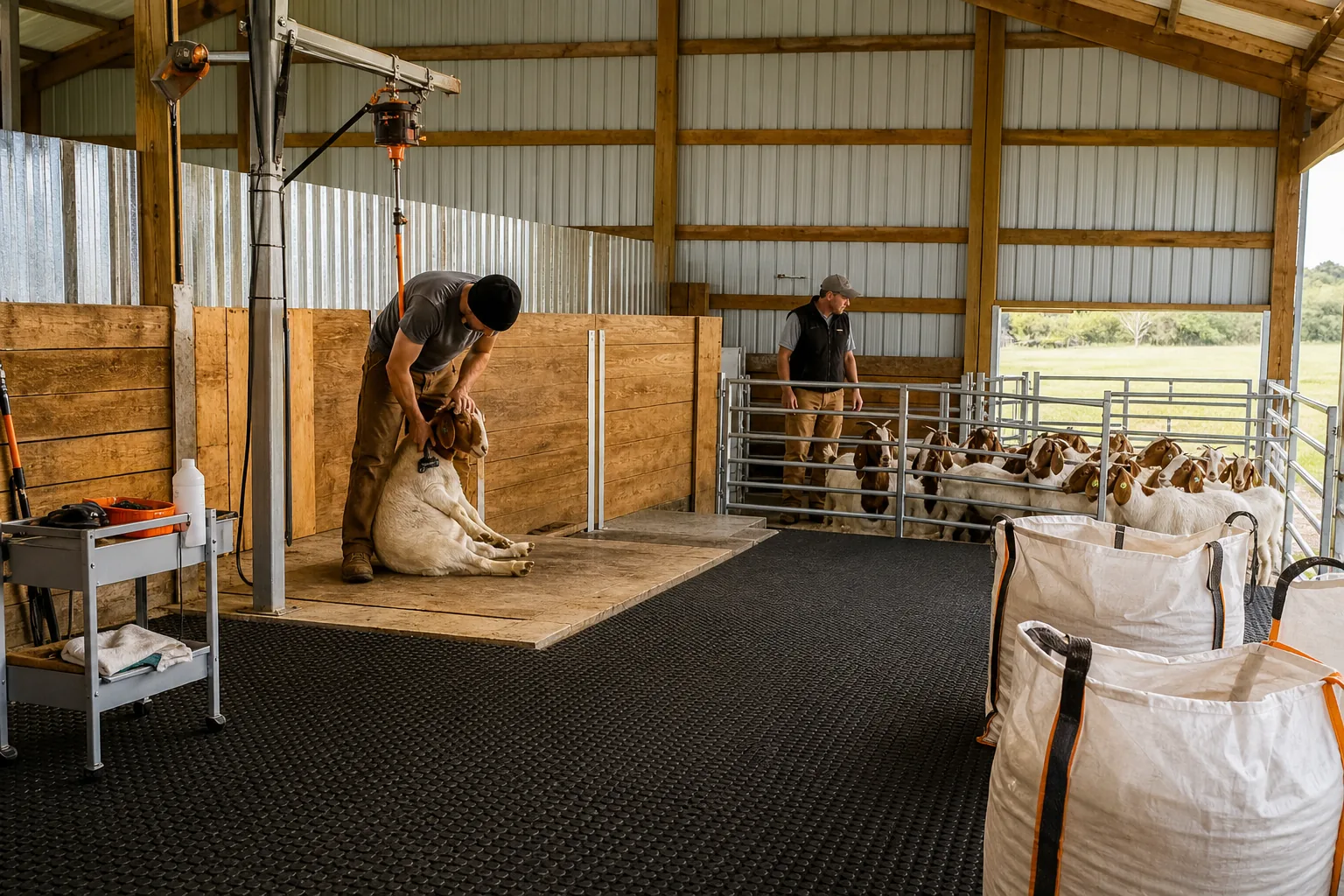
Choose a spot with firm footing and enough room for the shearer to move. Remove clutter from the floor. Check that gates latch well and that no goat can slip into a pasture during a handoff. Set up a clean area for bags or bins if you plan to save the fiber.
Gather the herd before the appointment window. Do not leave the shearer to chase goats across a large field. Put the animals in a secure pen where they can wait without crowding. If one goat is aggressive or hard to catch, tell the shearer before work begins.
Limit the audience. Shearing can look like a good farm event, but extra noise and movement can raise stress for the animals and distract the crew. Keep children and dogs out of the work zone unless the shearer gives clear permission.
Plan the helper roles in advance. One person can manage gates. Another can label fiber bags. A third can bring goats forward. Do not add helpers who lack a job, since a busy pen becomes harder to control.
 Save
Use the waiting time to review the job with the shearer. Point out goats that need gentle handling. Confirm which fiber should stay separate. Tell the shearer if any animal has a recent injury, skin issue, or health concern that affects restraint.
The work area should stay calm and controlled. A good shearing visit is a livestock task, not a spectator event. When the last goat is done, check the animals for cuts, missed mats, or signs of distress before returning them to the herd.
FAQ
How do I find goat shearing near me?
Find a local goat shearer by searching your ZIP code, county, nearby counties, feed store contacts, and large-animal vet referrals. The Easy Homestead lets you search local listings by ZIP code or county. Keep in mind that many shearers travel across several states, so ask whether they have a route near your farm.
How much does goat shearing cost?
Goat shearing prices vary, and public listings may not show rates. Ask each shearer for a written quote based on herd size, travel distance, coat condition, and extra work such as hoof trimming. Also ask about small-herd minimums, deposits, cancellation terms, and payment. Compare the full visit cost rather than a bare per-goat figure.
When should goats be sheared?
Goats should be sheared on a schedule that fits their coat, climate, breed, and health needs. Fiber goats may need a planned annual clip, while other goats may need work for comfort or cleanliness. Ask a goat-experienced shearer about timing in your area, then keep the herd dry before the appointment.
What should I ask a goat shearer before booking?
Ask how often the shearer handles goats, whether they take small herds, how they handle nervous animals, and what equipment or helpers they bring. Confirm travel dates, total pricing, weather plans, and fiber handling. Since current listings lack verified reviews, request a farm reference when possible.
Can a shearer trim goat hooves during the same visit?
Some shearers also trim hooves, but you must confirm this before booking. Andrew Shipsky also offers hoof trims for pigs and goats, while other listings do not state that service. Ask whether hoof care adds time or cost, and tell the provider how many goats need both jobs.
Conclusion
Choose a goat shearer who fits your herd and gives clear answers about handling, travel, timing, and price. Start by searching The Easy Homestead by ZIP code or county, then send a complete job summary to a few providers. Find a verified goat shearer near you and save the contact for your next shearing season.