If you’ve gone looking for guinea fowl for sale near me, you already know the problem. Most sellers won’t tell you where they are or what the birds cost until you’ve already filled out a form. We dug through the listings so you don’t have to. Here are five solid places to buy guinea fowl, and exactly who each one is for.
1. The Easy Homestead (Our Top Pick) , Find verified local guinea fowl listings
The Easy Homestead is a local directory for working homesteaders, built like Yelp but for the homesteading supply chain. You search by ZIP code or county and pull up hatcheries and poultry suppliers near you, with verified listings and real reviews. No mystery locations. No three-week research project that ends in a Facebook thread.
This is the pick for you if you want a nearby source and you’re tired of guessing. When we looked at the open web for guinea fowl sellers, only one of four hatcheries even listed a location. Three of four hid it completely. That’s the exact gap The Easy Homestead fills: you see who’s close, what they stock, and what other homesteaders said about them before you ever reach out.
Guinea keets are a smart buy for more than meat. They’re some of the best yard alarms you’ll find, and they hammer ticks and other pests hard. If you keep a laying flock, they double as early-warning birds. We cover that overlap in our roundup of the 7 best animals to protect chickens, where guinea fowl earn a spot for their loud, distinctive alarm calls.
The honest caveat: directory coverage depends on your area. We’re growing county by county, so some regions have deep listings and some are still thin. If your county is light on hatchery listings right now, we’ll show you that plainly instead of pretending. Search your ZIP, see what’s there, and use the comparison picks below to fill any gaps.
Pro Tip: Search by county, not just city. Guinea keets travel fine within a short drive, and a hatchery two towns over often beats waiting on a shipment.
2. Local Hatcheries , Fresh, USDA-inspected stock
Local hatcheries are your most reliable bet for healthy guinea keets in season. You buy birds that hatched nearby, which cuts shipping stress and gets you fresher stock. Most run heavy hatch schedules from late spring through summer.
Here’s the one hatchery from our search that actually shows its cards. Freedom Ranger Hatcheries lists French Guinea keets starting at $4.50 each and ships anywhere in the United States from Lancaster County, PA. French Guineas grow about twice as fast as other varieties and reach roughly four pounds by 12 weeks on game-bird starter and broiler feed. They’re bred mainly for meat, which is lean, dark, and has about 50% less fat than chicken.
This is the source for you if you want birds for the freezer and you value knowing the price up front. That last part matters more than it should. Across the four sellers we checked, only 25% posted a price at all. Cost certainty is rare in this market, so a clear number is worth something.
One thing to know before you buy keets: guinea keets are sold not-sexed, meaning you can’t pick hens or cocks at hatch. You take a straight run and sort them later by call. If you’re stocking a laying flock too, our guide to the best laying hen breeds for your flock pairs well with a guinea order, since the two flocks share feed and space.
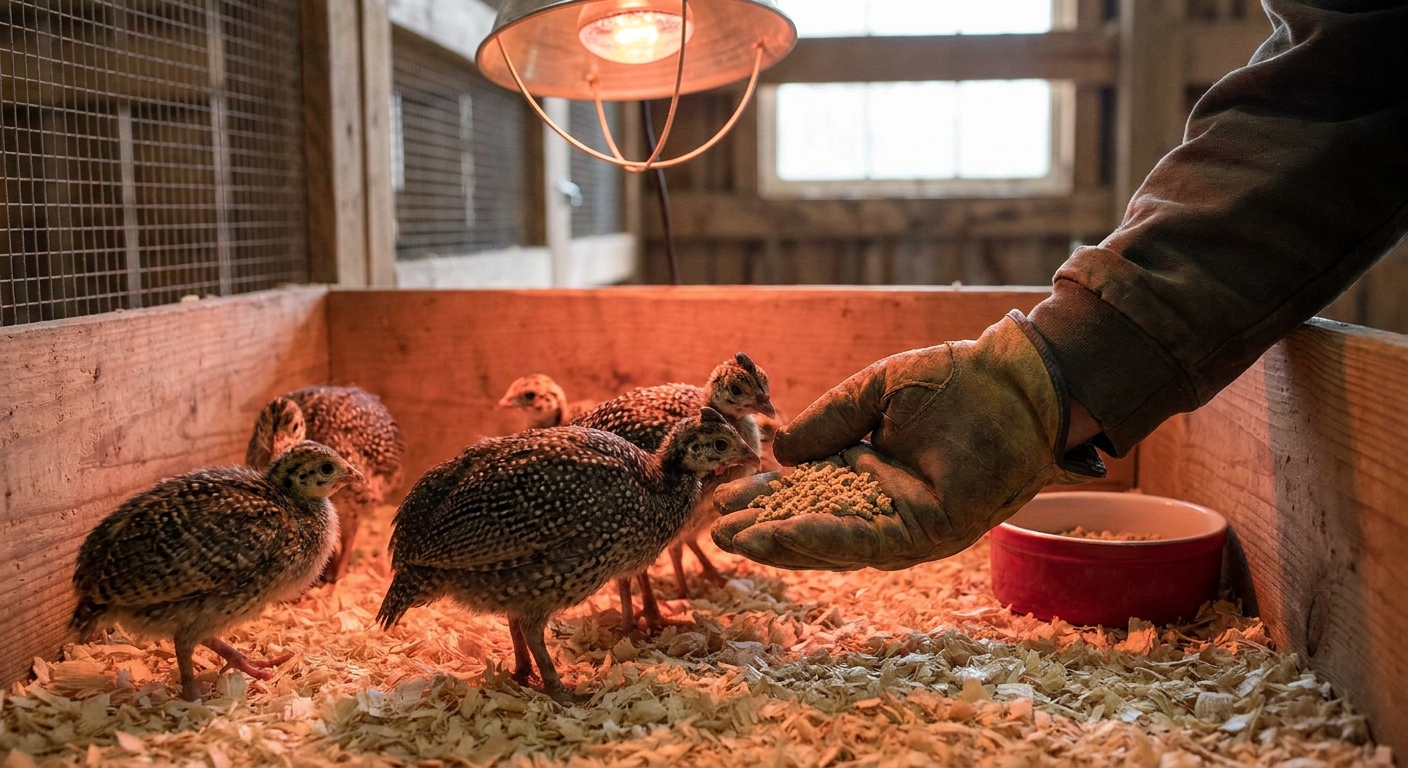
3. Specialty Guinea Fowl Breeders , Heritage breeds and show birds
Specialty breeders raise guinea fowl for color and conformation, not just pest control or meat. This is where you go for specific varieties or birds bred to a standard. You’ll pay more, and you usually wait for a hatch list.
There are three main varieties raised in the U.S.: pearl, white, and lavender. Pearl is the classic speckled bird most people picture, and its feathers get used for ornamental work. A breeder who specializes can get you the white or lavender stock that hatcheries rarely carry.
This is the source for you if you want a particular look, plan to breed selectively, or care about lineage. Guinea fowl have never been commercially “improved,” so they stay hardy and largely disease-free. That means a careful breeder is selecting for traits like color and temperament rather than fighting the health problems that plague heavily bred chickens.
The catch is finding one. Specialty breeders rarely have polished websites, and many sell only by word of mouth, the same way a good farrier or processor stays invisible outside the local network. That’s exactly the visibility gap The Easy Homestead was built to close, so a breeder can set up a verified profile once and actually be found.
Key Takeaway: Go specialty when you want pearl, white, or lavender to a standard. For tick patrol and meat, a regular hatchery keet does the job for less.
4. Mobile Poultry Vendors , On-site sales at farm markets
Mobile poultry vendors bring birds straight to swap meets, farm markets, and feed-store parking lots in season. You see the bird before you buy, which beats any photo on a website. No shipping, no wait.
This is the source for you if you want to inspect stock in person and skip delivery entirely. You can check that keets are bright-eyed, well-feathered for their age, and active before money changes hands. For adult birds, in-person buying lets you hear that telltale two-syllable “buckwheat” hen call so you know what you’re getting, since you can’t sex young guineas reliably by sight.
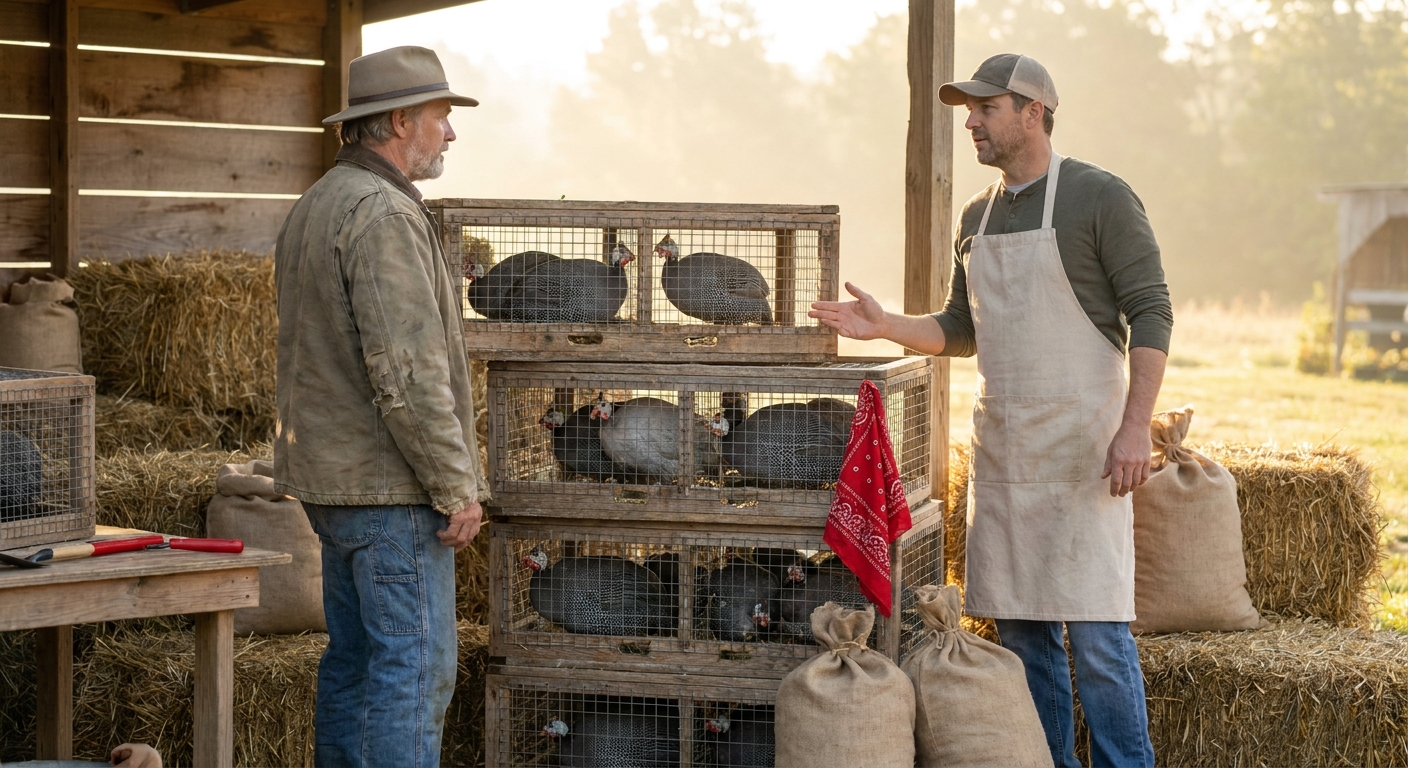
The honest limitation: supply is unpredictable. A vendor might have 40 keets one weekend and zero the next, and there’s no health guarantee like a hatchery offers. Ask where the birds hatched, whether they’ve been confined or free-ranged, and what feed they’re on. Bring a ventilated box. If you raise other animals, the same in-person, ask-first approach works when you’re sizing up any new addition, from pygmy goats to a started flock.
Buy from a vendor who answers straight questions and let the ones who dodge them keep their birds.
5. Online Certified Breeders , Ship nationwide with health guarantees
Online certified breeders ship keets through the mail with a health guarantee, which opens up varieties no one near you carries. This is your fallback when local sources come up empty.
Shipping day-old keets works because of biology, not luck. The poultry extension notes that newly hatched birds can survive about 48 hours on the yolk they absorb during hatching, which is the window that lets them travel without food or water. That’s why hatcheries can mail keets across the country at all.
This is the source for you if local stock is sold out or you want a specific breed. Two of the four sellers we checked offered shipping details, and only Murray McMurray Hatchery lets you pick a ship date at checkout, which points to tighter fulfillment control. A set ship date matters when you’ve got a brooder warming and a schedule to keep.
The trade-off is real: you’re choosing breed availability over a nearby pickup, and you can’t inspect the birds first. Order minimums apply too, since keets ship in groups to stay warm in transit. New keets are sensitive to cold and damp in their first two weeks, so have a 95-degree brooder and lukewarm water ready before they arrive. If a bird shows skin lesions later, our walkthrough on how to treat fowl pox in chickens naturally applies to guineas too.
How to choose a guinea fowl source
Pick your source by what you’re solving for: proximity, price certainty, breed, or the chance to inspect birds in person. Run through these before you buy.
- Check your zoning first. Guineas range wide and cross property lines, and they get loud when disturbed. Confirm poultry is allowed and think about neighbors before you order a single keet.
- Decide keets or adults. For tick and pest control, the extension recommends buying adults, since they’re easier to settle and forage well on their own. For meat or a flock you raise from scratch, keets cost less and bond to your place.
- Nail down location and price. If a seller won’t post where they are or what birds cost, you’ll be reaching out blind. A directory like The Easy Homestead shows verified location and reviews up front, which is the whole point of searching local.
- Match the breed to the job. Pearl for the classic look and ornamental feathers, French Guinea for fast meat growth, white or lavender for color. No single seller we found carried all of them.
- Confirm shipping or pickup logistics. Ask about ship dates, order minimums, and live-arrival guarantees. Have your brooder at 95 degrees before keets land.
Finding a verified local supplier is the same skill as finding any farm service. The homesteaders who track down a good large animal vet near them early are the ones who aren’t scrambling at the worst moment. Treat your guinea source the same way: vet it before you need it.
25%of the guinea fowl sellers we checked posted a location or a price
Comparison of the top 5 options
Here’s how the five sources stack up on the things that actually decide your purchase: how local, whether you can see the bird first, and what you’re trading off.
| Source | Best for | See bird first? | Main trade-off |
|---|---|---|---|
| The Easy Homestead | Finding a verified nearby supplier | Depends on local listing | Coverage varies by county |
| Local hatcheries | Fresh, in-season keets | Sometimes, on pickup | Seasonal hatch windows |
| Specialty breeders | Pearl, white, lavender varieties | Often, by appointment | Higher cost, waitlists |
| Mobile vendors | Inspecting birds in person | Yes | Unpredictable supply, no guarantee |
| Online breeders | Specific breeds when local is dry | No | Shipping stress, order minimums |
If you want one place to start, start with the directory and check what’s listed in your county. The same logic applies to other hard-to-source needs, which is why we built out guides like where to buy raw milk near you: the supply chain runs on knowing who’s close and whether you can trust them.
FAQ
Where can I buy guinea fowl near me?
The fastest way to find guinea fowl for sale near you is a verified local directory like The Easy Homestead, where you search by ZIP code or county and s. Local hatcheries, specialty breeders, and mobile vendors at farm markets are your in-person options. Online breeders ship keets nationwide when nothing local is in stock.
How much do guinea fowl cost?
Day-old guinea keets start around $4.50 each at Freedom Ranger Hatcheries, one of the few sellers that posts a price. Costs climb for specialty varieties like white or lavender and for adult birds. Most sellers hide pricing until you contact them, so expect to ask directly. Order minimums on shipped keets can also raise your total.
Are guinea keets sold as male or female?
Guinea keets are sold not-sexed, meaning you can’t choose hens or cocks at hatch. They look nearly identical until 12 to 52 weeks old. After that, you can tell hens by their two-syllable “buckwheat” call and by males’ larger helmets and wattles. Buy a straight run and sort the birds later by sound and head size.
Can guinea fowl be shipped in the mail?
Yes, day-old guinea keets ship through the U.S. Postal Service because newly hatched birds survive about 48 hours on absorbed yolk. That window lets them travel without food or water. Online hatcheries ship in groups to keep keets warm, so order minimums apply. Have a 95-degree brooder and lukewarm water ready before they arrive.
How many guinea fowl should I buy to start?
Buy at least six to start, since guineas are flock birds that get stressed alone. For protecting a laying flock, plan on roughly 6 to 10 guineas per 20 to 50 chickens. Shipped keets often come with a minimum order anyway. More birds also mean better tick and pest coverage across your property.
Conclusion
Start with the directory. Search your county on The Easy Homestead, see which hatcheries and breeders are verified near you, then use the picks above to fill any gap. Browse hatcheries and poultry suppliers in your area and reach out to the closest one with your breed and pickup date ready.