Finding a processor can take longer than raising the hog. Many small plants book months ahead, especially during fall and winter. Start with the cut list, then check inspection status, ask about handling, and reserve a date before your hog is ready.
Step 1: Decide what processing service you need
Before searching for hog processing near me, write down what you want back in your freezer. A processor can’t give you a useful estimate if you only say, “I have a hog.”
First, decide if you need slaughter and full processing, or processing only. Some plants handle a live hog from pickup through cutting. Others accept a dressed carcass or work only from scheduled slaughter appointments. A few may provide on-farm kill or live pickup, but you must confirm that service before booking.
Next, sketch out your cut plan. Think about how your household eats pork during a normal month. You may want thick bacon, bone-in ham, shoulder roasts, chops, ground pork, or sausage. Ask if the plant makes smoked products, brats, snack sticks, or seasoned sausage. Each add-on can affect the price and the pickup date.
Also ask about the package size. A shop may use heat-sealed bags or butcher paper. Both can work, but the choice affects how long packages hold up in your freezer and how clearly each cut is labeled.
Some processors give a rough freezer-space estimate; a half hog will require less space than a whole hog. Treat that as a planning figure, not a promise. Carcass size and your cut choices will change the final volume.
For a deeper search plan, use How to Find a Meat Processor Near Me alongside your own county search. It helps when the nearest shop has no open dates.
Write down these details before you reach out:
- Number of hogs and approximate live weight.
- Slaughter date, if already set.
- Custom cuts you want.
- Smoking or sausage needs.
- Preferred package style.
- Who will pick up the finished meat.
By now, you should have a clear order sheet. That makes every processor comparison fair.
Step 2: Find local processors before they book out
Local hog processing near me often means searching beyond the first map result. Small processors may have no current website, and some rely on feed-store referrals or repeat farm clients.
Start with The Easy Homestead. Search by ZIP code or county for meat processors and local butchers. Listing depth can vary by area, so treat the directory as a focused first stop rather than a claim that every local plant appears there. Check the listing details and reviews, then confirm current availability with the processor.
Ask at the feed store where working farms take their hogs. A feed clerk may know which plants accept small orders or handle custom sausage. Your county extension office can also point you toward state directories and inspection resources.
Public inspection directories can help identify federally inspected establishments. State lists differ, and some cover only state-inspected plants. See the additional public processor-search guidance when you need to widen the search.
Search by more than one phrase. Try “pork processor,” “custom slaughter,” “hog butcher,” “farm livestock processing,” and “mobile meat processor”. A plant may not use the words you expect. Add the nearest town or county to each search.
Build a short list of three to five plants. Record the distance, inspection type, species accepted, and first available date. Don’t choose based on mileage alone. A plant 20 minutes farther away may save you a second trip if it handles slaughter, cuts, smoking, and pickup in one workflow.
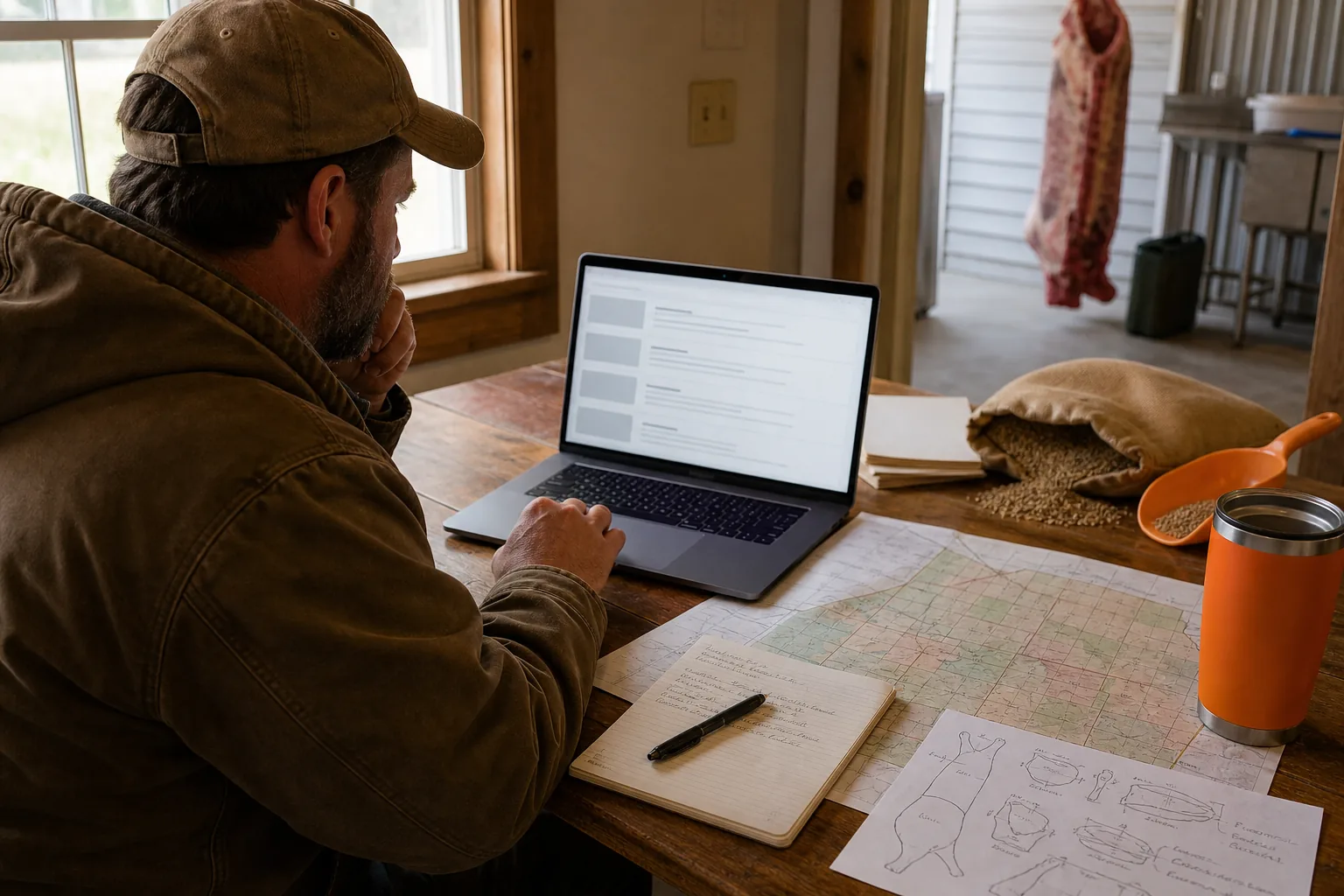
When schedules fill up, ask about cancellations. You can also ask if the plant keeps a waiting list. Get any open date in writing through email or the shop’s contact form so both sides have the same record.
Key Takeaway: Search by county first, then widen the radius before you assume no processor is available.
By now, you should have several names, a service match, and at least one possible date.
Step 3: Verify inspection status, services, and handling
When you compare hog processing near me options, inspection status is one of the first facts to confirm. State-inspected and USDA-inspected plants may follow different rules about sales and distribution. Your intended use matters.
If the meat is for your household, ask the processor what inspection status applies to custom work in your state. If you plan to sell meat, serve it at an event, or supply a restaurant, ask what inspection level and labeling rules apply. Don’t rely on a vague phrase such as “licensed butcher.” Ask for the exact status.
A processor directory entry may identify basic plant types, such as slaughter or processing. The entry may not tell you which cuts the shop makes, which animals it accepts, or whether it handles small farm orders. You still need a direct service check.
| Question to ask | Why the answer matters | What to record |
|---|---|---|
| Does the plant slaughter hogs? | A cutting shop may not accept live animals. | Slaughter, carcass drop-off, or both |
| What inspection status applies? | Your plan may involve household use or legal sales. | State, USDA, or another stated status |
| Do you handle farm-raised hogs? | Fat, size, and cut needs can differ by animal. | Accepted weight and species limits |
| Do you make smoked ham or bacon? | Curing and smoking can add time to the order. | Available products and added wait |
| Can I choose sausage seasoning? | Flavor choices may need to be set before drop-off. | Blend choices and minimum batch size |
| How is meat wrapped and labeled? | Clear labels help when several hogs share a freezer. | Wrap type, labels, and package size |
| How long is the usual turnaround? | You need freezer space and pickup plans. | Estimated date, not a guaranteed date |
Ask how the shop keeps customer orders separate. This matters when you bring more than one hog or share a delivery with another farm. Also ask whether you receive your own animal’s meat. Some processors state this clearly. Others may use a commingled custom system that you need to understand first.
Sanitation questions don’t need to sound formal. Ask how the plant handles chill time, labeling, and frozen storage. Ask what happens if a package is damaged or a cut is missing. A good answer should be specific enough for you to plan around it.
Compare the full job, not one tempting line item. A low slaughter fee may not include cutting, curing, sausage, wrapping, or storage. Request a written estimate based on your cut sheet. Pricing varies by region, animal size, service, and inspection requirements.
Cross off any plant that won’t explain its process. A busy shop can still give clear answers. If it can’t, keep looking.
Step 4: Contact the processor and reserve your date
Once you have a service match, contact the processor with a short, complete message. Don’t send a string of separate questions. Put the animal count, timing, and main cut needs in one note.
Use the shop’s preferred contact method. If it asks for email or an online form, follow that path. If the business accepts phone calls, you can speak with the scheduler, but keep your final cut sheet and date confirmation in writing.
Include:
- Your county and travel distance.
- Number of hogs and estimated size.
- Whether slaughter is already arranged.
- Desired processing date or date range.
- Major cuts, sausage, smoking, and packaging needs.
- Questions about deposits, minimum fees, and pickup.
Ask what makes the date official. Some plants require a deposit. Others place you on the calendar after they approve the animal and cut plan. A verbal confirmation is not a reservation.
Ask when the cut sheet is due. Get the plant’s own form if it has one. Mark the deadline on your farm calendar, then keep a photo or digital copy of the final sheet.
Give the processor honest information about the hog. Mention an unusually large animal, a damaged hide, illness concerns, or a prior medication issue. The shop needs that information to decide if it can accept the order and how it should handle the animal.
Before you finish, confirm the handoff in one message: arrival point, date, time window, required tags or paperwork, payment terms, and finished-meat pickup plan. Save the reply with your cut sheet.
That small record prevents the most common booking problem: two people remembering different instructions.
Step 5: Prepare the hog, transport, and pickup details
Preparation starts before transport day. Ask the processor for its exact instructions because fasting, loading, tags, and delivery rules can vary by plant.
Plan the route before the hog is ready. Check trailer space, gate width, flooring, weather, and the time needed to reach the plant. Avoid a rushed load. A calm, secure trip is safer for the animal and the people handling it.
Confirm whether the processor wants a live hog, a dressed carcass, or an animal handled through its own pickup service. Never assume a shop with a cutting room also provides slaughter or farm pickup. Those are separate parts of the job.
Ask what paperwork travels with the animal. The shop may require an order number, owner name, animal tag, or cut sheet. Label your copy before leaving the farm. If another person delivers the hog, give that person written instructions and the processor’s confirmation.
A general swine-handling guide can help you review transport planning before delivery. Use the swine handling resource as a starting point, then follow the processor’s own rules.
Keep the handoff clean and clear. Don’t bring a muddy trailer into a plant area unless the shop says it’s fine. Ask where to park and where the animal or carcass changes hands. Small details matter when several farms arrive on the same day.
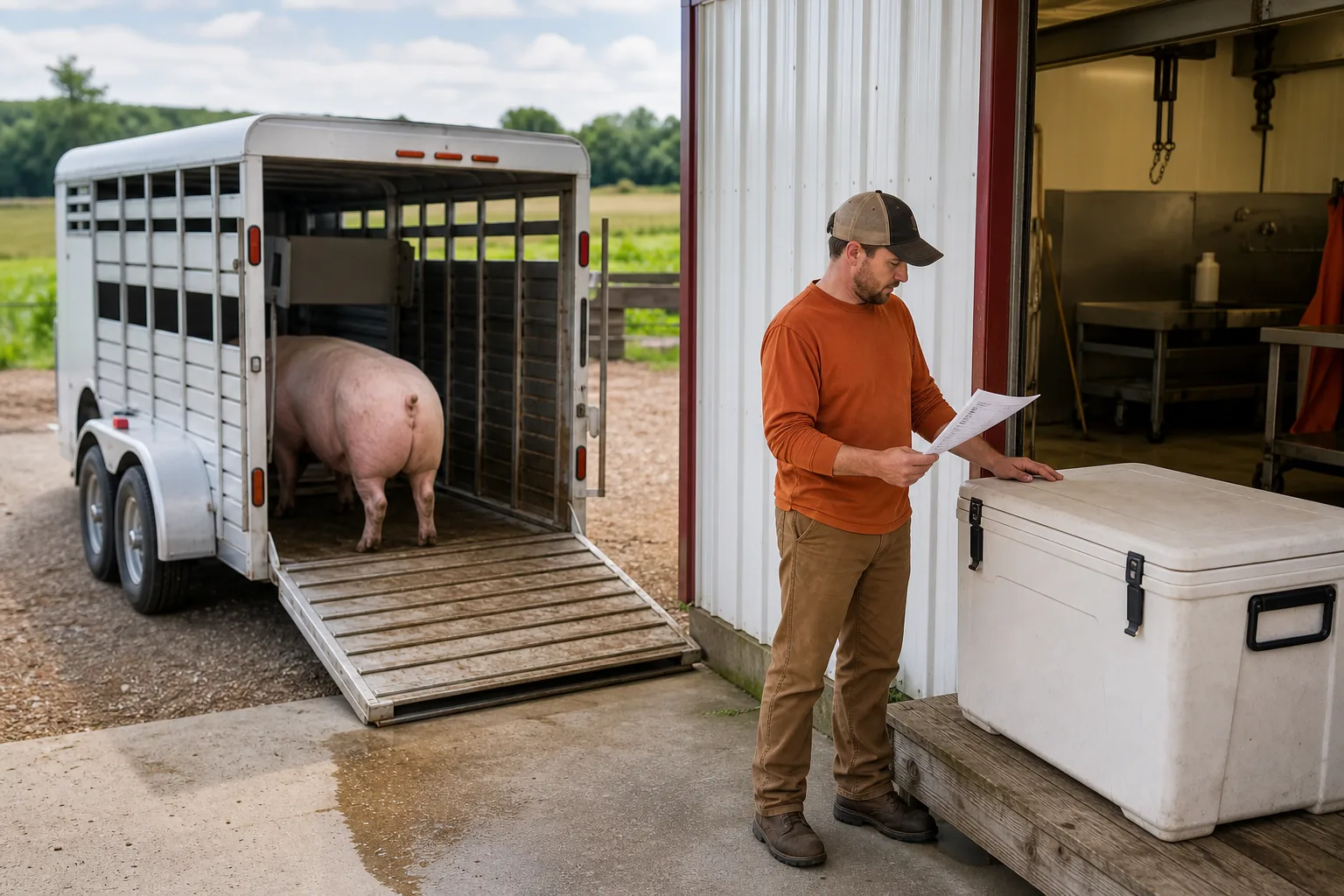
Pickup deserves the same planning. Ask how much freezer space you’ll need and whether the order comes frozen. Turnaround times vary by processor, and curing or a busy season may change the schedule.
Bring enough freezer capacity before pickup. Clean the freezer, make room by category, and keep a written inventory as packages go in. Group chops together. Set aside sausage and cured meat so you can use those items first.
Check every label before leaving. Look for your name, cut name, weight if listed, and any special notes. If something seems wrong, raise it at pickup while the order is still easy to trace.
By now, you should have a confirmed booking, a delivery plan, and freezer space waiting at home.
FAQ
How far in advance should I book hog processing near me?
Book as soon as you know your likely slaughter window, often months ahead during busy seasons. Small plants may have limited weekly capacity. Ask about cancellations and waiting lists if the first date is full. Keep the date, deposit terms, and cut-sheet deadline in writing so your farm plan stays on track.
What does a hog processor usually do?
A hog processor may slaughter the animal, chill the carcass, cut pork into custom pieces, grind trim, make sausage, cure bacon, smoke ham, wrap packages, and freeze the order. Each plant chooses its own services. Ask for the full list because “processing” can mean cutting only at some shops.
What is the difference between state-inspected and USDA-inspected pork?
State-inspected and USDA-inspected plants follow different inspection systems and may have different rules for selling meat. The right choice depends on whether the pork stays with your household or enters a sale channel. Ask the processor which status applies to your order and confirm the rules in your state.
Can a processor handle a farm-raised hog?
Many processors accept farm-raised hogs, but you must confirm size, slaughter method, and delivery rules first. Farm-raised animals may have different fat levels or carcass sizes than shop-supplied animals. Share the breed, estimated weight, and any special handling concern before reserving a date.
How much freezer space does a whole hog need?
Your final need will change with carcass size and the amount of bone-in meat, sausage, and cured product you choose. Leave extra room if your cut sheet includes large roasts or bulk packages.
Conclusion
Choose a processor that matches your cut plan, inspection needs, and delivery setup, not one that only looks close on a map. Search verified local listings on The Easy Homestead, then send your cut sheet and reserve a date while the calendar still has room. Find a verified meat processor near you on The Easy Homestead.