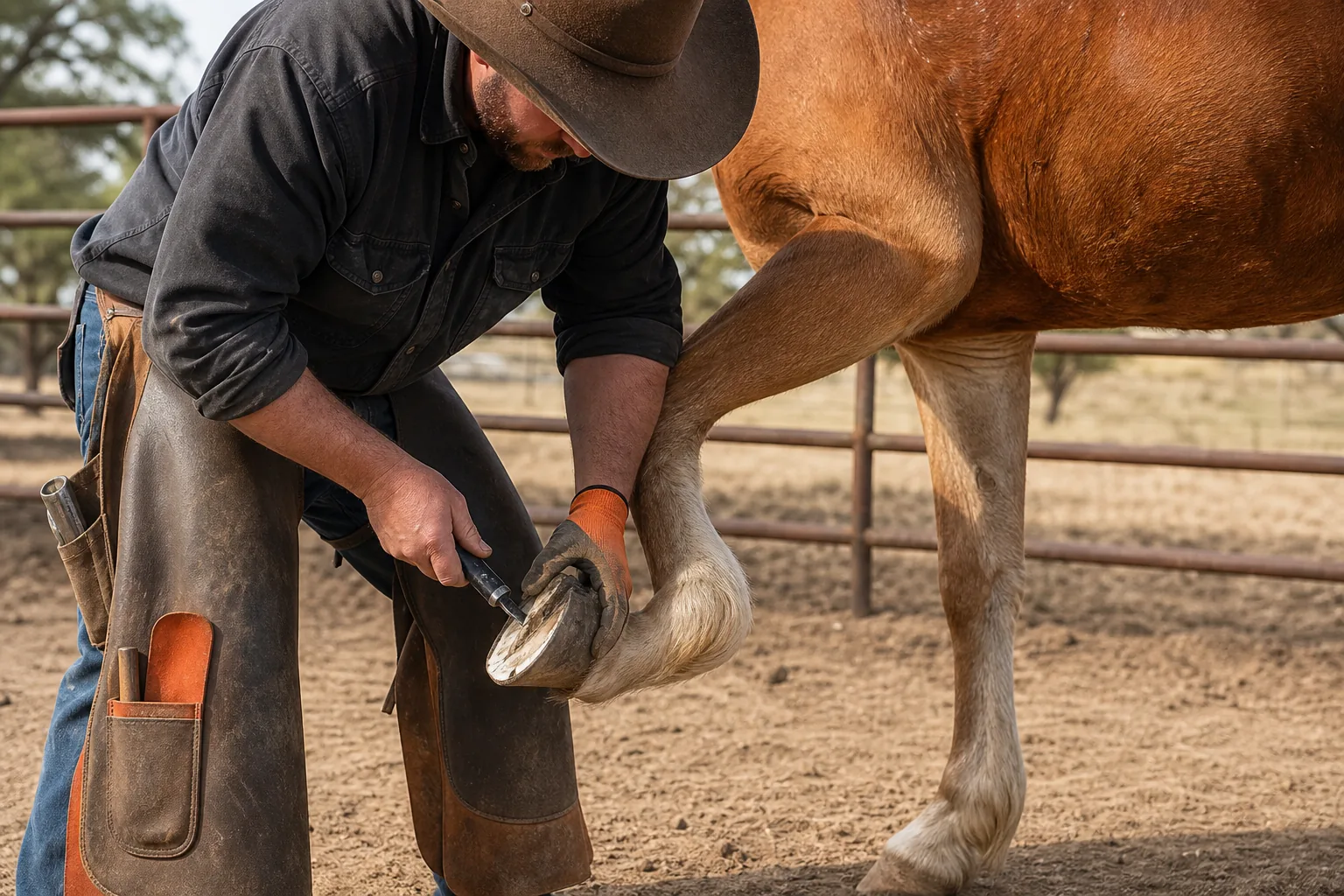
In Burleson County, a trim-only service averages $60. That figure should not be treated as a statewide rate.
Your horse’s hoof condition, the work requested, travel, and the farrier’s own pricing model all matter. Here’s how to read the numbers, compare quotes, and find a local provider you can trust.
What a Texas farrier may charge for a trim or shoeing visit
So, how much does a farrier charge per horse in Texas? For a basic trim, the clearest local figure we found comes from Burleson County. It lists an average of $60 for trim-only work.
That leaves us with a useful but limited answer. A routine trim may land near the lower end of the market, while a difficult visit can cost much more. Texas has long travel distances in many rural areas, and farriers may price a farm call separately or build travel into the per-horse rate.
Ask what the quote includes before you book. A clear quote should tell you whether it covers:
- A trim only, without shoes.
- Front shoes or a full set.
- Removal of old shoes.
- Extra work for overgrown or neglected feet.
- A farm call or mileage charge.
- Sales tax, if the provider applies it.
Horse owners often budget by visit, but the bill repeats. One source on horse ownership puts routine farrier visits at roughly $30 to $150, depending on location and need, with visits often scheduled every six to eight weeks. That broader figure is useful for planning, but it is not a Texas survey.
For a closer look at trim, shoeing, and specialty work, our guide to farrier cost and real price ranges can help you build a yearly budget.
Key Takeaway: Use the $60 Burleson County figure as one local data point, not as a guaranteed price for every Texas horse.
The factors that change a farrier’s price per horse
The answer to how much a farrier charges per horse in Texas changes with the job in front of them. Two horses at the same barn can need different amounts of time and skill.
Trim versus shoeing
A trim removes excess hoof wall and shapes the foot. Shoeing adds more steps because the farrier must fit and attach the shoe. The type of shoe can also change the price. A standard shoeing visit is different from corrective or therapeutic work.
Ask whether the quote covers all four feet. Some providers quote by horse. Others may quote by hoof, by shoe, or by the type of work. That distinction may explain why one source reports a $60 average beside a $125 low figure.
Condition of the feet
A horse with regular care usually takes less time than one with long toes, chipped walls, thrush, cracks, or a poor trim from a past visit. A nervous horse can also slow the job. The farrier may need to stop, reset, or use a different approach.
Do not hide a problem when asking for a quote. Send clear photos if the farrier wants them. Describe how long it has been since the last trim. That gives the provider a better chance to quote the right job.
Travel and the number of horses
Mobile farriers spend time on the road between farms. A remote address may bring a travel charge, especially for one horse. A group visit can sometimes make the trip worthwhile for the provider, but you should never assume a group discount.
Ask if the farrier has a minimum number of horses per stop. If you have one horse, a nearby provider may cost less than someone driving across several counties. If you have several horses, the total visit price may be easier to manage even when each horse has a separate fee.
Location and local demand
Texas is too large for one statewide price to mean much. A farrier working near a dense horse area may have a different schedule and client mix than one serving spread-out ranches. Demand can also affect how far ahead you need to book.
A horse-cost guide also notes that location affects horse expenses, while farrier needs depend on the horse and the service. Its general estimate places farrier visits around $30 to $150 and says many horses need care every six to eight weeks. Read the horse ownership and hoof-care cost guidance as a broad planning reference, not a Texas price list.
For budgeting, write down the expected visit price and the likely schedule. A $100 visit every six weeks is a different annual cost than a $100 visit twice a year. Regular hoof care needs a place in the farm budget.
Pro Tip: When you request a quote, send your county, horse count, service type, last trim date, and clear hoof photos. You’ll get a more useful answer than asking for a flat rate.
How to compare quotes without comparing unlike services
To compare farrier quotes in Texas, put each provider’s answer into the same set of questions. A lower number may cover less work.
Start with the service name. Write down trim, front shoes, full shoes, corrective work, or therapeutic work. Do not compare a trim-only quote with a shoeing quote.
Then ask how the provider bills. The charge may be per horse, per hoof, per shoe, or per visit. The wording matters. It may also explain the strange Burleson County figures, where the reported average sits below the listed low.
Next, ask about travel. A provider may include mileage in the rate. Another may add a farm-call fee. A third may serve your area only on a certain route day. You need the full visit cost, not the base price alone.
Ask what happens if the horse cannot stand safely. Some farriers may stop the visit and recommend help from a veterinarian or trainer. A horse with severe pain, heat, swelling, or sudden lameness may need veterinary care rather than a routine trim.
Also ask about scheduling. A farrier who can book you next week may not have the same availability six weeks later. Regular care works best when the provider can return on a workable schedule.
Use this short quote checklist:
- What service does the price cover?
- Is the rate per horse or per hoof?
- Are shoes, materials, and removal included?
- Is travel included?
- What extra charge applies to difficult or corrective work?
- When can the farrier return?
Our local search guide for the best farrier near you covers the same fit questions, including county search and hoof-care experience.
Keep the written answers. When you compare the next quote, you’ll know whether the price changed or the job changed.
When a low farrier quote may not be the lower-cost choice
A low farrier quote can save money, but only when it covers the work your horse needs. If the trim is rushed or poorly matched to the horse’s feet, you may pay again sooner than planned.
Price alone cannot tell you whether a provider is a good fit. Ask how the farrier handles a horse with a long break between visits. Ask what they do when a horse has a crack, flare, imbalance, or soreness. You want a clear answer, not a vague promise.
Travel is another hidden cost. A provider with the lowest base price may be far away. Add the travel fee and the value of your time at the barn. A nearby farrier with a slightly higher rate may cost less for the whole visit.
Availability matters too. If a farrier is booked for months, you may struggle to keep the next visit on schedule. That can push a routine trim into a more involved job. The cheapest quote is not useful if you cannot get repeat care.
Be careful with prices that seem too low to support the work. A farrier pays for tools, fuel, training, maintenance, and time spent traveling between farms. You do not need to choose the highest quote, but you should understand what each price supports.
For a horse with sudden lameness or a painful hoof, ask a veterinarian whether the horse needs an exam before routine farrier work. A farrier handles hoof care. A veterinarian diagnoses medical problems.
Finding a dependable farrier near you in Texas
Finding a farrier near you in Texas often starts with the feed store, a neighbor, or a local horse group. Those leads can help, but they may not tell you how the provider charges or whether they serve your county.
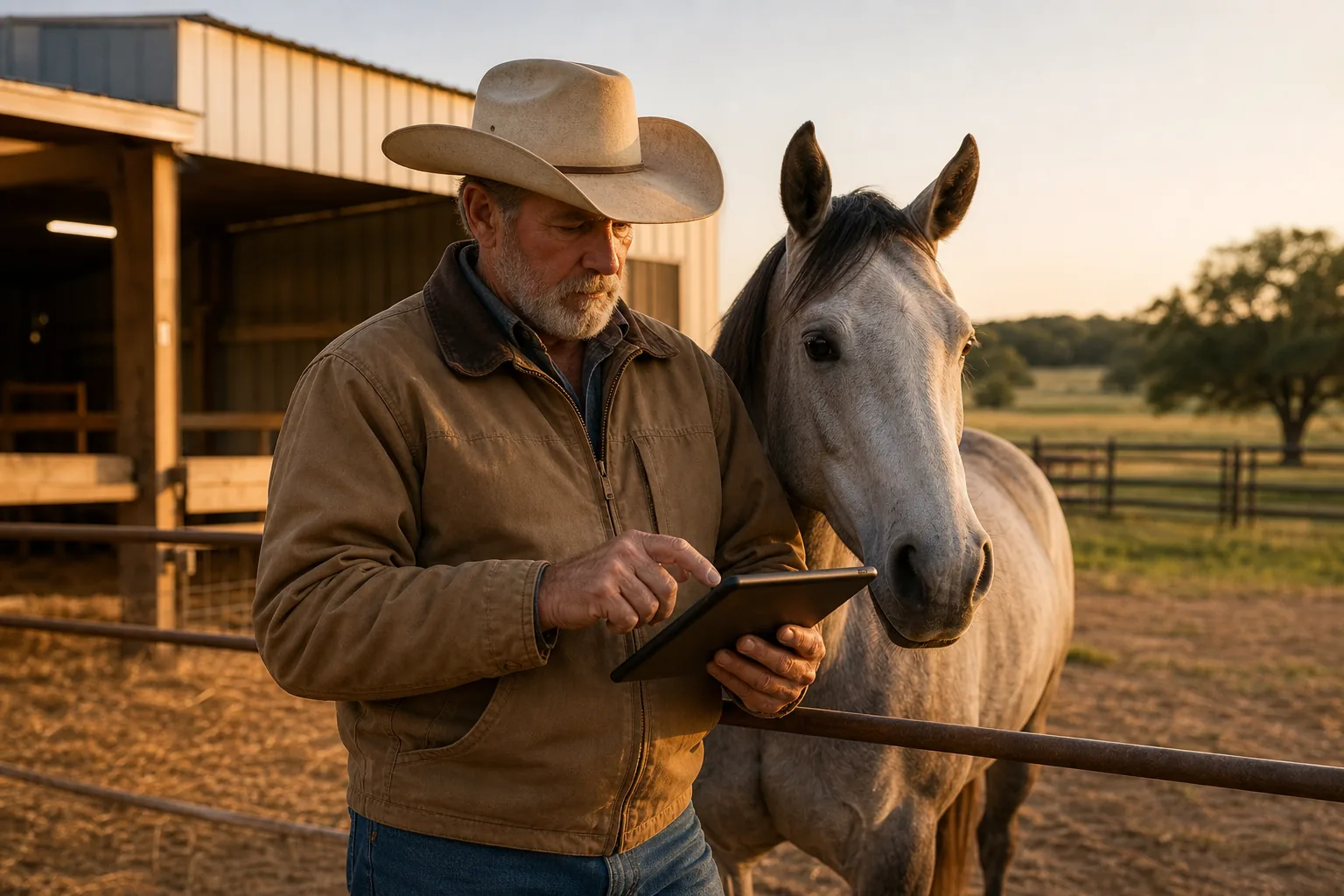
The Easy Homestead is built for that gap. You can search local farm service providers by ZIP code or county, then look for listing details and reviews before you reach out. Farriers sit alongside other services that working homesteaders need, including large-animal vets and mobile farm providers.
Start with your location. A county search is often more useful than a statewide search because mobile providers plan routes. If the first results are thin, expand to nearby counties and ask whether the farrier already travels your way.
Next, check the listing for the details that affect price:
- Does the provider serve your area?
- Does the listing name trims, shoeing, or corrective work?
- Can you s?
- Does the provider explain how to request a quote?
- Is the listing clear about the type of horses served?
A directory cannot replace a direct conversation about your horse. It can shorten the search for names worth checking. That matters when you have a new horse, a farrier who retired, or several animals due for care at once.
Before you book, send the horse’s age, current hoof condition, last service date, and your address or county. Say whether you need a trim or shoes. Ask for the full expected charge and the next available repeat slot.
If you keep several horses, ask nearby owners whether they want to join a route day. Do not promise a discount. Instead, ask the farrier whether a multi-horse stop changes the travel cost.
The Easy Homestead’s goal is direct: help you find who you need and trust what you find. Coverage will vary by county, so if you do not see a useful listing yet, widen the search and verify the provider before booking.
 Save
Use The Easy Homestead’s farm directory by ZIP code when you need to search beyond the names already in your local circle.
Frequently asked questions
How much does a farrier charge per horse in Texas?
A basic trim may cost about $60 in one Burleson County data point. Ask whether the quote is per horse, per hoof, or per visit, and confirm what work the price includes.
How often does a horse need a farrier in Texas?
Many horses need farrier care about every six to eight weeks. The right schedule depends on hoof growth, workload, terrain, conformation, and current hoof condition. Your farrier can set the next visit after seeing how the horse responds to the trim.
Does shoeing cost more than a trim?
Yes, shoeing usually costs more than a trim because it adds materials and fitting work. The exact price depends on whether the horse needs front shoes, a full set, special shoes, or corrective work. Ask if shoe removal is included. Never compare a trim-only quote with a full shoeing quote.
Why do farriers charge a travel fee?
Farriers may charge for travel because mobile work includes fuel and time between farms. The fee may appear as mileage, a farm call, or part of the per-horse rate. Ask how the provider bills travel before booking. If several horses are ready at one farm, ask whether the route cost changes.
How do I find a farrier in my Texas county?
You can search by county on The Easy Homestead, then review the provider’s service details before requesting a quote. Ask about trims, shoes, travel, scheduling, and repeat visits. If your county has few listings, check nearby counties and confirm that the farrier already serves your area.
Conclusion
Plan on a wide range rather than one Texas price. Get a written quote that names the service, travel cost, and repeat schedule. Then search The Easy Homestead by county to find a farrier worth contacting for your horse.