Farrier bills can swing from $25 to well over $200 per visit, and the difference has almost nothing to do with how good the farrier is. It comes down to where you live, what your horse wears on its feet, and how often you’re scheduling visits. Here’s a clear breakdown of what you’ll actually pay and what drives the number up or down.
What a basic farrier visit typically costs
A standard hoof trim runs about $30 to $50 for most horse owners in the US. A full set of shoes, meaning four standard keg shoes nailed on, lands closer to $90 to $150. Add up five or six visits per year and most owners pay somewhere between $450 and $750 annually just for basic hoof care.
In the Kentucky Bluegrass area, trims run $25 to $35 per head, which is on the low end for the country. Even in a high-density horse market like Lexington, the concentration of farms drives prices down because a farrier can knock out 25 to 40 horses in a single day without burning half a tank of gas on travel.
Outside of major horse country, $45 to $60 for a trim is more common. In suburban or rural-fringe areas where horses are scattered, you can easily pay $60 to $80 for the same trim because the farrier is spending more drive time between stops.
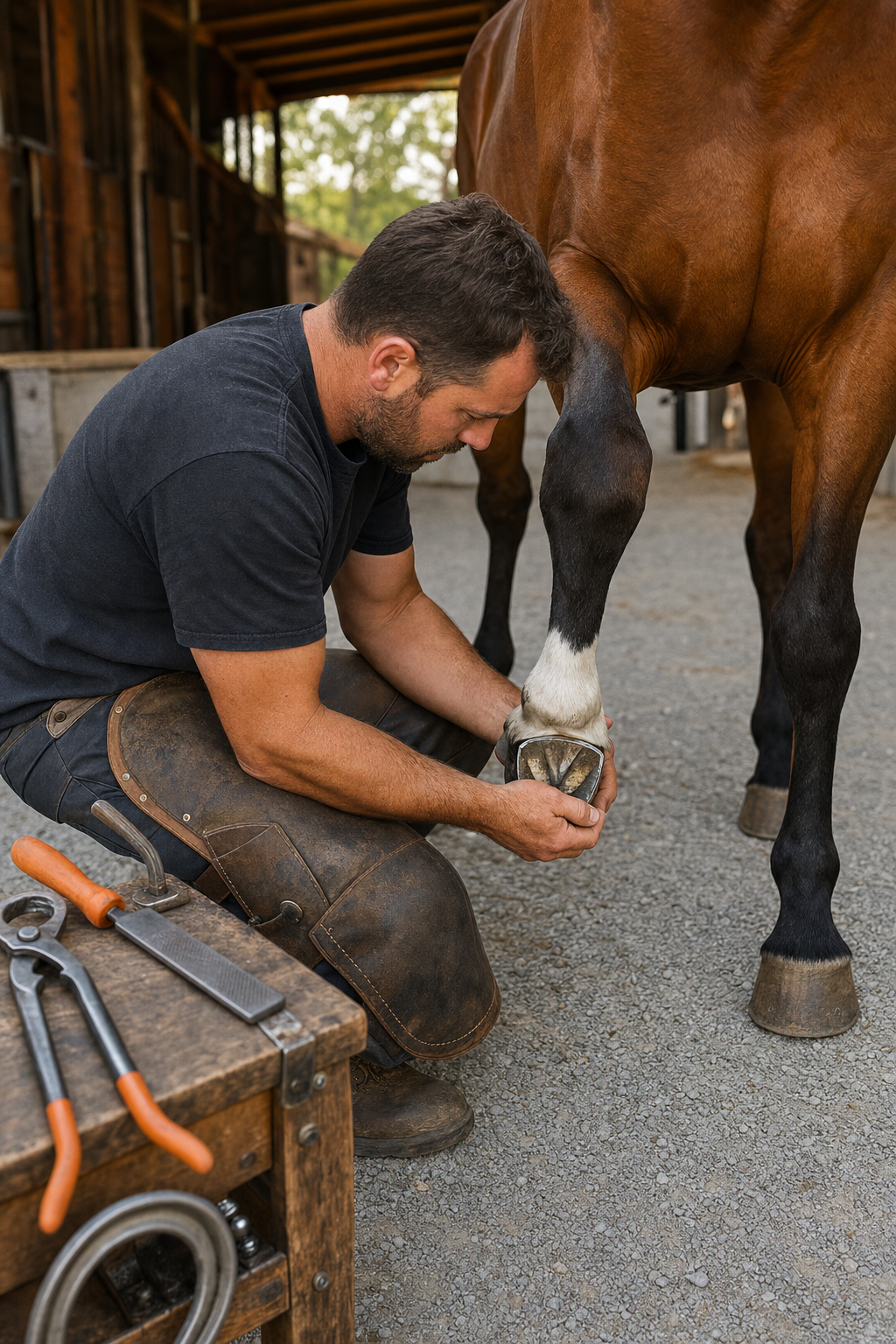
The American Farriers Journal has tracked nationwide pricing for years, and their survey data has consistently put the average cost to trim four hooves and apply four keg shoes in the mid-range of what most owners report paying.
One thing to keep in mind: trim prices and shoe prices don’t scale together. A farrier might charge around $40 for a trim, while a full shoe job costs considerably more. That’s not a markup. Shoes involve materials, more time, and more skill. You’re paying for the steel, the shaping, the nailing, and the finish work all in one visit.
Key Takeaway: Expect $30, $50 for a trim and $90, $150 for a full shoe set, with annual costs between $450, $750 for horses on a standard 6-week schedule.
Shod vs. barefoot: how the management choice affects your annual bill
Keeping a horse barefoot is cheaper per visit. But the decision isn’t purely financial. A horse with naturally strong, healthy feet who works mostly on soft ground can often go barefoot without issue. A horse with thin soles, poor hoof structure, or who works regularly on gravel or pavement needs shoes. If you pull shoes to save money and the horse goes lame, you’ll spend more on the vet than you ever would have on the farrier.
| Management Style | Cost Per Visit | Visits Per Year | Estimated Annual Cost | Best For |
|---|---|---|---|---|
| Barefoot trim only | Varies by region | 6–9 | Varies by region and frequency | Easy-keeping horses, soft terrain, pastured horses |
| Full shod (4 shoes) | Varies by region | 6–8 | Varies by region and frequency | Working horses, rocky terrain, horses with hoof issues |
| Partial shod (2 front shoes) | Varies by region | 6–8 | Varies by region and frequency | Horses needing front protection only, trail horses |
| Rotating shod/barefoot | Varies | 6–8 | Varies by region and frequency | Seasonal riders, horses transitioning hoof types |
Many owners rotate between shod and barefoot seasonally. A horse might go barefoot through a wet winter when they’re not working hard, then get shod again for spring riding season. That approach can trim the annual bill compared to shoeing year-round.
If you’re on a budget, the math matters. A barefoot horse on an 8-week trim cycle costs less per year than the same horse on a 6-week cycle. That difference is real money, but it’s worth asking whether the longer interval is actually good for your horse’s feet. A hoof that goes 8 weeks can develop imbalances that stress tendons and ligaments. The savings have a cost, just one that shows up later.
The farrier costs for miniature horses follow a similar structure but at lower dollar amounts, typically $15 to $20 per trim visit, which is worth knowing if you’re managing a mixed herd with both full-size and mini horses.
What drives the price up: size, shoes, location, and the farrier’s experience
Four factors push farrier prices higher than the baseline. Understanding each one helps you figure out whether you’re being quoted fairly or whether there’s room to negotiate.
Horse size
Farriers charge more for bigger horses. A draft horse or draft cross takes more time, more physical effort, and more material. The spread from the smallest to the largest animal can be significant, just for a trim. Draft shoes cost more in materials alone, and the shaping work is heavier. If you’re running Belgians or Percherons, expect to pay at the top of whatever price range applies in your area.
Type of shoe
Standard keg shoes (factory-made, off-the-shelf steel) are the cheapest option. Specialty shoes cost more. Race plates for a thoroughbred can run $150 for four, as seen in the Kentucky Bluegrass market. Therapeutic shoes, the kind a farrier custom-shapes to correct a conformational issue or manage a condition like navicular disease, cost significantly more per set depending on the complexity and materials.
Aluminum shoes are lighter than steel and cost more. Pads add cost. Clips add time. Every modification adds to the bill, and they’re not optional when a horse needs them.
Location
Urban areas and regions with few farriers carry a premium. The Kentucky Bluegrass example is instructive: in a dense horse market, a farrier can stay on a single farm for half a day, reducing travel overhead and keeping prices lower. Trim prices of $25 to $35 per head reflect that efficiency. A farrier covering three counties in rural Tennessee works the same hours but covers far more ground, and that cost gets built into his per-visit rate.
Experience and certification
Certified farriers have passed written and practical exams demonstrating skill beyond basic trimming. A journeyman farrier or a credentialed farrier at the journeyman level will charge more than an apprentice. That premium is usually worth it, especially for horses with hoof problems. A skilled farrier spots a brewing issue before it becomes a lameness call to the vet. The fee difference between a novice and a certified farrier might be $20 to $30 per visit. Over a year, that’s a couple hundred dollars, which is cheap compared to a vet bill for a problem that went unnoticed.
Pro Tip: Ask your farrier about their training and credentials before the first visit. A farrier who completed an apprenticeship or holds recognized certification can spot early hoof problems that save you significantly in vet costs down the road.
Additional fees to know about before the farrier arrives
The base trim or shoe price is rarely the final number. A few additional charges show up regularly, and knowing about them ahead of time prevents bill shock.
Travel fees
Farriers in densely populated horse areas often absorb travel costs because the farms are close together. But if you’re 30 miles from the nearest farrier, expect a travel fee of $20 to $50 on top of the service price. Some farriers charge a flat trip fee. Others charge per mile after a certain radius. Clarify this before scheduling, especially if you’re one of their more distant clients.
Emergency and after-hours calls
A lost shoe before a competition or a hoof crack that needs immediate attention pulls a farrier away from their scheduled route. Emergency calls typically run 1.5 to 2 times the standard rate, plus any travel fee. If your horse is hard to shoe, requires sedation, or is difficult to handle, some farriers charge a handling fee on top of the standard price. Worth mentioning when you call, not when they arrive.
Reset fees and pulled shoes
When a shoe is reset (pulled, reshaped if needed, and re-nailed to the same foot) rather than replaced with a new shoe, some farriers charge a lower reset price, around $10 to $20 less per shoe. Others charge the same rate regardless. Ask about their policy upfront if your horse consistently holds shoes well and resets are usable.
Barn visits that require sedation for a difficult horse are worth a conversation with your vet in advance. Sedation fees from the vet typically run $30 to $80, which comes on top of the farrier’s bill. Some farriers won’t work on an unsedated horse that’s known to be dangerous. That’s a fair call on their part.
When you’re thinking about the full cost of keeping a horse, farrier work sits alongside feed, hay, vet care, and housing. If you’re still in the planning stages and weighing the overall budget, the cost breakdown in our guide on how much large livestock costs to purchase and maintain gives useful context for comparing the ongoing expenses of different farm animals.
How to budget for farrier costs across the year
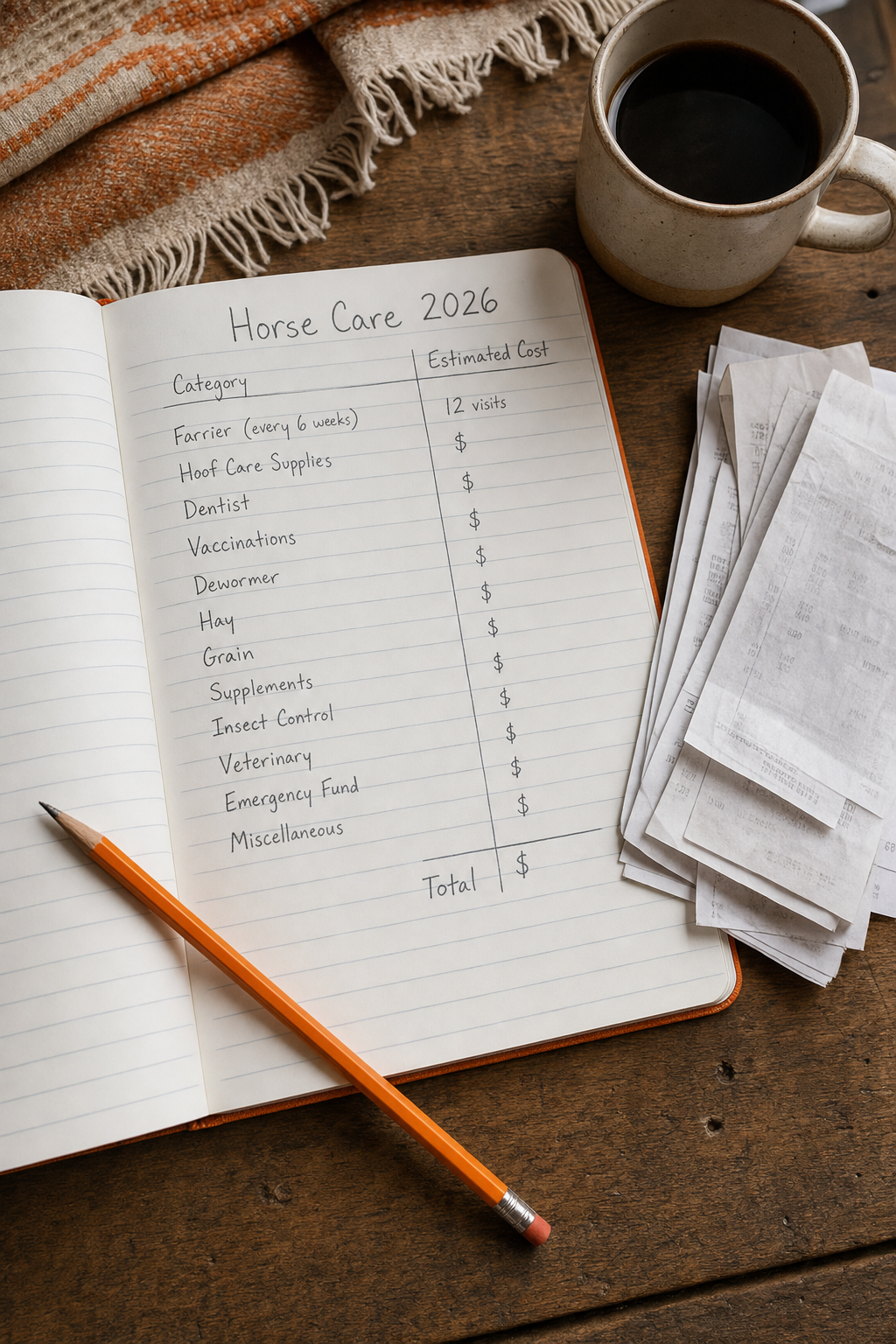
Start with your service interval. Most horses need attention every 6 to 8 weeks. At 6 weeks, that’s about 8 to 9 visits per year. At 8 weeks, it’s 6 to 7 visits. Multiply by your local farrier’s rate and you have your baseline annual number.
Then add a buffer. Budget for one or two unplanned visits per year. A lost shoe, a hoof crack, or a visit that runs longer than expected because of an issue the farrier spots. Fifteen to twenty percent above your baseline is a solid cushion without being excessive.
Here’s how a simple annual budget looks for a shod horse:
- Full shoe set per visit, multiplied by 8 visits per year, gives your baseline shoe cost
- Two unplanned visits (trim or shoe reset): pricing varies by region and farrier
- One potential travel fee: rates are available on request from your farrier
- Total annual estimate: your baseline plus the buffer visits and any travel fees
For a barefoot horse on a 6-week cycle, 8 visits gives your baseline trim cost. Adding two buffer visits brings the annual total higher. That difference between barefoot and fully shod management is substantial and a real factor when you’re managing multiple horses.
One usable way to keep farrier costs down without compromising hoof health: maintain a consistent schedule. Horses that go too long between visits are harder to trim and sometimes need more corrective work to bring the hoof back to balance. A farrier who has to spend twice as long on a neglected hoof may charge more. Regular visits take less time and cost less per appointment.
Finding a reliable, verified farrier is often the hardest part of this whole equation. Many good farriers are fully booked and only take new clients through referrals. If you’re in a new area or adding horses, The Easy Homestead directory lists verified farriers by ZIP code and county, including real reviews from other horse owners in your area. It’s the fastest way to find someone who’s already trusted in your local horse community without spending three weeks asking in Facebook groups.
If you’re also budgeting for other farm animals alongside horses, it helps to see the full picture. Our post on what mini Highland cows cost to buy and maintain walks through a similar annual expense breakdown that pairs well with equine budgeting.
Frequently asked questions
How often does a horse need to see a farrier?
Most horses need a farrier visit every 4 to 8 weeks, with 6 weeks being the standard interval for both shod and barefoot horses. The right frequency depends on how fast your horse’s hooves grow, the terrain they work on, and whether they’re shod. Some horses, especially older ones with arthritis or hoof problems, benefit from visits every 3.5 to 4 weeks to keep their hooves in comfortable balance.
What is the average cost for a farrier to trim and shoe a horse?
A hoof trim averages $30 to $60 nationwide. A full set of four keg shoes runs $90 to $150 on average, with the nationwide median varying by region and source. Specialty shoes, therapeutic work, or draft horses push that number higher. Where you live matters a lot: dense horse markets like Kentucky’s Bluegrass region can see trim prices as low as $25 to $35 per head, while rural or suburban areas often run $50 to $70 for the same service.
Is it cheaper to keep a horse barefoot?
Yes, barefoot is cheaper per visit and per year. A barefoot horse costs less annually in farrier fees compared to a fully shod horse. But the choice has to fit the horse. Horses with soft or weak hooves, horses working on hard terrain, or horses with conformational issues often need shoes to stay sound. Pulling shoes to save money on a horse that genuinely needs them usually results in higher vet bills.
What extra fees do farriers charge?
Travel fees range from $20 to $50 for clients outside a farrier’s main service area. Emergency or after-hours calls typically run 1.5 to 2 times the standard rate. Some farriers charge extra for horses that are difficult to handle, for corrective or therapeutic shoeing, and for specialty shoe materials like aluminum or pads. Always ask about additional charges before the first visit so there are no surprises at the end.
How do I find a good farrier in my area?
The best farriers are usually fully booked and only take new clients by referral. Ask your large-animal vet for recommendations. Other horse owners at local boarding facilities or feed stores are also reliable sources. The Easy Homestead directory lists verified farriers searchable by ZIP code and county, with real reviews from horse owners in your area, which saves the usual weeks of dead-end Facebook searching.
Does a farrier cost more for draft horses or miniature horses?
Yes, size affects price in both directions. Draft horses cost more to shoe because of the physical effort involved and the larger, heavier materials required. Experienced farriers typically charge $80 to $90 just for a trim on a draft. Miniature horses cost less, with trims often running $15 to $20 per visit. The type of shoe also matters: a basic keg shoe on a standard horse costs far less than a custom therapeutic shoe on a draft.
Wrapping up
The honest short answer on farrier cost: trims run lower, full shoe jobs run higher, and annual totals vary widely depending on your horse’s needs and your location. The biggest variable most owners overlook is the service interval. Stay on a consistent 6-to-8-week schedule and your farrier’s job is easier, faster, and often less expensive per visit than catching up on neglected feet. If you don’t yet have a farrier you trust, find a verified one near you on The Easy Homestead and skip the Facebook group rabbit hole entirely.