
A $9 per-head processing fee sounds low until grading, labeling, and beef split fees land on the bill. One published example reaches at least $39 per animal before other add-ons. Here are the best places to start, plus the numbers to ask for before you book.
1. Piedmont Custom Meats: a published per-head pricing example
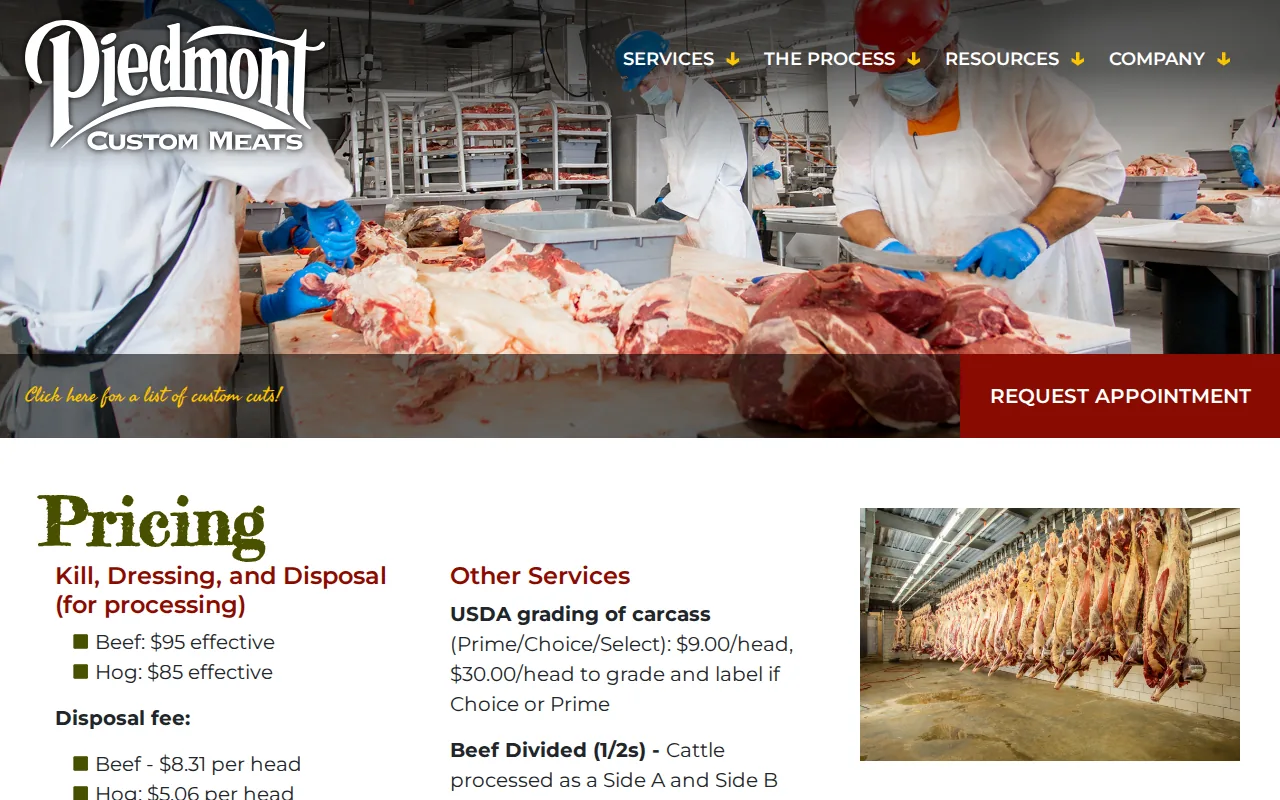
Piedmont Custom Meats gives us one of the clearest examples of per-head pricing. Piedmont Custom Meats lists a base fee of $9 per head. That makes the example useful for a small homestead processing one animal instead of a large batch.
 Save
The listed base package includes grading and custom labeling, and vacuum-packing. Those inclusions matter because a headline price can leave out the work that turns an animal into packaged meat. Still, you need to read the add-on section before treating $9 as the final bill.
Piedmont lists a $30 per-head charge to grade and label Choice or Prime cuts. Add that to the $9 base fee and the total reaches at least $39 per head. The page also lists $40 for beef divided into Side A and Side B, $120 per beef bundle, and $6 per pallet. Processing a pregnant animal carries an additional $100 charge. Review the full breakdown before treating the base fee as the final bill.
Those fees may apply in different situations, so ask which ones fit your order. Do you need a whole animal processed? Are you buying a beef bundle? Does the processor apply the Choice or Prime fee to your cuts by default, or only when you request that grade and label?
Here is the basic math for the clearest case:
| Charge | Published amount | When it matters |
|---|---|---|
| Base processing | $9 per head | Starting charge |
| Choice or Prime grading and labeling | $30 per head | When that grading and labeling applies |
| Base plus grading and labeling | At least $39 per head | Before other listed add-ons |
| Beef divided, Side A and Side B | $40 additional | When the beef is divided this way |
| Beef bundle | $120 | When this listed bundle charge applies |
| Pallet | $6 | When a pallet is used |
| Pregnant animal | $100 additional | When the animal is pregnant |
The published base fee is the standout point for a small farm. Many local processors set their own scheduling rules, so never assume another shop will accept one animal at the same rate. This single published example shows why you should ask for a written total instead of comparing base fees alone.
2. USDA-inspected processors in your region: capacity for saleable meat
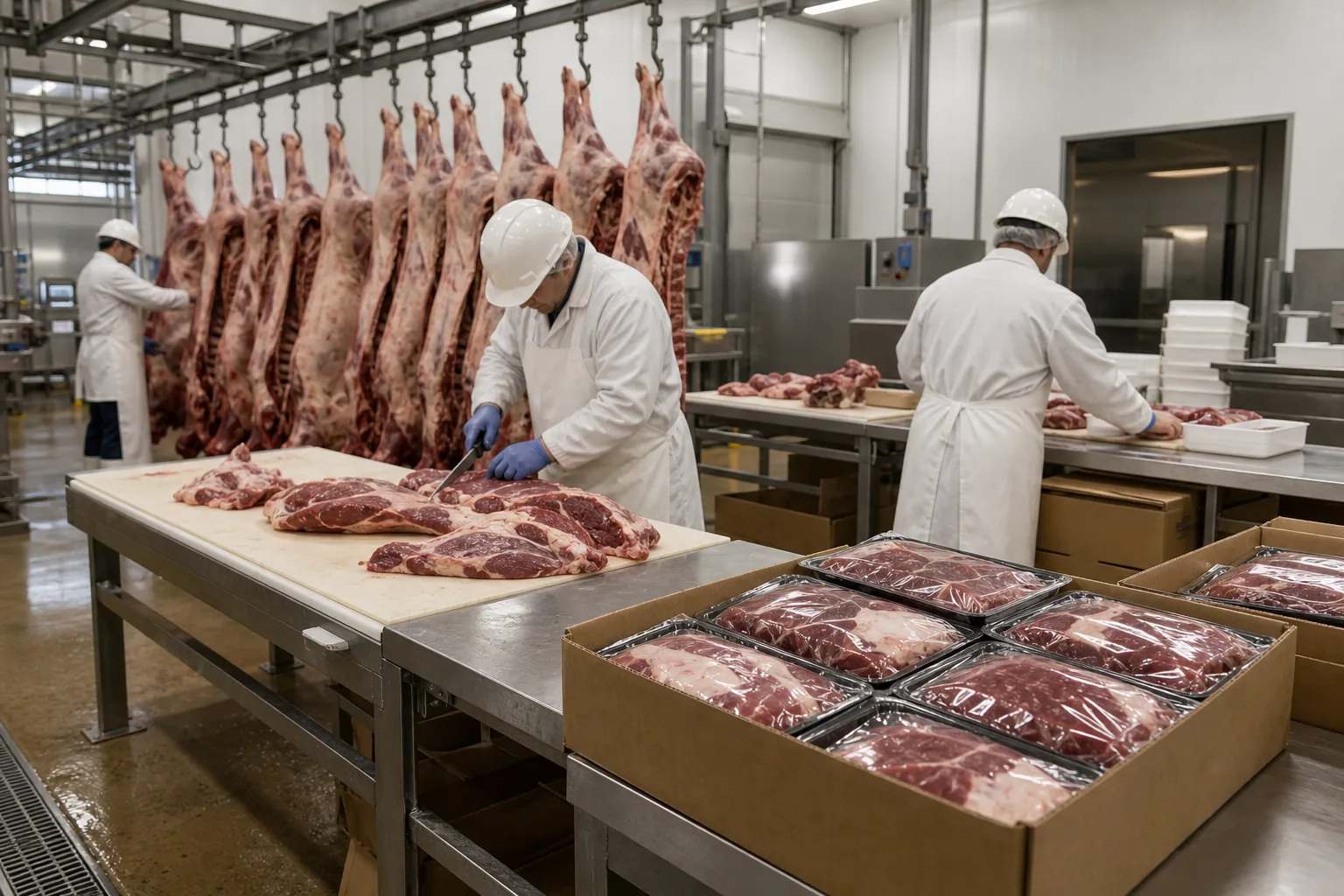
USDA-inspected processors are the right category when you need meat that can enter interstate commerce. The question is not only how much a USDA processor charges per head. You also need to ask what inspection and labeling work the quote includes.
 Save
The available inspection guidance distinguishes federal inspection from state inspection programs. The rules affect where meat can be sold, so inspection status should come before price in your comparison.
USDA status can matter when you sell shares, supply a store, serve a restaurant, or move products across state lines. A custom-exempt arrangement may work for household use, but it does not fill the same sales role. Ask the processor to state the inspection status on the quote.
Published per-head prices are harder to compare here because shops may split the bill into separate stages. One processor may quote slaughter by head. Another may add cutting by hanging weight. A third may price sausage, smoking, or packaging as separate line items.
Use this question set when you call or message a USDA-inspected shop:
- Does the per-head fee include slaughter?
- Is cutting charged by head, pound, or cut?
- Does the quote include vacuum-packing?
- Are labels included, and can they carry your farm name?
- What is the charge for curing, smoking, or sausage?
- How far out is the next booking?
Do not confuse a shop’s willingness to process your animal with permission to sell the finished meat. The processor can explain its inspection setup, but you still need to follow the rules that apply to your sales plan.
For a small farm, the best USDA option may be the one with a clear quote and a slot you can actually secure. A lower base fee loses its value when each needed service appears later as a separate charge.
We also recommend checking The Easy Homestead before relying on a single feed-store referral. Search by county, compare the available local listings, then verify the processor’s current rules directly.
3. State-inspected and custom-exempt processors: local pricing with tighter limits
State-inspected and custom-exempt processors can be useful when your meat will stay within the limits that apply to that inspection type. Their per-head rates may look lower, but the price only makes sense after you confirm what the meat can be used for.
State inspection programs can follow federal standards while operating under state authority. The sales rules still depend on the program and location. Custom-exempt processing has a different purpose. Meat is processed for the owner or members of a defined group, not as ordinary retail meat for open sale.
That distinction changes the buying question. Instead of asking only, “What do you charge per head?” ask, “Can this inspection type support what I plan to do with the meat?” If you plan to sell packages, supply a restaurant, or ship products across state lines, get a clear answer before you pay a deposit.
Use the table below as a quote-screening tool. It does not replace your state rules or the processor’s current terms.
| Processor category | Best fit | Ask before booking | Main price risk |
|---|---|---|---|
| USDA inspected | Meat intended for sales that require federal inspection | Which services are included in the per-head quote? | Separate fees for cutting, labels, grading, or packaging |
| State inspected | Sales allowed under the state program | Where can the inspected meat be sold? | Rules differ by state and facility |
| Custom exempt | Personal or qualifying custom use | Who may receive the meat? | The meat may not fit a retail sales plan |
| Mobile processor | Farms that need on-site work or have limited transport options | Is travel included in the quote? | Travel, setup, minimum, or equipment fees |
Mobile work deserves its own quote because travel and setup can change the total. If you are comparing on-farm service with a fixed shop, review average fees for on-site meat processing before you compare the numbers.
What to put in your quote request
Send the processor one clear message. Name the animal, the number of head, the inspection type you need, and your desired pickup or processing date. State whether you want standard cuts, ground meat, sausage, smoked items, or special packaging.
Then ask for the total with each add-on shown on its own line. This helps you spot the difference between a $9 base charge and a $39 starting total after grading and labeling. It also makes competing quotes easier to compare.
Key Takeaway: The per-head rate is only useful when the inspection status and included services match your actual sales or household plan.
FAQ
How much does a meat processor charge per head?
A meat processor may charge a base fee per head, but the final total depends on the animal and added services. One published example lists $9 per head, then adds $30 per head for Choice or Prime grading and labeling. That brings the total to at least $39 before other listed charges.
Is $9 per head a normal meat processing price?
A $9 per-head fee is a published example, not a national average. The available pricing data does not provide enough processor quotes to set a market norm. Ask local shops for the full total, since cutting, packing, grading, labels, travel, and special handling may change the bill.
What extra fees should I ask a meat processor about?
Ask about grading, labels, beef splits, bundles, pallets, pregnancy charges, travel, cutting, smoking, curing, sausage, and packaging. Piedmont Custom Meats lists several of these as separate charges. Your processor may use different terms, so request an itemized quote before booking.
What is the difference between USDA-inspected and custom-exempt meat?
USDA-inspected meat can support sales that require federal inspection, while custom-exempt meat is processed for the owner or an eligible custom group. State-inspected meat follows a state program with its own sales limits. Confirm the rules that apply to your location and sales plan before choosing based on price.
How can I find a meat processor near me?
You can find a local processor by searching The Easy Homestead by ZIP code or county, asking at the feed store, and checking current availability with each shop. Start with inspection status and animal type. Then compare the full quote, booking date, packaging terms, and extra fees.
Conclusion
Budget from the full quote, not the base number. Use The Easy Homestead to find local processors, then ask each one for an itemized price tied to your animal, inspection needs, and planned use. Compare local meat processors by inspection status and service before you reserve your date.