Most homesteaders can start one hive with a first-year budget that varies by setup. A bare kit may cost less than $200, but bees, protective gear, mite treatment, feed, and shipping push the real total higher.
Premium systems can cost more than $1,000 before you buy bees. The smart move is to price the whole first season, not the box on the shelf.
Step 1: Set your first-year beekeeping budget
To answer how much it costs to start beekeeping, begin with a full first-year budget for one hive. A single hive setup requires planning for hive parts, a bee package, protective gear, tools, supplies, and tax.
That number is a planning point, not a fixed bill. A budget kit may bring the equipment total below $200. A premium Flow Hive 2+ complete kit can reach $975 to $1,735, yet it still requires bees, protective gear, a smoker, and Varroa treatments.
Research across 33 starter kits found an average listed startup cost of $250.67. The median was $169.99 because a few expensive kits pulled the average up. In plain terms, most kits sit below $200, while a small group costs far more.
| Budget choice | What it usually covers | What you still need to check |
|---|---|---|
| Lean equipment start | Basic woodenware and a few tools | Bees, suit or jacket, smoker, treatment, feed |
| Mid-price kit | Hive parts with more tools, and sometimes protective gear | Bee package or nuc, shipping, treatment |
| Premium hive system | Special hive components or Flow frames | Bees, protective gear, smoker, Varroa care |
| Two-colony start | Two sets of hive equipment and two colonies | Double most bee and treatment costs |
Use the table as a buying filter. If a kit does not list bees, gear, or mite treatment, add those items before comparing it with another kit.
Hive parts make up a large part of the first purchase. A complete hive can represent a significant equipment expense, while assembled boxes can cost about 20% to 25% more than unassembled parts. The extra cost may make sense if you do not want to assemble and paint boxes during winter.
A Langstroth hive uses stacked boxes with removable frames. That common format also makes it easier to find used equipment, local advice, and replacement parts.
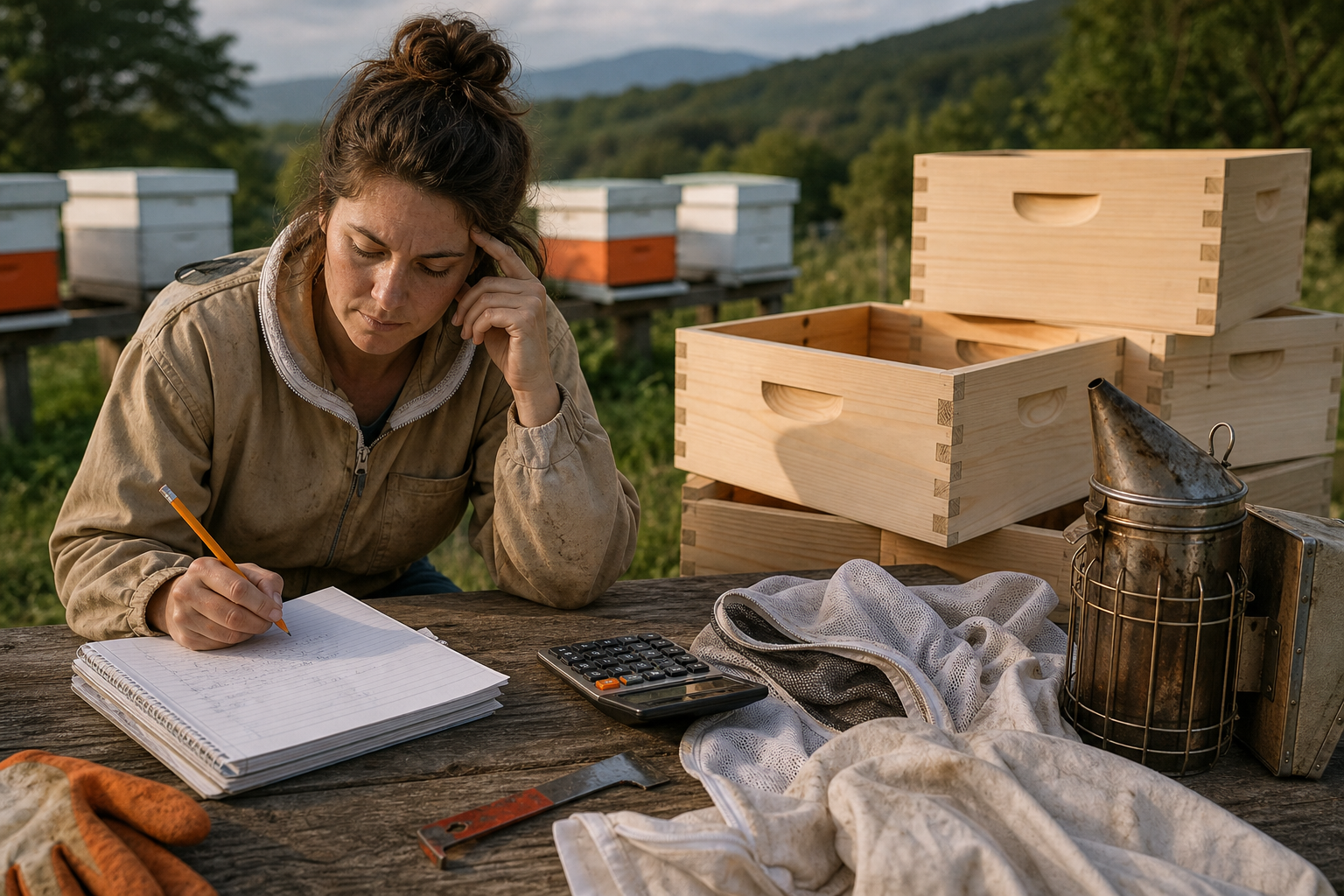
We recommend setting aside a 20% buffer for freight, tax, replacement parts, and a second round of feed. Heavy woodenware can cost more to ship than expected, especially when it comes from a distant supplier.
Before buying, write down the amount you can spend without touching feed, fencing, livestock care, or repair funds. Beekeeping should not compete with the needs of animals already on your place.
If you want the full setup sequence, our first-year beekeeping guide covers hive placement, equipment, bees, and local supplier planning.
Step 2: Choose the hive format that fits your operation
Hive format changes both your first purchase and your later harvest costs. Choose the system you can inspect, lift, repair, and expand without buying a second set of tools.
The standard 10-frame Langstroth starter kit has a listed startup range of $475 to $885. It includes hive components, but you still need bees, protective gear, a smoker, and Varroa treatment.
An eight-frame setup can reduce lifting weight, though the price difference may not change your full budget much. For a homesteader who already moves feed bags and livestock equipment, the better question is whether local suppliers stock the size you choose.
A 10-frame Langstroth setup includes 2 deep brood boxes, 2 medium super boxes, 40 wood frames, and 40 plastic foundation sheets. You still need protective gear, tools, and bees.
The Flow Hive 2+ complete kit ranges from $975 to $1,735. It targets experienced beekeepers in the source material, but its price does not remove the need for bees, a suit, a smoker, or mite treatment.
Harvest gear can also change the budget. A top-bar system may use crush-and-strain methods, while Langstroth honey extraction calls for an extractor once you harvest at scale. A shared extractor, borrowed equipment, or a local club can delay that purchase.
Think about your work pattern. If you want standard boxes that another beekeeper can help inspect, Langstroth is the safer choice. If reducing lift weight matters more than sharing parts, compare an eight-frame or top-bar setup with local keepers first.
Do not buy an extractor before you know how much honey you expect to process. One or two hives rarely justify dedicated harvest gear in the first season.
We also suggest checking local rules and site conditions before ordering. For a general reference, see the beekeeping overview; your county rules and forage conditions decide what fits your land.
Step 3: Price the bees, protective gear, smoker, and treatments
Bees are the cost that turns a cheap hive kit into a working colony. Price the colony and safety gear before you place an equipment order.
A package is usually the lower-cost route. It arrives as loose worker bees with a queen, while a nucleus colony, or nuc, arrives with established frames, brood, workers, and a queen. The nuc costs more, but it starts with drawn comb and a working colony structure.
Regional bee prices vary sharply. One source lists packages at $35 to $55 and says nuc pricing varies, while another notes that package pricing depends on the supplier and colony type. Treat those figures as planning ranges, then ask nearby apiaries for current prices.
Order early. Local suppliers may sell out before spring delivery, and shipping live bees adds risk and cost. A local pickup can reduce freight and gives you a person to contact if the delivery schedule changes.
Protective gear needs its own line in the budget. A jacket with veil, gloves, and boot protection may be enough for many inspections. A full suit gives more coverage but costs more and can feel hot during summer work.
Buy gear for every person who will open the hive. Sharing one jacket creates a problem when two people need to respond to a defensive colony or a swarm at the same time.
A smoker is a work tool, not decoration. Choose one that stays lit through a full inspection. Add fuel before the bees arrive, and keep a second fuel option on hand if your usual material runs out.
Varroa treatment must be part of the first-year budget. The mite,Varroa destructor , feeds on honey bees and can spread disease through a colony. Treatment timing depends on the product, season, temperature, and label directions, so use a local plan rather than guessing.
Feed may also be needed while a new colony builds comb. Sugar syrup is a consumable cost, and weak colonies may need more than one feeding period. Keep a feeder ready even if strong forage makes it unnecessary.
Key Takeaway: A kit is only the housing. Bees, protection, mite care, feed, and shipping determine what you truly spend.
The Easy Homestead is built for the part that online carts cannot solve. Search by ZIP code or county to find beekeeping suppliers and local help near your operation.
Step 4: Find bees and beekeeping suppliers before spring
Finding bees early can save more money than trimming a few dollars from a hive tool. Start supplier research before spring orders fill.
Ask each supplier five questions:
- Is the colony a package or a nuc?
- When will pickup or delivery happen?
- What queen type or local strain is available?
- Does the price include transport?
- What happens if the queen arrives dead or the schedule changes?
Do not rely on a single social media post. A supplier may have sold out, moved pickup dates, or stopped serving your county. Write down the answers and compare the total delivered cost.
Used woodenware can lower the bill, but inspect it with an experienced beekeeper. Wax moth damage may hide in corners. Disease spores can remain in old equipment even when the wood looks sound.
Buy foundation, gloves, suits, and smoker parts new. These items can absorb chemicals, lose their shape, or fail at the wrong time. Used boxes are a different decision because you can inspect the wood and replace questionable frames.
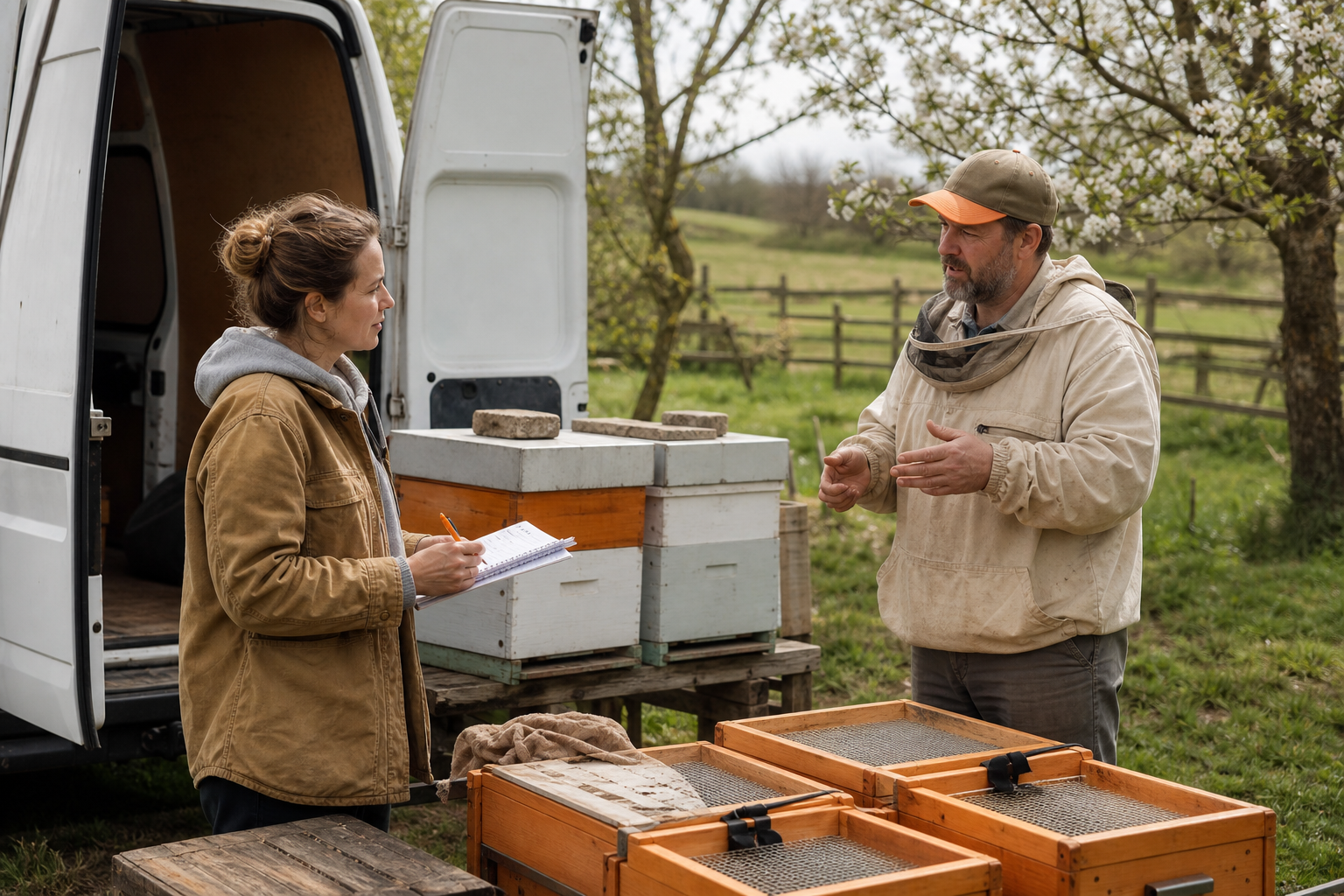
Use The Easy Homestead to search for beekeeping supplies near you by county or ZIP code. The directory helps you replace a long chain of scattered posts with a local starting point. Coverage can vary by area, so if your county has few listings, widen the search to nearby counties.
That local search also helps with supplies that are hard to ship. Woodenware is bulky. Live bees need careful timing. A supplier within driving distance may be worth more than a slightly lower online price.
Keep a backup plan. If the first supplier cannot fill your order, you should already know the next closest source and the date when you need to decide.
A simple cost graphic can help your household see where the money goes before you buy. An infographic tool can turn text or a brief into an infographic, which may help when you compare a one-hive start with a two-colony plan.
Step 5: Add annual costs and decide what you can delay
The first year carries the largest bill, but annual costs do not disappear after the hive is built. Set aside money for treatment, feed, fuel, replacement parts, and colony loss.
A common ongoing range is about $60 to $150 per hive each year. That can include replacement foundation, smoker fuel, mite treatment, and sugar syrup. Your climate and colony strength may push the total higher.
Some costs are tied to colony growth. Add boxes when the bees need space, not because a kit includes them. Buy another feeder when the first one fails or when two colonies make one feeder inconvenient.
Delay these purchases unless your operation needs them:
- Honey extractor for one or two hives.
- Extra supers before the colony fills its current boxes.
- Premium full-body suits for people who rarely inspect hives.
- Large honey processing gear before you know your harvest volume.
- Duplicate tools when one shared set works.
Do not delay mite monitoring, basic protection, or a safe smoker. Those items protect the colony and the person working it.
Plan for a bad season. A colony can fail because of mites, queen trouble, weather, forage gaps, or winter conditions. A replacement package or nuc may become a second-year cost, so keep part of the buffer untouched.
Check local rules before bees arrive. Registration requirements vary by place, and some towns or homeowner groups limit hive placement. Your site also needs a safe flight path, a water source, and shelter from strong wind.
The site planning guidance for beekeeping recommends checking local laws, talking with neighbors, placing hives in a sheltered spot, and providing water before the bees arrive.
For most established homesteaders, the best spending rule is plain: buy dependable safety gear and colony care first. Delay convenience gear until the bees prove what your setup needs.
FAQ
How much does it cost to start beekeeping with one hive?
Starting one hive requires a first-year budget that varies by setup. That includes equipment, bees, protective gear, tools, feed, and mite treatment. A bare hive kit may cost less than $200, but it is rarely a complete working setup. Shipping, local bee prices, and whether you choose a package or nuc change the final bill.
Can I start beekeeping for under $500?
You may start with a lower-cost plan if you buy a lower-cost kit, choose a package, limit optional gear, and find local pickup. The plan leaves little room for lost equipment, extra feed, treatment, or a colony replacement. Set aside a buffer before ordering, because the first-year total can rise quickly after shipping and supplies.
What is the most expensive part of starting beekeeping?
The most expensive part depends on your setup, but the hive system and bees usually take the largest share. Premium hive kits can exceed $1,000 before you add a colony. A nuc costs more than a package, while assembled woodenware costs more than parts you assemble yourself. Shipping can also change the final price.
Is a bee package cheaper than a nuc?
A bee package is usually cheaper than a nuc because it contains loose bees and a queen rather than established comb and brood. A nuc costs more but gives the colony a stronger start. Local prices vary, so compare the delivered price and the time needed for the colony to build comb before choosing.
What beekeeping costs continue every year?
Annual beekeeping costs include mite treatment, sugar syrup, smoker fuel, replacement foundation, and small repairs. Many keepers budget about $60 to $150 per hive after the first year. Expansion adds more boxes and frames. A failed colony can add the cost of another package or nuc, so do not spend your full reserve on first-season upgrades.
Conclusion
Plan on a variable first-year budget for one working hive, then adjust for local bee prices and shipping. Buy protection, a dependable smoker, and mite care before premium extras. When you are ready to source bees or supplies, search your county on The Easy Homestead. Find a verified beekeeping supplier near you.