A healthy laying hen eats about 110 grams of feed each day. Cold weather or illness can push that figure toward 125 grams, while a day-old chick may eat only about 10 grams. The number changes fast as birds grow, so use age and flock conditions to set your feed order.
We’ll start with a daily baseline, then adjust it for stage, weather, health, and feed waste.
We read 8 public guides that currently rank for chicken feed questions, checking each for age-specific amounts and a feeder-weighing method. Six of the 8 give only one adult figure, such as a quarter pound or half a cup per day. One site lists 10 to 15 grams for chicks and 100 to 115 grams for pullets, yet stops before a molt or cold-weather figure. None of the 8 describe weighing a feeder, leaving stage-by-stage grams and a measured daily baseline mostly missing from public feed guidance.
Step 1: Set a daily feed baseline for your flock
To work out how much feed a chicken eats per day, start with the birds you have now, not a broad flock average. For a standard laying hen, 110 to 115 grams of dry feed per day is a sound planning range.
That planning range reflects two reported measures. One gives an average intake of 110 grams and a wider range of 80 to 150 grams, which puts the midpoint at about 115 grams. You can review the supporting material for the assumptions behind those figures.
For a working flock, multiply the daily amount by the number of birds. Six laying hens at 110 grams need 660 grams per day. Over seven days, that is 4.62 kilograms of feed before you account for waste or a cold snap.
Use this formula:
Bird count × grams per bird × number of days = planned feed.
For example, for ten layers, multiply 110 grams by ten to plan the daily amount. Add a reserve when winter weather is near or when your flock has a history of feed loss.
Do your math by weight. A common backyard estimate says an average hen eats about half a cup of dry feed per day, but cup size and feed density vary. A cup of mash won’t weigh the same as a cup of pellets. Weight gives you a better record.
Breed also changes the baseline. Large birds need more maintenance energy than light birds. Bantams can fall well below a full-size hen. A mixed flock needs separate counts, especially when large hens share space with smaller birds.
Forage changes the amount of feed you supply, but it doesn’t erase the need for a complete ration. Pasture quality can drop hard in late summer or winter. Treat ranging as a supplement unless you have measured what the flock still consumes from the feeder.
Feeder design can make your numbers look wrong. Birds scratch feed onto the ground, spill it from low troughs, and let rain spoil uncovered feed. Our guide to choosing chicken feeders for healthy hens covers the hardware details that cut those losses.
Key Takeaway: Start with 110 to 115 grams per standard laying hen each day, then compare that estimate with your measured use.
Once you have a baseline, keep age groups apart on paper. A flock with chicks, pullets, and layers won’t fit one daily number.
Step 2: Adjust the amount for age and production stage
Age changes how much feed a chicken eats per day more than most flock owners expect. A day-old chick and a mature layer need different amounts because their bodies are doing different work.
| Bird stage | Age or condition | Daily planning amount | How to use the number |
|---|---|---|---|
| Day-old chick | 0 to 7 days | About 10.5 g | Count chicks separately and keep starter feed available. |
| Pre-lay pullet | 11 to 17 weeks | About 90 g | Use the pullet group count, not the layer count. |
| Laying hen | 18 to 40 weeks | About 114 g | Use this as a stage baseline during active lay. |
| Molting bird | During molt | About 120 g | Allow for a modest rise while feathers regrow. |
| Cold or illness | Stress condition | Up to 125 g | Keep extra feed on hand and watch intake closely. |
The jump is large. A chick at about 10.5 grams grows into a pre-lay pullet eating about 90 grams. The laying period then settles near 114 grams. Molting can reach 120 grams, while cold weather or disease treatment may push the figure to 125 grams.
These values are planning points, not a ration prescription. Read the feed tag for the correct formulation at each stage. Chicks need starter feed. Pullets need grower feed. Active layers need a layer ration with calcium. A molting bird needs enough protein for feather regrowth, but the feed change should match the product label and your flock plan.
Do not switch young birds to layer feed only because they are near the coop with adult hens. Excess calcium is a poor fit for growing pullets. At the same time, delaying the change after birds enter lay can leave the ration short for shell production.
Production stage also helps you plan purchases. If eight pullets are moving toward lay, their feed use will rise before the first eggs arrive. If four older hens are molting, their intake may rise even as egg numbers fall.
Keep a note on the flock board with the date of each stage change. That small habit keeps a feed order from being based on last month’s flock.
If breed size is part of your calculation, our notes on laying hen breeds and climate fit can help you compare the type of birds you keep before you set a long-term feed budget.
Do the stage math in groups. For example, five pre-lay pullets at 90 grams need 450 grams per day. Six layers at 114 grams need 684 grams. Add those totals rather than applying one average to all eleven birds.
Step 3: Account for cold weather, illness, and flock conditions
Weather and health can change how much feed a chicken eats per day even when its age stays the same. Use the stage number as your floor, then watch the flock for changes.
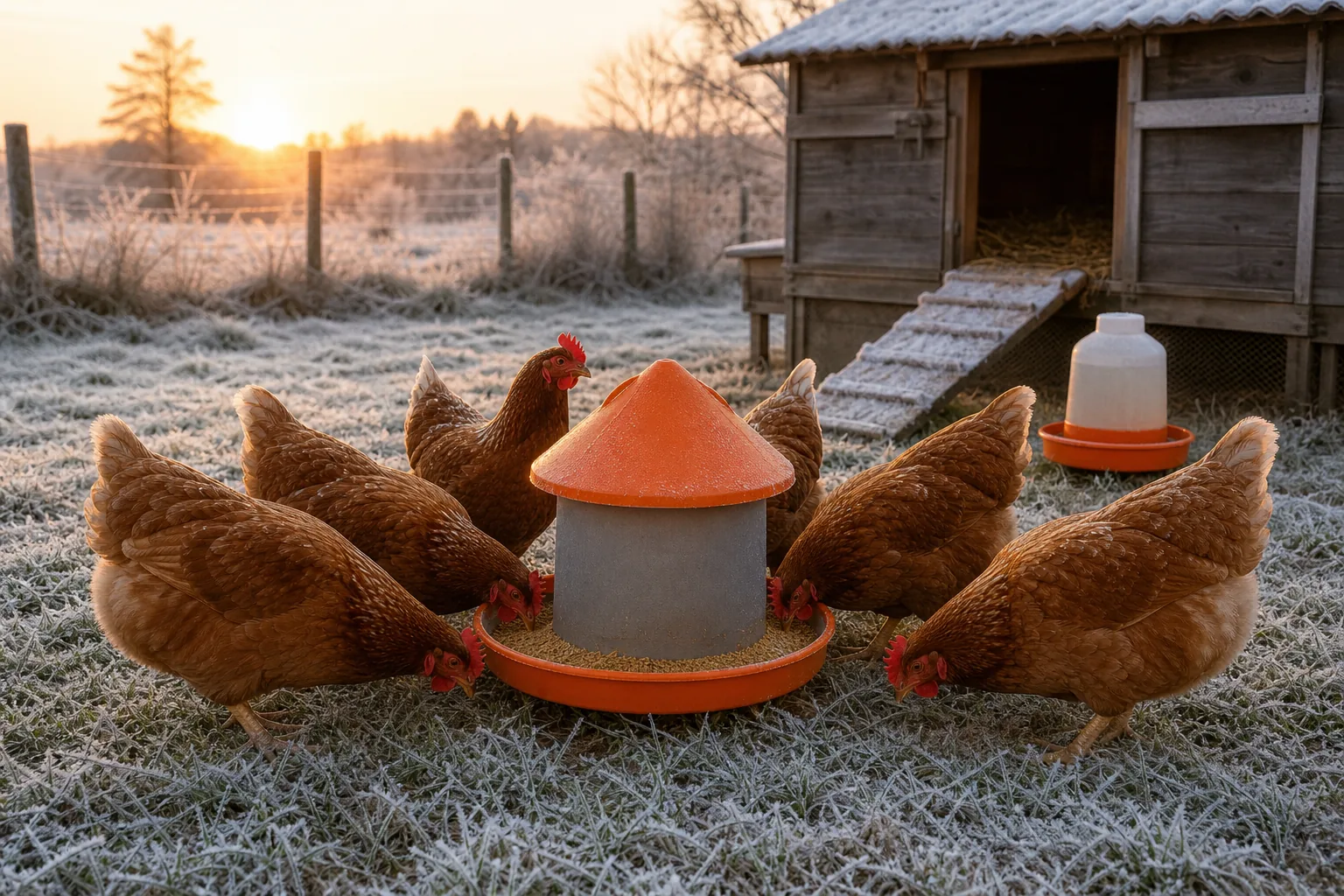
Cold weather raises energy needs because birds spend more calories staying warm. The research range used here places intake as high as 125 grams per bird per day during cold weather or disease treatment. That is above the 114-gram laying figure and slightly above the 120-gram molt figure.
Plan for the spike before it arrives. If twelve layers usually eat 110 grams each, they use 1.32 kilograms per day. At 125 grams, the same flock uses 1.5 kilograms. That difference adds up over a long cold spell.
Keep feed dry and protected from rodents. A sudden increase in feed disappearance may mean the hens are eating more, but it may also mean mice, rats, wild birds, or rain are taking the difference.
Heat can move intake in the other direction. Birds often eat less during hot weather, especially during the warmest part of the day. Don’t respond by cutting access to feed. Keep a complete ration available and focus on cool, clean water and shade.
Illness needs a closer look. A sick bird may eat less, while a flock under disease stress may show a different pattern. Track feed intake beside egg output, water use, droppings, and bird behavior. A sharp change in feed use deserves attention rather than a blind increase in the ration.
Water problems can also look like feed problems. A blocked drinker, frozen line, or dirty trough can reduce feeding because birds need water to process dry feed. Check every drinker when intake drops without a clear reason.
For a flock near Knoxville or another place with sharp seasonal swings, use two feed budgets. Keep a normal-season figure. Keep a winter figure that uses the 125-gram ceiling for planning. You may not use all the reserve, but running short during a freeze is a bad time to start searching.
Pro Tip: Weigh the flock’s feed for three normal days before cold weather arrives. That gives you a local baseline for spotting a true change.
Step 4: Measure what your chickens actually consume
The best answer to how much feed does a chicken eat per day comes from your own feeder record. Published figures set the starting point, but your flock tells you what happens on your farm.
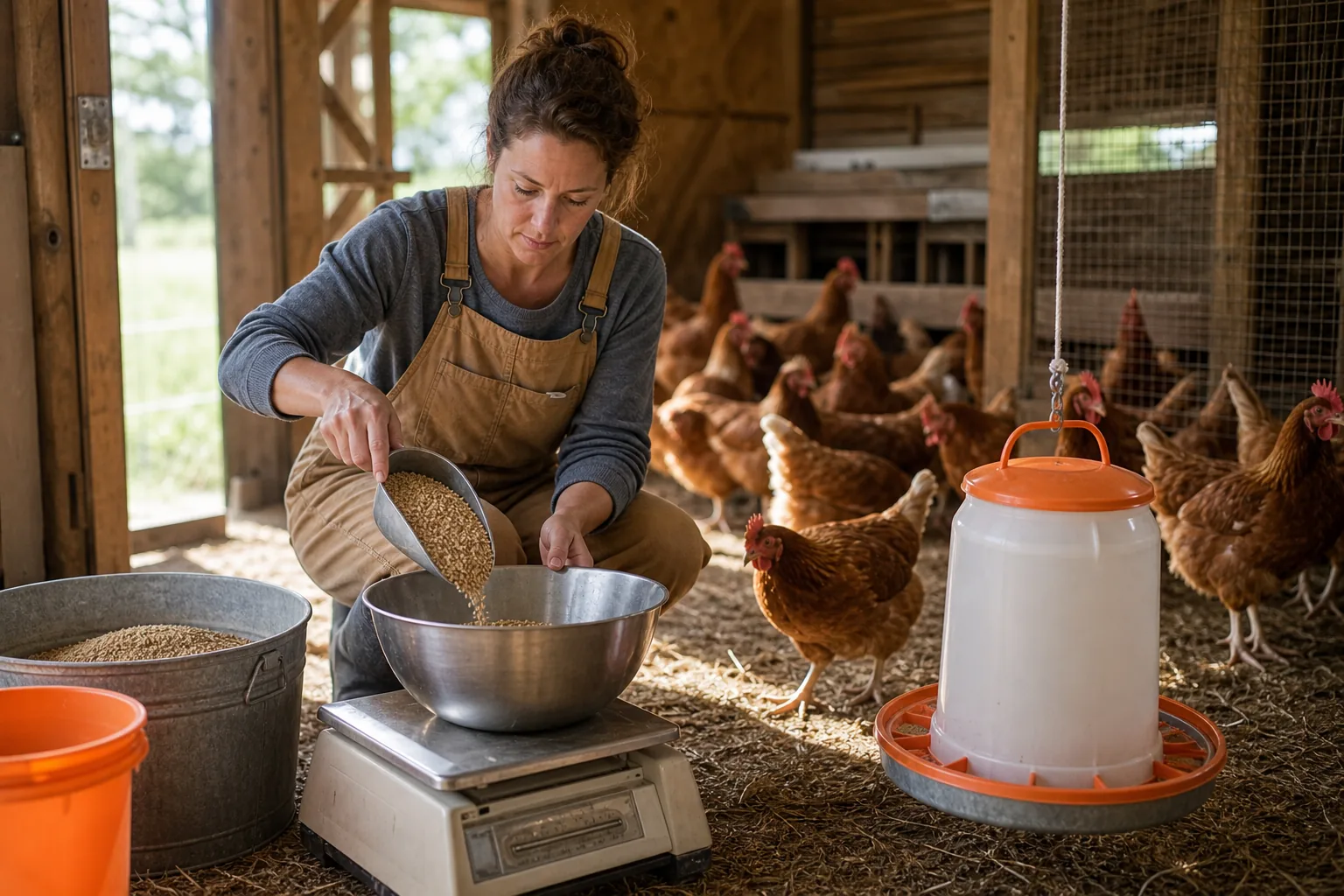
Begin with a known weight. Weigh the full feeder in the morning, then weigh it again at the same time the next day. Record any feed you add during that period. The calculation is:
Feed at the start + feed added − feed left at the end = feed gone.
Repeat this for three to seven days. One day can mislead you because rain may spoil feed or a predator scare may keep birds off the run. A short run of records gives a better daily average.
Separate consumed feed from feed gone. Sweep up spilled feed before it mixes with bedding. Check beneath the feeder for scratch piles. Look for wet clumps, torn bags, and rodent tracks. If feed disappears faster than the hens’ body condition and output suggest, suspect waste or pests first.
Use the same feed type during the test. Pellets, crumble, and mash can differ in density, so volume comparisons become messy. A kitchen scale or hanging farm scale is more useful than a scoop marked in cups.
Track the flock by group when possible. A pen with six layers gives a cleaner number than a shared run with chicks and pullets. If birds share one feeder, weigh the total use and divide only after you account for the age mix.
Record four details beside the weight:
- Number of birds present.
- Life stage and breed size.
- Weather during the test.
- Feed spilled or removed from the feeder.
These notes help you spot a pattern. If intake rises each winter, increase your order before the cold season. If feed use jumps after a feeder change, inspect the hardware. If intake falls while birds look dull or egg production drops, check water and health before changing feed.
Feed planning also connects to the cost of raising meat birds. For that side of the farm budget, the cost breakdown for raising meat chickens separates feed from processing and other expenses.
When your local supply runs low, The Easy Homestead can help you search for a feed and seed supplier by ZIP code or county. We built it for the moment when asking at the feed store turns into three weeks of scattered research.
Use your measured average for routine orders. Use the higher seasonal figure for your reserve. That keeps your feed shed stocked without treating every extra pound as proof that your hens need more.
FAQ
How much feed does a chicken eat per day?
An adult laying hen usually eats about 110 to 115 grams of dry feed per day. A wider planning range runs from 80 to 150 grams, depending on breed, age, weather, forage, and health. Day-old chicks eat far less, at about 10.5 grams daily, while molting birds may reach about 120 grams.
How much feed does a laying hen eat per day in cups?
A laying hen is often described as eating about half a cup of dry feed per day, but cups are less precise than grams. Pellets, crumble, and mash have different density. Weigh your usual feed once, then use that weight for flock math instead of relying on a scoop.
Do chickens eat more in cold weather?
Yes, chickens can eat more in cold weather because they need extra energy to stay warm. The planning figure in this research reaches up to 125 grams per bird per day during cold conditions. Keep feed dry and available, then measure actual use so you can separate a weather rise from waste or rodent loss.
How much do baby chicks eat each day?
Day-old chicks from zero to seven days eat about 10 to 11 grams per chick per day, with 10.5 grams as a useful planning figure. Their intake rises as they grow, reaching about 90 grams during the pre-lay stage. Keep chicks on the correct starter feed and calculate them apart from adult birds.
How do I know if my chickens are eating too much feed?
Measure feed gone over several days before deciding that hens eat too much. Spillage, wet feed, rodents, and wild birds can make feeder loss look like high intake. Check body condition and flock behavior as well. If the numbers still rise without a clear cause, review the ration with a poultry vet or extension office.
Conclusion
Use 110 to 115 grams per standard laying hen as your starting point, then adjust for stage, breed size, weather, and health. Weigh feed for a week and keep a seasonal reserve based on the 125-gram stress figure. When you need a nearby supplier, search feed and seed listings by county on The Easy Homestead. Find who you need. Trust what you find.