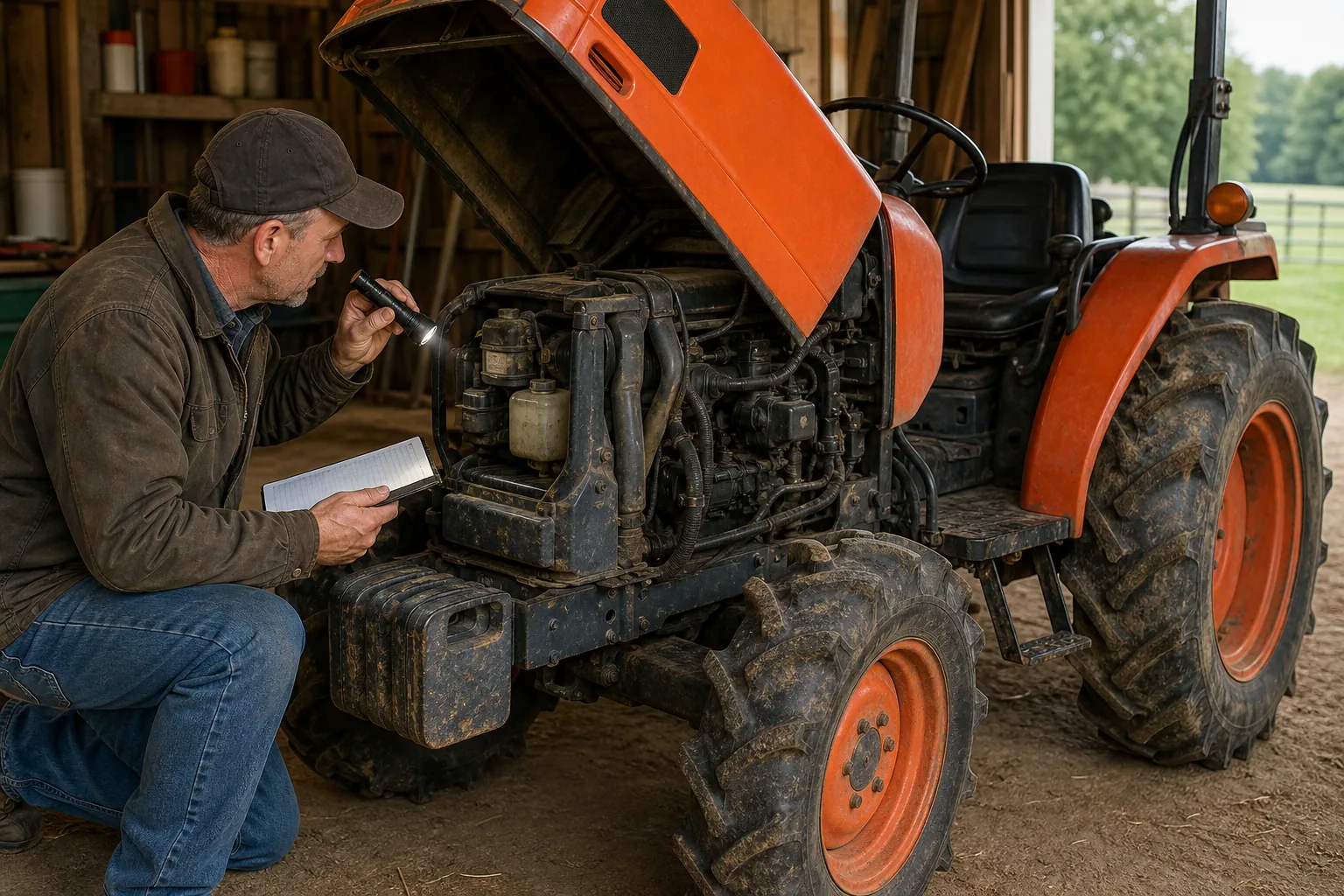
The hour meter can change the whole deal. A clean hood means little if the tractor has high hours, weak hydraulics, or no service record. If you’re learning how to buy a used tractor for small farm work, follow these five steps before you hand over money.
Step 1: Match the tractor to your farm work
The first step in buying a used tractor for a small farm is to write down the jobs it must handle. Start with the work, not the brand or paint color.
List your heaviest regular task. That might be mowing pasture, moving round bales, grading a drive, digging post holes, clearing brush, or running a tiller. Then note the attachment you plan to use and its power needs. A tractor that handles a finish mower may struggle with a loaded grapple or a heavy rotary cutter.
For a property between 5 and 20 acres, compact tractors in the 30 to 40 horsepower range often fit mixed work. Larger acreage, steep ground, heavy clay, or frequent hay work can push you toward more power. Those figures are a starting point, not a final answer. The attachment and soil load can matter more than acreage.
| Farm task | What to check | Common mistake |
|---|---|---|
| Pasture mowing | PTO horsepower, cutter width, tire grip | Buying a tractor that lugs under wet grass |
| Loader work | Lift rating, hydraulic flow, front axle condition | Choosing by engine horsepower alone |
| Driveway grading | Tractor weight, three-point lift, rear blade size | Using a light tractor that bounces and spins |
| Post-hole digging | PTO output, lift capacity, hydraulic remotes | Ignoring soil type and auger load |
| Brush cutting | PTO power, ground clearance, protective guards | Underestimating thick or wet growth |
The tractor selection guidance also puts farm needs ahead of tractor size. That is the right order.
Write down the exact model, serial number, drive type, PTO type, tire type, and included attachments for every tractor you consider. A compact tractor with a loader may fit your gates and barn lanes better than a larger utility machine. But a small frame can become a poor choice if you expect it to lift heavy bales every week.
Key Takeaway: Buy for your hardest repeated task, then confirm that the tractor fits your land, gates, trailer, and attachments.
Step 2: Set a complete budget and find serious sellers
Your budget for a used small-farm tractor must include more than the asking price. Set aside money for inspection, transport, fluids, filters, tires, hoses, and the first repair.
Make two numbers before you shop. The first is your purchase limit. The second is the maximum amount you can spend after bringing the tractor home. If the seller’s price uses every dollar, walk away. Used equipment always brings some unknowns.
Compare dealers, private sellers, farm auctions, and retirement auctions. Each source changes the risk. A dealer may provide more history or a basic inspection. A private seller may know the machine well but offer little help after the sale. An auction can expose you to good equipment, but you may have limited time to test it.
Ask the seller these questions before driving out:
- How long have you owned it?
- What jobs did it perform?
- Was it stored inside or outside?
- What repairs were done recently?
- Does the hour meter work?
- What implements come with it?
- Why are you selling it?
Pay close attention to the answers. A seller who cannot explain the tractor’s work history may still have a good machine, but you should price in more risk. A seller who refuses a cold start or an operating test gives you a reason to leave.
Parts support matters too. Before you make an offer, check whether local shops can service the model and whether common filters, belts, seals, and hydraulic parts are available. Parts access and known model issues belong in the purchase decision, not after the sale. Read the used farm equipment market guidance when you’re comparing an older or discontinued model.
If you need a tractor for a short seasonal job while you keep shopping, compare local options in our guide to farm equipment rental near you. Renting can also show you which size and attachment setup actually fits your work.
Don’t use the lowest listing price as your target. Use the total cost of putting a safe, working tractor in your barn.
Step 3: Inspect the used tractor before you pay
A hands-on inspection is the part of how to buy a used tractor for small farm work that you cannot skip. Bring a flashlight, work gloves, paper towels, a notepad, and someone who knows machinery.
Ask the seller not to warm the tractor before you arrive. A cold start can reveal slow cranking, hard ignition, excessive smoke, weak batteries, and poor fuel delivery. Watch the exhaust after the engine warms. Persistent blue smoke, ongoing white smoke, or heavy black smoke needs a closer look.
Check the oil before starting the engine. Milky or foamy oil can point to coolant contamination. Look under the engine, transmission, axles, steering parts, loader cylinders, and hydraulic lines. Old dust around a seal is different from fresh fluid that keeps spreading across the floor.
Then inspect the hour meter. The meter is useful, but it is not proof by itself. Compare the reading with the seat, pedals, steering wheel, loader pins, hitch points, and tire wear. A very low reading with heavy operator wear deserves questions. Research used tractor checklists have flagged readings above 35,000 hours as a high range that calls for deeper inspection or a sharp price adjustment. Treat that as a warning point, not a guarantee of failure.
Ask for maintenance records. Look for oil changes, filter work, hydraulic service, clutch repairs, cooling-system work, and tire replacement. Missing records do not prove abuse, but they increase uncertainty. A well-kept high-hour tractor can beat a low-hour tractor that sat outside with no service.
Inspect the frame and body for cracks, bent metal, fresh paint, and uneven repairs. Fresh paint can hide a repair rather than show good care. Check the rollover protection structure and seat belt. Confirm that lights, gauges, warning lamps, steering, and brakes work.
Give every tire a close look. Search for sidewall cracks, cuts, bulges, missing tread, rim damage, loose lug nuts, and mismatched tires. Tire replacement can change the value of a bargain fast.
Walk away from major frame cracks, unsafe brakes, failed rollover protection, active heavy leaks, or a seller who blocks a proper inspection. Cosmetic wear is normal. Safety defects are different.
Step 4: Test the PTO, hydraulics, loader, and implements
The next step in buying a used tractor for a small farm is to operate every system you expect to use. Letting the engine idle in a driveway tells you very little.
Drive the tractor until it reaches normal operating temperature. Test forward and reverse several times. A hydrostatic transmission should respond without sharp hesitation, grinding, or loss of power. A gear-drive tractor should shift cleanly, and the clutch should engage without slipping or shuddering.
Test the brakes on level ground. Try each pedal if the tractor has split brakes. Check the parking brake too. Engage four-wheel drive according to the manufacturer’s process, then disengage it. Listen for clicks, grinding, binding, or unusual noise near the front axle.
Test the three-point hitch with an implement attached if possible. Raise it, lower it, and hold it in place. Slow movement, drift, jerking, or whining can point to weak hydraulics. Look at hoses and cylinder rods while the system works. Keep your hands clear of moving parts and never search for a hydraulic leak with your fingers.
Run the loader through its full range. Curl and dump the bucket. Raise it under load if the seller permits a safe test. Watch for slack at the pins, bent arms, leaking cylinders, and uneven movement. Loader wear often tells you more about a tractor’s past work than the hood does.
Engage the PTO at the correct engine speed and listen for rumbling, vibration, or delayed engagement. If the tractor comes with a mower, tiller, auger, or blade, inspect its gearbox, guards, pins, driveline, and attachment points. An included implement has value only when it is safe and ready for work.
Pro Tip: Test the exact attachment you plan to use most. A tractor can drive well while its PTO, rear lift, or loader has an expensive fault.
Step 5: Verify records, negotiate, and arrange delivery
Before you make an offer, verify that the tractor’s records match the machine. Confirm the model and serial number on the tractor against the paperwork. Ask who owns it, whether money is owed on it, and whether the seller can provide a bill of sale.
Write down every repair need from your inspection. Separate safety faults from wear items. A cracked tire, leaking hydraulic hose, weak battery, or worn belt may support a price reduction. A damaged frame or failed transmission may be a reason to reject the tractor rather than negotiate.
Use the hour meter as one part of the offer. Do not let fresh paint erase a high reading. If the meter shows more than 35,000 hours, demand stronger records and a professional inspection, or move on. If the hours are low but the pedals, seat, and loader pins show heavy wear, ask how the meter was checked.
Get the final terms in writing. Include the tractor, loader, attachments, spare parts, known defects, sale price, deposit, pickup date, and responsibility for loading. Do not send a large deposit before you have confirmed ownership and agreed on the terms.
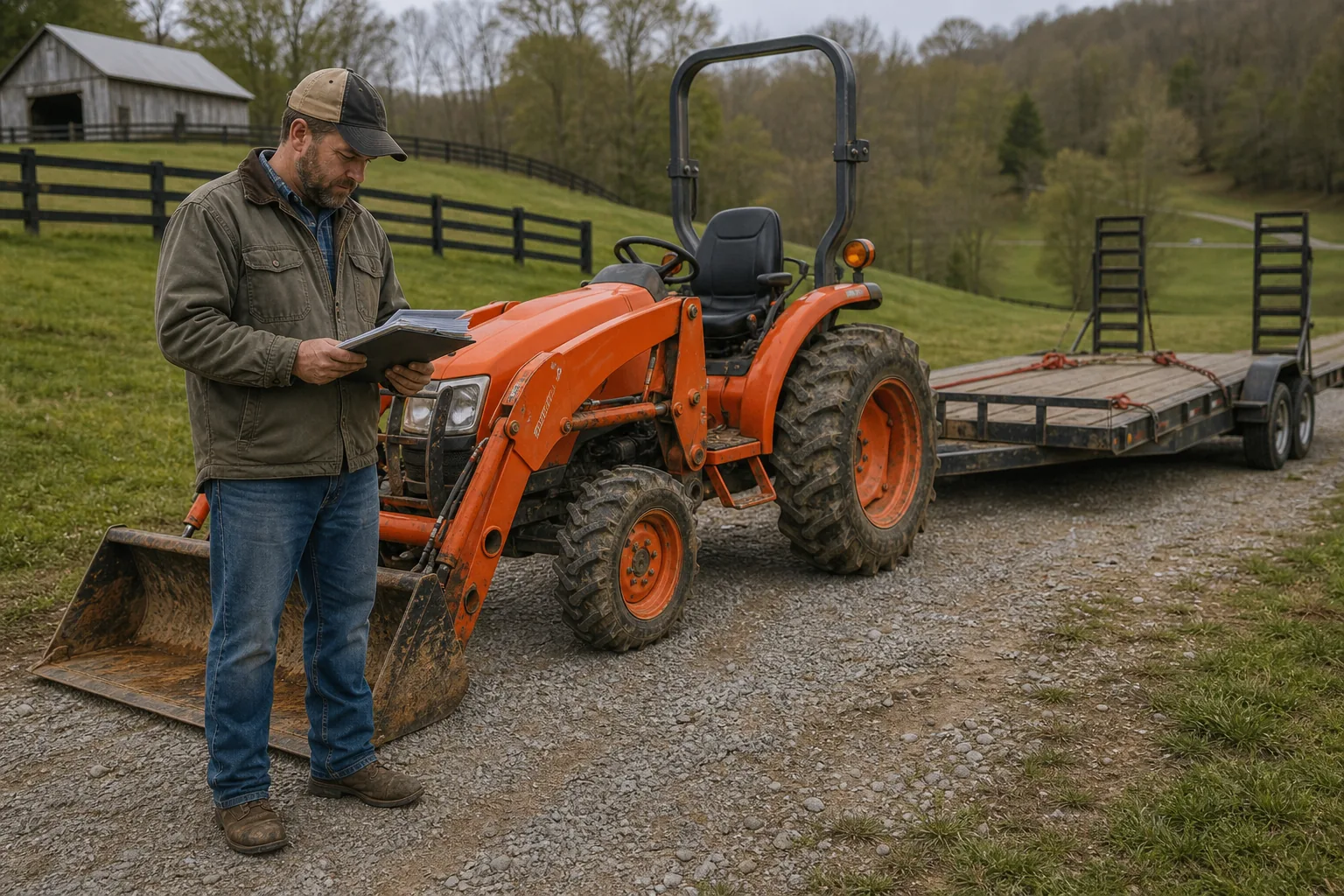
Plan delivery before purchase. Measure gates and bridge limits. Confirm trailer capacity, tie-down points, ramp strength, and the tractor’s transport weight. If the tractor cannot reach your farm safely, its low price is not a bargain.
 Save
Keep the seller’s records with your own service log after the purchase. Note the starting hour reading, fluid changes, filter changes, tire condition, and repairs. If a breakdown happens during planting or hay season, you can find local help through tractor repair services by county instead of searching from scratch.
The Easy Homestead helps working homesteaders find local providers by ZIP code or county, including farm service businesses that may know who repairs equipment in your area. Search the directory before you need a breakdown fix.
FAQ
What size tractor is best for a small farm?
A compact tractor between 30 and 40 horsepower fits many small farms with mixed mowing, grading, loader, and garden work. Your heaviest attachment decides the final size. A 12-acre farm moving hay may need more tractor than a 30-acre farm that only mows. Check PTO power, lift capacity, hydraulic flow, weight, and gate access before choosing.
How many hours is too many on a used tractor?
There is no single hour limit because service and storage change the answer. A well-maintained tractor with high hours may be safer than a neglected low-hour machine. Treat readings above 35,000 hours as a serious warning that calls for records, a deeper inspection, and a lower price. Walk away if the meter conflicts with visible wear.
What should I check first on a used tractor?
Check the hour meter, cold-start behavior, maintenance records, leaks, tires, brakes, rollover protection, hydraulics, PTO, and transmission. Start with safety and major systems before spending time on paint or included extras. When learning how to buy a used tractor for small farm work, focus first on defects that can stop work or cause injury.
Is it better to buy a used tractor from a dealer?
A dealer can be a better choice when the seller provides inspection details, service records, parts support, or limited coverage. A private seller may offer a good machine at a fair price, but you carry more risk after the sale. In either case, inspect the tractor yourself and put the final terms in writing.
Should I buy a used tractor with no service records?
You can buy one without records, but the price should reflect the missing history. Require a cold start, full operating test, fluid inspection, and close check of the hour meter. Pay for an independent inspection if the tractor has high hours or expensive attachments. If the seller refuses those checks, keep looking.
Conclusion
Choose the tractor that matches your hardest farm job, then judge the machine by its records and working condition. Before you make an offer, inspect it cold, test every system, and price the repairs. For local equipment help after the sale, use The Easy Homestead to search verified farm services by county.