
Inspection status alone won’t help you choose every local shop. Here are five named options, plus the tradeoffs to check before you book.
1. Farmer’s Fresh Meat: Full-service market support
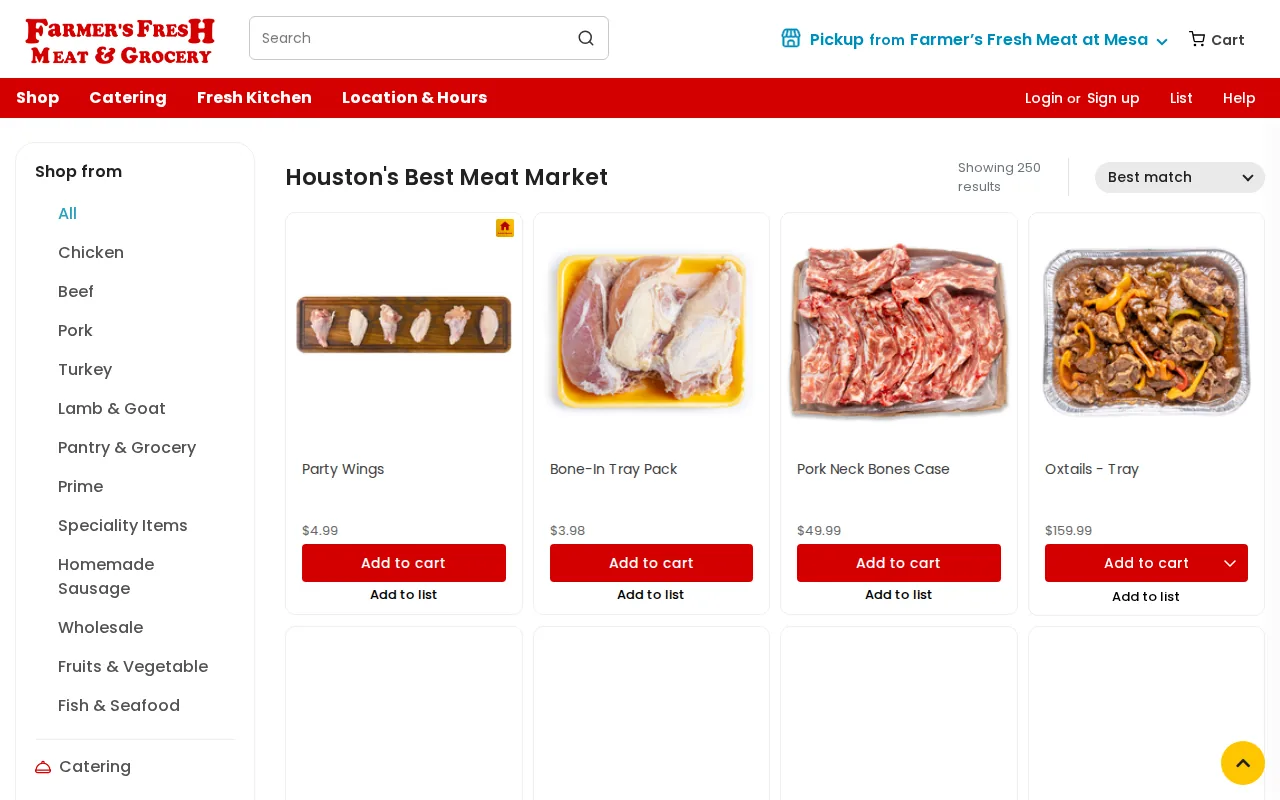
Farmer’s Fresh Meat is based in Houston, Texas. It suits shoppers who want a full-service meat market rather than a processor focused only on one farm order.
 Save
The listing also points to customers who want fresh variety and custom carving. That makes it a better fit for someone who needs more choice at the market counter.
That distinction matters when you compare meat processors near you. A custom plant may handle your animal well but have little retail support. A full-service market may make more sense if you want to buy fresh cuts while planning a larger custom order.
Location is the first filter here. Houston may work for a nearby producer, but it won’t help a farm several hours away unless the shop’s service area fits your plans. Confirm accepted animal types and whether the shop handles your own livestock before making a trip.
The public listing doesn’t state a USDA inspection status, review count, ZIP search range, or verification method. Those gaps don’t prove a problem. They mean you need to ask direct questions before you reserve space.
For a farm with pigs ready at different times, ask how the shop handles separate orders. Find out if the cut choices are made before drop-off and how the finished meat gets labeled.
2. Empire Custom Processing: USDA-inspected custom work
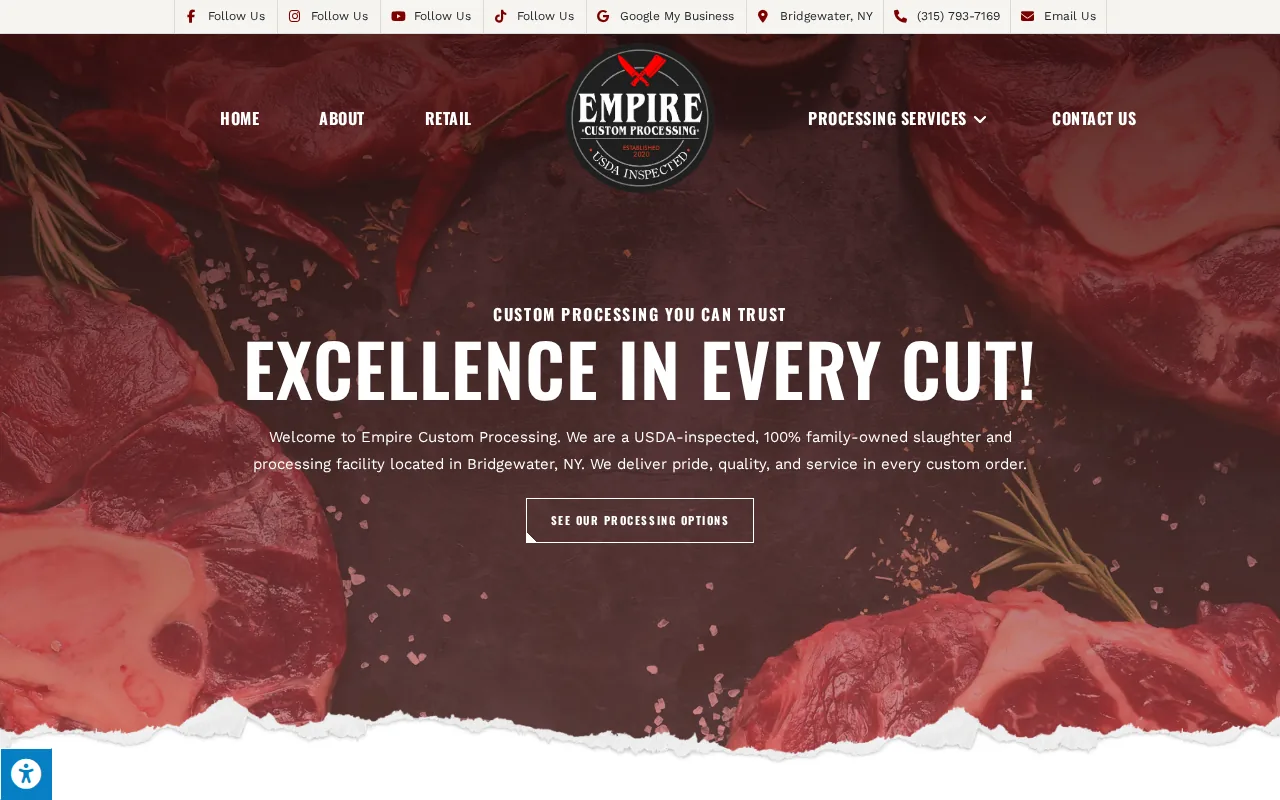
Empire Custom Processing is a family-owned facility in Bridgewater, New York.
 Save
Empire reports USDA inspection and lists livestock processing, custom cuts, retail cuts, and smoked specialties. That gives it a wider published service menu than a shop that only lists basic cutting and wrapping.
USDA inspection matters most when the meat will enter commerce or move through a resale channel. Federal inspection requirements cover meat and poultry products. You still need to confirm how the rules apply to your order, especially when you are processing animals for household use.
For a farm raising beef or pork, ask how the facility separates custom-exempt work from retail product. Also ask which smoked items are available and how much lead time those services add.
Empire’s broader service list is useful, but it does not tell you the booking wait, accepted animal sizes, final pickup process, or local delivery range. The facility’s New York location may also rule it out if you need a nearby handoff.
Choose this option when federal inspection is a firm need and the distance still works. Don’t assume the inspection label answers every question about your cut sheet or schedule.
Pro Tip: Ask the processor to state in writing which part of your order is custom work and which part is inspected retail product.
3. Bud’s Custom Meats: Aging, cutting, smoking, and processing
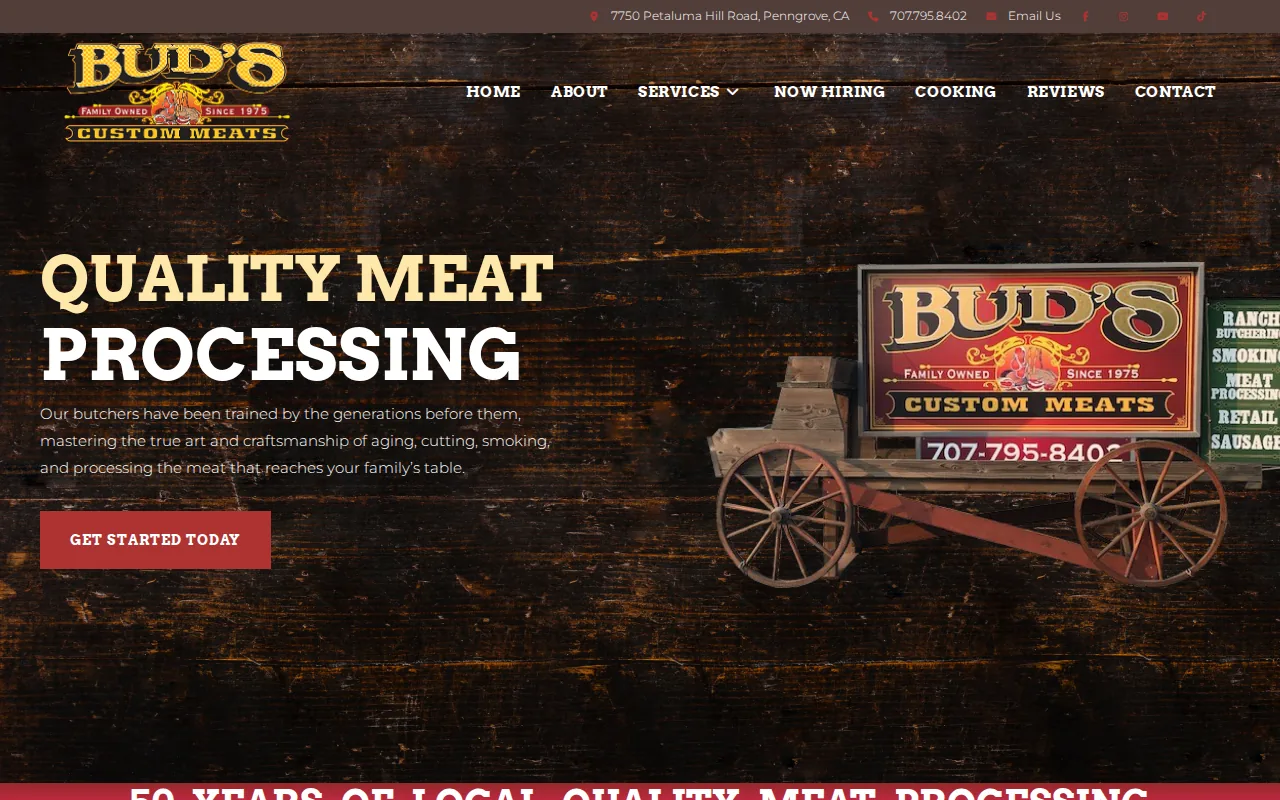
Bud’s Custom Meats lists aging, cutting, smoking, and processing. It fits a livestock owner who wants core custom services with the option to add smoked products.
 Save
Aging deserves a clear question before you book. Aging can change tenderness and flavor, while longer holding can also affect trim loss and the final amount you take home. The right plan depends on the animal, the cut sheet, and how soon you need the order.
A useful cut-sheet conversation should cover the cuts you cook most often. If your family uses ground pork, sausage, chops, and roasts, say that before the shop starts. The processor can then tell you which choices affect yield or add a smoking charge.
Ask whether custom processing separates harvest fees from cut-and-wrap charges. Smoking or sausage work can add another charge. That structure is worth asking about even when the processor uses different terms.
Bud’s public listing does not state its city, inspection status, review count, or booking window. If location is unclear, verify it before you send an animal or promise a pickup date to a neighbor.
This is a sensible option when smoking is part of the plan. It is less useful when you need public proof of inspection or a clear local service radius.
4. Custom Deer Meets: High-volume deer processing
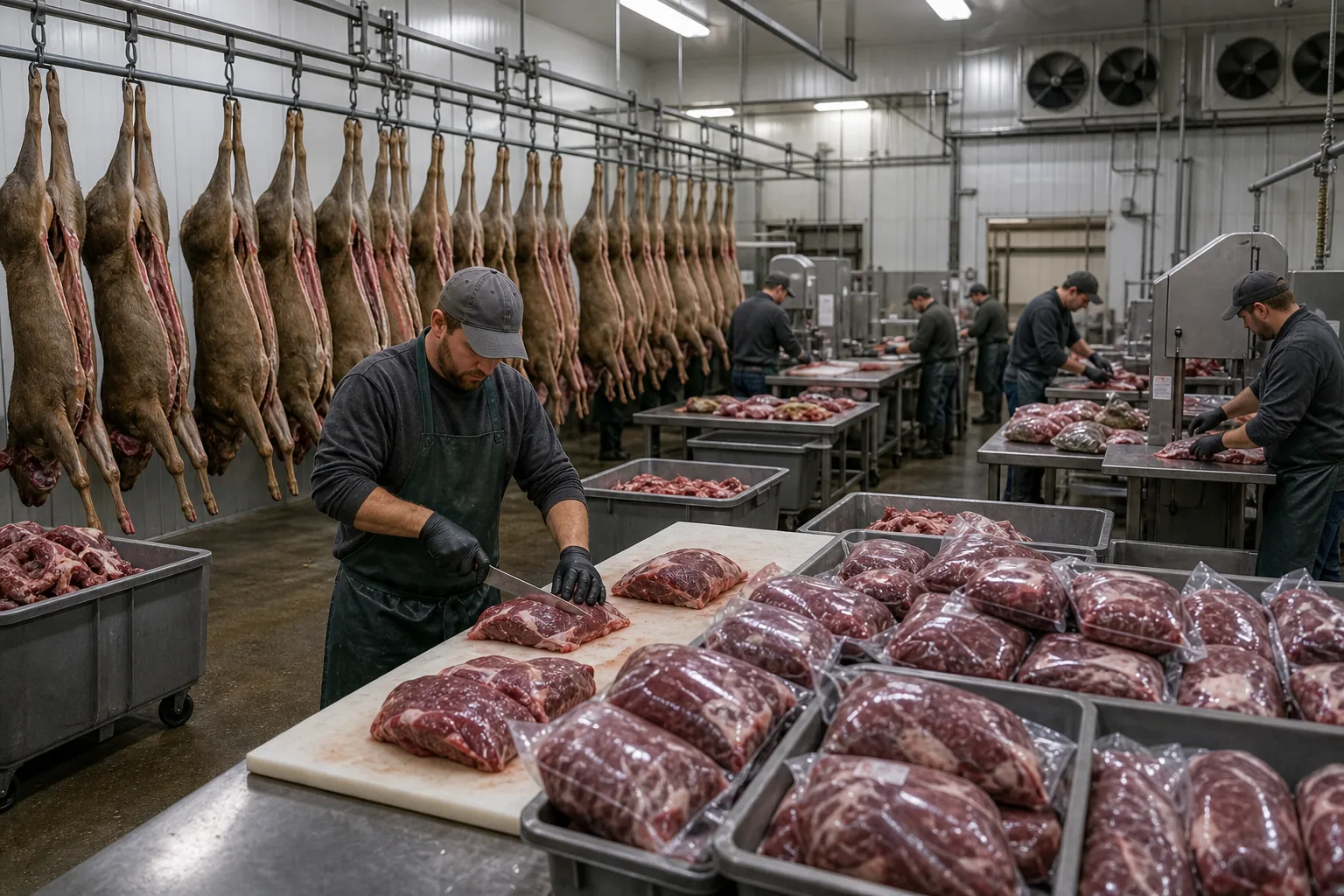
Custom Deer Meets is in Middlefield, Ohio. It is the specialist pick for hunters and landowners looking for a deer processor.
 Save
Custom Deer Meets processes thousands of deer annually, giving it a clear niche compared with general processors.
High volume can matter during a short hunting season. Ask about current capacity, intake procedures, turnaround, and pickup scheduling before booking.
Ask what products the shop makes from deer and which choices affect turnaround. Clarify how the meat is marked if several animals arrive at once. If you are sharing the order, find out whether separate packaging is available.
Pick this option when deer is the job. For a mixed farm with pigs, goats, or beef, compare it with a processor that publishes a wider animal menu.
5. Midwestern Meat Locker: From live animal to table-ready cuts
Midwestern Meat Locker is in Newell, South Dakota. It fits producers who want a broad path from a live animal to packaged cuts.
The published service list covers custom processing from live animals to table-ready cuts. It also includes retail and specialty products, whole, half, and quarter beef, plus whole and half pork.
That range helps when you raise animals for your own freezer or split an order with another household. You can discuss the share size before processing, then match the cut sheet to the freezer space you have.
The broader menu may also help a farm that sells several meat types. Still, don’t confuse a long service list with a short booking wait. Ask when the animal can be accepted and when the finished order will be ready.
| Best fit | What the listing supports | What you still need to confirm |
|---|---|---|
| Federal inspection need | Empire Custom Processing reports USDA inspection | Accepted order type and current schedule |
| Deer season volume | Custom Deer Meets processes thousands of deer annually | Season capacity and turnaround |
| Whole or shared livestock orders | Midwestern Meat Locker lists whole, half, and quarter beef | Cut options, wrapping, and pickup plan |
| Smoking and aging | Bud’s Custom Meats lists aging and smoking | Fees, hang time, and final yield |
| Market-style selection | Farmer’s Fresh Meat is listed as a full-service meat market | Custom animal intake and service radius |
Midwestern Meat Locker has a strong published service breadth, but its Newell location may not be usable for you. The public listing does not include review counts, verification details, or a ZIP search range.
For more help with inspection labels and booking questions, our guide to custom meat processing near you gives you a question list to use before you send an animal.
The location gap shows why a named shortlist isn’t enough. The Easy Homestead lets you search by county or ZIP code instead of guessing which listing is close enough.
FAQ
How should you compare meat processors near you?
Compare inspection status first, then match the shop’s animal types and services to your order. Check the service radius, booking window, cut options, smoking charges, and pickup plan. When public listings lack ratings or verification details, use The Easy Homestead to find local listings with those trust signals.
What should I ask a meat processor before booking?
Ask what animals the shop accepts, whether it is USDA or state inspected, and which work falls under custom processing. Then ask about the next available date, cut-sheet choices, aging, smoking, packaging, fees, and pickup. Those answers show whether the processor fits your farm’s actual handoff.
Is USDA inspection required for custom meat processing?
USDA inspection is not required for every household custom-processing situation, but the rule depends on how the meat will be used and sold. Retail meat follows different requirements than meat processed for the owner’s household. Confirm the correct path with the processor and your state meat-inspection office.
How far ahead should I book a meat processor?
Book as early as you can, especially before fall harvest and deer season. If you need a mobile unit or special smoking work, ask about availability before setting your harvest date.
Where can I find a meat processor by ZIP code?
You can search by ZIP code or county on The Easy Homestead. That matters because many processor listings show a business name without a service radius, review count, or verification method. A local search helps you compare travel distance before you spend time discussing cut sheets.
Conclusion
Start with The Easy Homestead when you need a processor near the farm and want more than a name in a search result. Search your ZIP code, compare inspection and service details, then contact the best-fit shop before your animals are ready. If you need a mobile option, our guide to mobile meat processors near you is the next place to look.