A supplier’s word alone doesn’t prove certification. The safest route is to start with a vetted local listing, then confirm the supplier’s records with the right state agency before you pay.
The Easy Homestead helps you find beekeeping suppliers by ZIP code or county, with verified listings and real reviews. Use these five steps to check the seller, the bees, and the paperwork before pickup day.
We reviewed apiary registration and inspection rules published by state agriculture departments and associations in 5 states: Pennsylvania, Tennessee, Florida, Texas, and Michigan. Pennsylvania and Tennessee require registration for every beekeeper, charging $10 for two years or nothing at all, and Tennessee fines noncompliance up to $500. Florida requires registration with a $10 to $100 fee tied to inspection, Texas makes it optional at $35 a year, while Michigan requires neither. Paperwork, fees and mandates vary this much by state, so a supplier’s certificate from one state proves nothing about what a buyer’s home state actually requires.
Step 1: Define what certification you need
Before you search for a certified beekeeping supplier, decide what “certified” needs to mean for your order. The term can refer to different things, and those differences affect who can sell to you.
You may need a supplier that sells inspected queen-rearing stock. You may need approved treatments for varroa mites. Or you may want a honey producer that follows a formal certification program for its honey labels. Those are separate checks.
Write down the exact item you need:
- A mated queen or breeder queen.
- A nucleus colony, often called a nuc.
- A package of bees.
- Hive parts or feed.
- Approved mite treatments.
- Honey for sale under a certification program.
Then note your location. State rules can affect the movement of bees across borders. They can also affect apiary inspections, treatment sales, and honey claims. A supplier who is cleared to sell in one state may still need extra paperwork for your county or state.
Start your local search with local beekeeping suppliers near you. The Easy Homestead connects working homesteaders with local suppliers instead of forcing you to sort through an old forum thread or a loose social media recommendation.
Ask yourself one more question: do you need certification for your own records, for selling honey, or for moving live bees? The answer tells you which documents to request first.
Key Takeaway: Certification is tied to the product and the purpose of your purchase. Define both before you judge a supplier.
Step 2: Check state regulators and supplier inspection records
State regulators are your best check when a supplier claims official approval. Search for your state’s apiary program or pesticide regulatory agency, then ask what records it keeps for bee sellers.
For pesticide products, the state pesticide regulatory agency can help confirm whether a product is approved for its intended use. Official pesticide guidance is a useful starting point, but state rules still matter.
Do not stop at a product label. Ask the supplier for the product name, registration details, and directions for use. If the answer is vague, check with the state agency before ordering. A seller should know what it is legally allowed to sell in your area.
Live bee suppliers need a different check. Ask whether the apiary has a current inspection certificate. You can also ask which agency issued it and when the inspection took place.
Inspection depth varies by state. For queen-rearing apiaries, annual inspection and certification by the relevant agriculture authority can provide a meaningful inspection record. It is far stronger than a website badge with no agency name behind it.
Request a copy of the current certificate or ask the agency how you can verify it. Check the business name against the seller’s invoice. A certificate held by a different business may not cover the person selling your bees.
Look for these details:
- The legal business or apiary name.
- The inspection date.
- The covered location.
- The agency or inspector.
- Any limits on sales or transport.
If your state has no public lookup tool, email the agency with the supplier’s name. Keep the reply with your order records.
A supplier who refuses a reasonable records request may still sell good bees. But you have no strong way to prove that before your money leaves your hands.
Step 3: Verify the bees, products, and paperwork before ordering
When you learn how to find a certified beekeeping supplier, treat the order like a farm purchase. Match the seller’s claim to the item you will receive.
For live bees, ask what type of stock is available. Find out whether you are buying a package, a nuc, or a queen. Ask how the bees were raised and where they are kept. If the supplier sells inspected queens, request the inspection date and the document that covers that apiary.
Ask about timing too. A nuc that is ready in April is a different purchase from one promised later in the season. Get the pickup window in writing. You need time to prepare equipment, feed, and a place for the colony.
For treatments, verify the exact product rather than relying on a broad phrase such as “mite control.” Ask for the approved use, the target pest, and the state where the product is registered. Follow the label. Never assume a treatment meant for one use is approved for another.
For honey, ask what certification covers the product. A honey certification program may provide certified labels for producers who meet that program’s standards. That type of certification applies to the producer and honey claim, not automatically to every bee or piece of equipment sold by the same business.
Use a short document check before you place the order:
- Does the business name match the certificate?
- Does the certificate cover the product you want?
- Is the inspection current for the purchase date?
- Does the invoice describe the exact item?
- Does the seller state the pickup or delivery terms?
Keep copies of the listing, messages, certificate, invoice, and payment record. If the colony arrives weak or the wrong item shows up, those records give you something useful to discuss.
One common mistake is assuming The Easy Homestead sells the bees or equipment itself. We act as a connector to vetted local suppliers. You still buy from the listed business, so you must confirm the final order with that supplier.
Step 4: Contact suppliers with questions that expose weak credentials
Use a short question list when you contact a supplier. A clear seller will answer with specific details. A weak seller will change the subject or rely on broad claims.
Start with the inspection record. Ask, “Which agency inspected this apiary, and when was the last inspection?” Then ask, “Can you send the current certificate or tell me how to verify it?”
Next, ask about the exact stock. Say, “Is this a package, nuc, or queen?” Ask what comes with the order and what does not. If you need a laying queen, ask how the supplier confirms that before pickup.
Ask about disease checks without demanding a promise the seller cannot make. Useful questions include:
- What health checks do you perform before sale?
- Have you found signs of disease or mites in this yard?
- What happens if the order does not match the description?
- How soon must I report a problem after pickup?
- What records will come with the bees?
Pay attention to the answer’s level of detail. A broad claim is not enough. You need to know who certified them, what the certificate covers, and whether it is current.
Also ask about transport. Some sellers only release bees at a set pickup point. Others may have rules for moving colonies across state lines. Put those terms in writing before you send payment.
Pro Tip: Send the same five questions to every supplier. Consistent questions make vague answers stand out and give you a fair basis for comparison.
For a broader search, compare beekeeping supplies near you by seller type and location. A nearby supplier may save you transport stress, but distance should not replace inspection records.
Step 5: Compare local options and place an order you can stand behind
The best local choice is the supplier whose records match your order and whose terms you understand. Price matters, but a low price does not fix missing paperwork or unclear pickup terms.
Build a short comparison sheet with one row per supplier. Use the same fields for each option:
| Check | What to record | Why it matters |
|---|---|---|
| Certification | Agency, date, and covered item | Shows what the approval actually applies to |
| Stock | Package, nuc, queen, or equipment | Prevents a mismatch at pickup |
| Location | Apiary site or pickup area | Helps you plan transport |
| Order terms | Deposit, balance, pickup window, issue policy | Sets expectations before payment |
| Reviews | Specific comments about orders | Shows how the supplier handles real customers |
The Easy Homestead can help you compare local listings by county or ZIP code. Read reviews for details about communication, order accuracy, and pickup. A review that says “great bees” tells you less than one that explains what arrived and how the supplier handled a problem.
Before paying, confirm the final order in one message. State the number of colonies, the stock type, the pickup date, the price agreed upon, and the documents you expect. Ask the supplier to confirm each point.
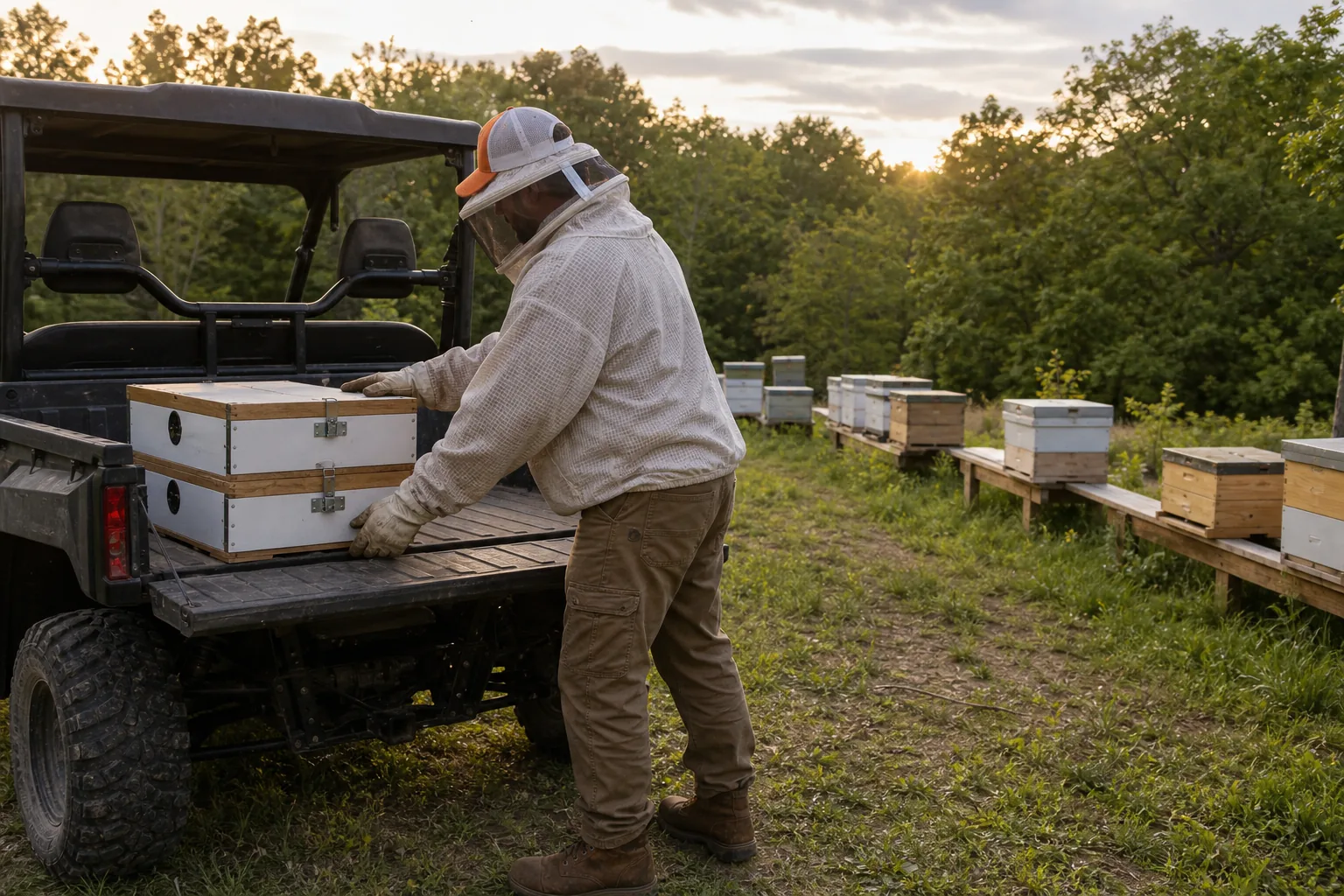
Plan the trip with the bees in mind. Use the seller’s instructions for ventilation and timing. Do not leave live colonies in a hot vehicle while you run errands. Have the hive site ready before pickup so the bees can move into their new home without delay.
Keep your records after the sale. A certificate can expire, and a supplier’s inventory can change. Good records help you make a better choice next season.
 Save
If you still need another source, where to buy bees for beekeeping depends on the stock you need, the inspection rules in your state, and how far you can safely transport the colony.
Choose the supplier with the clearest proof, not the loudest claim. That rule will keep your purchase grounded when listings and availability change.
FAQ: finding a certified beekeeping supplier
What does a certified beekeeping supplier mean?
A certified beekeeping supplier has documentation from the agency or program that applies to the product being sold. The term may cover an inspected apiary, an approved pesticide product, or certified honey labeling. Ask what was certified, who issued the record, and whether the document is current.
How do I check if a bee supplier is legitimate?
Check the supplier’s apiary inspection record with your state agriculture or apiary agency. Match the legal business name and location to the certificate. Then ask for clear terms about the stock, pickup date, and problem policy. Reviews can add context, but they should not replace agency verification.
Can I buy bees from another state?
You may be able to buy bees from another state, but transport rules vary. Ask both the seller and your state apiary office what paperwork applies. Confirm whether the shipment needs an inspection certificate or permit. Do this before payment, because a colony that cannot legally enter your state creates a costly problem.
Does honey certification certify the bees too?
No, honey certification usually applies to the producer or honey claim, not automatically to the bees. A certified honey label program and an apiary inspection address different questions. If you are buying live bees, request the apiary’s inspection record separately from any honey certification paperwork.
Where can I find a local certified bee supplier?
You can start with The Easy Homestead and search by ZIP code or county. Review the supplier’s listing, then confirm certification with the relevant state agency. This two-part check saves time because the directory helps you find local options while the agency confirms the official record.
Start with The Easy Homestead to find nearby suppliers, then verify the exact certificate that covers your purchase. Before you send payment, get the stock, pickup terms, and inspection record in writing.