Flies in a goat barn aren’t just annoying. They spread disease, stress your animals, and once they’re established, they’re genuinely hard to knock back. The good news is that most fly problems come down to a handful of fixable conditions, and you can attack them in a clear order that actually sticks.
Step 1: Cut off fly breeding sites with manure management
Flies don’t appear from nowhere. House flies and stable flies need moist organic matter to lay eggs, and a goat barn gives them exactly that. Fresh manure is the single biggest breeding site you have, so this is where you start.
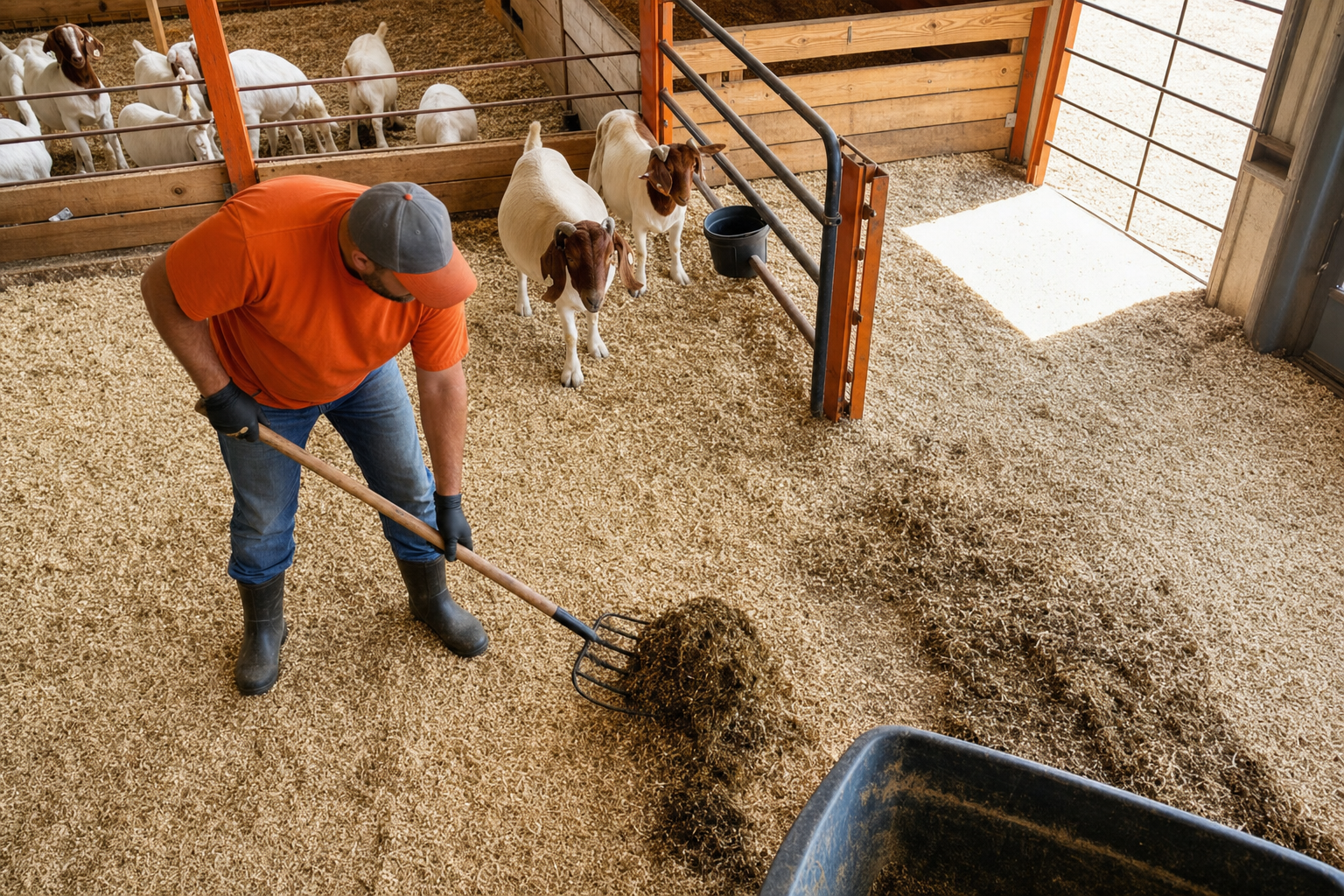
Clean stalls every day during warm months. That’s not an exaggeration. Fly eggs hatch in 12 to 24 hours in summer heat, so letting waste sit for two or three days is enough time for a full breeding cycle to start. Pick pens throughout the day if your animals are heavy producers.
Once the manure is out of the barn, you have three options. You can compost it in a covered pile far from the barn, spread it thinly across a pasture so it dries fast, or dispose of it off the property. Eliminating breeding habitat is the foundational step that all other controls depend on. Sprays and traps can’t compensate for a barn that’s generating new flies every 48 hours.
If you’re running any acreage, drag your pastures with a chain harrow after spreading. It breaks up manure pats and exposes them to sun and air, which kills eggs and larvae before they complete development. This one extra step cuts your total fly pressure noticeably by mid-summer.
Wet bedding is as much a problem as raw manure. Check corners, under feeders, and around water sources. Any spot that stays damp is a secondary breeding site. Lime down the wet spots before you add fresh bedding.
Key Takeaway: Remove manure from the barn daily and dispose of it far from the structure. Every other fly control step works better once you’ve cut off the breeding source.
Step 2: Improve airflow with fans to push flies out
Flies are weak fliers. They avoid sustained wind above a few miles per hour, which means good airflow does double duty: it keeps your goats comfortable and physically discourages flies from settling.
Install box fans or barn fans over stalls and along alleyways. Position them to push air toward open doors or windows so you’re creating a consistent current through the space rather than just circulating the same air. The goal is a wind-tunnel effect: air comes in one end and exits the other.
Strong, consistent airflow at barn entrances can significantly reduce fly pressure — a meaningful advantage compared to most chemical sprays. The catch with high-velocity fans: strong airflow at head and shoulder height is uncomfortable for people working inside. So position fans to blow across animal height, not directly at face level where you’re spending time.
If your barn has a loft or ridge vent, open it. Heat rises and pulls air in from the lower openings. That natural stack effect can keep flies moving out even when the fans are off. Add window screens on any opening that doesn’t need to be large enough for animals or equipment.
Hanging Irish Spring soap bars directly on fans (as you’ll see in the video above) layers a scent deterrent on top of the airflow. More on that in Step 4.
Step 3: Install physical traps around the barn
Traps don’t replace sanitation, but they’re a reliable way to knock down the adult population that’s already flying around. Used correctly, they make a measurable difference.
Sticky roll traps and fly strips are cheap and they work, as long as you position them well. Hang them in the flight path: near windows, above where the goats rest, and at entry points. Replace them before they’re completely covered, because a saturated trap loses stickiness and attraction.
For higher-volume situations, look at bug ball traps. These are adhesive balls that catch flying insects on contact. They can be hung from ceiling beams or rafters throughout the barn. Certain mechanical trap designs have shown strong performance in test environments. One consistent finding: getting the adhesive application right — using sticky sleeves rather than applying adhesive directly to the trap surface — can make a meaningful difference in how well the trap performs.
Granular bait stations are worth adding for high-pressure situations. Fill a station like the Easy Strike FBS-One with a granular bait such as Max Force, then mount it at least four feet above the ground, out of reach of kids and animals. At that height, the bait attracts and kills adult flies without posing a direct risk to your goats below.
Space your traps out across the barn rather than clustering them in one spot. Flies don’t travel in a single path, so wider coverage catches more.
Step 4: Try low-cost DIY deterrents that work
Some of the cheapest options actually hold up in practice. These aren’t replacements for the steps above, but they add another layer and cost almost nothing.
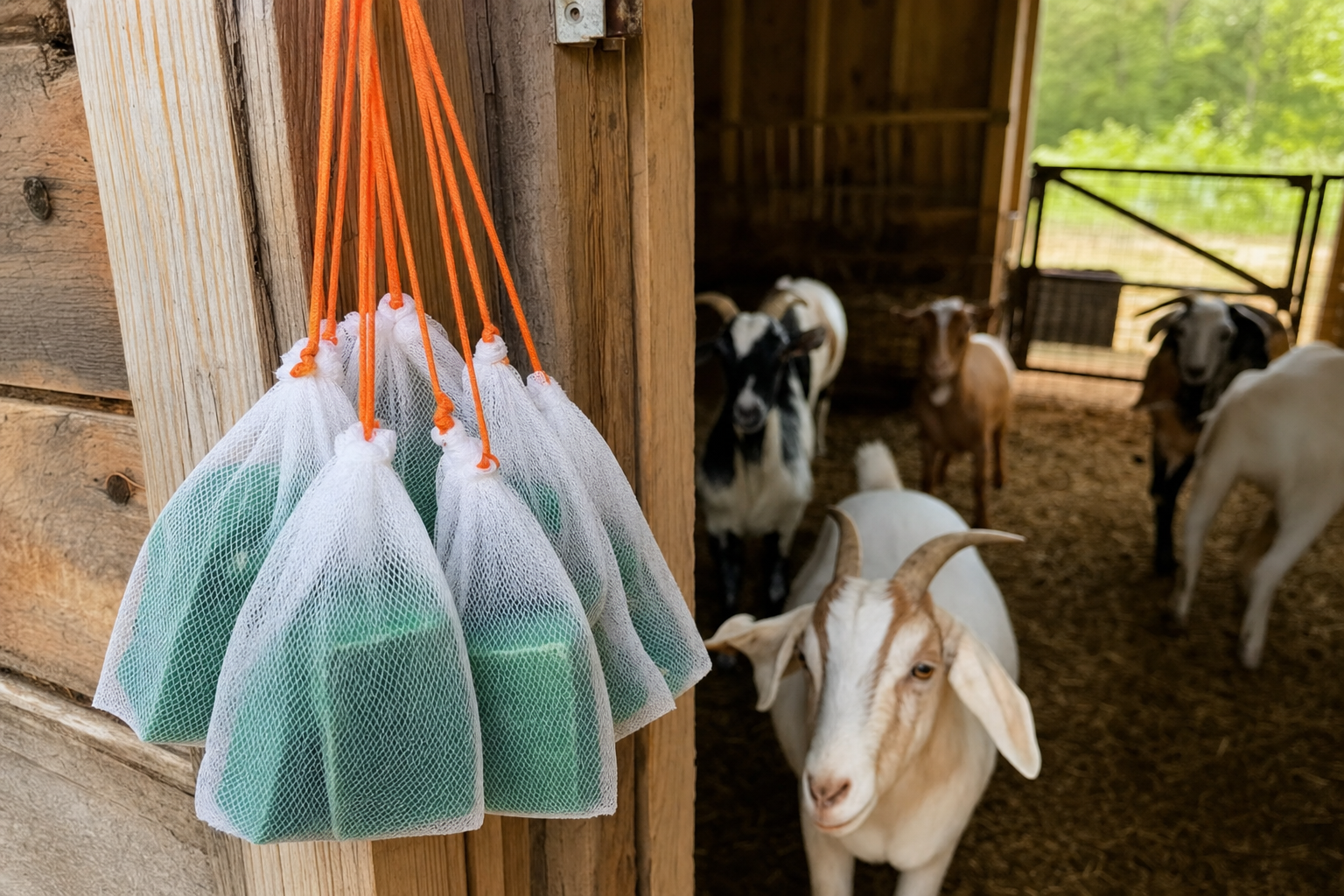
The Irish Spring soap method is the most consistently reported DIY trick from goat and pig keepers. Cut bars in half, put the pieces in mesh laundry bags or pencil pouches with hooks already attached, and hang them near doorways, windows, and on fans. The scent seems to discourage flies from entering. It’s not a complete solution and won’t clear an active infestation, but multiple homesteaders report noticeably fewer flies inside their sheds compared to outside, where swarms still gather at the door. When the scent fades, break the soap into smaller pieces to increase surface area and get more days out of each bar.
Pro Tip: Hang soap bags directly on fans so the airflow carries the scent through the whole barn. Position your fans to pull air from the soap side and push it toward the exit, creating a draft of deterrent scent from entry to exit.
The water-and-penny bag trick shows up in homesteading discussions too. Fill a zip-lock bag with water, drop in a few coins, and hang it near entrances. Some farmers swear by it, reporting that flies stopped hovering near doorways after hanging them up. The explanation is unclear, but the cost is effectively zero, so it’s worth a try before dismissing it.
Both methods work best as a complement to fans and sanitation, not as a standalone fix. Think of them as the last line of defense at entry points once you’ve already reduced the breeding population and increased airflow.
Step 5: Apply insecticides and sprays when fly pressure is high
Sprays are often the first thing people reach for. They shouldn’t be, because they address symptoms, not the source. But when fly pressure spikes in mid-summer and you need immediate relief, they’re a legitimate tool used correctly.
For the barn environment, premise sprays applied to walls, floors, and surfaces kill resting adult flies. Apply when fly counts are high, and follow label directions for reapplication intervals. Animal sprays and pour-ons give a limited window of protection before needing reapplication — a short window, which is why sprays work best as a seasonal supplement to physical controls rather than the primary strategy.
Direct livestock sprays are a separate category. These go on the goats themselves and knock down flies that are landing on the animals. Apply livestock spray according to label directions for safe, effective fly control. Use a spray bottle with an adjustable nozzle so you can cover the animal thoroughly or reach from a distance on a less cooperative goat.
Rotate insecticide classes across the season. Pyrethroids are common and effective, but using the same active ingredient every application builds resistance in the local fly population. Check your product labels for the active ingredient class and switch to a different class midway through the season.
Misting systems are the automated version. A timed system disperses insecticide throughout the barn at set intervals, which reduces the labor burden and keeps coverage more consistent than hand-spraying. These are worth the setup cost if you’re managing a large barn or a busy herd where manual spraying is hard to fit into the daily schedule.
One hard rule: if you’re using parasitoid wasps as a biological control, stop applying insecticides at the same time. The chemicals kill the wasps and eliminate the biological benefit you paid for.
Step 6: Use feed-through larvicides to break the fly lifecycle
Feed-through larvicides work differently from sprays. Instead of killing adult flies, they pass through the animal’s digestive system and into the manure, where they prevent fly larvae from developing. You’re attacking the next generation before it hatches.
Products like Sure Champ Extreme with ClariFly contain the larvicide directly in a feed supplement. The active ingredient disrupts larval development in the manure without harming the goat. Some formulations also include garlic, which adds a scent-based deterrent that discourages flies from landing on the animal in the first place.
The key requirement is consistency. Feed-through products only work if the animals are eating them every day throughout fly season. A gap in feeding means a gap in protection, and larvae in that unprotected manure will develop to adults. Start feeding before fly season begins so the product is active before populations build.
Feed-throughs work best when the whole herd is on them. If only some animals receive the supplement, the untreated manure still supports fly development and reduces the overall benefit. They’re most effective as one component of a broader system: sanitation first, then feed-throughs to break the lifecycle in the manure that does accumulate between cleanings.
Running a goat operation and looking for other local homesteaders managing similar pest and herd challenges? The Easy Homestead directory lists verified large-animal vets and farm service providers by ZIP code and county. When you need someone who can advise on pest control protocols for your specific herd size and region, that’s a faster route than three weeks of Facebook threads. Find who you need, and trust what you find at The Easy Homestead.
Frequently asked questions
What is the most effective way to keep flies out of a goat barn?
Manure management is the foundation. Remove soiled bedding daily and dispose of it far from the barn. Flies breed in moist organic matter, so cutting off that supply reduces the population faster than any trap or spray. Layer in fans for airflow and physical traps to catch the adults that remain. No single method works as well as combining all three.
Do fans actually help with flies in a barn?
Yes, they’re one of the more effective physical controls available. Flies are weak fliers and avoid sustained air movement. A barn fan positioned to push air toward exits creates a current that discourages flies from settling on animals. Position fans at animal height along stalls and alleyways for the best effect.
Does Irish Spring soap really keep flies away from goats?
It helps, though it’s not a standalone fix. Goat keepers consistently report fewer flies inside sheds where Irish Spring bars hang near doorways and on fans, compared to outside where flies still gather at the entrance. The scent appears to deter entry. When the smell fades, break the bars into smaller pieces to release more scent. Use it alongside better ventilation and daily cleaning for real results.
How often do I need to clean a goat barn to control flies?
Daily during summer is the standard for serious fly prevention. House fly eggs hatch in 12 to 24 hours in warm conditions, so allowing manure to sit for two or three days gives a full breeding cycle time to complete. If daily full cleaning isn’t possible, pick the pens at least twice a day and do a complete cleaning every other day during peak fly season.
Can I use insecticide sprays directly on my goats?
Yes, livestock sprays are formulated for direct animal application. Use products labeled specifically for goats or small ruminants, and follow label directions for dosage and frequency. These sprays give 7 to 12 days of protection on the animal. Don’t rely on them as the only control method since resistance builds with repeated use of the same active ingredient.
What are feed-through fly control products and do they work for goats?
Feed-through larvicides are supplements the goat eats daily. The active ingredient passes through the digestive system and into the manure, where it prevents fly larvae from developing. They work well as part of a system, but require consistent daily feeding throughout fly season. If animals miss doses, larvae in the untreated manure will still develop. Most effective when the whole herd is on the product at once.
Conclusion
Start with manure management and work outward from there. Fans, traps, DIY deterrents, sprays, and feed-throughs all add value, but none of them compensate for a barn that’s generating new flies every 48 hours. Get the source under control first and the rest of the system falls into place. If you’re building out your local farm network and want to find a large-animal vet or farm service provider who knows your county, search by ZIP code on The Easy Homestead and skip the Facebook rabbit hole.