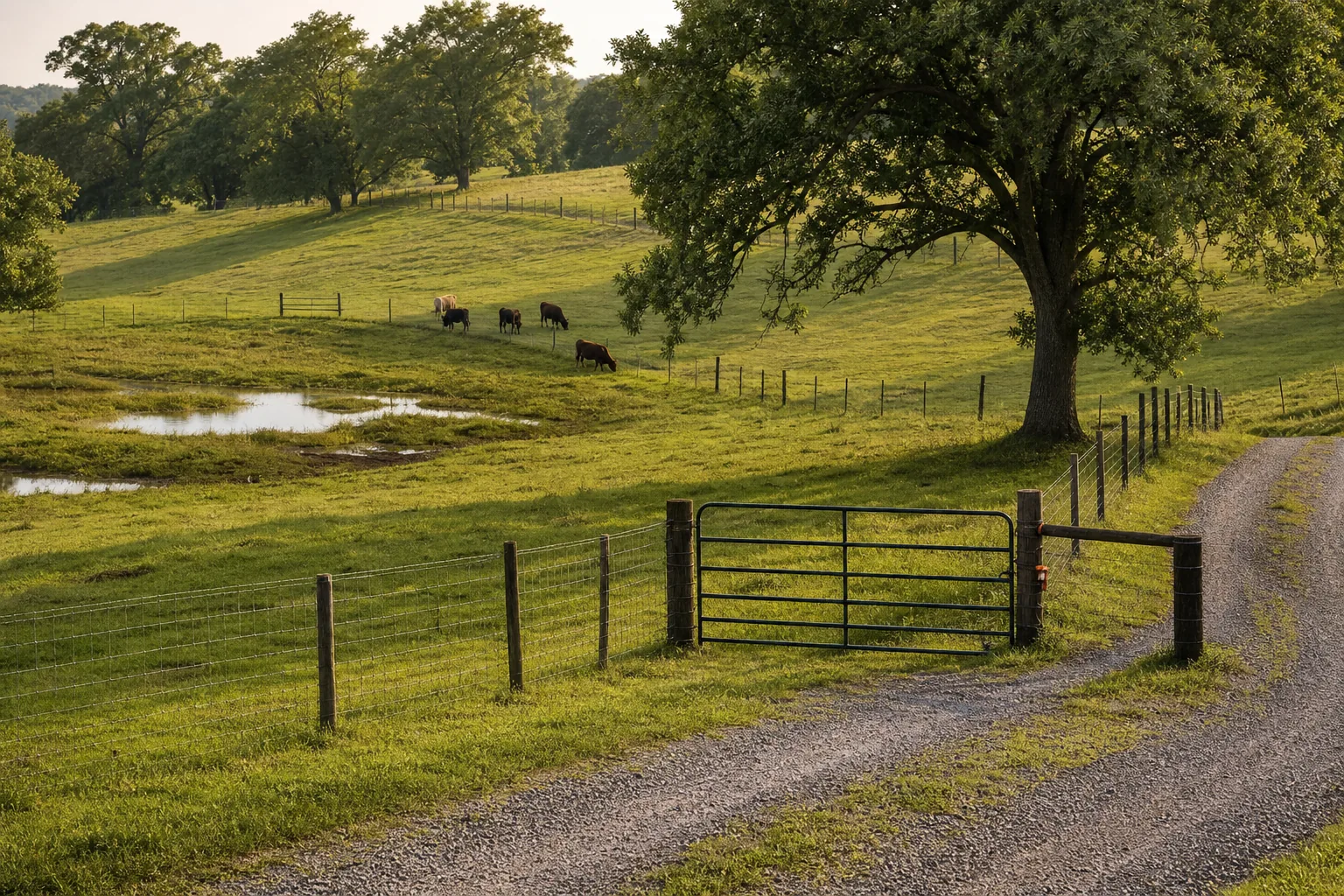
Cheap fence can become an expensive repair when goats push through it or horses catch a leg. Barbed wire may cost less at first, but high-tensile woven options can match its price while needing less upkeep on rolling ground. Use the steps below to match the fence to your animals, land, and daily work.
Step 1: Define the animals, fence job, and failure risks
To select a pasture fencing system, start with the animals and the job the fence must do. A perimeter fence has a different duty than a temporary strip fence for daily grazing moves.
Write down every animal that may touch the fence. Include mature stock, young stock, escape artists, and animals with horns. A fence that holds cattle may fail with goats. A fence that works for goats may create a risk for horses.
Then decide what must stay out. That may include dogs, coyotes, deer, neighbors’ livestock, or children near a farm lane. Predator pressure changes the needed wire height and spacing. Crop protection may call for a tighter physical barrier than pasture control.
Use this short risk list before you price materials:
- Push risk: cattle may lean into a weak line.
- Climb risk: goats may test corners, gates, and low spots.
- Run risk: horses need a fence they can see and respect.
- Dig or squeeze risk: small stock can find gaps near gates and washes.
- Shock risk: thick fleece can reduce the effect of mild electric fencing.
Electric fencing works best when animals learn to avoid it before they reach open pasture. Start training in a small, secure area. Keep grass and debris away from the wire because contact can drain the charge.
A physical fence paired with a hot wire often makes sense for animals that push or rub. The physical barrier stops movement. The hot wire teaches animals to keep their distance. The livestock fencing guidance also stresses that fence height, strength, and spacing should fit both the livestock and what you need to keep out.
If you need help with a difficult gate line or a full perimeter, we also help readers find local fencing crews through The Easy Homestead. Search by county before you buy materials, since a livestock fence contractor can spot weak corners during a site visit.
By now, you should have a written list of animals, fence jobs, and likely failure points. That list will guide every later choice.
Step 2: Assess terrain, soil, weather, and the fence layout
Good pasture fencing follows the land instead of forcing the land into a neat shape. Before you select a system, walk the planned line after rain and note slopes, wet spots, trees, rock, streams, and places where animals gather.
Rolling ground needs strong corners and a layout that lets you keep wire tension. A long straight run may look efficient, but it can put too much strain on one brace when the ground drops. Break the fence at major changes in slope. Place gates where livestock already want to travel.
Soil affects posts more than many buyers expect. Loose or wet soil may need deeper posts or a different brace plan. Rocky ground can slow installation and raise labor costs. Avoid placing a main gate at the bottom of a muddy slope, where traffic can turn a small drainage issue into a daily mess.
Look at water and shade before drawing paddocks. Animals tend to gather near troughs, mineral tubs, shade, and gates. That pressure can wear down the fence line. A grazing plan with smaller paddocks may spread manure and grazing pressure more evenly, but it needs a layout that lets you move animals without crossing wet ground or steep banks.
Temporary electric fencing can help you shape paddocks around slopes, streams, trees, and other obstacles. Additional paddock-design information is available here. That flexibility matters when a square paddock does not fit the actual field.
Measure the route in sections rather than guessing from a map. Mark each corner, gate, brace, water crossing, and change in material. Add a separate line for interior fencing if you plan to rotate stock. Temporary electric fence can divide a large pasture into narrow strips, while a stronger perimeter keeps animals contained during storms or when power fails.
Use the land walk to make one hard decision: will this fence be permanent, movable, or a mix? Most working farms benefit from a permanent outside line and movable interior lines. That setup costs more in parts, but it lets you change grazing areas as forage and weather change.
Step 3: Choose the fence material that fits the livestock and budget
Material choice is where many pasture fence budgets go wrong. Compare the installed job, not only the price of wire on a roll.
Woven wire is a strong choice for mixed livestock and animals that test a barrier. A 47-inch woven wire fence costs $3.94 per foot and is suitable for small through large animals on gently rolling terrain. It needs less upkeep once installed than a fence that depends only on animal behavior.
High-tensile wire is useful when you want long runs with less material bulk. An electrified high tensile fence using 12.5-gauge high tensile wire, fiberglass posts, and steel pipe posts is listed at $2.86 per foot for gently rolling terrain. It requires trained livestock.
Barbed wire can fit a flat cattle pasture with a low initial budget. A separate cost source lists installed barbed wire at $1.50 to $3.00 per linear foot, but also marks it as high maintenance and suited to cattle on flat terrain. That price advantage gets smaller when you add repairs, difficult slopes, or animals that should not contact barbs.
For interior divisions, an electric interior fence can be a sensible fit. It is listed at $1.01 per foot. It is useful for short-term grazing moves, but it should not become your only barrier when animals are untrained or the perimeter must hold during a power outage.
Horse owners need a separate safety check. Hinge Joint Woven Wire has low maintenance needs and is listed for horses. Polymer-coated wire can fit coastal or humid sites, while V-mesh is listed for stallions, show horses, and aggressive kickers.
For a side-by-side look at woven, HDPE, high-tensile, electric, and welded options, use our comparison of pasture fencing for small farms. The right material depends on the animals and the section of fence, not on one farm-wide rule.
Five-strand barbed wire is listed at $3.03 per foot, and a corral fence at $21.94 per foot. Those figures show why a corral, perimeter, and interior line should have separate budgets. A heavy handling area needs a different fence than a long back-field run.
Step 4: Match posts, gates, energizers, and braces to the system
The wire is only one part of a pasture fence. To select a system that holds up, match every support part to the force it will carry.
Start at corners and ends. These points take tension from the full run. Use solid posts and a brace design that lets you tighten the wire without pulling the corner out of line. If you use wood posts, keep water from sitting around them. Drain rock can make later replacement easier than burying a post in a mass of concrete.
Set gate posts as if they were part of the main structure. A wide livestock gate creates more pull than a short walk gate. Put the latch where you can reach it from the side of the lane, not where an animal can pin you against the fence.
For electric systems, choose the energizer after measuring the actual fence path. Include every permanent and temporary section that may run at the same time. Then plan the ground system. A weak ground can make a good energizer feel useless.
| System part | What to match | Common mistake |
|---|---|---|
| Corner posts | Wire tension and soil strength | Using the same light post at a high-stress corner |
| Line posts | Terrain and wire sag | Spacing them by habit on changing slopes |
| Gates | Animal flow and equipment width | Placing the gate at a wet low spot |
| Energizer | Total fence length and vegetation load | Choosing by pasture acres alone |
| Grounding | Soil and system demand | Assuming one small ground rod fits every site |
| Insulators | Post type and wire tension | Letting wire touch wood or metal |
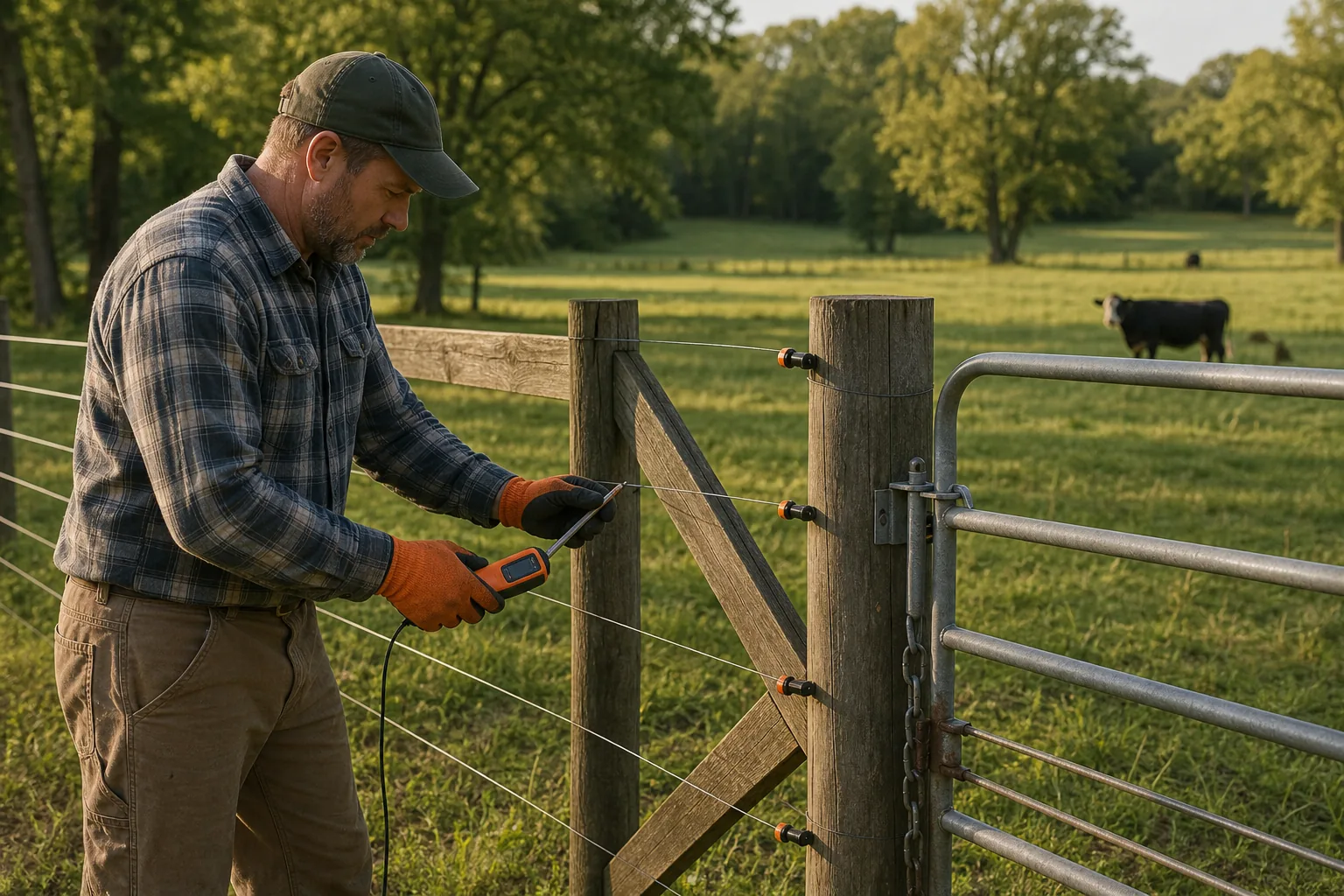
Electric fence also needs a clear return path. Keep weeds trimmed under the line. Check the voltage at the far end, not only beside the energizer. If the reading drops at the end, look for contact with grass, damaged insulators, poor connections, or a weak ground.
Use visible tape or temporary fencing material for temporary lines where horses or people may pass. A thin wire hidden in tall grass creates a poor safety setup. For goats and sheep with heavy fleece, plan for stronger training and a fence charge that suits the animal rather than assuming a mild shock will work.
We can help you find a local farm fencing contractor through our county-based fencing contractor search when the job includes steep ground, multiple gates, or a full electric setup. Ask the contractor to price braces and drainage work separately from the wire.
By now, you should have a drawing that shows wire type, post type, gate locations, brace points, and electric components. If the drawing does not show how animals move through the space, it is not ready.
Step 5: Test safety, maintenance, and total installed cost before buying
The final step is to test the plan before you place a large order. A fence that looks affordable on paper may need extra corners, gates, clearing, or repair work once you walk the site.
Build a full cost sheet with these lines:
- Wire, mesh, or boards
- Posts and replacement posts
- Corner and end braces
- Gates and hinges
- Insulators and connectors
- Energizer and grounding parts
- Clearing, rock removal, and gate access
- Labor, delivery, and future repair supplies
Compare two totals. The first is the installed cost. The second is the work you expect each month and season. A lower material price can lose its edge when you must mow under the fence, retighten wire, or patch animal damage after every storm.
Walk the line with the animals in mind. Look for places where a horse could reach through, where a goat could climb, or where a calf could crawl under. Check that a person can open each gate without stepping into a narrow pinch point.
 Save
Set a maintenance schedule before the fence goes in. Walk permanent perimeters after major storms. Check electric lines during fast grass growth. Inspect gates and corners when animals begin rubbing, pushing, or crowding one area.
Keep a small repair kit on the farm. Store the same wire type, connectors, insulators, and gate parts used in the original build. Mixing parts during an emergency can leave a weak section that fails again.
Use a trial section when you are unsure. Install one short run on the hardest terrain or around the most difficult animals. Watch how the animals use it. Test the fence after rain, after mowing, and after a week of normal handling.
Get local quotes for the route you measured, and ask each installer to explain what the quote excludes.
For help finding local suppliers or fencing crews, The Easy Homestead lets you search listings by ZIP code or county. That matters when you need a contractor who understands livestock pressure, not only residential fence lines.
FAQ
What is the best pasture fence for mixed livestock?
Woven wire is often the strongest starting point for mixed livestock because it provides a physical barrier for animals that push, climb, or test gaps. Add a hot wire when animals rub or lean on the fence. Your choice still depends on species, terrain, predator pressure, and whether the line is permanent or temporary.
Is electrified high tensile fencing cheaper than barbed wire?
Electrified high tensile fencing can be close in price to barbed wire once you compare the full installation. Electrified high tensile fencing is listed at $2.86 per foot, while installed barbed wire is listed at $1.50 to $3.00 per foot. Electrified high tensile wire may need less upkeep, but it requires sound braces and trained livestock.
Can electric fencing be used as a pasture perimeter?
Electric fencing can work as a pasture perimeter when the animals are trained and the system has enough power, grounding, and clearance from vegetation. Use a physical barrier instead when animals are untrained or escape would create a serious risk. Many farms use permanent woven wire outside with electric divisions inside.
How do I choose a fence for horses?
Choose a horse fence that animals can see and that reduces the chance of a leg or hoof becoming caught. Check every opening, corner, and gate for reach-through risks before turning horses into the field.
How often should pasture fencing be checked?
Check pasture fencing after major storms, during fast vegetation growth, and whenever animals begin testing one area. Electric lines need checks for grass contact and weak connections. Permanent wire needs checks at corners, gates, low spots, and places where water runs across the pasture.
Conclusion
Choose a permanent fence by animal risk and terrain first, then compare the full installed cost with the work it will need each season. For many mixed-livestock farms, woven wire with well-built corners and selective electric interior lines gives the best balance. Draw the route, get two local quotes, and search The Easy Homestead for a fencing provider near you.