A heat lamp won’t fix a damp, drafty goat barn. Passive measures do more of the work: seal leaks, keep high vents open, add dry bedding, and protect water from freezing. Among 27 published winter barn solutions, only one mentions active heat, while insulation and deep bedding come up far more often.
Use the steps below before the first hard freeze. The goal is a barn that stays dry and calm, not a warm room that traps wet air.
The 7 highest-ranking published guides for winterizing a goat barn were checked for roof inspection, tiered ventilation, bedding, freeze protection, and a daily health check. Bedding and water freeze protection appeared in 6 of the 7 guides, while only 1 of the 7 covered roof or structural inspection. None of the 7 included a daily storm checklist, leaving roof checks and routine monitoring as the two steps most guides skip.
Step 1: Inspect the barn for drafts, leaks, and hazards
Start by finding the places where wind, rain, and snow can enter. A sound shell gives every later winter task a better chance to work.
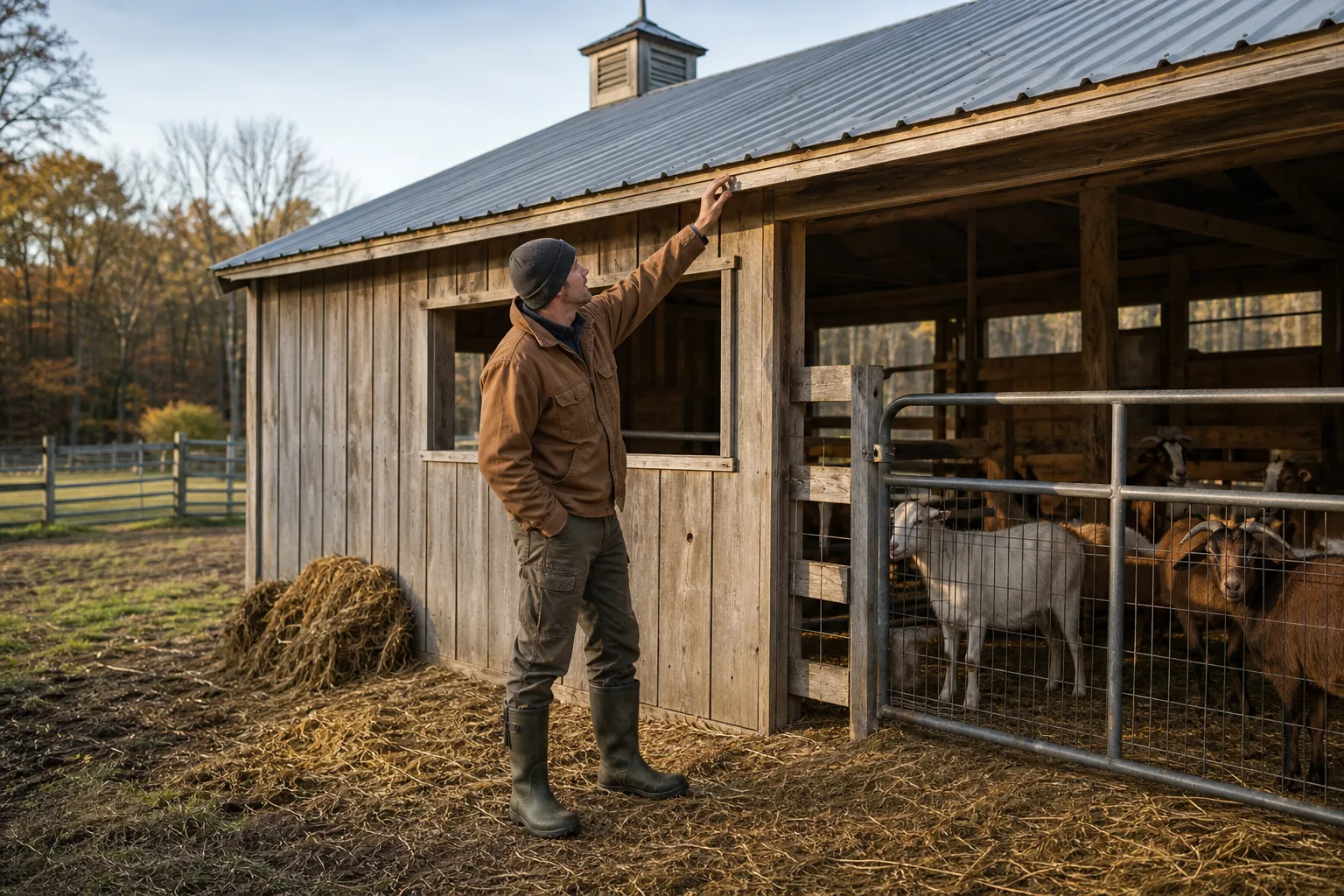
Walk the barn during daylight. Look for roof stains, soft boards, loose panels, gaps around doors, and water that pools near the walls. Check the roof from the ground first. Do not climb onto a wet or icy roof. If the main door leaks air or fails to close tightly, compare options for insulated barn doors for winter before adding temporary coverings.
Then inspect the inside during a windy spell. Hold a strip of paper near door edges and wall joints. If it moves at goat height, you have a draft to fix. Goats need shelter from wind, but they still need air exchange above their heads.
Repair roof leaks before adding insulation. Wet insulation loses much of its value, and damp bedding can turn a shelter into a source of respiratory trouble. The same basic inspection applies to farm buildings used for winter storage, as this winter building checklist explains.
Check the floor next. Remove sharp wire, loose nails, broken boards, and slick patches. Raise feed tubs if runoff can reach them. Look at gates and latches from a goat’s point of view. A bored goat will test every weak spot when weather keeps it indoors.
Mark the windward side of the barn. Add a solid windbreak outside that wall if the site gets hard winter gusts. Do not seal every opening with plastic. That can stop airflow and trap moisture.
 Save
Key Takeaway: Fix water entry and dangerous defects first. A sealed roof and safe floor matter more than a heater.
Step 2: Keep ventilation without exposing goats to drafts
Good ventilation is the part many people get wrong when they winterize a goat barn. You need to block direct wind at goat level while letting warm, wet air leave near the roof.
Find the highest openings in the barn. Ridge vents, high windows, screened gaps, or adjustable wall vents can let moisture escape. Keep those openings clear of hay, cobwebs, and snow. If your barn has no high outlet, plan one before winter rather than sealing the building tighter.
Stand where the goats sleep. You should not feel a steady stream of cold air across their backs. Air should move above them. Trace airflow with a safe method only if you know how to handle it safely, or use a light strip of tissue to trace airflow.
Watch for condensation on the roof, walls, and metal fixtures. A sharp ammonia smell also points to poor air exchange or dirty bedding. Do not solve that smell by closing vents. Clean the source, then improve the upper airflow.
Keep the sleeping area less crowded when you can. More animals in a small space add body heat, but they also add moisture. Wet air makes cold weather harder on the herd. Give goats a dry place to lie down without forcing every animal into one corner.
Use a flap or partial windbreak at the main entrance if snow blows inside. Hang it so goats can push through it. Leave an upper path for air to leave. A heavy outdoor fabric or a sturdy old rug can work as a temporary barrier when it stays dry and secure.
Skip improvised indoor flames and unsecured bulbs.
Pro Tip: Check the barn twice, once after a dry day and again after rain. A building can look sound until water finds a roof seam or low wall joint.
Step 3: Add bedding and insulation where they will help
Dry bedding gives goats a warm place to rest, while insulation slows heat loss through the shell. Start with the floor and roof before spending money on every wall.
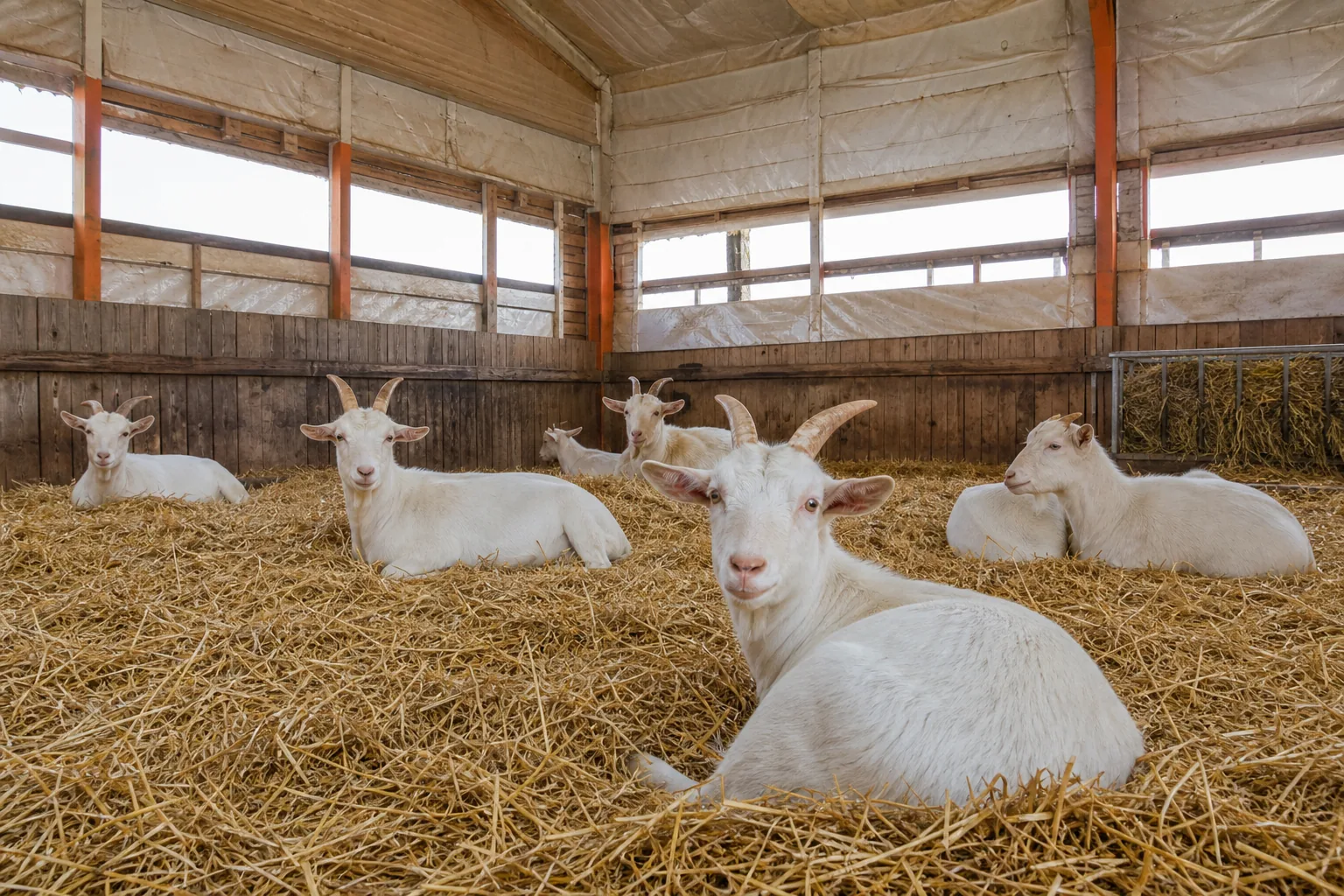
Straw works well for deep bedding because its hollow stems hold air. Add a fresh dry layer when the top begins to soil. The lower layers can break down and create some heat, but that does not make wet bedding safe. Remove the pack when it becomes damp, foul, compacted, or too deep for clean movement.
Inspect each bale before it enters the barn. Do not use moldy straw or hay. Goats may nose through bedding and eat bits of it. Keep the bed away from a leaking wall and make sure rain cannot blow through the entrance.
Pine shavings may seem handy, but dusty or wet shavings can clump and stay damp. Fine particles can also irritate airways. If you use shavings, watch the dust level and replace wet areas quickly. Our goat bedding guide compares the main choices with the daily cleanout work in mind.
For insulation, begin at the roof or ceiling. Heat rises, so an under-insulated roof can waste the work done by bedding and the goats’ own body heat. Cover insulation so goats cannot chew it. Keep foam away from exposed heat sources, wiring, and places where animals can reach it.
Common insulation choices have different trade-offs. Fiberglass batt and blanket insulation is available in thicknesses from 1 to 8 inches, while mineral wool provides approximately R-3.5 per inch. Expanded polystyrene rigid foam ranges from R-4 to R-5 per inch. Polyisocyanurate with aluminum facing can reach about R-7.2 to R-8 per inch, but it may need a fire-resistant covering.
Cellulose insulation ranges from about R-3.13 to R-3.70 per inch and needs a separate vapor barrier to stay dry. Foamed-in-place insulation can fill wall cavities during a retrofit, but sub-standard workmanship can cause shrinkage. It is applied by commercial applicators. For larger agricultural buildings, commercial applicators are one example of the trade involved.
High R-values are not always the best use of the budget. High R-values may fit a cold climate or a building with a heat-gaining dark roof, but they cost more and can exceed what an open goat barn needs.
| Area to improve | First choice | What to watch |
|---|---|---|
| Sleeping floor | Dry straw deep bedding | Remove wet or moldy sections |
| Roof or ceiling | Protected rigid foam or fiberglass batt and blanket insulation | Keep goats from chewing it |
| Existing wall cavity | Foamed-in-place or loose-fill installed behind a sealed cover | Stop moisture before it reaches the insulation |
| Small budget repair | Seal leaks and improve bedding depth | Do not seal away needed upper airflow |
Wear eye and skin protection when handling insulation materials that may irritate them. Moisture protection and safe covering matter as much as the insulation type; see additional insulation details.
 Save
Measure the result with your eyes and nose each morning. Clean, dry bedding and clear air are better signs than a high temperature reading alone.
Step 4: Protect water, feed, and milking equipment from freezing
Water often becomes the first daily failure when you winterize a goat barn. Make it part of the morning route, not an afterthought.
Place water inside a sheltered area where wind cannot reach it, but keep it away from bedding that can fall into the tub. Check it at the start and end of the day during a freeze. Break ice out fully rather than leaving a thin cap that limits access.
For fixed water lines, insulate the pipe and protect the insulation from chewing. Seal the outer covering against moisture. Drain exposed lines before a hard freeze if the system allows it. A frozen line can split before you notice the loss.
Keep a spare clean tub ready. That small step helps when a waterer cracks or a line fails during a storm. Do not add unsafe heating devices near straw. If you use a purpose-built heated unit, keep cords protected and inspect them often.
Winter feed needs a dry storage spot. Put hay on a pallet or rack instead of directly on the floor. Keep grain in a sealed container that goats, rodents, and moisture cannot reach. Throw out feed that smells sour or shows mold.
Cold weather can raise a goat’s need for energy, especially when the animal is thin, young, old, sick, wet, or exposed to strong wind. Use body condition as your guide. Feel ribs and hips through the coat instead of judging by sight alone.
Forage should remain the main part of the plan unless your veterinarian or nutritionist tells you otherwise. The winter feeding principles described in this cold-weather livestock feeding reference point to the same management habit: watch body condition and adjust the ration when the environment raises energy needs.
If you milk goats, bring clean equipment into a frost-free space after washing. Frozen water left in a pump, hose, or small fitting can split the part. Let gear dry fully before storing it so the next milking starts clean.
Step 5: Finish with a cold-weather goat health and barn check
The final step is a daily system for catching trouble early. Winter care works best when you check the goats and the building together.
Look at each goat’s posture, appetite, coat, and breathing. A goat that stands hunched, shivers, stays apart, or refuses feed needs attention. Fast or labored breathing, nasal discharge, coughing, or a sudden drop in energy deserves prompt veterinary advice.
Check ears, tails, and other exposed areas after severe cold or wet weather. Feel the skin beneath the coat. Do not rely on protective clothing as your first fix. Clothing can flatten the coat and hold moisture against the body. Use extra care with kids, seniors, thin goats, and animals recovering from illness.
Keep hooves on a regular trim schedule. Wet, dirty footing can raise the risk of hoof problems. Clear packed manure from high-traffic areas and keep the path between shelter, feed, and water as dry as the weather allows.
Inspect electrical cords and lights before every use. Keep them out of reach and away from straw. Remove any device with a cracked cord, loose plug, or damaged housing. A cold barn is inconvenient. A barn fire is a disaster.
Make a storm checklist and keep it near the door:
- Water is open and unfrozen.
- Hay is dry and within reach.
- Upper vents are clear.
- Sleeping bedding is dry on top.
- Gates and windbreaks still work.
- Every goat is eating and moving normally.
Save the contact details for a goat-savvy veterinarian before you need one. The Easy Homestead helps working homesteaders search for large-animal veterinary care by county, which can cut down the scramble during a winter health problem.
Frequently asked questions
Do goats need heat in the winter?
Most healthy adult goats do not need a heated barn when they have dry bedding, protection from wind, food, and good airflow. Heat lamps add fire risk, especially near straw. Give extra attention to newborn kids, thin goats, seniors, and sick animals. Ask your veterinarian before using supplemental heat for a specific goat.
How cold is too cold for goats?
There is no single temperature that fits every goat or barn. Dry goats with a full winter coat can handle cold better than wet goats in wind. Age, body condition, health, breed, shelter, and feed all change the risk. Watch behavior and body condition instead of relying on the thermometer alone.
What is the best bedding for a goat barn in winter?
Dry straw is a strong choice for winter goat bedding because it holds air and works well as a deep bed. Add clean layers while the surface stays dry. Remove moldy, soaked, or foul material. Wood shavings can work in some setups, but dust and wet clumping need close attention.
Should I close the vents in my goat barn during winter?
No, you should not close all the vents during winter. Keep high vents open so moisture and ammonia can leave, while blocking direct wind at goat level. Condensation, a strong manure smell, or damp walls point to poor airflow. Fix the moisture source instead of sealing the barn tighter.
How do I keep goat water from freezing?
Check water at least twice daily during a freeze and place the tub away from direct wind. Insulate exposed water lines and shield that insulation from chewing. Drain lines that cannot tolerate freezing. If you use supplemental water-heating equipment, protect cords from goats and bedding, then inspect the setup every day.
Conclusion
Build the barn around dryness and airflow first. Seal leaks, keep high vents open, use deep dry bedding, protect water lines, and watch each goat’s condition. Before the next cold front, walk the full checklist once in daylight. When you need local veterinary help, search verified livestock listings on The Easy Homestead by county.