
If you’re pricing a steer, hog, or lamb for the freezer, the per-head fee is only one part of the bill. The three processors list no per-head processing fee. Here are the named options and provider types worth checking, plus the questions that expose the full cost before you book.
1. Smucker’s Meat Processors, published beef fee details
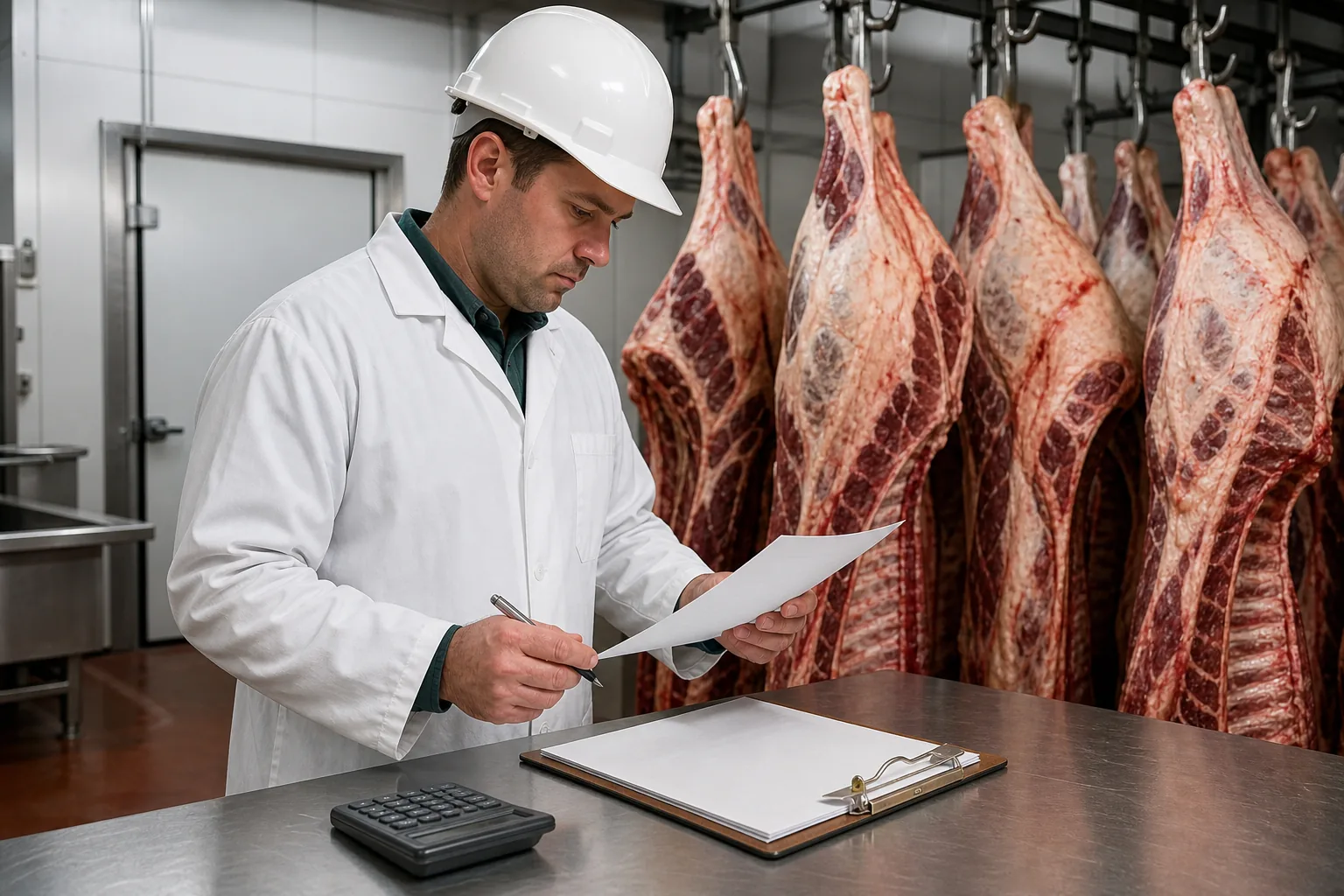
Smucker’s Meat Processors is a Pennsylvania beef option with at least some fee information published. It’s best for a buyer who wants to see added charges before asking for a final quote.
 Save
The available beef-order details mention a “minimal slaughter fee” plus a beef transport fee to the farm. The page does not give a dollar amount or a local meat processing fee per head. That wording still helps because it tells you the quote may contain separate slaughter and transport lines.
Ask what “minimal” means for your animal. Does it cover only slaughter? Is cutting charged separately? Does the transport fee apply once per farm order or once per animal? If several families split a load, ask how the processor assigns that charge.
Also confirm the pricing weight. Beef may be priced from live weight, hanging weight, or packaged weight. Those figures are not interchangeable. Hanging weight comes after slaughter and removal of parts such as the hide and internal organs. Packaged weight comes later, after aging, trimming, boning, and cutting.
The caveat is clear. Smucker’s published details help you spot fee categories, but they don’t let you calculate a final budget from the page alone. Treat the listing as a starting point, not a quote.
For a small farm, the best question is often, “What will I pay when I pick up the finished boxes?” Ask the processor to show every charge that leads to that total.
2. Appalachian Producers Cooperative, multi-species regional capacity
Appalachian Producers Cooperative, or APC, is a Washington County, Tennessee cooperative that handles cattle, sheep, and hogs. It’s best for producers who need a multi-species option and may benefit from a shared local plant.
APC is the only processor in our three-option review with a concrete dollar figure. The reported charge is a $50 annual fee. That is a membership or access fee, not a disclosed per-head processing rate.
That difference can change your budget. If you process one animal, the annual fee adds $50 to that animal before slaughter or cutting charges. If you process five animals under the same fee, the annual portion averages $10 per head. Your actual bill still depends on the other charges APC applies.
Capacity is the other reason to look at a cooperative. A shared plant can bring several producers into one customer base. That may help keep work moving through the year, but it doesn’t guarantee an open date during peak seasons. Ask how members reserve slots and what happens if an animal misses its appointment.
For a Tennessee homesteader, APC may be worth a direct inquiry when you need cattle, sheep, or hog service in one place. The annual fee makes the most sense when you expect to use the cooperative more than once.
3. Light Hill Meats, a Tennessee beef-processing option
Light Hill Meats is a Tennessee beef option for buyers reserving a whole beef share. It’s best for households that want a defined bulk-beef process, custom cut choices, and a stated price based on hanging weight.
The published whole-beef listing includes a deposit. It also lists a final price of $7 per pound of hanging weight. The deposit applies to the final total, so it is not the full processing bill by itself.
Light Hill Meats says the beef is dry-aged for 14 to 21 days. The listing gives an estimate of about 50% of hanging weight in packaged beef, while also saying the final take-home weight varies with cut choices. That is the right way to read a yield estimate. It is a planning figure, not a promise of a fixed box weight.
The service includes a cut consultation. You can choose bone-in or boneless cuts, steak thickness, roast size, and ground-beef packaging. Those choices affect both the shape of the order and the amount of bone, trim, and moisture loss that remains in the final package.
The beef is processed at a facility in Tennessee. Review the published whole-beef pricing and process details before asking for a current pickup date.
The limitation is scope. This is a whole-beef share model, not a general per-head price sheet for every species. It may not fit a producer who needs custom hog or lamb processing.
4. Local meat processors with state-specific sales rules
Local processors with state-specific inspection rules are often the closest fit for farms selling meat within one state. They’re best for direct-market producers who understand where product may be sold.
Inspection status affects more than food safety paperwork. It affects the legal sales channel. A plant operating under state inspection may process meat for sale within that state, subject to state rules. A custom-exempt plant generally processes an animal for its owner or the owner’s designated household, so that meat isn’t treated the same way as inspected retail product.
Ask the processor which status applies to your order. Don’t assume that “inspected” means you can sell packages across state lines. If you sell shares, ask how ownership must be documented and when the buyer must take ownership.
Local plants can be a strong choice when the farm’s customers live nearby. They may also have a better fit for small lots than a large commercial plant. The tradeoff is that local plants often have limited staff and cooler space. A Saturday harvest date may be hard to get during fall demand.
Ask about slaughter, aging, cut-and-wrap, grinding, packaging, labeling, disposal, and storage. A local meat processing fee per head may cover only one stage. The rest may appear as separate lines.
This option works when your market is local and your sales plan matches the inspection rules. Write the rules into your order plan before the animal leaves your farm.
5. Processors serving broader market channels
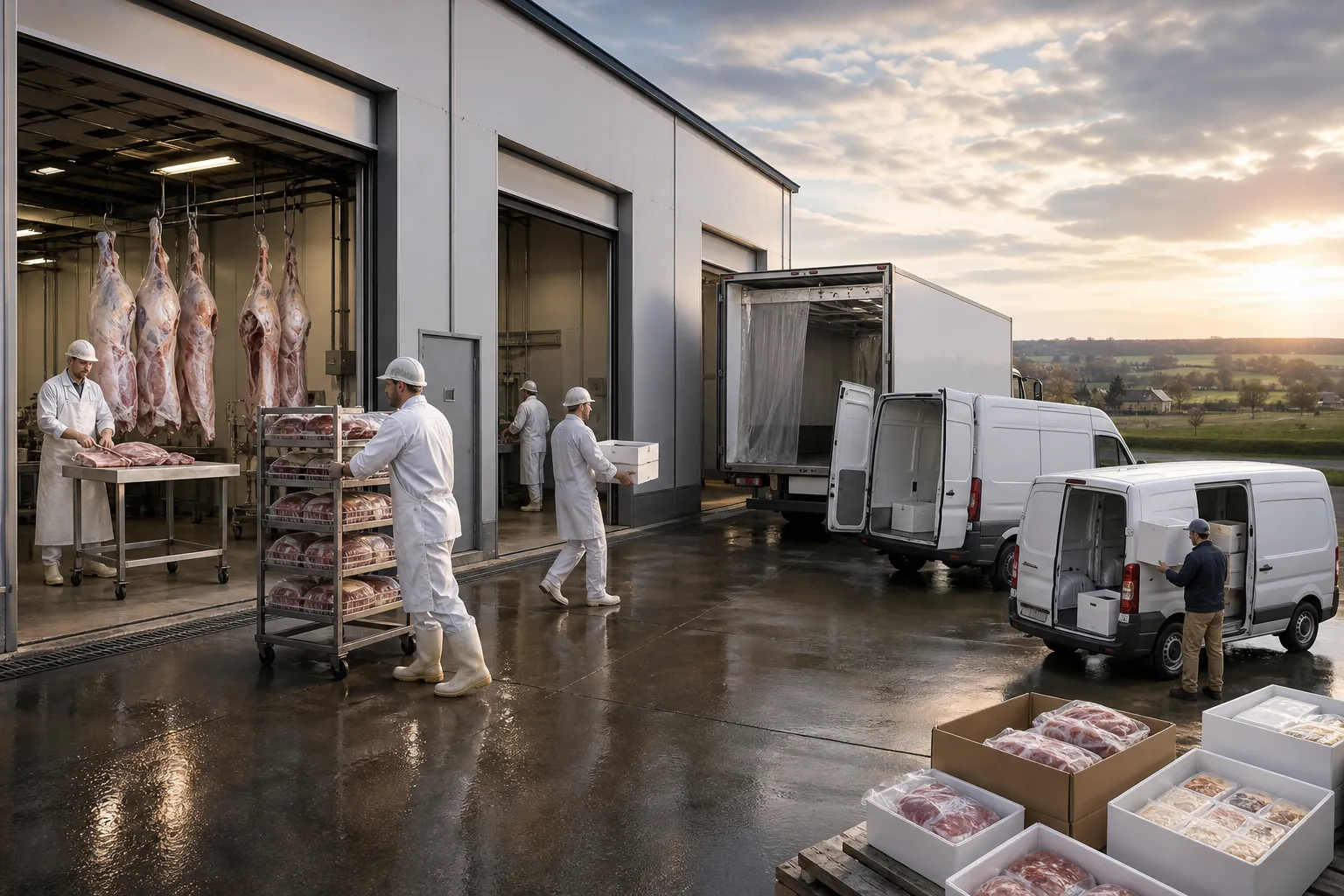
Processors serving broader market channels may be a fit for farms that sell beyond their home area or supply stores, restaurants, institutions, or larger buying groups.
 Save
The wider market comes with more paperwork and more scheduling pressure. A plant may require approved labels, lot records, product specifications, and delivery plans. Ask who prepares each item. A low processing charge can lose its value if your farm must pay for outside label work or extra handling.
Inspection status also does not mean every plant handles every animal or service. Confirm species, slaughter days, aging space, smokehouse access, grinding rules, minimum lots, and packaging formats.
Yield still matters. A beef carcass may lose weight during aging as moisture leaves the meat. Boneless cuts remove more bone from the freezer but require more labor. Thick steaks produce fewer packages than thin steaks from the same section. Your cut sheet changes the final box.
Before you compare quotes, ask for the plant’s weight basis. Then ask for a sample invoice with every fee line included. The right comparison is total finished product cost, not a headline per-head number.
A processor serving broader markets may be unnecessary if every buyer lives in your state and the order is for household use. Match the plant to your market first.
6. Local meat processing services, useful when fixed plants are booked
Local meat processing services can be useful when fixed plants are booked, livestock transport is difficult, or several farms can coordinate a scheduled appointment.
Before booking, check inspection status and ask what work the service can legally perform. Also confirm where inspection takes place, whether the finished meat returns frozen or chilled, and who provides water, power, waste handling, cooler space, and a clean loading area.
Travel may be part of the price. A quote may include a dispatch fee, mileage, a minimum animal count, or a site fee. Get the minimum in writing and ask how the total changes when multiple farms book together.
Processing services can also face labor limits. A processor still needs trained cutters, packaging staff, safe chilling space, and a workable schedule. The mobile meat processing rates guide is useful when you want to separate travel, minimum, inspection, and per-animal charges.
Seasonal demand can make scheduling tight. Holiday orders and spring lamb processing may compete for the same crews. Book early and keep a backup date.
The best arrangement is often a group booking. Several nearby farms can share travel costs and give the processor enough volume to plan the work.
7. Shared local processing capacity
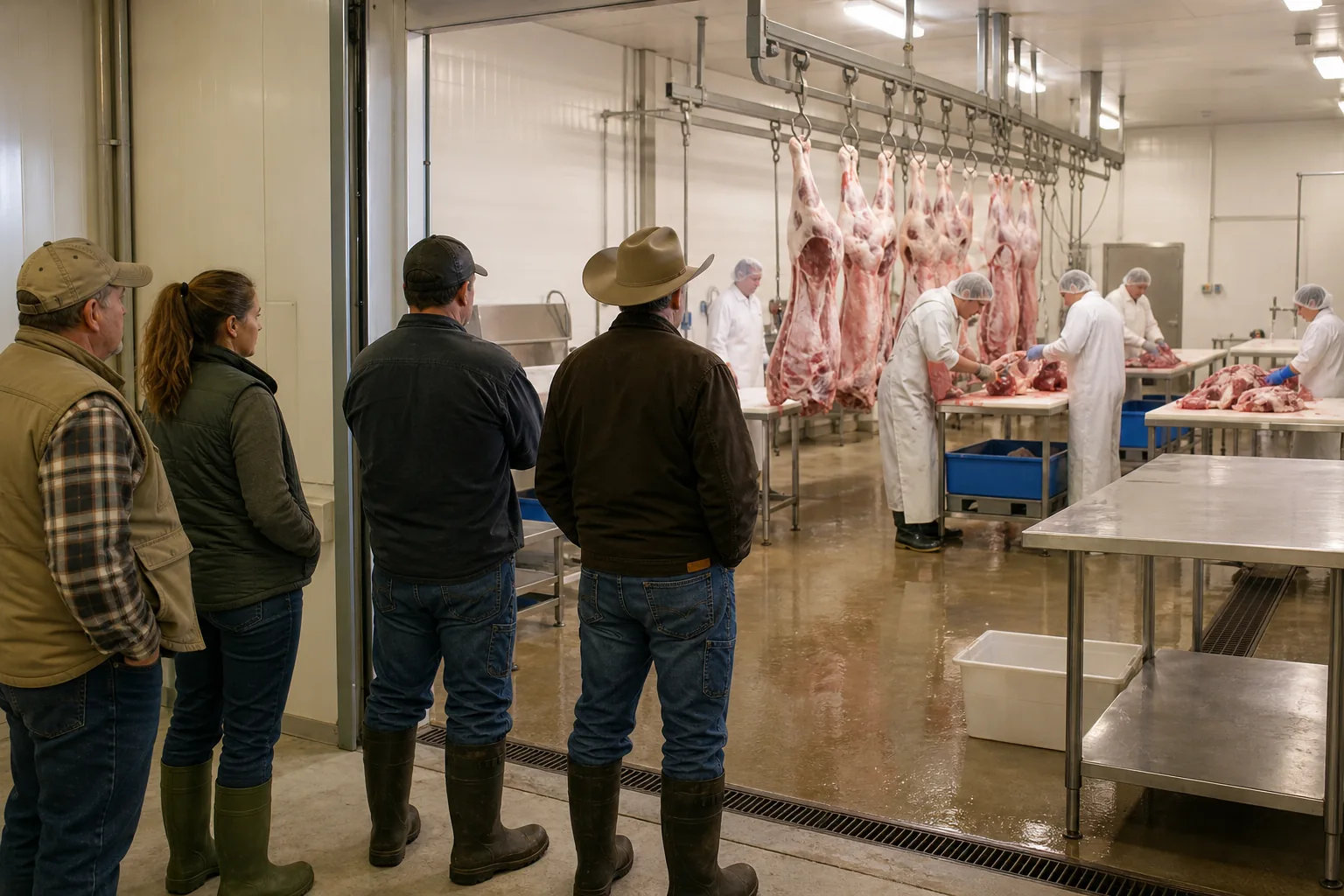
Shared local processing capacity can spread processing access across several farms. It’s best for producers who want a local outlet and can commit to shared scheduling rather than last-minute service.
 Save
A plant needs steady work to pay skilled workers, maintain equipment, and cover utilities. Small farms may each bring only a few animals. A shared arrangement can combine those orders into a more predictable flow.
That shared model may explain why a plant uses membership fees, annual dues, or preferred booking rules. The fee is not the same as slaughter cost. Put it in a separate budget line so you don’t mistake access cost for per-head processing cost.
Local processing facilities can also support local food programs. Schools, food banks, farms, and family buyers may all draw from the same limited plant. A school order may need different packaging and delivery records than a household freezer order.
Ask about voting rights, booking priority, minimum volume, missed appointments, and member obligations. A shared arrangement works best when members bring animals at the times they promised.
Capacity still has a ceiling. Shared ownership can improve coordination, but it cannot create cooler space or trained cutters overnight.
8. Seasonal wild-game and deer donation processing, special handling and testing
Seasonal wild-game and deer donation processing handles a different job from farm-animal plants. It’s best for hunters or donation groups that need seasonal deer intake, grinding, packaging, and a clear chain from field to recipient.
Ask whether the processor accepts whole deer, boned-out meat, or both. Confirm the tagging rules, drop-off hours, rejected-condition policy, and pickup process for donated meat. A processor may also have different charges for the hunter and the donation program.
Chronic wasting disease, or CWD, adds another question in areas where the disease is present or regulated. Ask if the processor requires testing, uses a designated testing zone, or restricts carcasses from certain areas. Do not assume a farm-animal inspection model applies to wild deer.
Seasonal capacity is the main concern. Deer processors may receive a rush of animals during opening weekends. A plant that handles farm beef during the week may have a separate deer schedule and different turnaround terms.
For a household that wants ground venison, clarify whether the processor adds beef or pork fat. Ask how that ingredient affects labeling and cost. If you’re donating, ask what package size the receiving group needs.
A seasonal wild-game processor may not be the right place for your steer or hog. Use the category for wildlife work, then find a livestock processor for farm animals.
9. Public funding and institutional-processing programs, offsetting costs
Public funding and institutional-processing programs help plants or producer groups pay for capacity, equipment, training, or market access. They’re best for farms that work with a cooperative, school, food hub, nonprofit, or local market project.
Funding rarely means your individual bill disappears. Funds may go to a plant expansion, a cooler, portable equipment, staff training, or planning work. Those changes can lower bottlenecks later, but you still need a quote for your own animal.
Institutional buyers create another pricing model. A school or food program may need consistent case sizes, delivery dates, labels, invoices, and approved purchasing terms. A processor may charge differently for an institutional run than for one household’s custom cut sheet.
School programs can also spread the processing cost through donations or sponsorships. In one beef-to-school model discussed by the Niche Meat Processor Assistance Network, businesses purchased animals and sometimes donated the processing fee to a school district. That structure shifts the cost away from the meal program without pretending processing is free.
Program rules vary by state, so check your agriculture department, extension office, and local food network.
| Program type | Who may benefit | What to confirm |
|---|---|---|
| Plant capacity grant | Processors or producer groups | Whether new equipment changes booking access |
| Cooperative membership | Farms using a shared facility | Annual fee, booking rights, and per-animal charges |
| School or institutional purchase | Processors supplying meals | Inspection status, pack size, delivery, and invoicing |
| Donation partnership | Businesses, farms, and food programs | Who pays slaughter, cutting, storage, and transport |
The useful question is not, “Is there a grant?” Ask, “Which part of this cost does the grant cover, and does that change my invoice?”
How to compare a local meat processing fee per head quote
A local meat processing fee per head quote is useful only when you know what the number includes. Compare each quote against the same checklist.
Start with the weight basis
Ask if the processor charges by live weight, hanging weight, packaged weight, or a flat animal fee. For beef, hanging weight is common in bulk-buy arrangements. It still does not tell you how much meat reaches the freezer.
One video example tracked a steer with about 601 pounds of hanging weight and roughly 340 pounds of packaged edible meat. That is a specific household result, not a universal yield. Breed, fat cover, aging time, trimming, boneless choices, and cut thickness all change the outcome.
Separate the fee lines
- Slaughter or harvest fee
- Cut-and-wrap charge
- Grinding or patties
- Transport or mileage
- Dry-aging or storage
- Vacuum packaging or special labels
- Disposal, inspection, or testing fees
- Annual membership or booking fees
Then ask for the expected pickup weight and the date the order will be ready. Packaging matters because vacuum-sealed cuts store well, but the number of packages depends on your cut choices.
Check the inspection and sales plan
State-inspected, USDA-inspected, custom-exempt, and wildlife processing are different paths. Your sales plan decides which one fits. If you plan to sell across state lines, confirm federal eligibility before you reserve a date.
Check capacity before price
A lower quote is useless if the plant cannot improve your animal when you need it. Ask about the next open slaughter date, the cutoff for cut instructions, cooler storage, missed appointments, and expected turnaround.
Use The Easy Homestead to search by county when you need more than one option. The meat processing services near me directory guide can help you build a short list before you start comparing invoices.
Finally, divide the full finished-order cost by the pounds you expect to take home. That gives you a better household budget than a bare per-head fee.
FAQ
What is the average local meat processing fee per head?
There is no dependable single average because processors use different billing systems. In the three listings reviewed here, none published a true per-head rate. APC listed a $50 annual fee, Smucker’s mentioned a minimal slaughter fee plus transport, and Light Hill Meats used a deposit and hanging-weight price.
How much meat do you get from one cow?
The take-home amount depends on hanging weight, breed, fat, aging loss, trimming, bone-in choices, and cut instructions. One household example reported about 340 pounds of packaged beef from a steer with roughly 601 pounds of hanging weight. Use that as an example, not a guaranteed yield.
What extra charges should I ask a meat processor about?
Ask about transport, slaughter, cut-and-wrap work, grinding, aging, packaging, storage, labels, disposal, testing, and membership fees. The local meat processing fee per head may cover only slaughter. A written quote should show every charge through pickup.
Are different meat-inspection standards the same?
Not necessarily. Inspection standards can affect which sales channels a product is eligible for. Confirm the exact requirements for your market before selling meat across state lines.
Why are local meat processors booked so far ahead?
Small plants have limited cooler space, trained labor, equipment, and seasonal capacity. Demand can spike around fall livestock schedules and hunting season. Book before the animal is finished, ask about cancellation rules, and keep a second processor in reserve.
Conclusion
Choose the processor that gives you a full written quote, a realistic pickup date, and an inspection status that matches your sales plan. Start by searching The Easy Homestead by ZIP code or county, then ask each candidate for total cost, weight basis, yield expectations, and every added fee before you haul an animal.