If you raise animals for meat, you already know the hard part isn’t the raising. It’s getting a slaughter date before the good processors fill up. Plants are booked months out, and the cut sheet you mailed in last fall feels like a lottery ticket. Here’s how to find a meat processor near you, what the inspection types actually mean for what you can do with the meat, and where to look when every place within an hour says they’re full until next year.
Why processors are booked out for months (and what it means for you)
The shortage isn’t in your head, and it didn’t start with you. The number of small plants serving farms like yours has been shrinking for decades. As of the latest USDA data cited by FoodPrint’s reporting on meat processing, there were just 837 USDA-inspected plants processing beef and pork, down 36 percent since 1990.
36%drop in USDA-inspected beef and pork plants since 1990
Fewer plants, more people wanting local meat. That math lands on your calendar. Cornell Small Farms course manager Erica Frenay, a farmer herself, described facilities “booked solidly for months” after a wave of new customers started sourcing meat from local farms.
Here’s what it means for you in practice. The butcher date controls everything, not the animal. Frenay put it plainly: from a calf’s birth to slaughter runs 20 to 30 months, and she books the slaughter date as soon as she gets the calf. When that date arrives, whether the animal is finished with the right fat cover or not, it goes. The date is fixed and the animal has to fit it.
So the move is the opposite of what feels natural. You don’t wait until your hogs hit weight and then call around. You book the date first, often six months to a year out, and then raise the animals to land on it. The processing is the bottleneck because killing is fast but cutting takes skilled labor and a lot of time, and that labor is hard to find.
A few farms have built their own on-farm plants, but that’s rare and brutally expensive. White Oak Pastures in Georgia spent more than $3 million on two USDA-inspected slaughterhouses. That isn’t the answer for the rest of us. The answer is planning further ahead than feels reasonable, and finding more than one processor so a cancellation somewhere becomes your opening.
Key Takeaway: Book your slaughter date before you finish the animal, not after. The good processors fill 6 to 12 months out, so the calendar runs your timeline, not the other way around.
State inspected vs USDA inspected vs custom exempt: which one you need
Before you call anyone, know which kind of processor you actually need, because it decides what you’re legally allowed to do with the meat. Picking the wrong one wastes a slaughter date you waited months for. There are three types, and the difference is about selling, not safety. All three follow the same humane and sanitary standards on the kill floor.
According to the University of Tennessee’s explainer on USDA inspection, inspection is broken into three parts: a pre-mortem check of the live animal for the four “D”s (dying, dead, diseased, disabled), a post-mortem check of organs like the lungs and liver, and ongoing product monitoring under a HACCP food-safety plan. State inspectors run the same checks a federal inspector would. The law requires state programs to be “equal to or greater than” federal inspection.
So what’s the real difference? Where you can sell.
| Inspection type | Can you sell the meat? | How you can sell it | Best for |
|---|---|---|---|
| USDA (federal) inspected | Yes, including across state lines | By the cut or by the side, at markets, to restaurants, online, shipped anywhere | Anyone selling retail cuts or shipping out of state |
| State inspected | Yes, but in-state only | By the cut or by the side, within your state (unless a Cooperative Interstate Sales agreement is in place) | Selling locally and staying inside state lines |
| Custom exempt | No, never for resale | The buyer purchases the live animal first; meat comes back stamped “Not for Sale” | Your own freezer, or selling the live animal as halves and quarters before slaughter |
Custom exempt is the one that trips people up. A custom-exempt plant sells you the processing service, not the meat. You buy the animal live, the plant cuts it, and everything comes back labeled “Not for Sale.” You can fill your own freezer or sell quarters and halves to a neighbor, but only if that neighbor buys the live animal share before it’s killed. You cannot sell individual packaged cuts to the public from a custom-exempt animal. This is the same path most wild game takes during deer season.
State inspected sits in the middle. The meat gets a legend (the inspection stamp), so you can sell packaged cuts, but only inside your state unless your state has a Cooperative Interstate Sales agreement set up. USDA inspected is the top tier: a federal legend means you can sell by the piece and ship anywhere.
Here’s the decision rule. If you’re filling your own freezer or selling live shares to a few buyers, custom exempt is fine and usually cheaper. If you want to sell packaged cuts at a farmers market or to a restaurant in your state, you need state inspected. If you want to ship out of state or sell online, you need USDA inspected. Know your answer before you call, because some plants only do one type.
Where to actually look for a processor near you
Once you know the inspection type you need, the search starts. Most people end up posting in a Facebook group and hoping a stranger answers with a real recommendation. There are faster, more reliable places to look first.
Start at a local butcher shop. Penn State Extension educator Melanie Barkley says the easiest way to connect with local meat is to walk into a butcher shop, and if they can’t help you, the people there often know which farms and processors in the area can. The Penn State Extension guidance on finding local meat points to the same shops that already process animals for local farms. A butcher who’s cutting for three farms in your county knows exactly who’s booked and who has an opening.
Check your state ag department directory. Many state departments of agriculture keep a list of inspected plants. Washington State, for example, runs a meat and poultry processing directory through its small-farm program. Search your own state’s ag department site for “meat processing directory” or “meat and poultry assistance.” These lists tell you which plants are state inspected versus USDA inspected, which saves you a phone call.
Ask at the feed store. The person behind the counter talks to every livestock owner in a 30-mile radius. They know whose processor went out of business and who’s taking new customers. This is old-school, and it works.
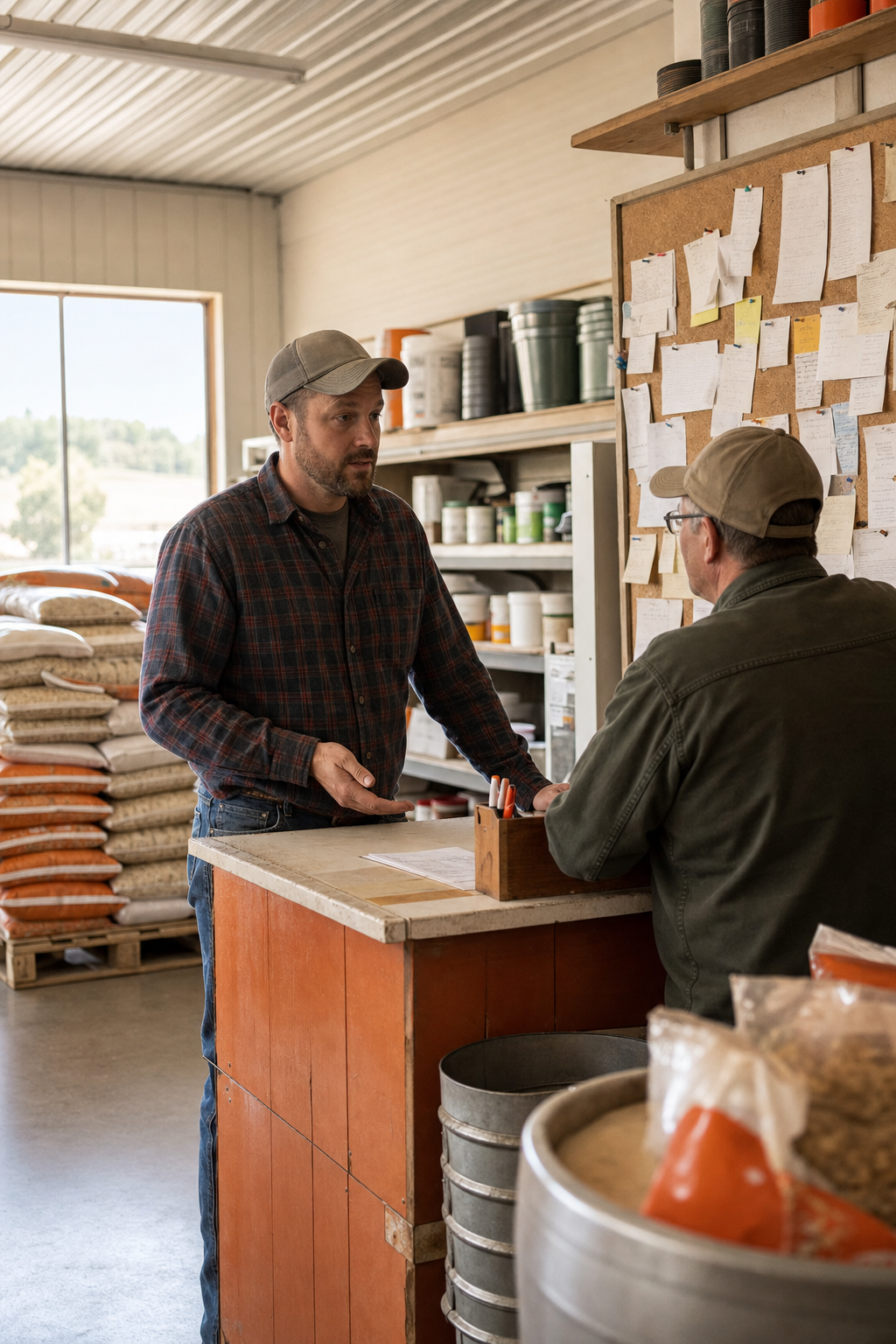
Call the extension office. Your county extension agent works with local producers all day. They keep informal lists of who processes what, and they’ll tell you straight if a plant has a bad reputation for missed dates or sloppy cuts.
The catch with most of these methods is that they’re scattered and unverified. A name from a Facebook thread might be a plant that closed last year. A directory might be a PDF nobody’s updated. You still have to call each one, confirm they’re open, confirm the inspection type, and confirm they have a date. That’s the three-week research project you already hate.
Use The Easy Homestead to find a verified processor by ZIP code
We built The Easy Homestead so you don’t have to run that three-week research project every time you need a processor. It’s a directory for the homesteading supply chain, like Yelp but for the people you actually call: meat processors, local butchers, farriers, hatcheries, large-animal vets. You search by ZIP code or county and get listings with real reviews, not a noisy Facebook thread.
Here’s why that matters for finding a processor. The pain isn’t just that plants are booked. It’s that the existing options are food-only directories with no services, no trades, and no reviews, so you can’t tell a reliable plant from one that misses dates. We list processors by inspection type, so you can filter for the USDA-inspected plant you need instead of calling six places to find out which one can give you a sellable legend.
Reviews come from working homesteaders, the people who’ve actually dropped an animal off and picked up the meat. That tells you what a state directory PDF never will: whether the cuts come back the way you asked, whether they honor hang time, and whether they call you back.
We’ll be honest about the gap. Coverage is strongest where homesteaders have added listings and reviews, and thinner in regions we’re still building out. If your county is sparse, the feed store and extension office are still worth a call. But the direction is clear: a searchable, trust-first list beats a Facebook thread every time, and it’s exactly the problem we set out to fix.
Find a verified meat processor near you on The Easy Homestead.
Mobile butchers and mobile units: when the processor comes to you
If you can’t haul, or the nearest plant is two hours away, a mobile butcher might be your answer. The processor comes to your farm. There are two very different versions of this, and the difference decides whether you can sell the meat.
Mobile slaughter units (USDA inspected). These are full kill-and-clean trailers with a USDA inspector on board for the whole day. The Niche Meat Processor Assistance Network’s description of a mobile slaughter unit walks through the Island Grown Farmers Cooperative trailer in Washington: a 24-foot rig with a processing room and a cooler, arriving with all its own wash water. The inspector checks every animal before and after slaughter, just like at a fixed plant. Because it’s USDA inspected, the meat gets a legend and can be sold.
The big advantage is the animal never leaves home. As the USDA inspector in that co-op put it, instead of hauling animals a couple hundred miles to the closest plant, the unit comes to them, which cuts stress on the animal. Less stress generally means better meat.
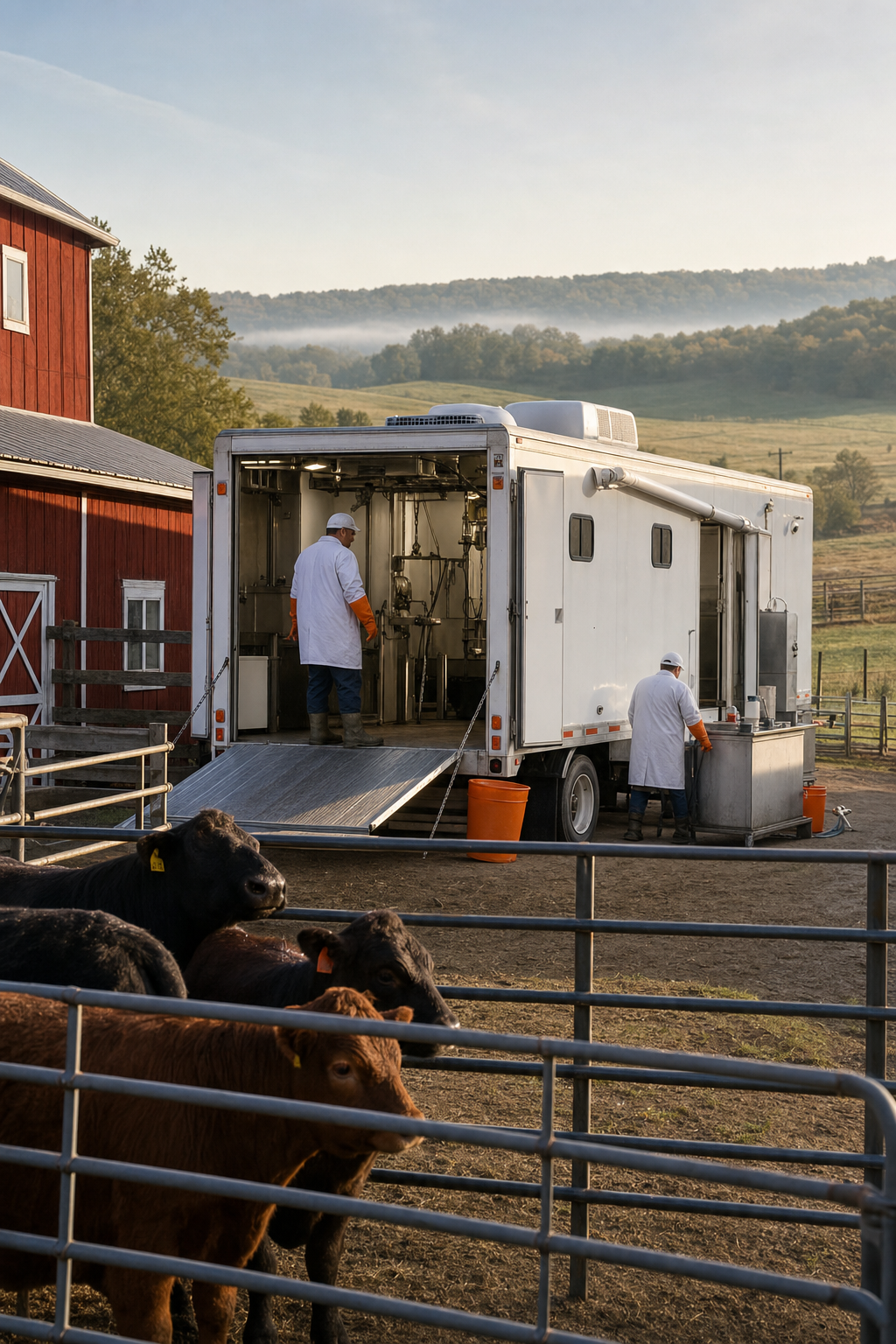
The catch: these units are rare. As of the latest count cited in the FoodPrint reporting, there were just nine USDA-inspected slaughterhouses on wheels in the entire country, so a true mobile USDA unit may not exist anywhere near you.
Custom mobile butchering (on-farm kill, Not for Sale). Far more common is the custom mobile butcher who kills on your farm, then hauls the carcass to a fixed shop for cutting. Byron Center Meats in Michigan runs this model: their producer information page notes that on-farm kill means no live trucking and less stress, but the meat is labeled “Not for Sale” and can’t be sold by the piece or donated. It’s for the buyer’s own freezer.
One thing to plan for either way. The farm site needs a clean spot for the animal to fall and bleed out, often a concrete pad. In the co-op example, the farmer poured his own pad for about $1,000. And these mobile slots fill the same way fixed plants do. Byron Center opens its next-year schedule months ahead and tells producers certain months fill fast, so book early and call more than one.
Pro Tip: If you want to sell cuts, confirm a mobile operator is a true USDA-inspected slaughter unit before you book. A custom on-farm kill gives you “Not for Sale” meat only, no matter how good the butcher is.
What to ask a processor before you book
When you finally get someone on the phone, the call is short and the date goes fast. Have your questions ready so you don’t lose the slot fumbling for answers. Here’s what actually matters.
Which inspection do you offer? Confirm USDA, state, or custom exempt before anything else. The Hampton Meat customer guidelines, a USDA plant in Southeast Tennessee, lay out three labeling paths: custom-exempt stickers with no USDA mark, the plant’s own USDA label, or your own branded USDA label. If you want your brand on the package, ask about lead time and setup fees, because you can’t drop off an animal and expect labels by cutting day.
What’s the lead time and the cancellation policy? Hampton schedules first come, first served and notes lead time varies a lot by season. They verify appointments about two weeks out and charge a fee for short-notice cancellations, $100 for beef, $50 for hogs, lambs, and goats. Knowing the cancellation window also tells you how cancellation slots open up, which is how you grab a date at a “full” plant.
When are cut sheets due, and what happens if I’m late? This is where people lose good meat. At Hampton, if cutting instructions don’t arrive within two days of drop-off, the animal is processed as “butcher’s choice.” Ask exactly when the cut sheet is due and how detailed it needs to be.
How long do you age beef, and what are the fees? Hampton dry-ages beef 7 to 14 days; pork doesn’t need aging and is usually cut within 5 to 7 days. Ask for the current fee schedule up front, including the disposal fee if the USDA condemns an animal, which can run $125 to $200.
One more thing worth checking on the front end. If you’ll be hauling carcasses or finished meat any distance to market, line up your logistics early. A reliable trailer and a plan for a roadside breakdown, like keeping a number for semi truck tire repair if you’re running a larger rig, keeps a cold load from turning into a loss.
Write the answers down and book the date. Then raise the animal to hit it.
Frequently asked questions
How far in advance do I need to book a meat processor?
Book a slaughter date 6 to 12 months ahead for the busy fall season, and confirm earlier if you want a specific plant. Good processors near you fill solidly for months, so the date controls your timeline. Reserve the appointment first, then raise the animal to be finished on that date rather than calling around once it’s ready.
What’s the difference between state inspected and USDA inspected meat?
Both follow the same safety and humane standards, but USDA-inspected meat can be sold and shipped across state lines, while state-inspected meat can only be sold within your state unless a Cooperative Interstate Sales agreement is in place. If you want to sell online or ship out of state, you need a USDA-inspected meat processor near you.
Can I sell meat processed at a custom-exempt plant?
No. Custom-exempt meat is stamped “Not for Sale” and is for the owner’s own use only. You can sell the live animal as halves or quarters before slaughter, and the buyer takes the meat home, but you cannot sell individual packaged cuts to the public from a custom-exempt animal.
What is a mobile butcher?
A mobile butcher comes to your farm to slaughter on site. A USDA-inspected mobile slaughter unit travels with a federal inspector, so the meat gets a legend and can be sold, but these units are rare. A custom mobile butcher kills on-farm and the meat is labeled “Not for Sale” for the owner’s freezer only.
How do I find a meat processor near me that’s actually open?
Start with a local butcher shop, your state ag department’s processing directory, the feed store, and your county extension office. To skip the phone-tag, search The Easy Homestead by ZIP code for verified processor listings with reviews from working homesteaders, filtered by the inspection type you need.
Conclusion
Your single best move is to book the slaughter date first and chase down at least one backup processor, because cancellations are how you get a slot at a “full” plant. Decide your inspection type now (custom exempt for your freezer, state or USDA if you’re selling), then search The Easy Homestead by your ZIP code to find a verified processor and read what other homesteaders said before you call.