A mobile farm vet can save a long haul when a goat has a hard birth or a cow goes down. But the first vet you find may not treat your species or travel to your farm. Use these steps to check coverage, credentials, cost terms, and emergency support before you need help.
Online listings can leave out service areas and pricing details. That gap is why a search for a mobile farm vet near me needs more than a map pin.
Step 1: Decide whether you need a farm call now
Before you search for a mobile farm vet near me, decide if the animal needs urgent care or a planned visit. A farm call makes sense when the animal cannot travel safely, when several animals need care, or when the problem needs an on-site exam.
Act fast for signs such as a difficult birth, a prolapse, sudden weakness, serious injury, severe lameness, or a newborn that is failing to nurse. These problems can worsen while you spend hours asking for recommendations in a local group.
Gather the facts before you contact a practice. Write down the species, age, sex, number of animals affected, main signs, time of onset, recent feed or pasture changes, and any treatment already given. Your county or nearest crossroads also matters because travel time can decide whether a farm call is possible.
In an urgent situation, an on-call veterinarian may triage the case first, give immediate instructions, and decide whether on-farm care or referral fits the situation. That is a useful model for your own first call. Ask what you should do while the vet travels, rather than guessing.
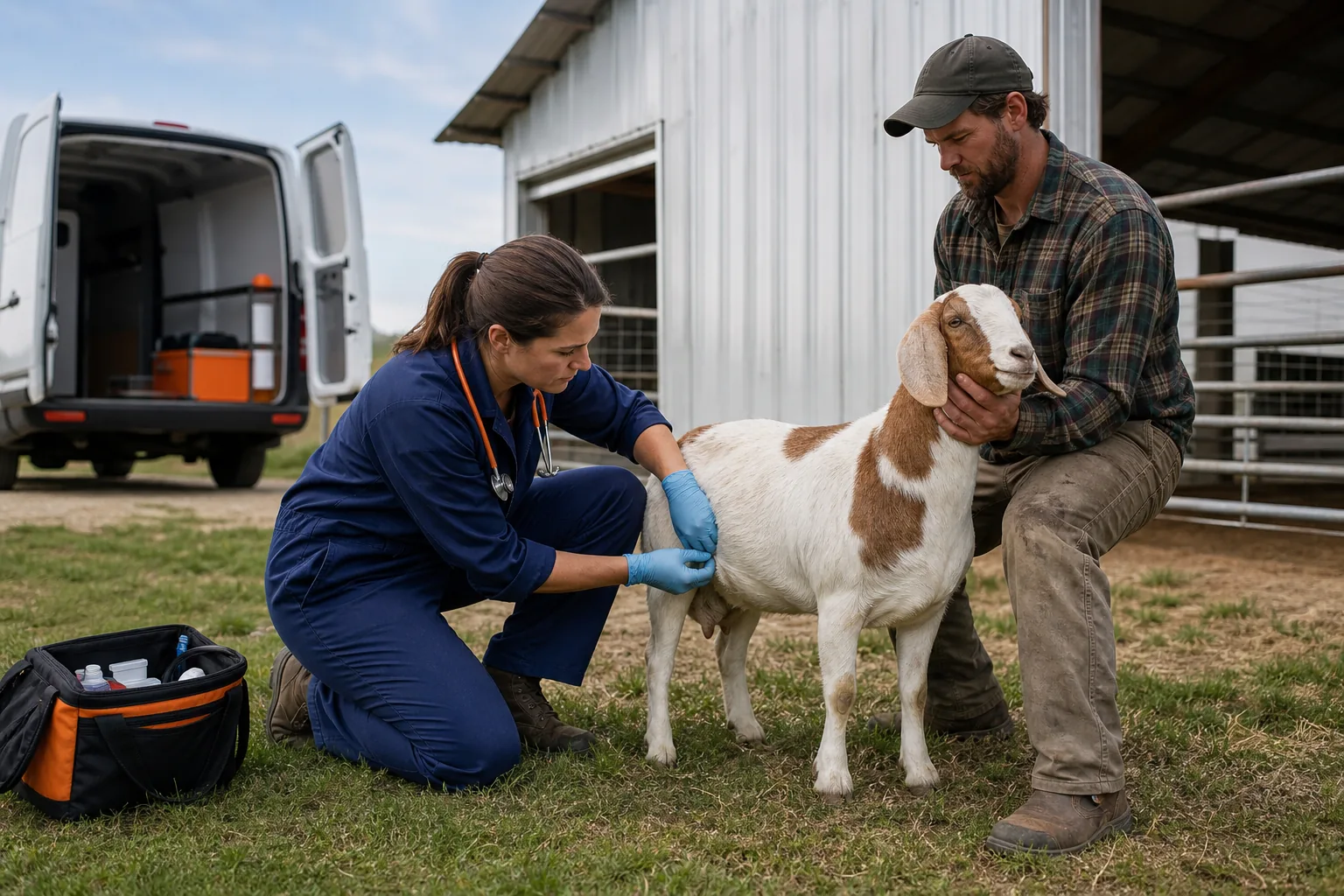
Do not move an injured animal into a trailer unless the vet tells you to do so. A mobile vet can assess the animal in its own pen, which also gives the vet clues about footing, feed, bedding, and the rest of the group.
For planned care, look at the next few weeks. A new herd, a breeding season, repeated illness, or a first kidding season all justify finding a regular provider before a crisis. Our article on finding a large-animal vet before an emergency covers the value of setting up that relationship early.
Milestone: By now, you should know whether you need emergency triage, a same-week visit, or a routine farm health plan.
Step 2: Search by species, location, and service area
A search for a mobile farm vet near me works best when you add the animal and your county. Search for terms such as goat veterinarian plus your county, cattle vet plus your ZIP code, or mobile large-animal veterinarian near your nearest town.
Start with a directory that lets you search by ZIP code or county. The Easy Homestead is built for that kind of local search. Its listings cover large-animal vets along with farriers, shearers, feed suppliers, hatcheries, and other farm services. That matters when your need is tied to a working property, not a city clinic.
Then check the service radius. A provider may be listed in your state but still decline a trip to your county. Some listings show a provider name but omit coverage area, specialty, or price information.
Two entries show how different the detail can be. Dr. Tyler Green Mobile Veterinary Service lists White County and surrounding areas. Hoof It Veterinary Clinic describes service in southern Middle Tennessee and names towns such as Franklin, Brentwood, Spring Hill, Columbia, Murfreesboro, Smyrna, Shelbyville, Pulaski, and Fayetteville.
That kind of geographic detail saves time. You can compare the listed area with your farm before you spend time explaining your operation. If a practice gives no service map, ask whether your property falls inside its normal route and whether an extra travel charge applies.
Search by species next. A goat and a beef cow are both livestock, but the vet’s day-to-day work may focus on only one group. AgCentral Co-op’s ambulatory veterinary service lists ruminants as its specialty. Hoof It lists horses, cattle, goats, sheep, llamas, alpacas, kangaroos, and pigs.
The wider list may suit a mixed homestead with goats, pigs, and cattle. A ruminant-focused practice may fit a property that only keeps cattle, sheep, or goats. Do not treat a long species list as proof that every service is available at your farm. Confirm the exact animal and problem.
Species and service type belong in the search. A practice may offer individual treatment without offering herd-level work. A vet who handles one sick goat may not run a full herd wellness visit.
Milestone: Keep a short list of providers that match your species and appear to travel to your county. If coverage is unclear, mark that listing as unconfirmed.
Step 3: Check credentials and the kind of animals the vet treats
When you find a mobile farm vet near me, check the credential record before you focus on reviews or price. You want proof that the person or practice is listed for large-animal work, plus a clear match for your animals. Our list of large-animal vets near you can help you compare providers before you call.
AgCentral Co-op is marked TR certified. There is no populated verification field for Dr. Tyler Green or Hoof It. That does not prove a provider lacks qualifications. It means you should ask how the practice handles verification and licensing.
Ask direct questions. Does the vet treat your species each month? Does the practice handle newborns, breeding work, herd health, or surgery? Can the vet manage the problem at your farm, or might you need a haul-in clinic?
Ask what the vet needs from you during restraint. A mobile visit can go poorly if the animal is loose in a muddy lot or if the chute is blocked by stored feed. Find out whether you need a working chute, stocks, a clean treatment space, or another person to help hold the animal.
Use the same questions for every provider. That gives you a fair comparison when one listing has a polished website and another relies on a state directory. The state data reviewed for this article had no user ratings for any of the four mobile providers, so ratings cannot fill the information gap.
Reviews still help when they contain detail. Look for comments about response time, farm handling, follow-up, and whether the vet worked with similar animals. A five-star score without those details tells you little about a difficult calving visit at your property.
Ask the practice how it shares records after a visit. You want the diagnosis, treatment instructions, withdrawal guidance when relevant, and follow-up plan in a form you can keep. If another vet covers after hours, ask whether that vet can see the same records.
Milestone: You should now have a species match, a credential question list, and a record of what each practice does not publish.
Step 4: Confirm the farm call details before you book
Before booking a mobile farm vet near me, confirm the visit terms in plain language. A nearby provider may still cost more or respond more slowly if your farm sits outside the normal route.
Ask for the farm call fee and how travel is counted. Ask whether the exam fee is separate. Then ask how the practice bills for multiple animals in one visit, diagnostic work, medicine, procedures, and after-hours care.
Do not copy a price from another state and use it as your budget. Farm call costs depend on local routes, distance, staff time, and the work required. In the Tennesed here, Hoof It is the only listed provider with a public pricing cue. It says price is available on request and depends on the service, number and type of animals, and location.
That wording is useful because it tells you what to include in your request. Give the provider your county, animal count, species, and reason for the visit. Ask for a written estimate when the case is planned. For emergencies, ask what charges apply before the veterinarian leaves if the situation allows.
Next, confirm availability. Does the practice take new farm clients? Does it have an after-hours vet? If the regular vet is away, who answers? Is the after-hours service handled by the same practice or by a referral partner?
Check emergency response, farm-animal experience, service range, and fee details before choosing a practice. Those questions belong in your first contact, not after an animal is in trouble.
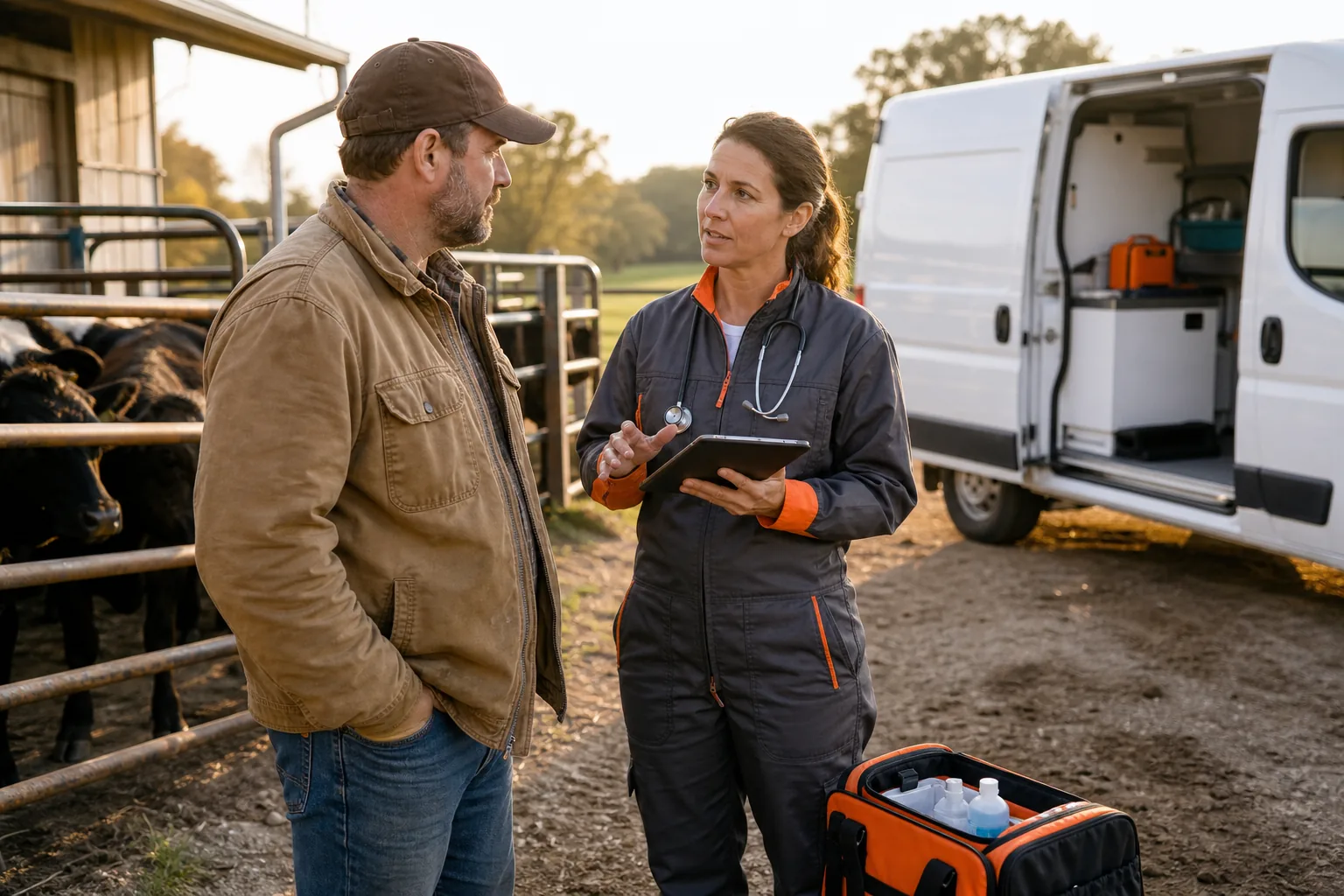
Give clear directions that work at night. Include the gate location, road conditions, livestock access point, and any locked barriers. Ask whether the vet needs someone to meet them at the road.
Also ask about care limits. Some mobile practices can perform procedures on the farm but do not provide overnight hospital care. If referral is possible, find out where the animal would go and how transport decisions are made.
Keep the answers in one farm record. A short note with coverage, fees, emergency terms, and species fit can save you a long search later.
Decision rule: If a practice will not explain its coverage or billing process, keep looking unless the situation is an emergency. In that case, share your location and animal details first, then ask about terms as soon as the animal is stable.
Step 5: Prepare your animals, records, and backup contact
The best mobile farm vet near me still needs a safe work area and good case notes. Preparation helps the vet make a sound decision when the visit window is short.
Set up the handling area before the appointment. Clear a path from the gate to the pen. Remove loose tools and wire. Make sure the chute, stocks, panels, or catch pen work as expected. Keep dogs away from the work zone unless the vet asks for them.
For a planned visit, group the animals that need care when it is safe. Mark each animal in a way you can explain quickly. A vet should not have to guess which doe had a poor appetite or which cow received a treatment last week.
Prepare the records the vet is likely to need:
- Animal identification and age.
- Breeding dates, due dates, or recent births.
- Vaccines and parasite control history.
- Recent feed, pasture, or housing changes.
- Symptoms, temperature readings, and treatment times.
- Prior lab results or discharge instructions.
Be precise about medicine. Write down the product name, amount given, route, and time. If you do not know one detail, say so. Guessing can lead to a wrong treatment decision.
Ask what you can watch for after the visit. Find out when to send an update and which signs mean the animal needs urgent reassessment. A written follow-up plan helps when another family member is checking the herd.
You also need a backup. Keep a second provider in your records, even if the first vet becomes your regular choice. Mobile practices can reach capacity, stop a route during bad weather, or lack the right equipment for a rare case.
The Easy Homestead helps fill the local network gap with searchable listings by county or ZIP code. We want the listing to answer the questions a state directory may leave open, such as species, service area, reviews, and farm-call terms. Coverage can vary by area, so check the listing details and confirm with the provider.
Store the practice name and after-hours instructions where everyone on the farm can find them. Do not wait until a birth goes wrong at midnight to search through old messages.
Milestone: You should have a safe access plan, current animal records, one primary provider, and one backup option.
Frequently asked questions about finding a mobile farm vet
What does a mobile farm vet do?
A mobile farm vet travels to your property to examine and treat livestock. Depending on the practice, that may include herd health, reproductive work, emergency care, diagnostics, or surgery. Ask about your species and needed service before booking. A vet who treats cattle may not handle pigs, camelids, or poultry.
How do I find a mobile farm vet near me?
Search by your county or ZIP code, then filter for mobile service and your animal species. Check the travel area before you share case details. The Easy Homestead lets working homesteaders search local service listings by location. You can also check your state agriculture department’s large-animal veterinarian list.
How much does a farm call cost?
Farm call cost depends on distance, service type, animal count, and whether the visit happens after hours. Many practices do not post rates. Ask if travel and examination fees are separate, then request an estimate for planned work. Give the practice your location and the number of animals so its answer fits your case.
Can a mobile vet treat goats and cattle on the same visit?
Yes, some mobile vets treat both goats and cattle, but you must confirm before booking. AgCentral Co-op lists ruminants, while Hoof It lists cattle and goats among several species. Tell the practice how many animals need care and what each one needs. The vet can then plan time, equipment, and restraint needs.
What should I ask a farm vet before an emergency?
Ask if the practice accepts new clients, covers your county, treats your species, and provides after-hours support. Confirm how it bills for travel and emergency care. Ask where the animal goes if farm treatment is not enough. Keep those answers with your livestock records so another person can act quickly.
Conclusion
Choose a farm vet by species fit and service area first, then confirm emergency coverage and billing terms. Search The Easy Homestead by county or ZIP code, compare the available listings, and contact your top choice before the next urgent case. Find who you need. Trust what you find.