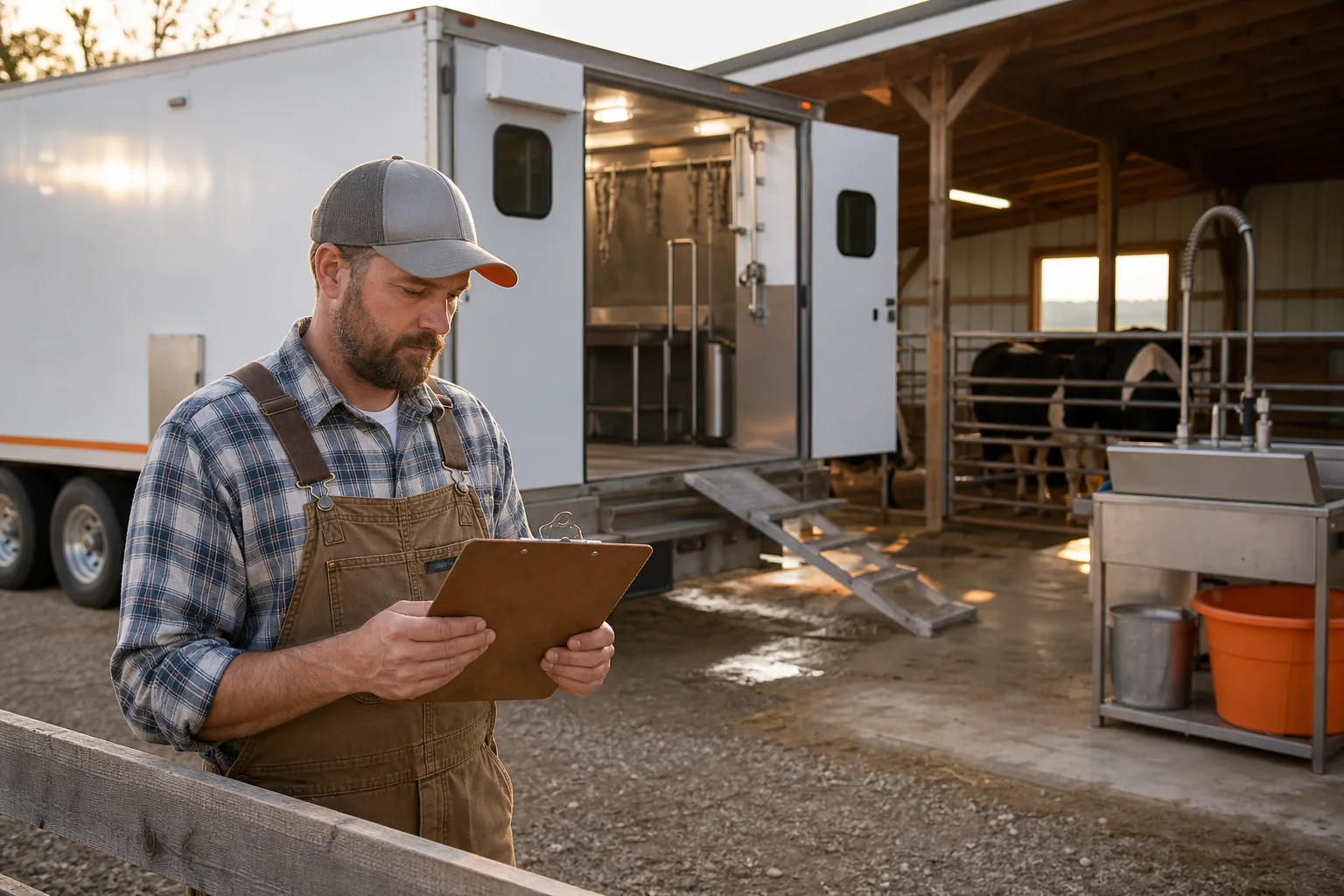
A low per-animal fee doesn’t tell you what mobile livestock processing will cost at your farm. Travel, slaughter, cutting, wrapping, inspection, and access can change the final bill.
Use the steps below to compare quotes line by line, then find local options through The Easy Homestead.
Step 1: Request quotes with the same line items
Mobile livestock processing rates are only comparable when every processor prices the same work. Send each provider the same request, with the same animal details and the same list of services.
Ask whether the quote covers slaughter at your farm. Then ask how the processor bills cutting, wrapping, disposal, inspection, and special products. A per-animal slaughter fee may be only the first line on the invoice.
Published prices show why this matters. CushmanMeats lists a $65 processing rate per hog. That figure gives you a starting point, but it doesn’t tell you whether travel or cutting is included.
Meatski’s Quality Meats lists a different animal and a different pricing basis. Its form shows $110 per goat head, including slaughter. You can’t compare that fee directly with the hog rate without matching species, work scope, and added charges.
Use this table when you send quote requests:
| Quote item | Question to ask | Why the answer changes your choice |
|---|---|---|
| Slaughter | Is slaughter done on the farm or at a plant? | On-farm work may reduce hauling, while plant work may fit a different inspection path. |
| Animal fee | Is the charge per head, by live weight, or by carcass? | The billing unit affects comparisons between animals and providers. |
| Cutting and wrapping | Is this included or billed separately? | A low slaughter fee can rise after fabrication and packing. |
| Travel | Is there a dispatch fee or mileage charge? | Distance may erase the savings from a lower base rate. |
| Disposal | Who handles hide, blood, offal, or other waste? | You may need a plan if disposal is separate. |
| Add-ons | What do sausage, bacon, smoking, or special cuts cost? | Extras can change your freezer plan and total bill. |
| Minimum charge | Is there a minimum per visit or per animal? | A one-hog appointment may price differently from a group booking. |
Don’t accept “starting at” as a final quote. Ask the processor to mark each row as included, excluded, or priced separately. If the answer is unknown, keep that quote open rather than treating it as the cheapest option.
Also ask how the processor measures weight. Hanging weight means the carcass weight after slaughter and dressing. If cutting is billed by hanging weight, the number may differ from the live weight you estimated at the farm.
Save every quote with the date, animal count, and expected appointment window. Rates can change, and a written quote gives you something clear to check before the crew arrives.
Step 2: Verify inspection status and local requirements
Inspection status determines how you can use the meat, so check it before you compare mobile livestock processing rates. Ask which agency inspects the slaughter and processing work, and ask where the inspection occurs.
Custom-exempt meat is generally for the exclusive use of the livestock owner. It isn’t the same as inspected meat prepared for retail sale. If you plan to sell cuts under your farm brand, you need a processor and inspection path that allow that use in your state.
For a clear example, meat-processing regulatory guidance is available here.
Don’t treat the word “licensed” as a full answer. Licensing and inspection are separate questions. Ask for the exact status that applies to your animal and intended use.
Some listings did not provide certification information in the material reviewed. That gap doesn’t prove a processor lacks approval, but it does mean you must ask.
- Is the slaughter custom exempt, state inspected, or USDA inspected?
- Does inspection cover slaughter, processing, or both?
- Can the finished meat be sold at a farm stand or market?
- What mark or label will appear on inspected product?
- Does your county require a permit, waste plan, or access condition?
Ask these questions before discussing cut preferences. A perfect cut sheet won’t fix an inspection mismatch.
Once you know the legal use of the meat, decide whether the inspection level fits your farm plan. If the answer is vague, pause the booking and check with your state agriculture agency.
Step 3: Calculate the total cost per animal and usable pound
Compare the full job cost, not the headline mobile processing fee. Your useful number is the amount paid for finished meat that reaches your freezer or approved sales channel.
Use this basic formula:
Total processing cost = base animal fee + travel + slaughter + cutting and wrapping + disposal + inspection + selected add-ons.
Then divide the total by the number of finished pounds you receive. If you don’t know the finished weight yet, keep the result as an estimate and label it clearly.
For example, imagine a quote with a per-hog fee plus a separate cutting charge. Add the travel and disposal costs before judging it against the $65 hog rate published by CushmanMeats. If the $65 covers only one stage, it isn’t an apples-to-apples comparison.
Do the same with goat work. The $110 per-head figure from Meatski’s Quality Meats includes slaughter, but you still need to ask about cutting, wrapping, travel, and extras before you compare it with another goat quote.
Separate fixed costs from variable costs:
- Fixed costs: dispatch, travel minimums, setup, or a visit fee.
- Per-animal costs: slaughter or a species fee.
- Weight-based costs: cutting, wrapping, smoking, or other work billed by weight.
- Choice-based costs: specialty sausage, cured meat, or extra packaging.
Fixed fees matter most when you process one animal. A larger group may spread a visit charge across several head, but confirm that the processor permits group appointments and uses the same access plan.
Count freezer space as part of the decision. A quote for vacuum-packed cuts may fit your storage plan differently from one built around bulk ground meat. Ask how packages are labeled and whether the processor uses your requested cut names.
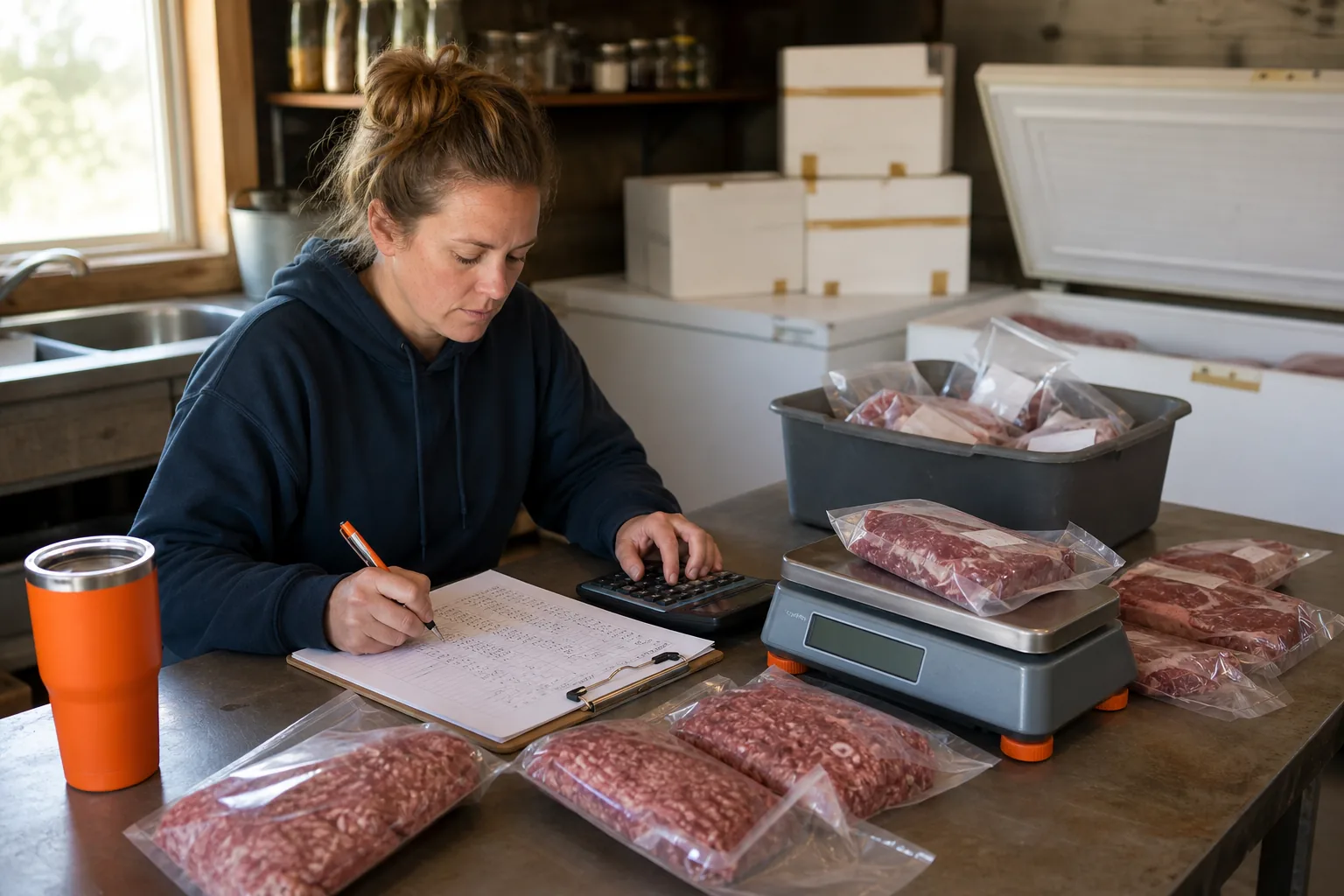
Track the estimate in a sheet with one row per animal. Record the quote, the final invoice, finished pounds, and any surprise charge. That record will improve your next booking because you’ll have your own farm data.
 Save
Step 4: Book the processor and confirm the appointment
Book only after the price, inspection path, access plan, and animal count are clear. Mobile livestock processing rates mean little if the processor can’t reach your farm on the scheduled day.
Send the processor your location and describe the last part of the drive. Mention narrow lanes, steep grades, soft ground, gates, low limbs, and the distance from parking to the working area. A crew may need room to position equipment and move animals safely.
Describe the animals honestly. Include species, head count, estimated size, temperament, and whether each animal is penned. Hard-to-access livestock can add labor time. One processor’s published service information, for example, warns that difficult access or unpenned animals may bring an hourly delay charge.
Confirm these details in writing:
- Appointment date and arrival window.
- Animals included in the booking.
- Exact work covered by the quoted fee.
- Inspection status and intended use.
- Who handles waste and disposal.
- Cutting instructions and packaging choices.
- Payment timing and cancellation terms.
Ask what happens if weather, equipment trouble, or an animal issue delays the visit. You need a reschedule rule before the animals are ready, not after the truck turns around.
Prepare the work area before the appointment. Clear the route. Secure dogs. Have clean water and power available if the processor requires them. Keep children and unrelated livestock away from the work zone.
Set aside time for the cut sheet. Mark the choices before processing day, then keep a copy for your records. If several people share the meat, agree on the split before the first package is wrapped.
When the crew arrives, walk the site with them. Confirm where animals will move and where waste will go. If the setup differs from what you described, stop and settle any new charge before work begins.
The Easy Homestead can help you keep this process local. Search listings by county, compare the details that are actually shown, and use your question list to fill the gaps. Our small-farm meat processing guide can also help you plan the inspection path, cut sheet, transport plan, and freezer space before you reserve a date.
Mobile processors often book well ahead. Start before the animals reach finished weight, especially if you need a specific season or inspection service. A confirmed date is part of the quote.
FAQ: mobile livestock processing rates
How much do mobile livestock processing rates cost?
Mobile livestock processing rates vary by species, service scope, weight, travel, and inspection needs. Published figures are starting points, not complete comparisons, because added services may be separate.
What should a mobile butcher include in a quote?
A quote should state the animal fee, slaughter work, travel, cutting, wrapping, disposal, inspection, and add-ons. It should also show any minimum charge. Ask whether the processor bills by head, live weight, carcass weight, or hanging weight. If a line is missing, ask before you compare the quote with another provider.
Are mobile meat processors USDA inspected?
Some mobile processors advertise USDA inspection, while others may work under a custom-exempt or state-inspected model. Ask which agency covers each stage and whether the finished meat can be sold. A license alone doesn’t answer the inspection question.
Do mobile processors charge for travel?
Travel charges depend on the provider and service area, so ask directly. Request the mileage rule, dispatch fee, or service boundary in writing. Give the processor your full location and access details because distance alone may not describe the labor required at the farm.
When should I book a mobile livestock processor?
Book before your animals are ready for slaughter because mobile schedules can fill well ahead. Give the processor your species, head count, estimated size, location, and target date. Confirm the appointment in writing, then ask about weather delays, rescheduling, access needs, and payment terms before processing day.
Conclusion
Choose the processor with the clearest full quote and inspection path, not the lowest number at the top of a price sheet. Start by searching The Easy Homestead by county, then send two or three providers the same line-item request and confirm every missing detail before you reserve the date.