Mobile meat processing rates can differ by more than $8 per pound, even when both processors carry USDA inspection. That gap usually reflects more than cutting work. Pickup rules, minimum charges, wait time, animal size, and your cut sheet can all change the final quote. Here’s how to read the numbers before you book.
How mobile meat processing rates are usually built
Most mobile meat processing rates start with a charge tied to weight. The processor may use live weight, hanging weight, carcass weight, or the finished amount of meat. Those terms aren’t interchangeable, so ask which weight drives the bill.
A quote based on hanging weight can look high or low until you know what happens before that weight is recorded. Slaughter, skinning, chilling, cutting, wrapping, freezing, and transport may sit inside one price. They may also appear as separate line items.
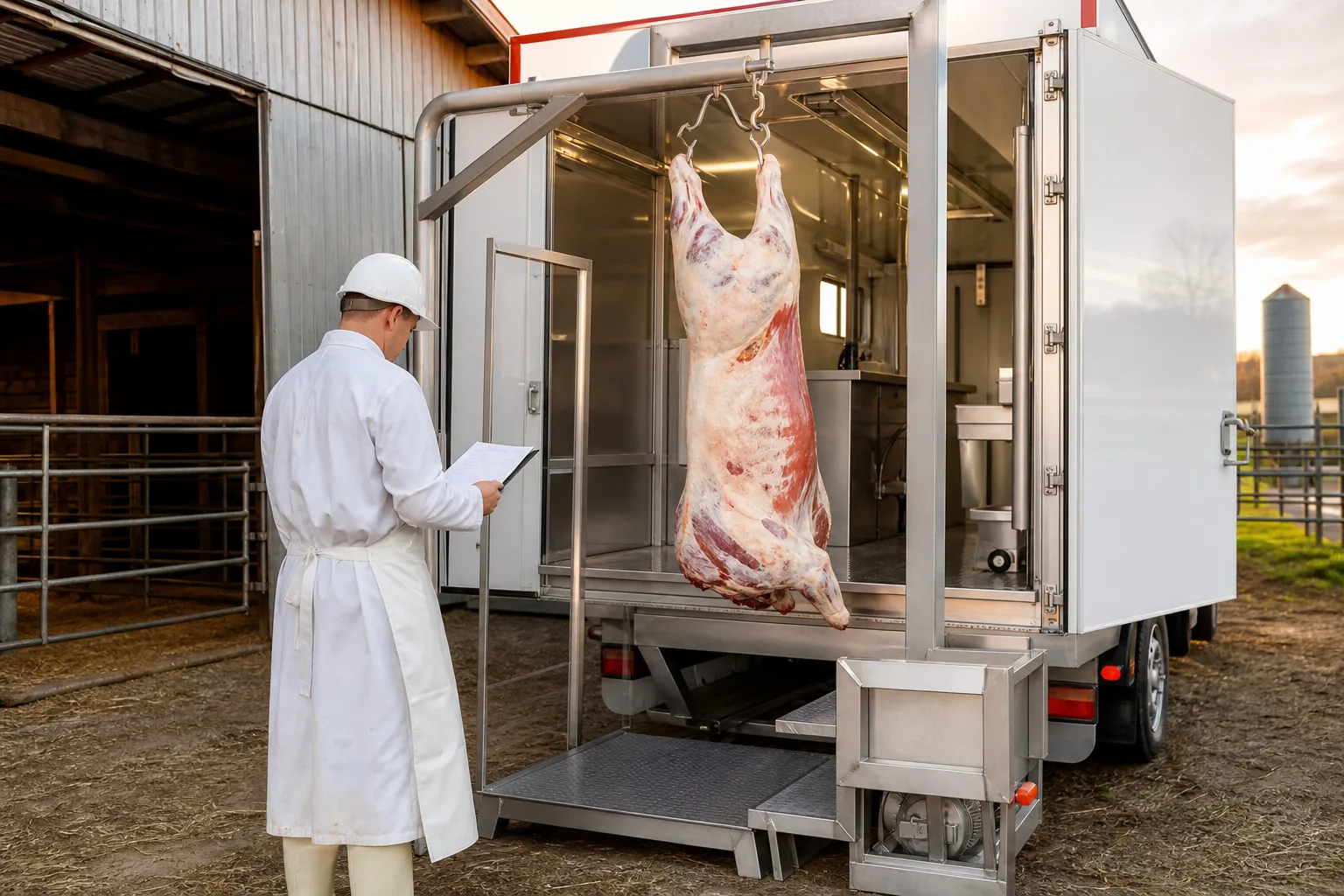
Mobile work adds another layer. The unit has to reach your farm, set up, keep the work area cold, handle waste, and leave the site clean. A processor may include that travel in the per-pound fee. Another may add a dispatch charge or set a service radius.
That’s why two quotes with the same animal can land far apart. One processor may handle the animal on your farm. Another may pick it up and finish the work at a fixed facility. The rate alone doesn’t tell you which service you’re buying.
Inspection status also affects the quote. A USDA-inspected processor works under federal inspection rules when the meat needs to enter interstate commerce or reach certain commercial buyers. A custom-exempt processor handles meat for the animal owner, and that meat must stay with the owner rather than enter normal sale channels.
Before comparing rates, write down these six details:
- Species and number of animals.
- Expected weight and how the processor measures it.
- On-farm slaughter, pickup, or delivery.
- USDA, state, or custom-exempt status.
- Preferred cuts and packaging.
- Target date and acceptable turnaround.
We recommend starting your search with a local listing that shows service area and inspection details. The Easy Homestead helps you search by ZIP code or county, which cuts down the usual feed-store-and-Facebook scavenger hunt. You can also compare the questions to ask in our mobile meat processor rates comparison.
Key Takeaway: Treat the per-pound number as one line in the quote, not the whole price.
Per-pound rates, minimum charges, and real pricing examples
Published mobile meat processing rates show why a direct comparison needs context. In the sources reviewed on September 04, 2026, Northeast Kingdom Processing, LLC lists $1.15 per pound with USDA inspection. Earth’s Echo Farm lists $9.99 per pound for half beef and $10.49 per pound for quarter beef, also with USDA inspection.
That creates an $8.84 gap between the lower published rate and Earth’s Echo Farm’s half-beef rate. The difference doesn’t prove one quote is better. It tells you to ask what each rate includes.
Earth’s Echo Farm also lists a $750 minimum for half beef and $500 for quarter beef. Its published service area is Fredericksburg, Virginia, with on-farm pickup only.
The published half and quarter beef figures provide a useful comparison point. The missing minimum from the other quote matters most when you have a smaller animal or a low-volume order.
| Quote detail | What it tells you | Question to ask |
|---|---|---|
| Per-pound rate | The starting price tied to a stated weight. | Is the rate based on live, hanging, carcass, or finished weight? |
| Minimum charge | The least you’ll pay, even if the animal weighs less than expected. | Does the minimum apply per animal, per share, or per visit? |
| Pickup rule | Shows who handles transport and where the work takes place. | Is the animal processed on-farm, picked up, or delivered by you? |
| Turnaround | Shows how long your freezer may wait for the finished order. | Is the stated time a minimum, an estimate, or a firm date? |
| Extras | Shows which cut or package choices raise the total. | What costs more for grinding, patties, smoking, or special wrapping? |
Fixed-site custom processors show how extras can change a bill. Some list separate charges for grinding, patties, vacuum-sealed ground beef, sausage work, smoking, and bacon slicing. Specialty items can also take longer. That’s useful context even when you’re comparing a mobile unit, because a low base rate may leave more work outside the headline price.
For example, some processors charge separately for beef grinding and add another charge for vacuum-sealed ground beef packages. Those figures belong to an individual processor’s price sheet, not to every mobile unit, so use them as examples of quote structure rather than a market average.
Before you compare totals, put each quote into the same shape. Ask for the base charge, every known extra, the weight method, and the pickup plan in writing. A $1.15 rate with an unknown minimum may not beat a higher rate with a clear total.
USDA inspection, state inspection, and what the rate covers
Inspection status changes what you can do with the meat, so it belongs near the top of your pricing questions. USDA inspection is generally tied to meat that may cross state lines or enter commercial sale. State inspection rules vary, but some state programs operate under standards considered equal to the federal program within that state.
Custom-exempt processing is different. The processor works for the animal owner, and the meat can’t be sold. Custom meat must return to the owner and carry a “NOT FOR SALE” label. That distinction matters if you plan to sell individual cuts, supply a restaurant, or split meat with buyers.
In the two published mobile examples reviewed here, both processors list USDA inspection. That gives you a useful point of consistency. You can focus the next questions on geography, timing, minimums, and the actual work inside the fee.
Ask what “processing” means before you assume it covers the finished freezer order. The quote may include slaughter and cutting but leave wrapping, freezing, transport, or specialty work outside the base rate. It may include standard paper wrap while charging more for vacuum bags.
Your sales plan should guide the inspection choice. If the meat stays with your household, custom exemption may fit the job. If you sell shares or cuts, ask the processor and your state agency which inspection path applies. Don’t rely on a listing label alone.
Pro Tip: Save a copy of the processor’s inspection statement and price sheet with your booking notes. You’ll have a clear record if the scope changes later.
Inspection answers the legal question. It doesn’t answer the service question. You still need to know who handles the animal, how long the order waits, and what comes back to your freezer.
How distance, scheduling, animal size, and cut instructions change the quote
Distance can change mobile meat processing rates before the first cut is made. A unit traveling across several counties spends more time on the road, uses more fuel, and may serve fewer animals during that day. Some processors build those costs into the rate. Others set a travel zone or charge per visit.
Earth’s Echo Farm gives a clear example of how geography can narrow a service. Its published information limits on-farm pickup to Fredericksburg, Virginia. If you’re outside that corridor, the rate isn’t useful until the processor confirms that your farm is within reach.
Scheduling has its own price. Northeast Kingdom Processing, LLC lists a minimum three-week turnaround. That may work when you’re planning freezer space well ahead. It creates a problem if your animal is ready now or if you need meat for a fixed event.
Ask whether the clock starts at pickup, slaughter, or delivery to the plant. Also ask what happens if weather, equipment trouble, or a full schedule pushes the date. A processor who gives a firm appointment may charge more than one who places you in the next open batch, but the difference is hard to judge without a date.
 Save
Animal size affects the work in several ways. A large beef animal takes more cooler space and creates more product to cut, wrap, label, and store. A smaller order may trigger a minimum charge instead of a clean per-pound total.
Species matters too. Beef, pork, lamb, goat, and poultry need different cut plans and handling. Don’t assume a beef rate transfers to hogs or goats. Ask for the rate sheet for your exact species.
Your cut instructions can move the quote in small steps or large ones. Standard steaks and roasts may fit the base service. Ground meat, patties, sausage, smoking, slicing, specialty items, and upgraded packaging may add work. A long cut sheet also creates more room for a missed detail.
Keep your instructions tight. Mark how much ground meat you want. State the package size. Say whether you want bone-in cuts. If you want sausage or cured meat, ask about added charges and extra wait time before the animal is booked.
Freezer space belongs in the quote conversation. Live weight can turn into a smaller finished amount, with the actual yield changing by breed, age, and condition. You shouldn’t use one yield figure as a promise for your animal. Ask the processor what weight they expect to return and plan space around that range.
When you compare local providers, record the answers in one sheet. The Easy Homestead is built for this part of the job. Search by county, check what each listing says, then contact only the processors who fit your species and service area. If you need more help finding nearby options, our guide to mobile meat processors near you covers the search side.
A good quote should leave you with four known points: the weight method, the minimum, the inspection type, and the promised timeline. If one is missing, the quote is not ready for a fair comparison.
FAQ about mobile meat processing rates
What are typical mobile meat processing rates?
There is no single typical rate because processors bill different work under different weight methods. The published examples reviewed here range from $1.15 per pound at Northeast Kingdom Processing, LLC to $9.99 per pound for half beef at Earth’s Echo Farm. Compare the full scope, minimum charge, pickup plan, and extras before judging the price.
Is USDA-inspected processing more expensive?
USDA inspection may affect a processor’s costs, but you can’t assume it always produces one fixed price. Both published providers in this review list USDA inspection while charging very different rates. Ask what the inspection status allows you to do with the meat, then compare the work included in each quote.
Does a per-pound rate include slaughter?
A per-pound rate may include slaughter, but you need the processor to confirm it. Some quotes combine slaughter, chilling, cutting, and wrapping. Others separate those tasks or add pickup and travel fees. Ask which weight is used and request a line-by-line estimate for your animal before you reserve a date.
What is a minimum processing charge?
A minimum processing charge is the least amount the processor will bill for a job. Earth’s Echo Farm lists a $750 minimum for half beef and $500 for quarter beef. A minimum can matter more than the per-pound rate when you have a small animal or a partial share, so ask whether it applies per animal or per visit.
How far ahead should I book a mobile processor?
Book as soon as you have a likely processing window, because available dates vary by area and season. Northeast Kingdom Processing, LLC publishes a minimum three-week turnaround. That is a processing timeline, not proof that a booking is available. Confirm the appointment date, pickup plan, and expected freezer-ready date.
Conclusion
Don’t choose a processor from the per-pound rate alone. Get a written quote that names the weight method, minimum charge, inspection status, pickup plan, extras, and turnaround. Then search The Easy Homestead by ZIP code or county to find a local processor whose terms fit your farm. Find a verified meat processor near you.