Finding a mobile meat processor that actually shows up at your farm, has the right inspection certification, and isn’t booked six months out is harder than it sounds. Here are six solid options, from a directory built for homesteaders to named regional processors with USDA credentials, and what each one is actually good for.
1. The Easy Homestead , best for finding verified mobile processors near you by ZIP or county
If you’ve spent three weeks crawling Facebook groups trying to find “our processing guy” and still came up empty, this is the gap The Easy Homestead’s meat processor directory was built to close. It’s a searchable listing platform for working homesteaders, organized by ZIP code and county, with verified listings and real reviews.
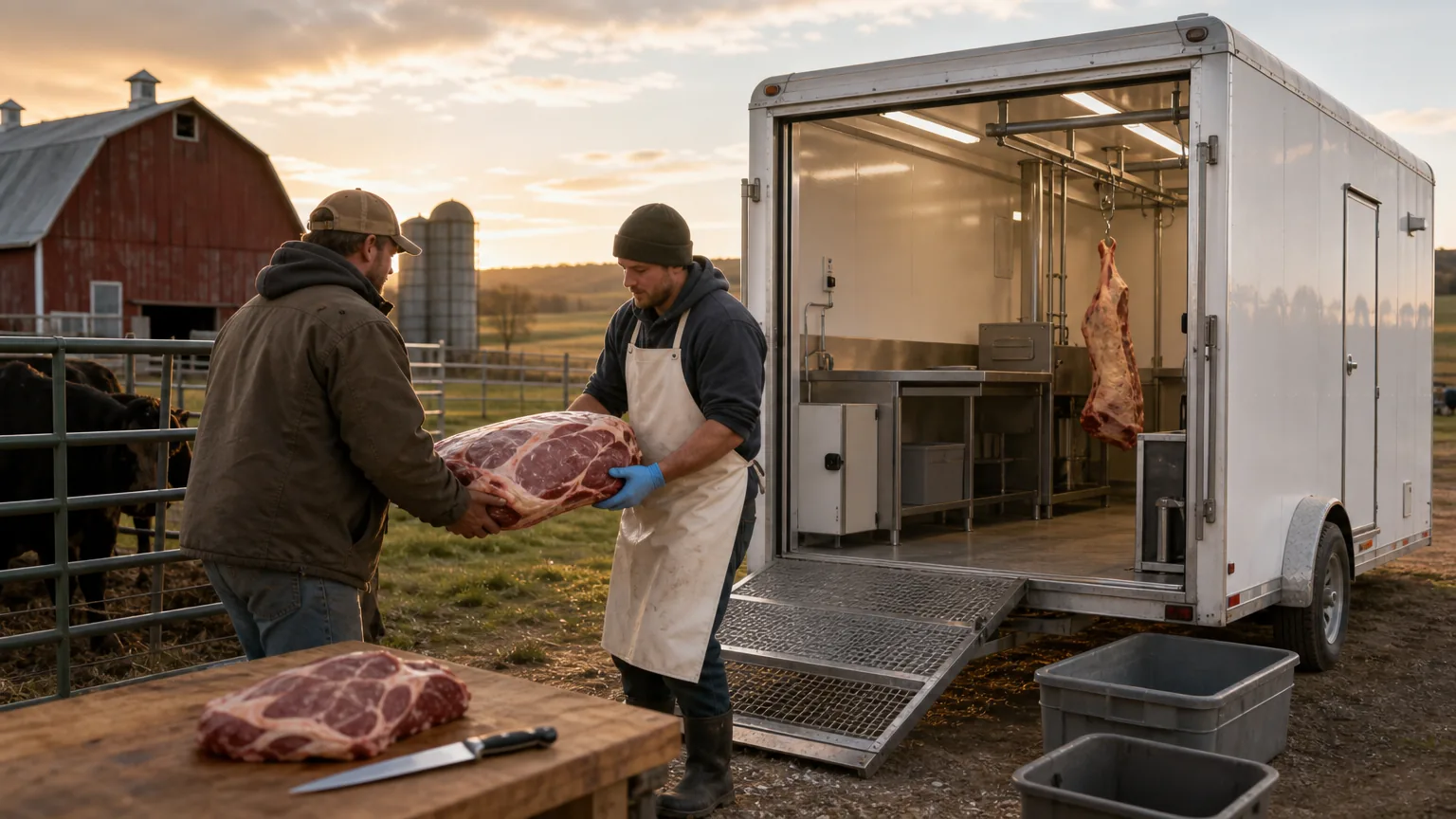
Most national food directories like LocalHarvest or EatWild focus on farm-to-consumer sales. They don’t cover mobile butchers, farriers, or the mobile slaughter units that small producers actually need. The Easy Homestead does. The directory covers meat processors and local butchers as its top launch category because that’s the single hardest thing to find in the homesteading supply chain.
Search by county, s from other producers, and contact the processor directly without playing telephone through a Facebook thread. Listings are free, and enhanced placement is available for processors who want more visibility.
If you run a mobile processing unit and you’re invisible outside your word-of-mouth network, you can list your business on The Easy Homestead and start showing up when producers search your county.
The honest caveat: coverage varies by region right now. Dense agricultural areas tend to have more listings than remote counties. If your area is thin, it’s worth checking back as the directory grows, and it’s worth listing your local processor if you know one who isn’t on there yet.
Key Takeaway: The Easy Homestead is the only homesteading-specific directory that combines proximity search, verified listings, and real producer reviews for mobile meat processors.
2. Island Grown Farmers Cooperative , best for small farms in San Juan County, WA needing USDA-inspected on-site slaughter
The Island Grown Farmers Cooperative (IGFC) runs what was the first USDA-inspected mobile slaughter facility for red meat in the United States. That’s not a marketing claim; it’s a documented first in mobile processing history, and it sets the standard for what USDA compliance on wheels actually looks like.
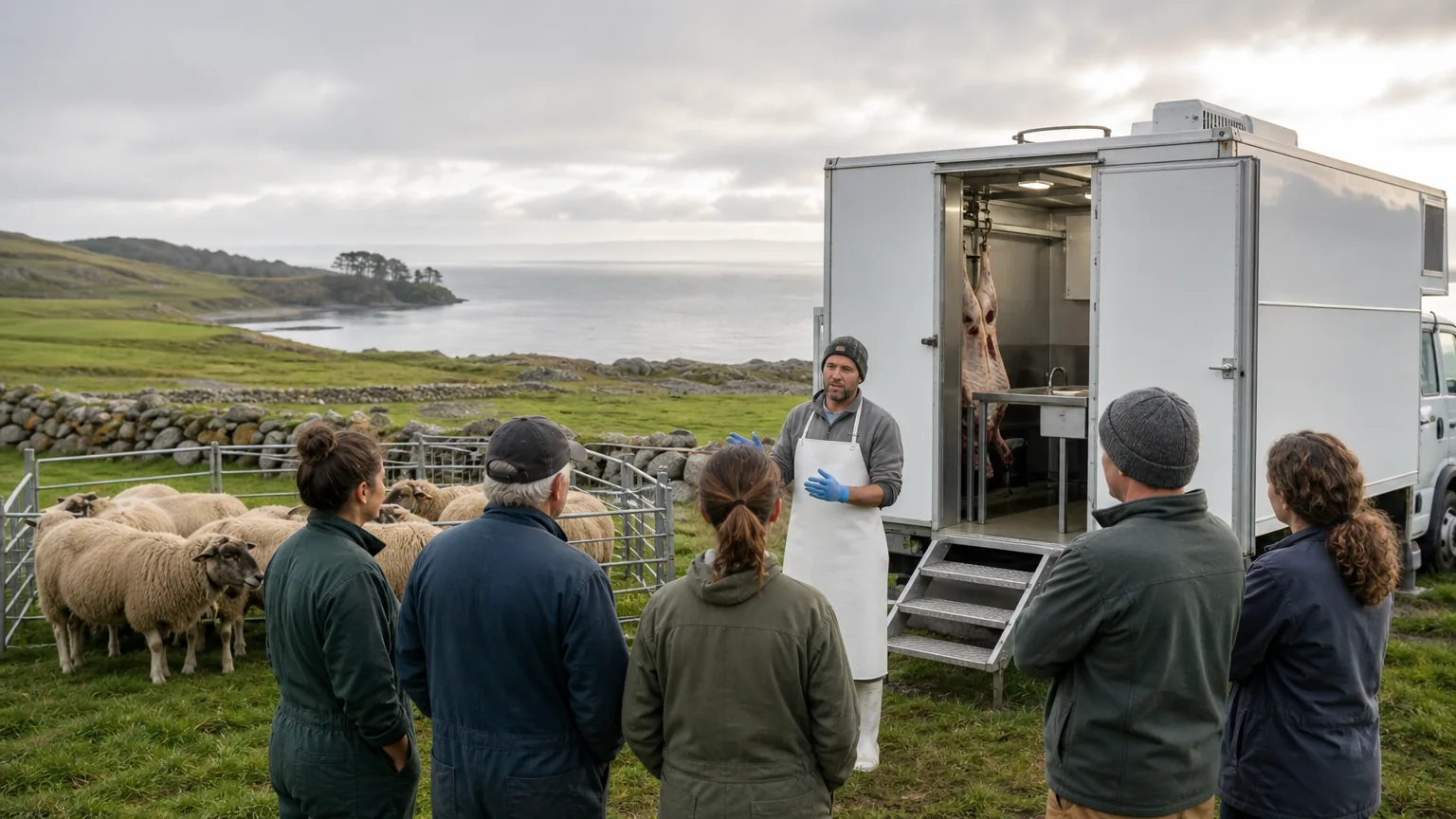
The IGFC mobile processing unit handles cattle and red meat animals, operating as a cooperative serving member farms across the region. Further processing happens at a permanent USDA-inspected plant in Bow, WA. Throughput figures are available on request directly from the cooperative. That’s real capacity for a cooperative serving island farms.
Service covers San Juan County, including the San Juan Islands, Orcas Island, and Lopez Island, and extends into Skagit County. The cooperative model means member farms get priority access. If you’re a small cattle or sheep producer in that region, this is one of the few options that brings USDA inspection directly to your pasture without trailering animals to a fixed facility miles away.
The limitation is geography. If you’re not in San Juan County or a neighboring area, this processor won’t come to you. And since it’s a cooperative, membership terms and scheduling logistics are worth understanding before you count on a slot.
3. Vermont Mobile Poultry Processing Unit , best for pastured poultry producers needing high-volume on-farm processing
Vermont’s state-supported mobile poultry processing unit is one of the few in the country that publishes its actual throughput numbers: 250 to 300 birds per day. That figure matters because most mobile processors, especially beef and pork units, give you nothing to plan against. The Vermont unit is the exception.
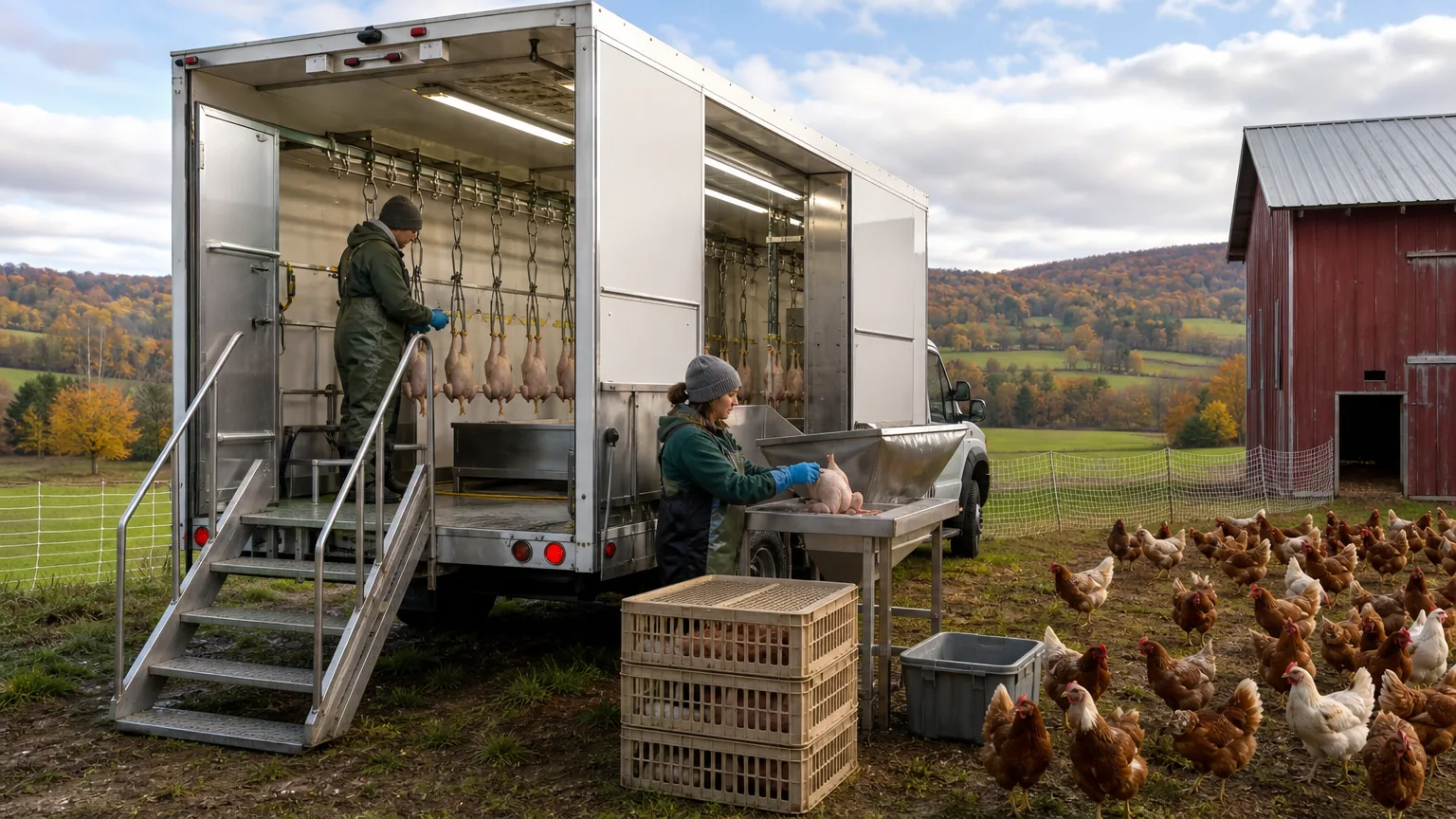
The unit was originally built as a prototype by the state of Vermont and later operated by experienced slaughterhouse professionals. It runs under state inspection and was designed so pastured poultry producers can process on their own farms, keeping birds calm and reducing the transport stress that affects meat quality. For anyone raising broilers or meat birds at scale, that on-farm processing advantage is real.
Service is limited to Vermont. If you’re outside the state, this specific unit won’t help you, but it’s a strong model for what a well-run state-inspected poultry MPU looks like. If you’re in Vermont and processing significant bird volume annually, this is the clearest capacity benchmark available. For producers elsewhere looking for poultry-specific mobile options, our poultry processing resource guide covers what to look for in your state.
One real limitation: state-inspected poultry processing means the meat can be sold within state but may have restrictions on interstate commerce. If you’re selling across state lines, USDA inspection changes the picture.
Pro Tip: When vetting any mobile poultry processor, ask for their birds-per-day capacity before booking. A unit rated for 150 birds per day will bottleneck a 400-bird flock, and you’ll lose half a working day waiting.
4. Central Arkansas Mobile Processing , best for beef and pork producers in Arkansas with USDA grant of inspection
Central Arkansas Mobile Processing built its operation around one core idea: bring the harvest to the farm so the animal is born, raised, and processed without ever leaving the property. The stress-free harvest argument isn’t just animal welfare talk. Lower cortisol at time of slaughter produces measurably better meat quality, and producers who’ve tracked this notice the difference.
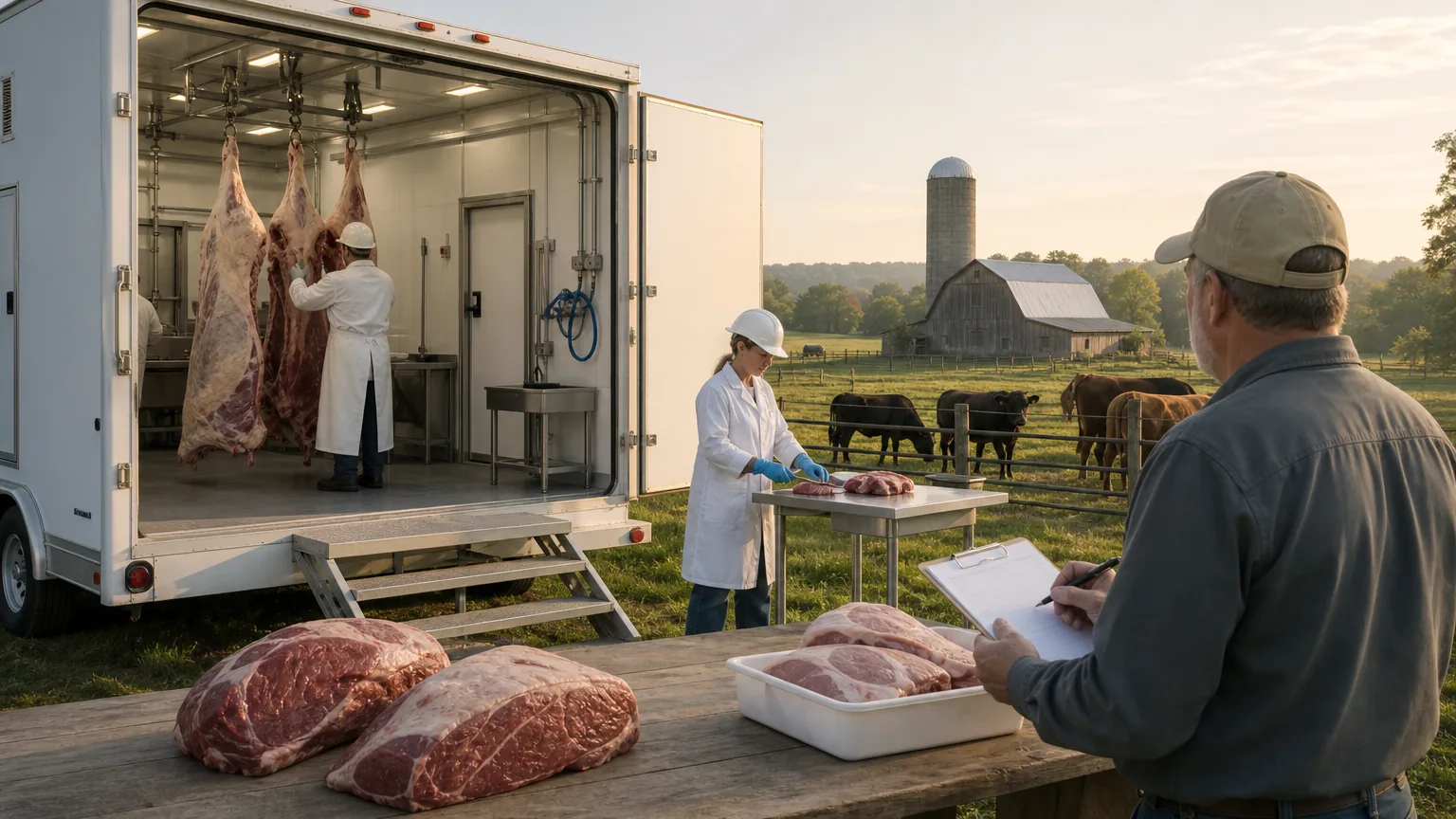
The unit has a USDA grant of inspection, making it one of a small number of mobile processors that carry federal-level certification for red meat. It can handle up to 15 head of beef per day, or roughly 25 to 30 hogs, with the cooler space being the usable limit on throughput. Service covers the entire state of Arkansas, and the team can reach any location within two and a half to three hours, process a full day’s harvest, and return the carcasses to their static facility by evening.
The workflow is worth understanding: the mobile unit handles slaughter and initial cool-down on site, then transports half-carcasses to a cut-and-wrap facility. That two-stage model keeps the mobile unit efficient and means producers get USDA-certified harvest without building their own facility. Pricing is available on request.
If you’re a beef or pork producer in Arkansas who’s been relying on a fixed processor that’s booked months out, this is worth a direct inquiry. The statewide reach is a genuine differentiator for producers in rural counties far from any fixed plant.
5. Local state-inspected mobile butchers , best when USDA certification isn’t required and you want lower-cost on-farm harvest
Not every producer needs USDA inspection. If you’re selling meat locally, at farmers markets, or through direct-to-consumer channels that fall under your state’s rules, a state-inspected mobile butcher can do the job at lower overhead than a USDA-certified operation. State inspection means the processor operates under your state’s department of agriculture oversight, and the meat can typically be sold within that state.
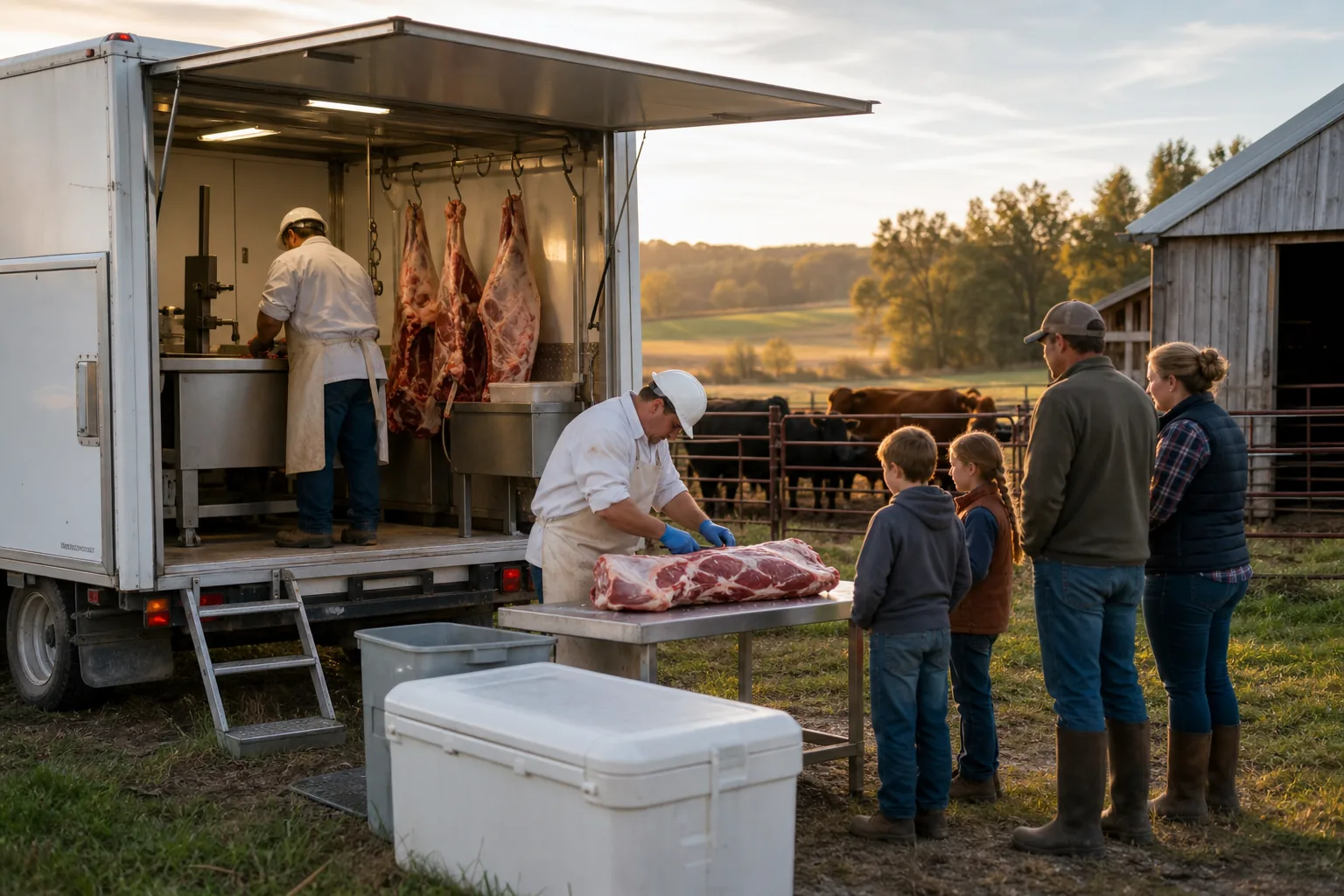
These operations vary widely in equipment and capacity. Some run purpose-built trailers with scalding tanks, skinning cradles, and refrigeration. Others are simpler setups suited to smaller farms. The advantage is flexibility. A state-inspected butcher working your county may have more scheduling availability than a USDA unit with a waitlist, and rates are often negotiated directly without the overhead of a cooperative or federal facility.
The trade-off is interstate commerce. Meat processed under state inspection generally can’t cross state lines for resale. If your business depends on selling to customers in another state or to retailers with USDA requirements, state inspection won’t cover you.
Finding these processors is the hard part. They often have no website, no social media presence, and operate entirely by word of mouth. The feed store is still the best local intelligence network, but The Easy Homestead directory is building out exactly this category of verified local service providers so producers don’t have to start from scratch every time.
6. Custom-exempt mobile processors , best for producers processing animals for personal or household use only
Custom-exempt processing sits outside both USDA and state inspection frameworks. Custom-exempt operations are legal when the meat is processed exclusively for the owner’s personal use, not for sale. If you raise two pigs a year and want them butchered and put in your own freezer, a custom-exempt mobile processor is the most accessible option.
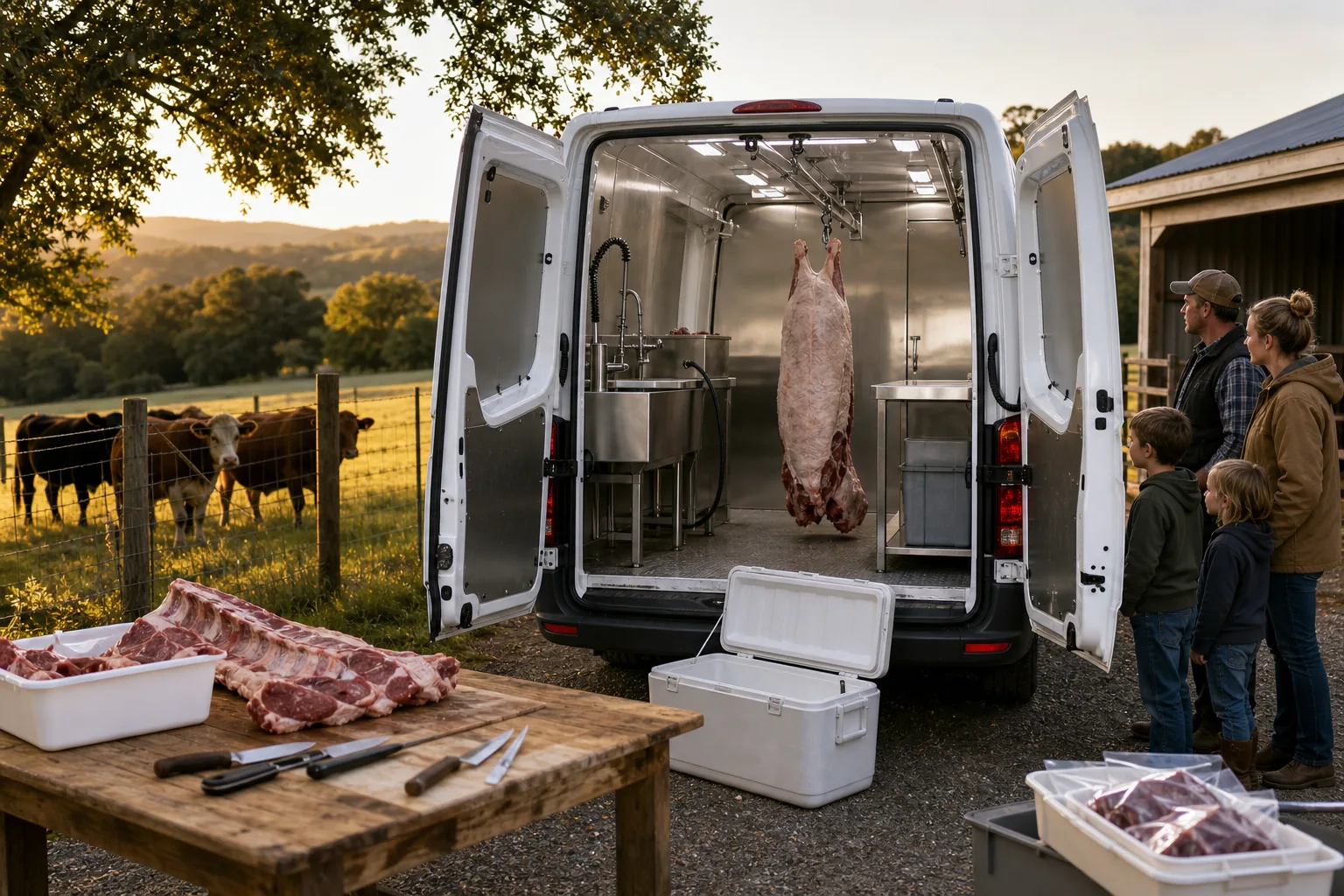
These processors often have the lowest overhead and the most flexible scheduling because they aren’t subject to the same inspection requirements. The animal must be yours, the meat must stay with you, and no sale can occur. That’s the line. Cross it and you’re operating outside the law, which puts both you and the processor at risk.
For a homestead like Rachel’s, where a couple of pigs get processed annually for family use, this tier is genuinely usable. A mobile custom-exempt butcher comes to your property, does the kill and basic processing, and you take everything home. You avoid the stress of transporting live animals, you’re present for the harvest, and you maintain control of how the animal is handled start to finish.
The gap here is the same as with state-inspected operations: these processors are hard to find through normal channels. If you know one, treat that relationship carefully. If you’re looking for one, the directory at The Easy Homestead is the place to start, because this category of provider exists nowhere else in a searchable, verified format.
What to look for when booking a mobile meat processor
Before you book, get clear on your inspection requirements. If you plan to sell, know whether your state allows direct sales under state inspection or whether you need USDA. If the meat is personal use only, custom-exempt works. The wrong certification tier can void your ability to sell legally.
| Factor | What to ask | Why it matters |
|---|---|---|
| Inspection level | USDA, state-inspected, or custom-exempt? | Determines where and to whom you can sell |
| Daily capacity | How many head per day for your species? | Affects scheduling and turnaround time |
| Species handled | Beef, pork, poultry, sheep, goats? | Not all units handle all species |
| Refrigeration on-site | Does the trailer have a built-in cool-down room? | Carcass quality depends on fast chilling after harvest |
| Cut and wrap | Does the processor cut, wrap, and label, or deliver halves only? | Halves need a second facility; full-service costs more but saves logistics |
| Lead time | How far out are they booking right now? | Good processors book weeks to months ahead; ask early |
| Power source | Generator, grid hookup, or diesel? Do they need shore power from you? | If you have no 200-amp hookup, a grid-dependent unit won’t work on your property |
| Sanitation standards | How is the unit cleaned between farms? | Cross-contamination between farms is a real biosecurity risk |
On power: modern mobile units either carry a diesel generator capable of running refrigeration, saws, and water heating simultaneously, or they connect to a transfer switch if shore power is available. A fully self-contained unit works on any property regardless of electrical infrastructure. Ask this question before booking.
On throughput transparency: the Vermont poultry unit is unusual in publishing a clear birds-per-day figure. Most beef and pork mobile processors don’t disclose capacity numbers upfront. Push for specifics. “We can handle your animals” is not a scheduling plan.
If you want a broader look at how fixed and mobile processing options compare, the guide to finding a meat processor near you covers the full landscape including state vs. USDA inspection in detail.
FAQ
What does a mobile meat processor actually do on your farm?
A mobile meat processor brings a self-contained slaughter and processing trailer to your property. They handle the kill, skinning, evisceration, and initial cool-down on site. Depending on the unit, they may also cut, wrap, and label the meat, or deliver half-carcasses to a cut-and-wrap facility. The animal never leaves your farm alive, which reduces transport stress and keeps you in control of the process.
Do mobile meat processors need to be USDA inspected?
Not always. USDA inspection is required if you want to sell meat across state lines or to retailers that require federal certification. For in-state direct sales, state inspection may be enough. For personal use only, custom-exempt processing is legal and requires no inspection. The inspection level you need depends on what you plan to do with the meat, not on the fact that processing is mobile.
How far in advance do I need to book a mobile butcher?
It varies by region and season, but good mobile processors often book out four to eight weeks, sometimes longer in fall when demand spikes. Processors serving broad geographic areas may have more availability than hyper-local operators. Contact processors in early summer if you’re planning a fall harvest. The earlier you ask, the better your odds of landing a date that works for your animals’ finishing schedule.
Can a mobile meat processor handle poultry and red meat?
Most mobile units specialize in one or the other. Red meat units (beef, pork, lamb) have different equipment requirements than poultry units, which need scalding tanks and plucking drums. Some larger setups handle multiple species, but most small operators pick one category. Always confirm the species a processor handles before booking, especially for goats or sheep, which some red meat units decline.
How much does a mobile meat processor cost?
Pricing varies widely and most processors don’t publish rates publicly. Custom-exempt operations tend to cost the least. State-inspected units charge more for overhead and compliance. USDA-inspected mobile processors carry the highest operational costs and typically price per head, per species, or by hanging weight. Request a quote directly from each processor you contact. Rates available on request is the standard in this industry.
Where is the best place to find a mobile meat processor near me?
The Easy Homestead directory is the most direct starting point for finding a verified mobile processor searchable by ZIP code or county. Beyond that, your local feed store, county extension office, and state department of agriculture may have processor lists. Some states publish USDA-inspected facility directories through FSIS. Facebook groups can surface names, but they don’t offer verification or reviews the way a structured directory does.
Conclusion
The right mobile meat processor depends on your species, your inspection needs, and your geography. For most homesteaders, the first step is finding out who actually operates in your county, and that’s exactly what The Easy Homestead directory is for. Search by your ZIP or county, check reviews from other producers, and contact the processor directly before you commit to a harvest date.