Finding a mobile meat processor is hard enough. Getting a straight answer on what they charge is even harder. Rates range from $1.15 to $3.50 per pound just among the few operators who post pricing publicly, and the highest price does not mean the tightest inspection. Here are the best options we found, what they actually cost, and where The Easy Homestead fits in.
1. The Easy Homestead , Find verified mobile processors near you by ZIP or county
The Easy Homestead is a local directory built for working homesteaders. Think of it as a Yelp for the homesteading supply chain: verified listings, real reviews, and search by ZIP code or county. The meat processor and local butcher category is one of the core launch categories, which means it gets real attention, not an afterthought tab.
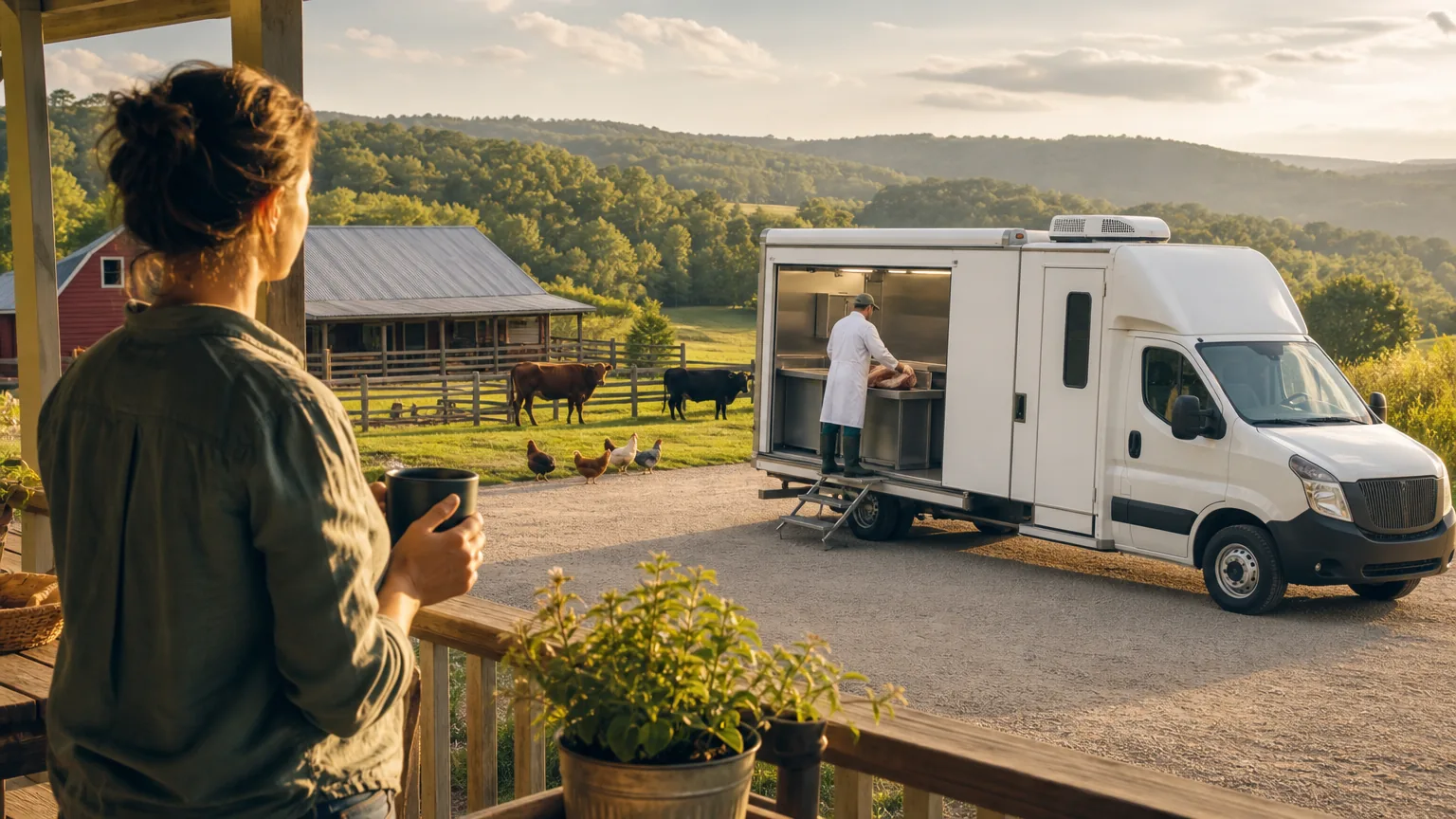
For anyone trying to find a mobile processor, the problem is rarely price. It is availability and trust. You can find a per-pound rate on a flyer at the feed store, but you have no idea if the operator is USDA-inspected, how far they travel, or whether they show up. The Easy Homestead solves that by letting you search listings that include inspection status, service area, and reviews from other producers in your county.
Directories like LocalHarvest and EatWild cover food products but skip mobile services and trades entirely. The Easy Homestead covers the full supply chain: processors, farriers, large-animal vets, hatcheries, and more. If you need to find a meat processor near you, this is the fastest way to see who actually operates in your area without a three-week Facebook thread.
The honest caveat: coverage varies by region right now. If you’re in a rural county that’s light on listings, it’s worth checking back in a few weeks as new processors are added regularly.
Key Takeaway: The Easy Homestead is the only proximity-searchable directory that covers mobile meat processors alongside the rest of the homestead supply chain, with verified listings and real reviews.
2. Camphill Village Minnesota , State-inspected mobile processing at $3.50/lb
Camphill Village Minnesota is the only processor in this comparison that publicly posts a per-pound rate: $3.50 per pound. That is the highest price in our dataset, and it comes with a catch worth knowing.
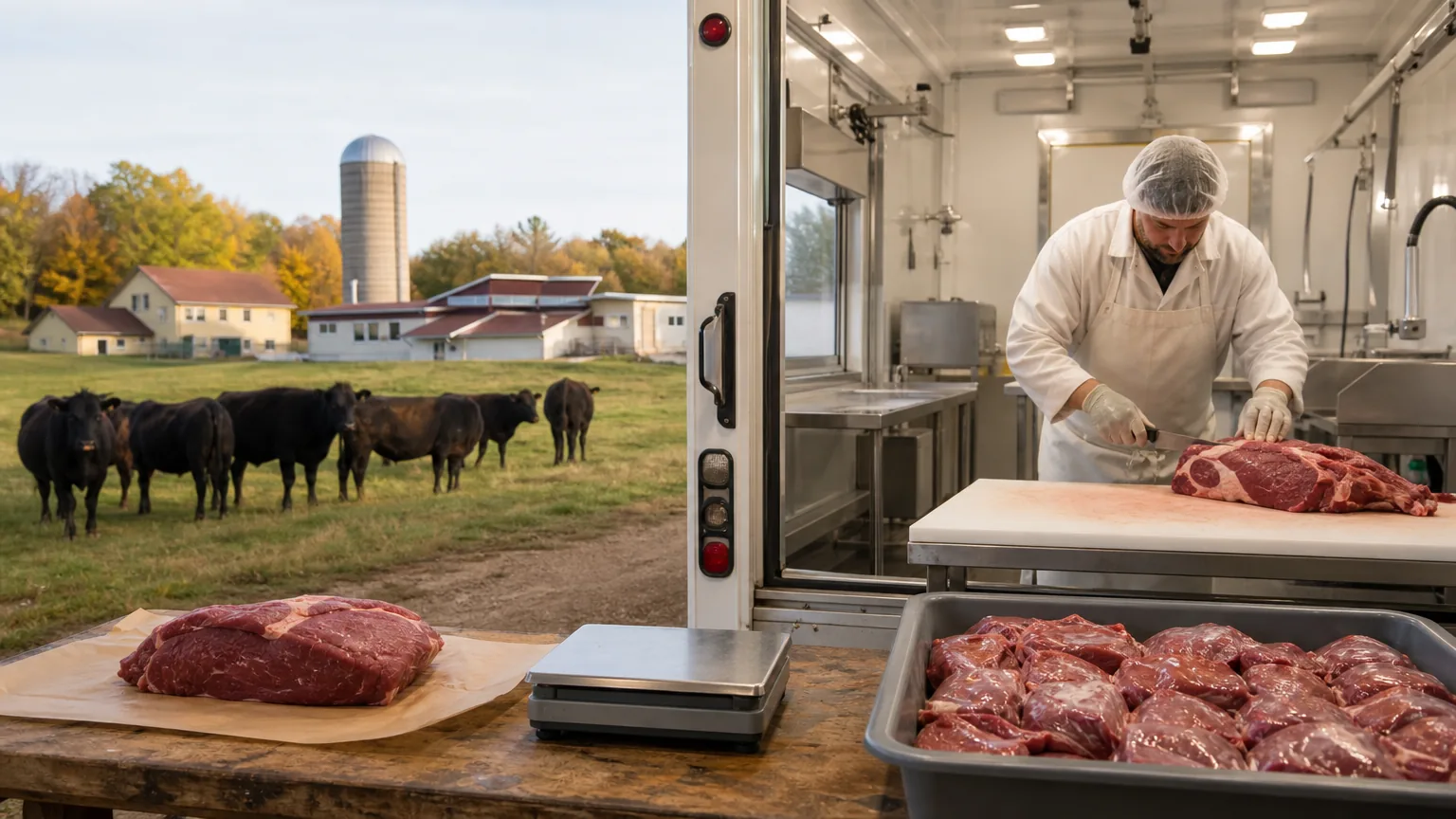
Camphill uses state inspection, not USDA inspection. That matters if you plan to sell meat across state lines or to any retailer that requires federal oversight. For personal use or in-state direct sales where your state allows it, state inspection is often perfectly acceptable. But you should not assume a higher rate equals a higher inspection tier. Here it does the opposite.
The state-inspected label means a state inspector, rather than a federal official, reviews the slaughter and processing. State programs are required to operate under standards at least equal to federal requirements, so the safety floor is similar. The usable difference is in where you can legally sell the finished product.
If you are processing beef for your own household or selling locally in Minnesota, Camphill’s setup works. If you need federally inspected product to access wider markets, you will need to look elsewhere. At $3.50 per pound, this is also not a budget option, so confirm exactly what the rate covers before booking.
3. BCM Custom Mobile Butchering , USDA-inspected on-farm processing
BCM Custom Mobile Butchering is listed under Byron Center Meats and offers on-farm processing with USDA inspection. That is the federal standard, which means the finished product can legally move across state lines and into retail channels if you need that flexibility.
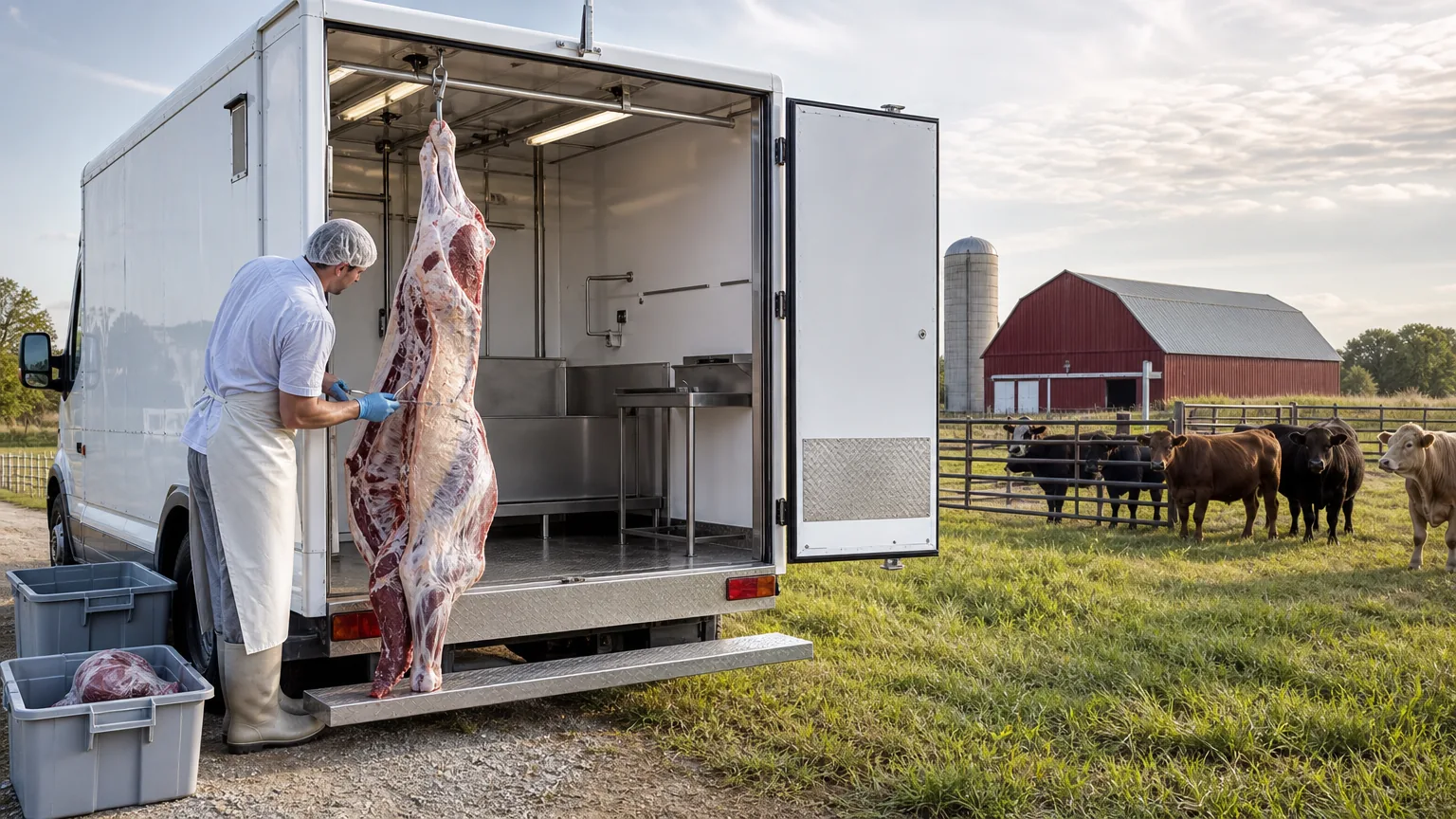
USDA-inspected mobile processing is harder to find than state-inspected, partly because the compliance requirements are more demanding. The processor must meet federal rules on sanitation, HACCP planning, and continuous inspector presence during slaughter. Running all of that from a mobile unit is logistically complex, which is why most smaller operators default to state inspection or custom-exempt status instead.
BCM does not post public per-pound pricing. That is common for mobile operators whose costs shift based on distance traveled, number of head, and species. Contact them directly for a quote, and ask specifically about travel radius, minimum animal count, and whether there is a separate kill fee on top of the processing rate.
If you need USDA-inspected on-farm slaughter and you are anywhere near western Michigan, BCM is worth a call. The absence of public pricing is a minor friction point, but it does not disqualify them.
4. Northeast Kingdom Processing , Custom labeling at $1.15/lb with USDA inspection
Northeast Kingdom Processing in Vermont is the most transparent option in this comparison. They post a rate of $1.15 per pound for custom packages that include full USDA inspection and custom labeling on every package. That is the lowest disclosed rate in our dataset and the highest inspection standard. Price is not a proxy for quality here.
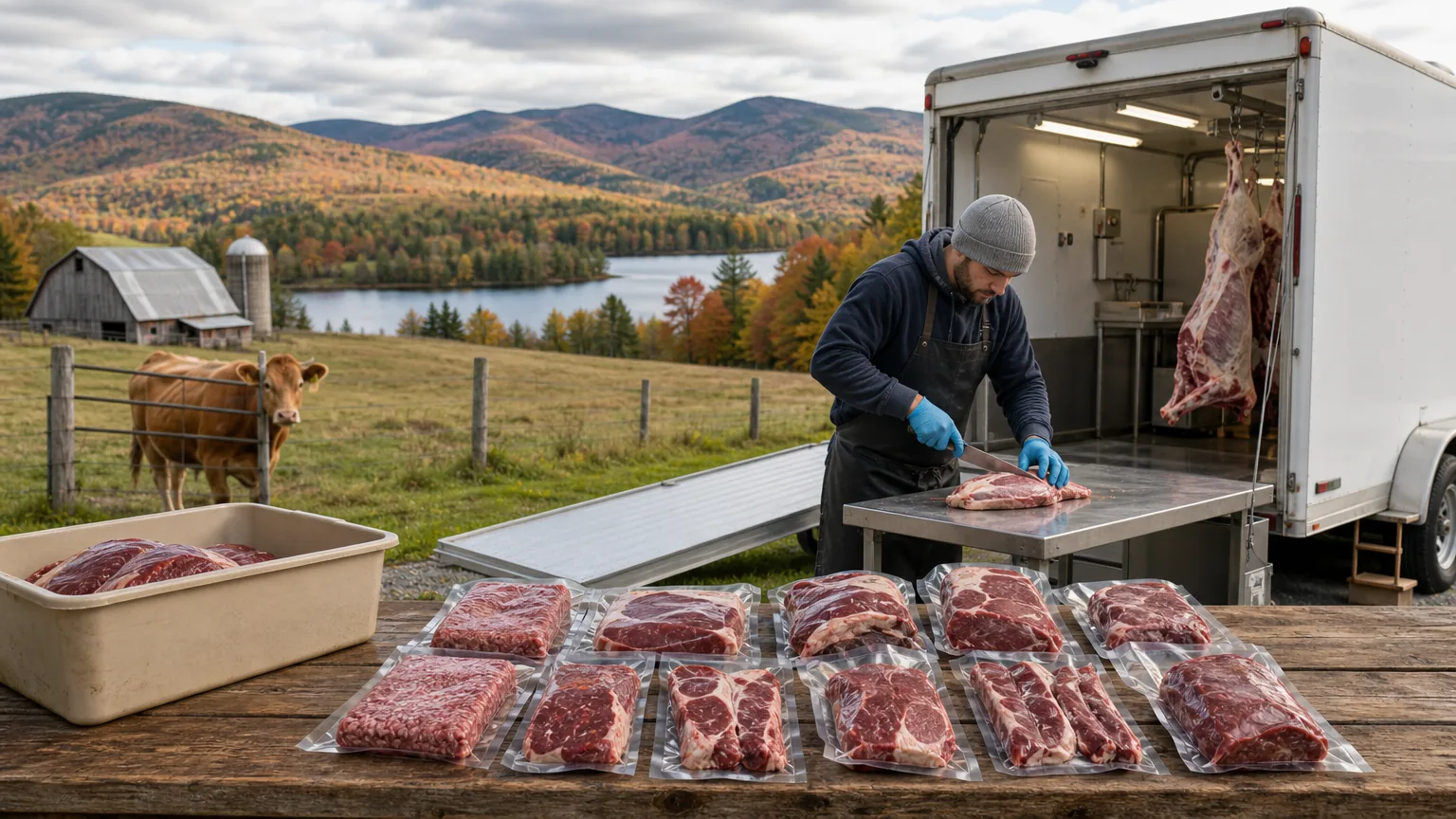
The tradeoff is time. Northeast Kingdom requires a minimum three-week turnaround. If you are processing a pig or a steer in early October and want product by Thanksgiving, you need to plan your booking well ahead. For homesteaders running predictable annual processing cycles, a three-week window is manageable if you schedule early.
Custom labeling at this price point is genuinely useful for anyone selling at a farmers market or supplying a small restaurant. You get federally inspected product with your farm name on the package, which is a real selling tool. If you are looking for context on how local butchers compare across service types, the guide on local butchers for homesteaders covers the range of options alongside mobile units.
Northeast Kingdom’s public price list is a model other processors should follow. The fact that only one of four operators in our research posted pricing at all tells you how opaque this market still is.
Pro Tip: When comparing processors, always ask whether the quoted per-pound rate applies to live weight, hanging weight, or dressed weight. The difference can change your effective cost by 30% or more depending on yield.
5. Central Arkansas Mobile Processing , USDA-compliant unit serving rural producers
Central Arkansas Mobile Processing has been confirmed as USDA-compliant. The video documents the operation directly, which is worth more than a checkbox on a website. The inspection status checks out. Pricing is not disclosed publicly.
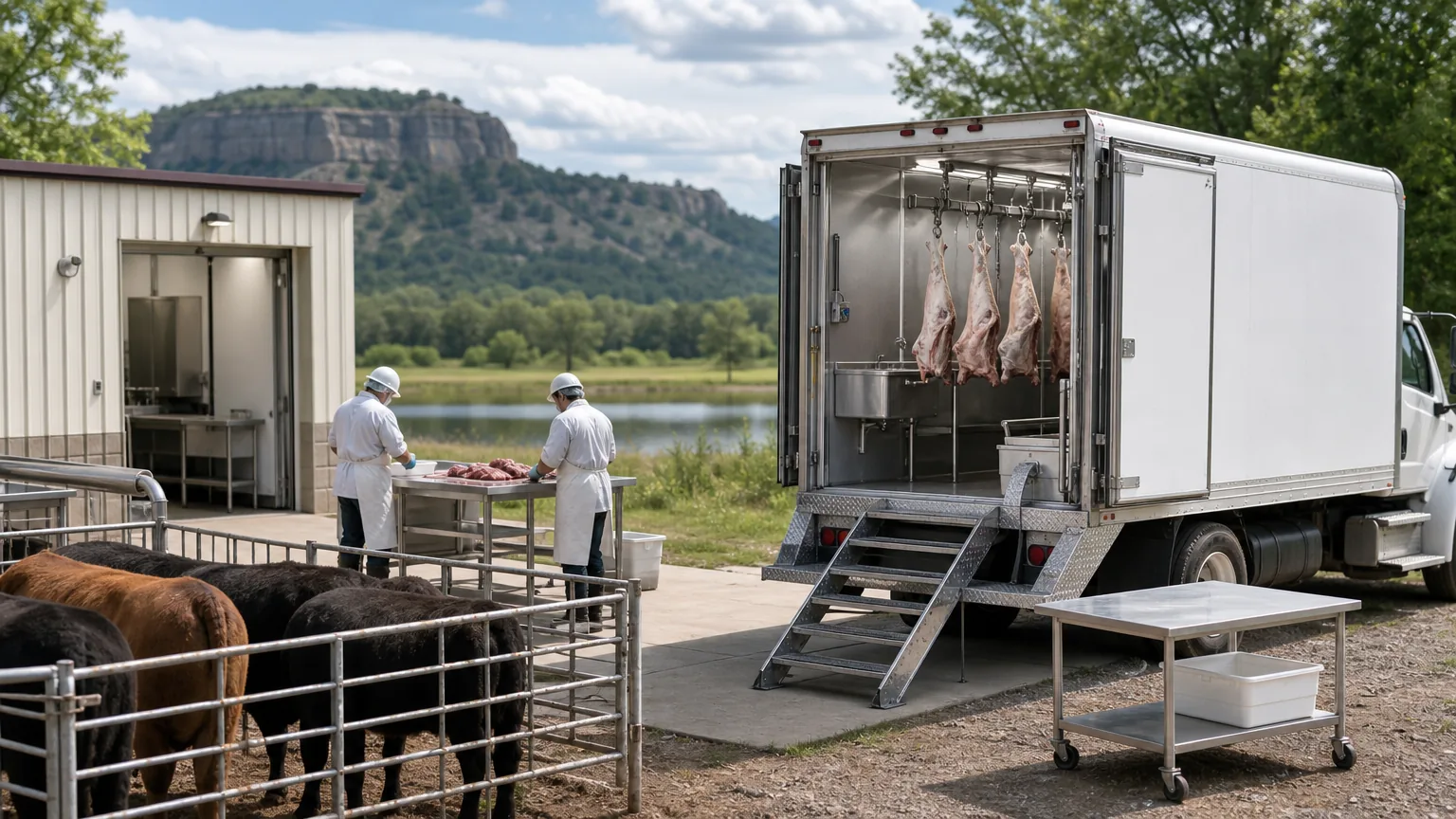
Mobile units operating at USDA compliance carry real overhead. Labor alone runs deep. A two-person crew for a mobile slaughter operation typically includes a licensed butcher and an assistant, plus HACCP coordinator responsibilities that may sit with the head butcher. Butcher salaries and fuel costs for long daily routes add up quickly, and those fixed costs explain why mobile processor rates are not purely negotiable , there is a real floor under them.
For rural Arkansas producers who have limited access to stationary plants, a USDA-compliant mobile unit that comes to the farm solves a genuine problem. The animal stays on familiar ground until slaughter, which reduces stress and can improve meat quality. That is a real operational benefit, not just a convenience.
No minimum charge or travel fee is listed publicly, which is the same gap we see with most operators in this space. Budget for those costs when you reach out.
6. Regional boutique mobile units , Independent operators with variable per-pound pricing
Outside the named operators above, there is a whole layer of regional boutique processors: independent owner-operators running a single mobile unit, often with deep roots in a specific county or cluster of counties. They rarely post rates online. Most run on word of mouth and a full calendar.
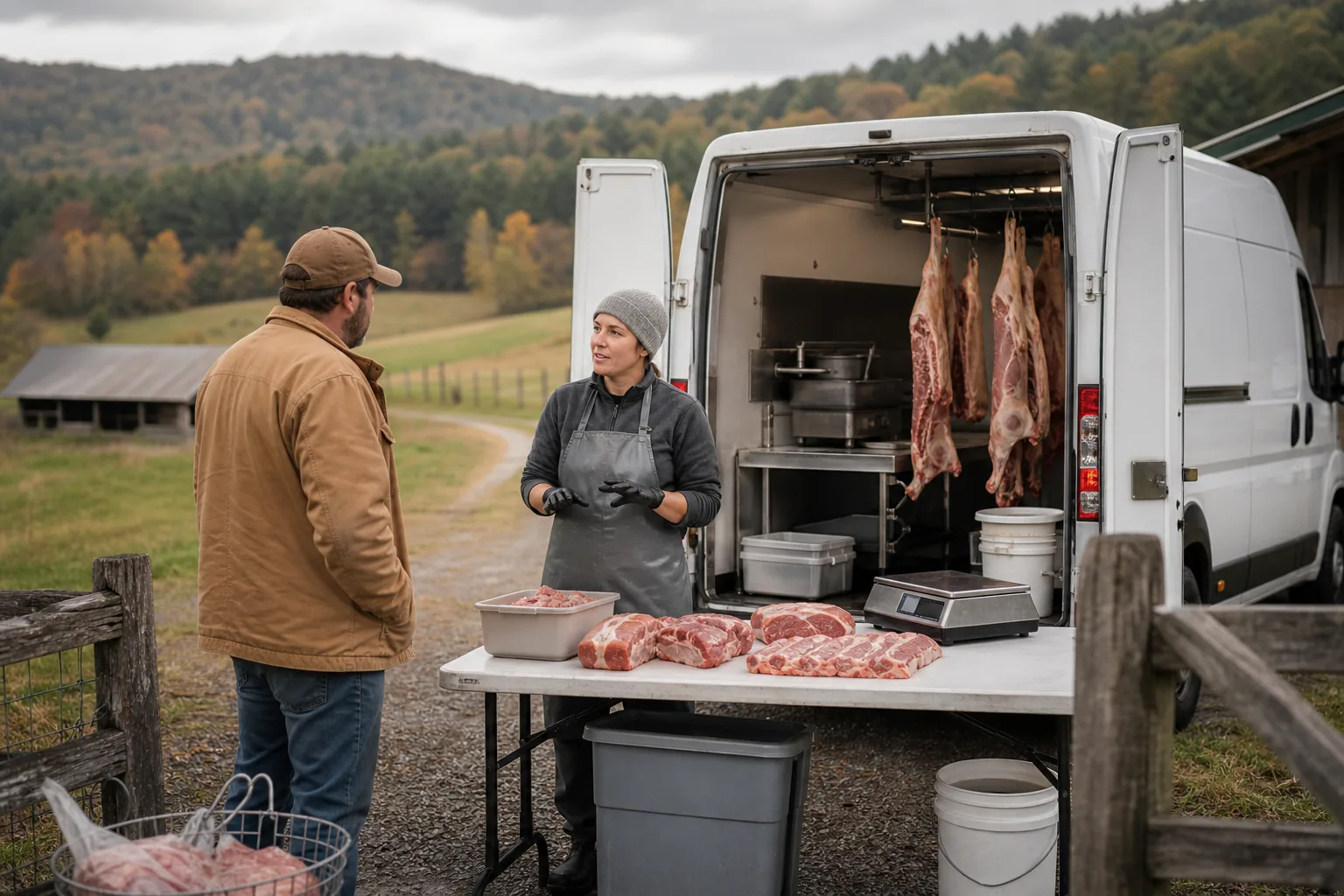
Independent stationary processors can serve as a useful reference point for how small USDA-inspected operations price their work. Fee structures vary by species and service type — kill fees, per-pound processing rates, and flat fees for smaller animals are all common formats. Those structures give you a reasonable baseline when a mobile operator quotes you something that sounds either suspiciously low or very high, but rates vary enough that direct comparison requires a conversation.
Regional boutique operators vary widely on inspection status. Some are USDA-inspected. Others hold state inspection. A third category operates under custom-exempt status, which means the product can only go back to the animal’s owner and cannot be sold. Know which category your operator falls into before you commit.
These are often the processors with the shortest booking windows, the most flexible scheduling, and the best local knowledge. They know the roads, the farms, and the specific handling quirks of the producers they serve. The downside is that vetting them takes more legwork than searching a directory.
7. Mobile unit startup operators , New entrants with competitive rates and grant backing
A growing number of first- and second-year mobile operators have entered the market with newer equipment and competitive rates. Many are backed by federal or state-level meat processing expansion programs, which offset startup costs and allow them to price lower than established operators while still meeting federal compliance requirements.
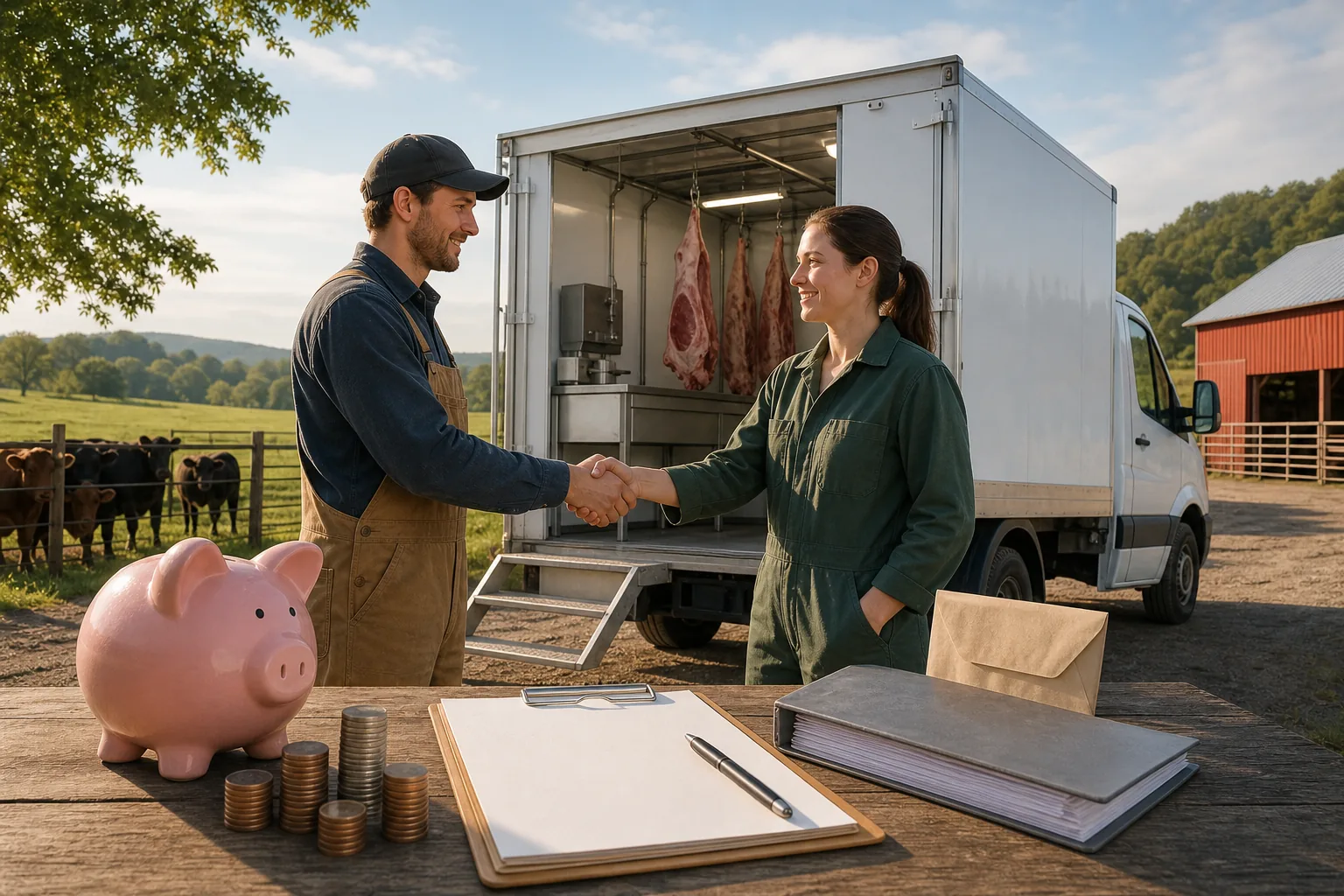
The USDA has invested in expanding small and mid-size meat processing capacity as a policy priority, which has created real funding pathways for new mobile unit operators. If you find a processor in your area who started operations in the last two or three years, it is worth asking whether they received grant support, because it can signal that their equipment and compliance infrastructure is newer and better documented than an older private operation that bootstrapped everything.
The risk with startup operators is experience. A newer processor may have the right paperwork and the right equipment but have processed fewer animals. Ask directly: how many head per week do you currently run, and what species? A processor who handles 10 cattle per week has a very different skill baseline than one who has processed 3.
For mobile processors looking to build visibility with producers in their service area, getting listed on a directory like The Easy Homestead’s directory is one of the fastest ways to get found by homesteaders who are actively searching. If you run a mobile unit and want producers to find you, a verified listing beats waiting for word of mouth.
If you want help documenting your operation on video to show producers your setup and hygiene standards, building a YouTube presence through a video production service can help processors convert curious homesteaders into booked clients.
What determines mobile meat processor rates
The per-pound rate you see on a price list is only part of the actual cost. Several variables sit underneath it, and most operators do not publish them upfront.
| Cost Factor | What to Ask | Why It Matters | Typical Approach |
|---|---|---|---|
| Inspection level | USDA, state, or custom-exempt? | Determines where you can legally sell | Confirm before booking |
| Weight basis | Live, hanging, or dressed weight? | Affects effective cost by up to 30% | Always clarify in writing |
| Travel fee | Is there a mileage charge? | Adds real cost for rural locations | Often not listed publicly |
| Kill fee | Is there a flat per-head fee on top of per-pound? | Makes small batches more expensive per unit | Common for cattle and large animals |
| Species | Does rate vary by animal type? | Hogs, cattle, and small ruminants are priced differently | Get a species-specific quote |
| Processing add-ons | Is custom cutting, labeling, or smoking included? | Value-added work raises the effective rate | Line-item quotes are better than bundles |
| Turnaround time | What is the minimum hold before pickup? | Affects freezer planning and scheduling | Only one provider in our data disclosed this |
The transparency gap in this market is real. Of the four specific providers we researched, only one posted a per-pound rate and only one disclosed a processing timeline. No operator listed a minimum charge or travel fee in their public materials. That means every comparison starts with a quote request, which takes time.
The gap between $1.15 and $3.50 per pound is large enough to change your annual processing budget significantly for a producer running multiple animals a year. Inspection level, location, and add-on services drive that spread. For a deeper look at finding processors by region and understanding state versus federal inspection, the guide on finding deer processing near you covers how to vet operators using the same questions that apply to livestock processing.
FAQ
How much does a mobile meat processor charge per pound?
Rates range from around $1.15 to $3.50 per pound based on verified public data, but most mobile operators do not post pricing publicly. The actual cost depends on inspection level, species, weight basis (live vs. hanging vs. dressed), any travel fee, and per-head kill charges. Always request a line-item quote before booking.
What is the difference between USDA-inspected and state-inspected mobile processing?
USDA-inspected processing is federally overseen and allows the finished product to be sold across state lines. State-inspected processing meets standards set by your state’s agriculture department and generally limits sales to within that state. For personal use only, either works. For retail or interstate sales, you need USDA inspection.
Do mobile meat processors charge a travel fee?
Many do, but few post it publicly. Travel fees vary by distance, fuel cost, and minimum head count per visit. In our research, none of the four operators we found disclosed a travel fee in their public materials. Ask about this specifically when you request a quote, and confirm whether there is a minimum number of animals required per visit.
How far in advance do I need to book a mobile processor?
It varies by region and season, but mobile processors in most rural areas book out weeks to months in advance, especially in fall. Northeast Kingdom Processing discloses a minimum three-week turnaround. Processors near active farming areas often fill their calendars in spring for the following fall. Book as early as you can, especially for cattle.
Can I sell meat processed by a mobile unit at a farmers market?
That depends on your state’s rules and the processor’s inspection status. USDA-inspected product can generally be sold at retail, including farmers markets, subject to labeling requirements. State-inspected product may be allowed in some states for direct farm sales. Custom-exempt processing is for the animal owner’s personal use only and cannot be sold. Confirm your processor’s status before assuming you can sell the product.
Where can I find a mobile meat processor near me?
The Easy Homestead directory lets you search verified mobile processor listings by ZIP code or county. It covers inspection status and service area in a way that Facebook groups and general food directories do not. For areas where listings are still growing, checking with your county extension office or local feed store is still a reliable backup.
Conclusion
If you process one or two animals a year, the per-pound rate matters but the inspection level and booking availability matter more. Northeast Kingdom Processing gives you the clearest deal: USDA inspection, custom labeling, and a published rate. For everything else, start with The Easy Homestead directory to find who actually operates in your county, then get a line-item quote before you commit to anything. Find a verified mobile processor near you at The Easy Homestead.