If you search for mobile slaughter near me, expect two problems fast: many providers book months out, and the lowest quote may not be the lowest total. Use the steps below to check distance, inspection status, fees, timing, and service-day details before you reserve a slot.
We checked the public pages of 7 mobile and on-farm slaughter providers across 5 states for inspection status, pricing, and lead time. The sample included New England Mobile Slaughter, Byron Center Meats, Hogsback Custom Meats, and four other providers. Only 4 of the 7 stated inspection status on that page, and only 4 posted a full kill fee. Just 3 of the 7 listed a booking lead time, leaving inspection status, pricing, and timing to a phone call for most providers.
Step 1: Search your county and nearby ZIP codes
Start with your county, then widen the search by ZIP code. A mobile slaughter unit may serve several counties without listing every town on its website.
Search these phrases with your location:
- mobile slaughter near me
- mobile butcher in [your county]
- on-farm slaughter in [your state]
- custom meat processor near [your ZIP code]
- farm butcher for beef, pork, lamb, or goats
Use the same process when you need a mobile butcher near you. The words “mobile slaughter,” “farm butchering,” and “on-farm processing” can bring up different listings.
Then check nearby counties. A provider may set a mileage limit instead of naming a full service area. Chesters Wild Meats, for example, lists a 30-mile radius and adds a mileage charge beyond that radius.
Keep a short list with the provider name, county served, animal type, inspection claim, and booking method. Do this before you start asking for quotes. It prevents one promising result from becoming your whole plan.
The Easy Homestead helps with this first pass because you can search local listings by ZIP code or county. The directory focuses on working homesteaders who need service providers, not broad farm-product searches. You can also compare this search with the directory’s guide to mobile meat processors near you. If no mobile unit serves your route, the guide to a meat processor near you can help you find a fixed facility instead.
Do not treat a search result as proof that a provider can serve your property. Websites often leave out route limits, animal limits, or current booking status.
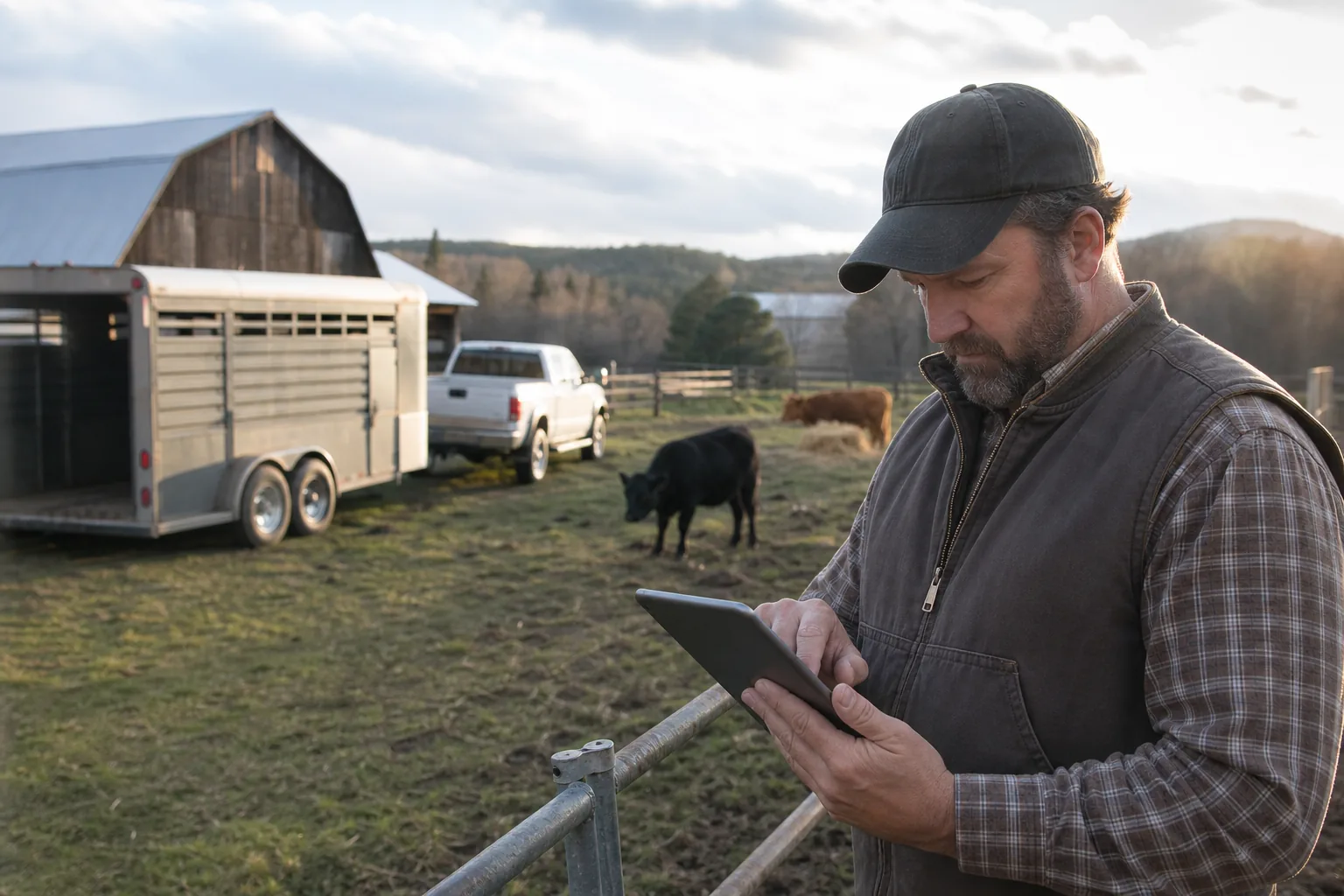
By now you should have three to five possible providers, including at least one backup. If the list is thin, ask at the feed store, your large-animal vet, and nearby livestock owners. Local knowledge often reveals processors who have little web presence.
Step 2: Confirm what the mobile butcher can legally process
Before you discuss a date, ask what the mobile butcher can process and what inspection status applies to the finished meat. These are separate questions.
Start with the animal. Say exactly what you have:
- Beef, including the animal’s size and whether it is a bull or steer.
- Pork, including the number of hogs.
- Lamb or goat.
- Poultry, if that is your need.
Some mobile units handle only large livestock. Others may harvest on your farm but send the carcass to a separate shop for cutting and wrapping. That handoff affects timing, cut-sheet instructions, pickup, and the inspection question.
Ask these questions in plain words:
- Which species do you process?
- Do you slaughter on the farm?
- Where does cutting and wrapping happen?
- Is the facility USDA inspected, state inspected, or custom exempt?
- Can I sell or give this meat to people outside my household?
- Will my animal stay separate from other orders?
Do not accept “inspected” as a complete answer. Ask which agency inspects the facility and whether that status applies to your intended use. The distinction matters if you plan to sell meat, supply a restaurant, or distribute it beyond your household.
When you need a federally inspected shop, compare the provider with a USDA-inspected butcher near you. The wording on a website may not tell you whether the mobile harvest crew and the cutting facility have the same status.
In the Tennes, Anderson Meat Processing was the only provider that explicitly advertised USDA inspection. The other five sources did not provide verified federal inspection status. That does not prove those providers lack another legal status. It does mean you need a direct answer before booking.
You should also confirm whether the provider accepts your animal’s size. Some posted rate sheets include extra charges for larger bulls or hogs. A quote for a standard animal may not apply to yours.
Key Takeaway: Get the species, facility, inspection status, and intended use in writing before you compare prices.
By now you should know whether each candidate can legally handle your animal and whether the meat fits your plans. If the answer stays vague, remove that provider from your short list.
Step 3: Ask about availability, pricing, and turnaround
When someone searches for mobile slaughter near me, the first useful call or message should ask about the full job cost and the next available date. A per-head fee alone tells you too little.
Ask the provider to separate the quote into these parts:
- Kill or slaughter fee.
- Cutting and wrapping fee.
- Hanging or carcass-weight fee.
- Travel or mileage fee.
- Hide, gut, offal, or rendering fee.
- Delivery to another processor.
- Freezer storage, if needed.
For example, 101 Custom Meats posts a $105 slaughter fee plus $1.05 to $1.20 per pound of hanging carcass weight for processing. That quote is useful, but it still needs a travel check and a clear estimate of the final carcass weight.
Chesters Wild Meats lists a $250 single beef kill and a $200 single hog kill. Its posted rates also include a 30-mile radius, with a $0.85-per-mile charge beyond that distance. A low base fee can lose its advantage once the route charge enters the total.
Ask whether mileage starts at the provider’s shop, the first stop on a route, or your county line. Also ask if the fee is charged one way or for the full trip. Do not assume.
For a wider price check, the mobile meat processor rates guide can help you see which parts of a quote need clarification. Use posted rates as a starting point, not a final bid.
Turnaround is just as important. One Tennessee source lists two to four weeks. Another lists four to six days for pork and lamb, plus ten to fourteen days for beef after the required hanging period. Those are different schedules, so ask when the clock starts.
Ask these timing questions:
- What is the next available slaughter date?
- How long will the animal hang?
- When will cutting begin?
- When will the order be ready for pickup?
- What happens if weather delays the route?
- How much notice do you need to cancel or move the date?
Cut sheets can have deadlines too. Chesters Wild Meats says its cut sheets must arrive two weeks before the kill date. That deadline can arrive before you feel ready, especially when you are processing several animals.
Write down the quote while you are still on the message thread. Include the animal count, species, estimated size, travel distance, and requested services. This gives you a fair comparison between providers.
Schedule earlier than feels necessary. The six vendor sources reviewed did not publish daily capacity, so you cannot tell from a website whether a provider can handle several animals on one route.
Step 4: Prepare your animals and property for service day
Good service-day prep gives the mobile crew a safe path to the animals and a firm place to work. Ask for the provider’s own site rules before you move livestock.
Set up a holding area that is secure and easy to reach. The crew should not need to chase an animal through a large pasture. Use a pen with sound gates, firm footing, and enough room for the animals to stand without crowding.
Clear the route from the road to the work area. Remove loose tools, wire, scrap metal, hoses, and farm equipment. Check the ground after rain. A truck or trailer may need to reach the site, and soft ground can change the plan.
Ask where the unit needs to park and where the crew needs water, power, or light. Never guess about these needs. A provider may bring its own setup, but the property still needs a safe work zone.
Keep children, dogs, and unrelated livestock away from the work area. You know your farm best, so point out gates that swing shut, low branches, steep ground, and any animal that may react badly to noise.
Confirm what happens to hide, organs, blood, and other waste. Some providers remove these materials. Others may charge for rendering or disposal. If you want organs or offal, say so before service day and ask what containers you need.
Put your supplies in one place:
- Clean buckets or tubs for items you are keeping.
- Labels and a marker.
- Cooler space or a confirmed freezer plan.
- Boots and work gloves.
- A printed copy of the booking details.
Do not use a general farm cleanup plan as a substitute for the butcher’s instructions. Fasting, water access, animal restraint, and site setup can vary by species and provider.
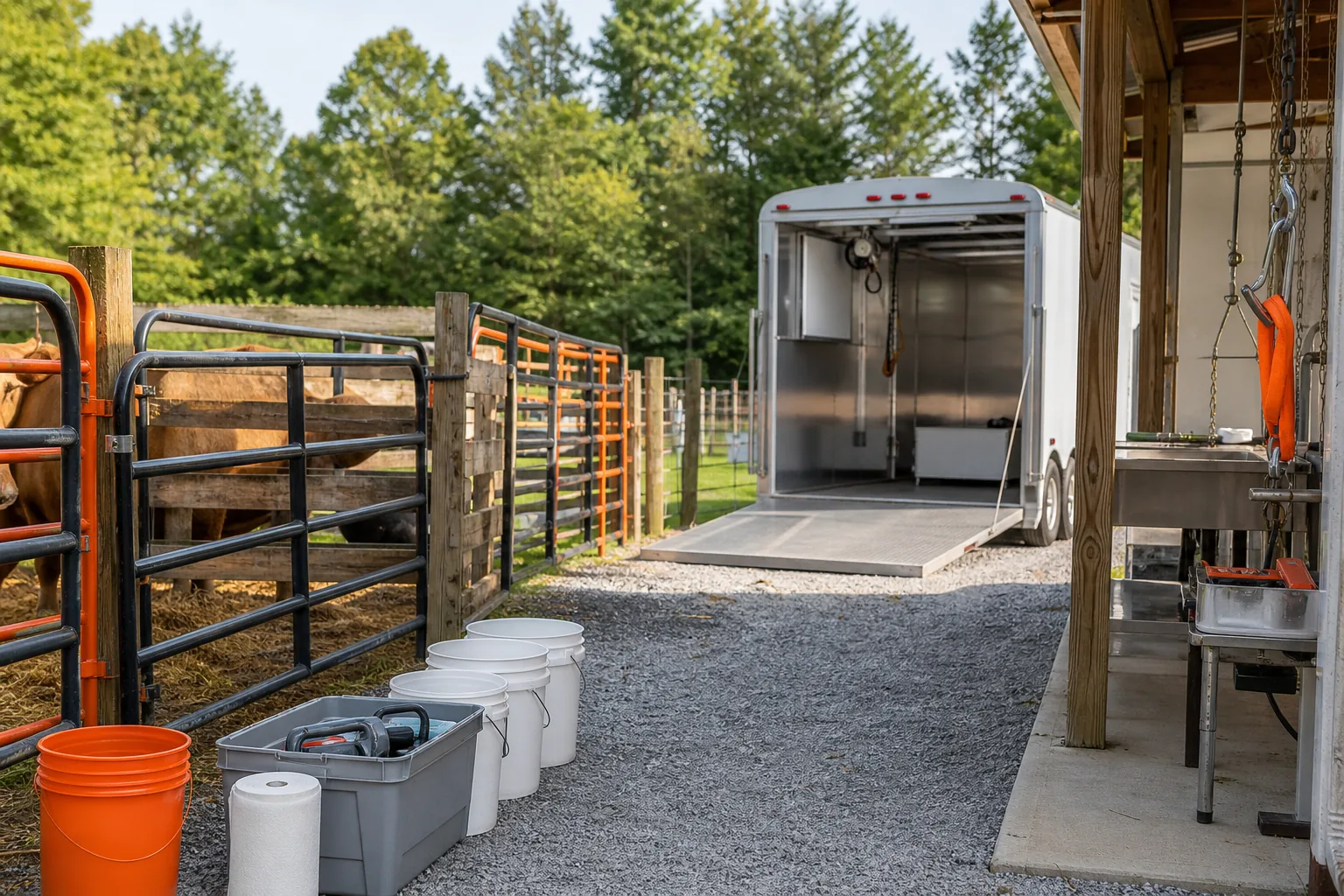
By now you should have a penned animal, a clear access route, and a written plan for waste and items you want to keep. If the ground or gate setup is unsafe, tell the provider before the appointment.
Step 5: Confirm inspection, cutting instructions, and pickup details
Before the appointment, confirm the final handoff. The mobile crew may harvest the animal, while another facility handles hanging, cutting, wrapping, and labeling.
Ask who will contact you about the cut sheet. Find out whether you choose steak thickness, roast size, grind amount, sausage options, packaging, and organ-meat handling through the mobile crew or the processor.
Complete the cut sheet before its deadline. Keep a photo or copy for your records. Mark unusual requests in plain words. If you want whole cuts instead of ground meat, write that down. If you want bones, fat, liver, or other items, list each one.
For poultry orders, use a provider that confirms poultry service. Large-animal mobile slaughter does not automatically include chickens, turkeys, or ducks. The Easy Homestead also keeps poultry processing in its farm-service coverage, which helps when one search needs to include both livestock and birds.
Ask how the processor labels your order. Your name, animal ID, cut sheet, and pickup date should match. If you own several animals, ask whether each one stays separate through the process.
Confirm the weight used for processing charges. Some shops use hanging carcass weight. Others may use a different measure. Ask when you will receive that weight and who sends the bill.
Pickup details deserve the same care as booking details. Confirm:
- The expected ready date.
- The pickup location.
- How long the shop will hold frozen meat.
- What containers or vehicle space you need.
- What happens if you cannot collect the order on time.
If you are comparing a farm visit with a fixed shop, the local butcher search guide can help you think through transport and pickup limits. A mobile harvest may reduce animal transport, but the finished meat may still require a trip to the processor.
Keep inspection records, invoices, cut sheets, and pickup notes together. If a question comes up later, you will have the details in front of you instead of trying to rebuild the order from memory.
The final decision rule is plain: book the provider that gives clear answers about legality, total cost, timing, and custody of the meat. A vague bargain is a poor backup plan during processing season.
FAQ
How do I find mobile slaughter near me?
Search by county, ZIP code, and nearby counties to find mobile slaughter near you. Use terms such as mobile butcher, farm slaughter, and on-farm processing. Then verify the provider’s service area, species list, inspection status, travel fee, and next available date. A local directory such as The Easy Homestead can shorten the search by grouping farm-service listings by location.
How much does mobile slaughter cost?
Mobile slaughter costs vary by animal, provider, distance, and processing needs. Posted Tennessee examples include a $105 slaughter fee from 101 Custom Meats and a $250 single-beef kill fee from Chesters Wild Meats. You may also pay for cutting, wrapping, hanging weight, mileage, disposal, or delivery to another processor.
Is mobile slaughter USDA inspected?
Mobile slaughter is not automatically USDA inspected. Ask which facility handles the carcass and whether that facility has federal inspection. In the Tennes, Anderson Meat Processing was the only provider that clearly advertised USDA inspection. The other listings need direct verification before you book.
How far will a mobile butcher travel?
A mobile butcher may use a mileage radius, a county list, or a route schedule. Chesters Wild Meats lists a 30-mile radius and adds a fee beyond that range. Ask where the mileage starts and whether the charge covers the full trip. Properties near a county border should confirm coverage instead of relying on a map pin.
How long does mobile slaughter take?
Mobile slaughter timing can range from several days to several weeks. One reviewed provider lists two to four weeks, while another lists four to six days for pork and lamb plus ten to fourteen days for beef. Ask about the slaughter date, hanging period, cut-sheet deadline, processing date, and pickup window.
Conclusion
Choose the provider that gives you a complete answer, not the lowest first number. Verify the inspection status, total travel cost, animal limits, turnaround, and pickup plan before you reserve the date. When you need a faster local search, browse verified meat processors and farm services by county on The Easy Homestead’s poultry and meat processing resources. Find who you need. Trust what you find.