A search for permaculture design near me rarely tells you who will actually fit your site. Use these steps to find a designer who fits your acreage, goals, climate, and budget.
The Easy Homestead helps working homesteaders search local providers by ZIP code or county. You can use it alongside personal referrals, local classes, and a good site brief.
We read the service pages of 9 permaculture design businesses across Illinois, Michigan, California, Virginia, Washington, New York, and Florida. None of the 9 named a Permaculture Design Certificate or similar credential, though 8 of 9 stated a founding year or years in practice. Only 5 of 9 listed specific counties, cities, or a mileage radius for site visits, leaving the rest with a broad region only. That pattern supports asking each designer directly about credentials, experience, and travel range before you hire, since a website rarely states it plainly.
Step 1: Define the work your homestead needs
Start by naming the work you need from a permaculture designer. A broad request for “a homestead plan” can mean a garden layout to one person and a full water and access plan to another.
Write down the result you want first. You might need a plan for a food forest, better drainage, a pond, animal zones, a kitchen garden, or a new driveway. You may need help placing all of them across the property.
Think in terms of systems. Water affects access. Access affects where you place barns, pens, and orchards. The location of those elements affects daily labor. A designer should be able to explain these links in plain language.
A useful first brief includes:
- Your land size and current use.
- The work you already do on the property.
- The animals, crops, trees, or structures you plan to add.
- Your main limits, such as poor drainage, steep slopes, limited funds, or low labor.
- The first project you want to build.
- The work you want to do yourself.
Separate permanent work from small tests. A swale, pond, road, or building needs more thought than a trial bed. Good site planning puts water first, then access, then structures. That order can prevent you from placing a barn in a flow path or an orchard in a frost pocket.
Some designers sell a short site walk. Others prepare a concept map with a written report. Limestone Permaculture describes site visits that mark possible element locations on the ground, while its larger design service adds an aerial overlay and notes about water, sun, risks, and future projects. That distinction helps you ask for the right service. Read the provider’s service details before you compare quotes.
Don’t ask for a full property plan if you only need help with a new orchard. And don’t hire someone for a planting list when your real problem is runoff across the whole farm.
Key Takeaway: Write one page that names your first build, your long-term aims, and the site problem that could stop the work.
Step 2: Gather the site information a designer needs
Your search for permaculture design near me will go faster when you send each designer the same site facts. A designer can’t judge slope, shade, access, or water flow from an address alone.
Make a site folder before you request proposals. Add a clear aerial image with the property boundary marked. Include the house, barns, wells, septic area, fences, driveways, ponds, creeks, gardens, and any areas that stay wet.
Then add notes from your own time on the land. You know details that a map may miss. Mark where water gathers after a storm. Note the first place snow melts. Record strong wind spots, summer shade, muddy gates, deer pressure, and places where equipment can’t turn.
Gather these items:
- Property survey or parcel map, if you have one.
- Contour or elevation information.
- Well, septic, utility, and easement details.
- Photos from each side of the property.
- Seasonal notes on sun, wind, frost, and drainage.
- A rough list of soil types or past soil test results.
- Your current livestock routes and daily walking paths.
- Local rules that may affect ponds, buildings, wastewater, or earthwork.
Don’t hide failed projects. Tell the designer where a tree died, where a garden flooded, or where a gate became too hard to use. Those details can save a round of guesswork.
Use a simple map with numbered photo points. Photo 1 might show the low field. Photo 2 might show the driveway crossing. This lets the designer match your notes to the land without a long email chain.
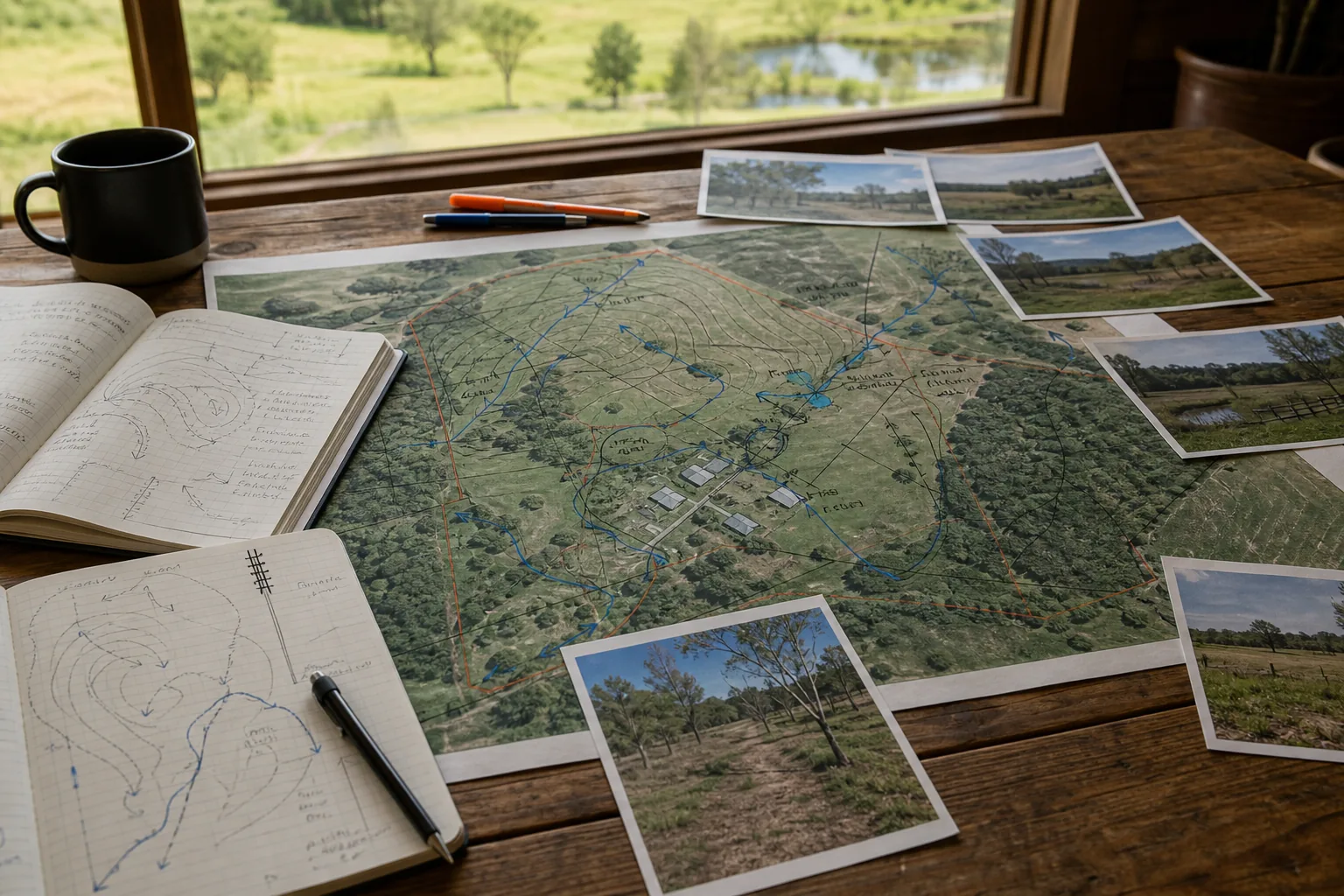
A site assessment should also include your household’s work pattern. Say how often you visit the garden. Explain where feed is stored and how far you carry water. If goats, pigs, or poultry share the land, show their usual routes.
For a deeper planning record, use the planning worksheet as a prompt for the questions you still need to answer. You don’t need a polished design. You need honest observations.
A designer who asks for this information before quoting is showing good process. A designer who promises a perfect plan without seeing the site deserves more questions.
Step 3: Search for local designers by service and location
Search by the work you need, not only by the phrase permaculture design near me. Add your county, nearest town, state, and a service term such as “farm water plan,” “ food forest design,” or “homestead site plan.”
Locality is harder to judge than it looks. Ask each provider how far they travel before you spend time on a detailed call.
That gap changes how you search. A designer may rank near you because of a directory listing, yet work only by remote consultation. Another may travel farther for a full site visit but charge for mileage. Ask before you spend time on a detailed call.
Build a short list of three to five names. Look for a service match first. A provider tagged for earthworks and hydrology may suit a runoff problem. A garden designer may fit a small orchard or kitchen garden. A whole-property plan needs someone who can discuss movement, water, structures, and labor together.
Directories can help you widen the search beyond the first page of Google. Regional directories separate listings by region, while some providers state that remote design works well for people outside their travel area. Those two routes can uncover options that a map search misses.
The Easy Homestead gives you another way to search. Enter your ZIP code or county, then look for the permaculture and land design category. Coverage will vary by area, so check the listing details instead of assuming every county has the same supply.
Local classes can also help you evaluate a designer’s approach and meet providers who work in your region. Use homesteading classes near you as one referral source, then verify that the instructor has experience with working sites like yours.
When you contact a designer, send the same short brief to each person. Include the property size, location, main job, desired format, and whether you need a site visit. Ask for a yes or no on travel before you share every detail.
Some local needs may connect to other trades. A layout that changes livestock movement may affect your farm fencing plan. A plan for a new access road may require equipment beyond hand tools, so compare local options for farm equipment rental before you commit to that phase. Keep those downstream jobs in mind while you search.
Don’t treat a remote designer as automatically poor. Remote work can fit a clear, small project. It becomes risky when the design depends on slope, drainage, soil depth, or hard-to-see site hazards.
Step 4: Check credentials, experience, and regional fit
A local designer for your land needs more than a nearby address. Check training, years of practice, past work, and knowledge of your climate before you hire.
Credentials can help, but they don’t tell the whole story. A PDC, or Permaculture Design Certificate, shows formal study in the design approach. It doesn’t prove that a person has planned a working farm in your soil and weather.
The search sample showed how thin these trust signals can be. Four of 21 listings named a credential. Only three listed years of experience. That leaves most buyers with no clear way to compare training or time in the field.
Ask each candidate these questions:
- What training have you completed?
- How many years have you worked on land design?
- Have you planned a property with similar slope and rainfall?
- Can you show a sample plan or explain its scope?
- Do you visit the site, work remotely, or do both?
- What parts of the plan require an engineer, surveyor, or other licensed trade?
Regional fit deserves close attention. A plan built for a dry climate may not suit a humid farm with heavy summer rain. Plant lists also need care. A designer should ask about hardiness, frost, drought, pests, and the time you can give to upkeep.
Look for signs that the designer understands working conditions. Can they discuss tractor access, animal pressure, harvest routes, mud, fencing, storage, and the farm equipment needed for implementation? A pretty map that ignores those jobs won’t help much when the ground is wet. If the plan includes tractor work, ask how you will handle breakdowns and identify a local tractor repair provider before the work starts.
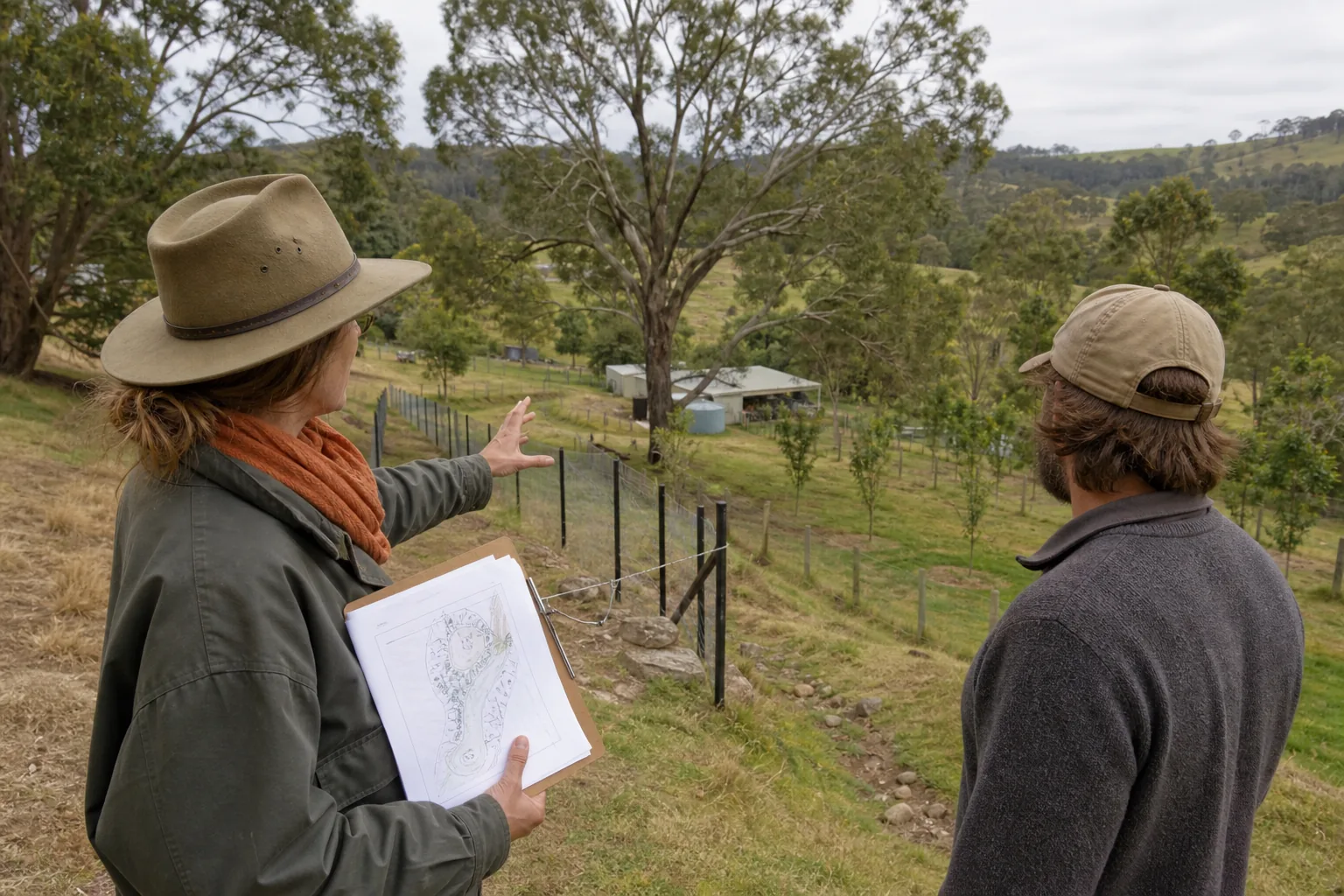
Training programs can also reveal what a designer has studied. Ask how their education relates to the soil, water, earthworks, planting, structures, or animals on your site. A program’s format and practical work can also help you judge how relevant it is to your regional conditions. Use the stated curriculum as a prompt for the subjects you still need to discuss.
Check reviews with care. A review should explain what the person delivered, not only say they were nice. Ask whether the client received a map, report, planting plan, build sequence, or follow-up support.
The Easy Homestead is built around this missing trust data. Where listings are available, we focus on verified provider details and real reviews. That doesn’t replace your questions, but it can shorten the first round of research.
Choose the person who can explain tradeoffs. If they say a pond would need a permit or that a road should move before you plant trees, ask why. Clear limits are a good sign.
Step 5: Compare proposals before you hire
Compare proposals by scope, not by the headline price. Two designers may quote different amounts because one includes a site while the other provides a short video call.
Ask each proposal to state the deliverables in plain terms. A useful proposal should tell you what you receive, how many site hours are included, how revisions work, and what happens after the plan arrives.
Look for details such as:
- Site visit length and travel fees.
- Maps, overlays, drawings, or written reports.
- Water and drainage analysis.
- Plant lists and planting zones.
- Build phases and suggested order.
- Follow-up calls or implementation support.
- Items excluded from the work.
A concept plan is not the same as construction drawings. It can show where an orchard, pond, road, or animal area may fit. It may not give you the grades, permits, engineering details, or exact build plan needed for construction.
Ask what the proposal means by “whole property.” One designer may map the main elements. Another may include a written reason for each placement. You need to know the difference before you compare the two.
Some designers begin with a paid strategy session. Rates and whether that fee applies to later design work vary by provider and site size.
Set your own decision rule before the calls. For example, you might choose the proposal that gives the clearest water plan, even if it isn’t the cheapest. Or you might start with a short paid consult because you need a better scope before committing.
Keep implementation in view. A plan that requires a long list of outside contractors may not fit your labor or cash flow. Ask for phases. A useful first phase might solve drainage near the house, improve access to animal areas, or place the kitchen garden close to daily use.
When the design affects animals, review the daily route in detail. Feed storage, water points, gates, and shelter should reduce repeated hauling. If the layout changes pasture access or forage storage, identify local hay suppliers before you set the final barn and feed-room locations. If horses are part of the plan, your forage and feed decisions may also connect with guidance on the best feed for horses. Your feed and pasture choices may also connect with a local supplier, such as the ones discussed in how to find an animal feed store near you.
Read the cancellation terms and payment schedule. Confirm who owns the finished drawings and whether you can share them with a builder. Ask how long the proposal stays valid.
Before signing, send the final scope back in your own words. If you expect a drainage map, a phased build list, and a planting plan, put those items in writing. That small step prevents a large mismatch later.
Pro Tip: Ask every designer to name the first three actions you should take after delivery. A plan is useful only when you can turn it into the next job on your calendar.
FAQ
How do I find permaculture design near me?
Start with your county or ZIP code, then search for the exact service you need. Use The Easy Homestead to check local land design listings, and confirm each provider’s travel area before requesting a proposal. Local classes and farm networks can add referrals, but ask for proof of similar site work.
What does a permaculture designer do?
A permaculture designer plans how land elements work together. Depending on the scope, that may include water flow, access, buildings, gardens, orchards, animals, soil care, and planting areas. Ask whether you are buying a site visit, a concept map, a written report, or a detailed project plan.
Do I need a permaculture design certificate to hire a designer?
You don’t need a certificate to hire someone, but training is worth checking. A PDC can show formal study, while a portfolio can show how the person applies that study. Ask for both when possible. Regional experience matters because slope, rainfall, soil, frost, and local rules affect the plan.
Can a permaculture designer work remotely?
Yes, remote design can work for a small project with clear site data. Send maps, photos, measurements, and seasonal notes before the first meeting. Choose an on-site visit when drainage, slope, access, soil depth, or permanent earthwork will shape the result.
How much does a permaculture design cost?
Permaculture design costs vary with property size, site complexity, travel, and the final deliverables. A short consultation costs less than a full concept plan with a report and follow-up. Request an itemized proposal so you can compare scope instead of guessing from one total.
Conclusion
Choose a designer who can show regional fit, explain the scope, and state how far they travel. Start by searching your county on The Easy Homestead, then send three candidates the same one-page site brief and compare their replies.