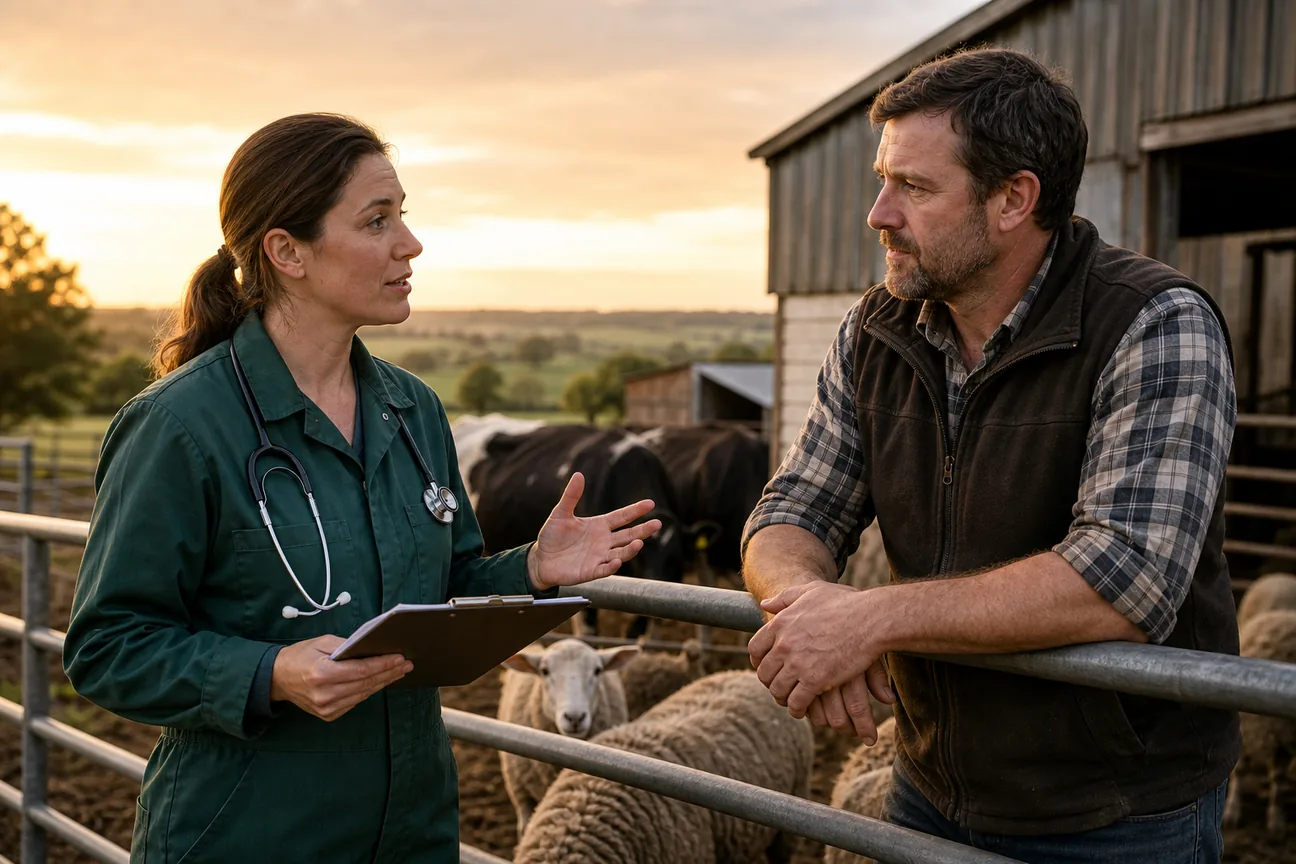
A farm vet can give better advice when you ask before a crisis starts. The best time to talk is before you add livestock, while planning routine checks, or when you’re deciding if a vet fits your operation. Here are the key questions to ask a farm veterinarian, plus how to find a local vet to ask.
1. Questions about emergency calls and on-farm visits
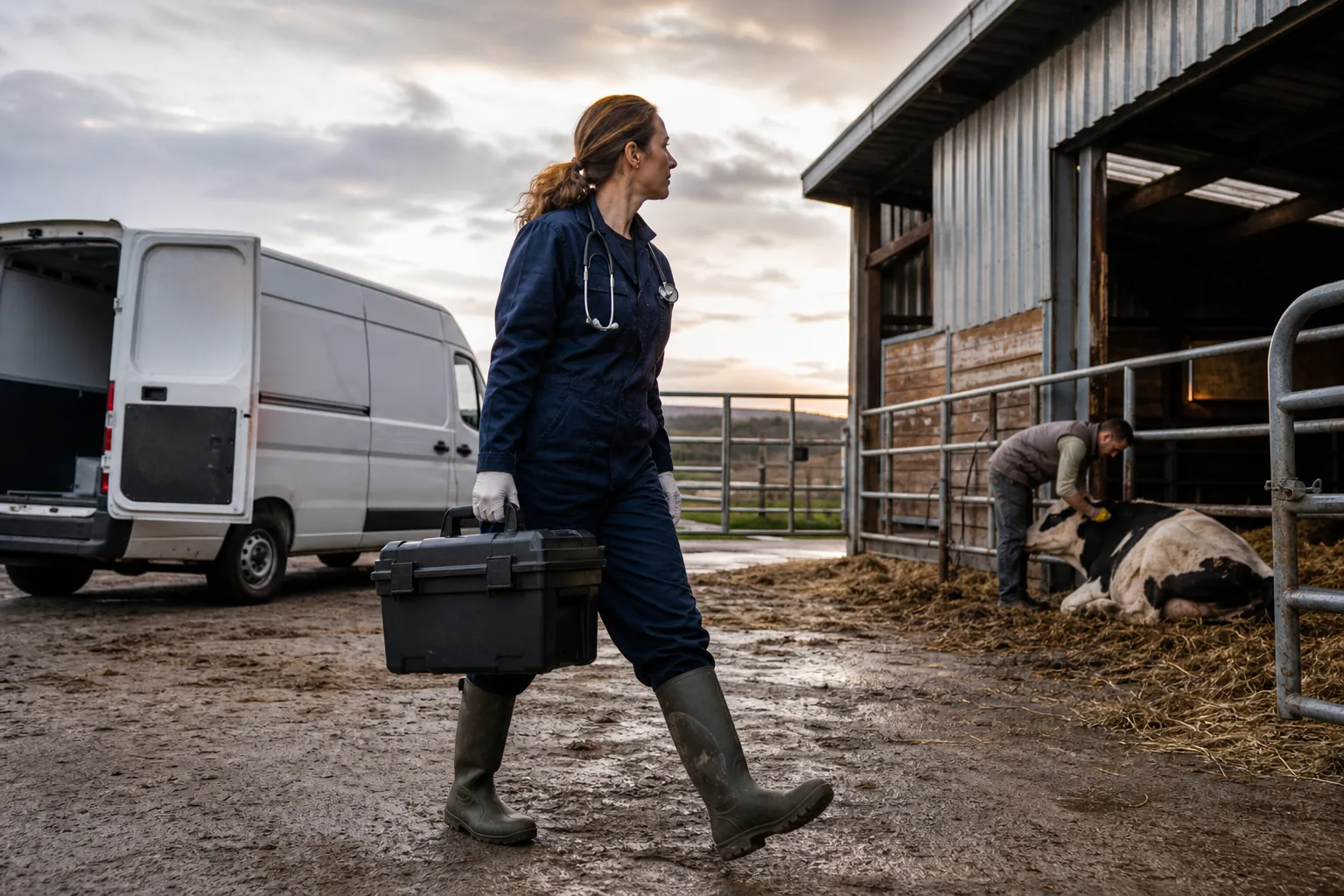
Questions to ask a farm veterinarian about emergencies should focus on response rules, after-hours care, and what happens when the vet cannot come. Do this before an animal is down, bleeding, bloated, or struggling to breathe.
 Save
Start with the coverage questions:
- Do you provide emergency care after regular office hours?
- What counts as an emergency for your practice?
- How should I reach you during an urgent case?
- Do you handle emergencies on my property?
- What should I do while I wait for help?
- Who covers your calls when you’re unavailable?
Ask about farm calls in plain terms. Find out how the vet reaches remote properties, whether you need a safe restraint area, and which records should be ready. A vet may need a clear route to the barn, a clean work space, or help moving an animal into position.
Ask how the vet handles an animal that may affect the rest of the group. A sick goat can raise questions about quarantine. A sudden death may call for a post-mortem exam. A new pig with coughing may need separation before the vet arrives.
If you’re still searching for coverage, our guide to finding a large-animal vet before an emergency explains what to check before you make contact. The key point is timing. A vet who knows your property and animals can give clearer instructions than a stranger reached during a crisis.
You can also ask what information the practice wants during an urgent call. Have the animal’s species, age, sex, symptoms, temperature if you have it, and recent changes ready. Mention new feed, a new animal, a recent birth, or a possible toxin.
Pro Tip: Save the vet’s emergency instructions in your farm records. Add a backup contact and the location of your first-aid supplies.
Never assume that a vet who provides routine visits also provides emergency calls. Confirm the rule in advance.
2. Questions about routine herd and flock health
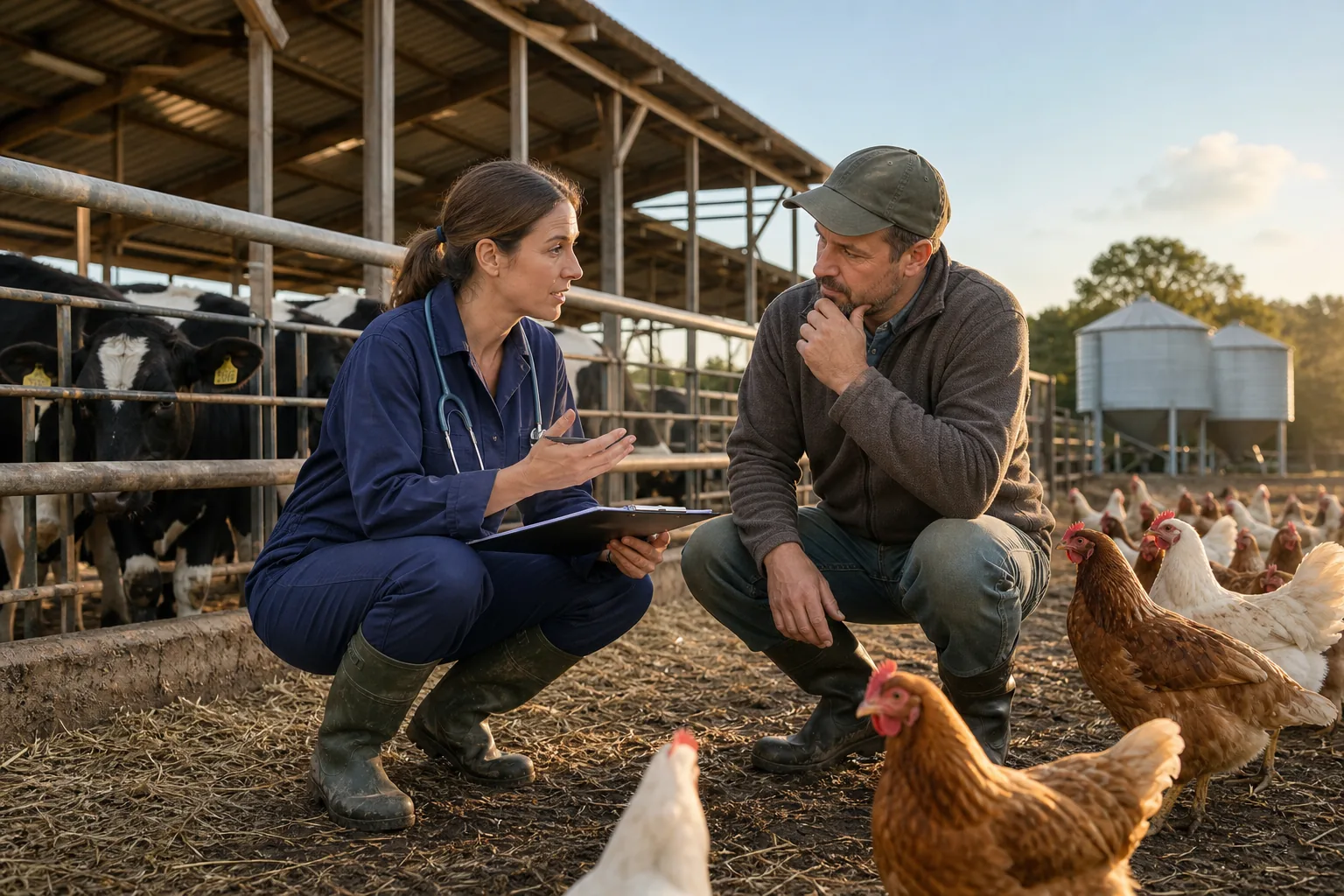
Routine questions to ask a farm veterinarian should help you build a care plan for the animals you actually keep. A goat herd has different risks from a laying flock. Mixed farms need a plan that accounts for each group.
 Save
Ask what the vet would review during a routine visit:
- Which vaccines fit my species and local risks?
- How should we track body condition?
- What parasite signs should I watch for?
- When is testing preferable to treatment?
- How should I quarantine new animals?
- What records should I keep for births, illness, and treatment?
Bring up management, not only disease. Ask about feed changes, water access, shelter, ventilation, hoof care, breeding plans, and stocking levels. You know the day-to-day setup. The vet can point out risks that are easy to miss during chores.
Before buying livestock, ask the vet to review your plan. Talk through species, breed, age, source, transport, and quarantine space. This is one of the best times to ask for advice because you can change the setup before the animal arrives.
For goat owners, species knowledge matters. A vet who treats cattle may not see many goats. Our page on finding a goat vet who treats goats gives you questions to use when checking local listings.
It also helps to ask how the vet wants you to communicate between visits. Some prefer a written symptom log. Others may want photos, lab results, or a short timeline. Clear notes reduce guesswork and help the vet see patterns across the group.
A strong relationship works both ways. The PLOS ONE study mentioned above examined factors tied to veterinarians’ work satisfaction. Asking what information helps a vet do their best work can improve the handoff. You might ask, “What makes a farm visit useful for you?” The answer may shape how you prepare.
Routine care does not mean every visit follows the same script. Your plan should change when you add animals, start breeding, change feed, or see repeated illness.
3. Questions about testing, diagnosis, and treatment decisions
Questions to ask a farm veterinarian about diagnosis should help you understand what the vet knows, what remains uncertain, and what test could narrow the choices. Ask for the reason behind a test before you approve it.
Useful questions include:
- What are the most likely causes?
- What other causes should we rule out?
- What would this test tell us?
- How long will results take?
- What can we do while we wait?
- What signs mean the plan is not working?
- When should I contact you again?
Ask whether the vet needs a sample from one animal or several. A single sick animal may show an individual problem. Several affected animals may point to feed, parasites, exposure, or a contagious illness. The sampling plan affects how useful the result will be.
Medication questions deserve direct answers. Ask about the dose, route, timing, storage, and withdrawal period for animals that may enter the food supply. Also ask what to do if the animal spits out medicine, vomits, misses a dose, or worsens.
Ask what result would change the plan. If a test comes back negative, does treatment stop? If the result confirms a disease, does the whole group need review? This question keeps testing tied to a decision instead of turning it into a bill with no next step.
For basic terms, Wikipedia’s overview of veterinary medicine explains that veterinary care covers animal health, disease prevention, diagnosis, and treatment. Your farm vet will apply those principles to your species, setting, and goals.
Good diagnosis also depends on your notes. Record when signs began, which animals are affected, what changed, and what you already tried. A short timeline often tells the vet more than a long description given from memory.
Be willing to ask for a second explanation. You don’t need every technical term. You need to know what to do next, what to watch for, and when the plan changes.
4. Questions about costs, records, and follow-up care
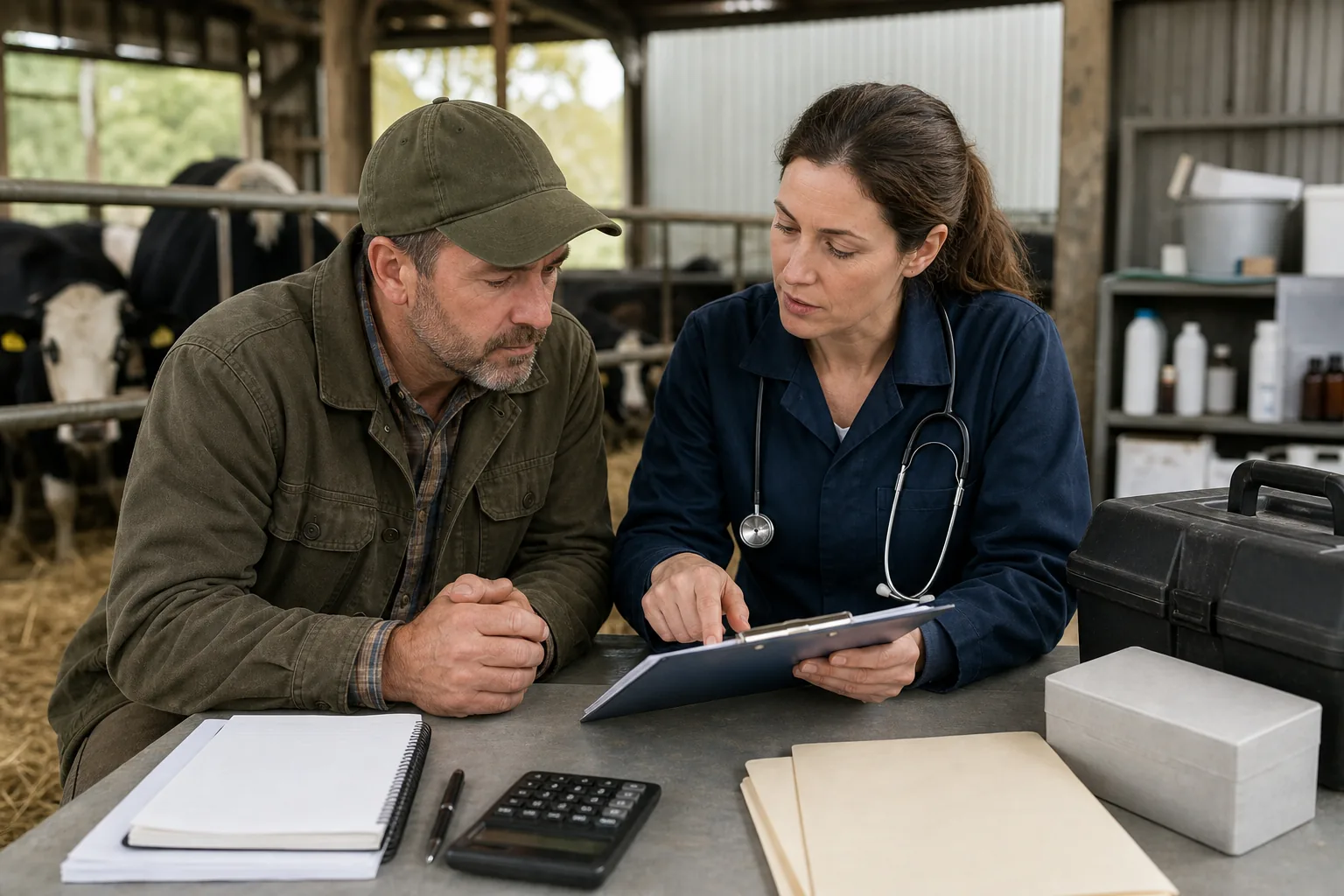
Questions to ask a farm veterinarian about cost should cover the full visit, not only the first farm call. Ask how the practice handles travel, exams, lab work, medication, follow-up messages, and return visits.
 Save
Use direct questions:
- What does the farm call include?
- How are travel charges calculated?
- Will you explain the expected cost before extra tests?
- How do you handle urgent visits?
- Are follow-up calls included?
- How will I receive test results?
- Can I keep a copy of the medical record?
Ask about payment timing and accepted payment methods before the first visit. Pricing varies by practice, distance, species, and the work needed. A clear estimate helps you decide what to approve when several animals need attention.
Records matter when you change vets or bring in a new animal. Ask for copies of lab results, treatment notes, vaccine records, and medication instructions. Keep them in one place with dates and animal identification.
Use a follow-up question that forces a clear plan: “What should improve first, and by when?” Then ask what action to take if that change does not happen. This gives you a line between watchful care and another visit.
| Question area | What a useful answer should cover | Warning sign |
|---|---|---|
| Farm call | Travel terms, visit scope, and what you need to prepare | The cost or service area stays vague |
| Testing | Purpose, timing, result delivery, and plan changes | The test has no clear effect on care |
| Medication | Directions, storage, safety, and food withdrawal rules | You leave without written instructions |
| Follow-up | Signs of progress and the next contact point | No plan exists if the animal worsens |
| Records | Copies of results and treatment history | You cannot access your own records |
Clean conditions also support the care plan. If your vet recommends better barn hygiene, you may need equipment that fits your floors and wash-down routine. A farm-cleaning equipment provider may offer equipment and service, though you should confirm whether its service area fits your farm.
Before the visit ends, repeat the plan in your own words. That small check can catch a missed dose, a wrong date, or a misunderstanding about when to call back.
FAQ
What should I ask a farm veterinarian before the first visit?
Ask which species the vet treats, whether they make farm calls, how far they travel, and how they handle emergencies. Also ask what records or animal details they want before arriving. These questions help you compare care options and prepare the property before the first appointment.
When should I ask a farm vet questions?
The best times are before you buy new livestock, while planning routine checks, and when you’re deciding on ongoing care. Asking during a crisis limits your choices. A pre-visit conversation gives you time to compare service areas, prepare records, and set up quarantine or treatment space.
What questions should I ask about farm vet emergencies?
Ask what counts as an emergency, how after-hours contact works, whether the vet visits your property, and what to do while you wait. Confirm who covers the practice when your usual vet is unavailable. Save those instructions with your farm records.
How do I find a large-animal veterinarian near me?
Start with a local directory that lets you search by ZIP code or county, then compare species served, service area, reviews, and availability. The Easy Homestead is built for this kind of local search. Confirm details with the vet before booking because coverage can change.
What should I ask about livestock treatment costs?
Ask about farm-call fees, travel charges, exams, lab work, medication, follow-up messages, and return visits. Request an estimate before extra testing when possible. Also ask how you’ll receive records and results. Clear terms help you make sound care choices when several animals need attention.
Conclusion: Find a farm veterinarian through The Easy Homestead
Start with The Easy Homestead, compare local large-animal vets, and contact your short list before the next emergency. Ask about species, travel range, routine care, testing, costs, and follow-up. Then save the vet’s instructions with your farm records so you’re ready when an animal needs help.