Small batch meat processing usually fails before the first bird reaches the table. The weak spot is often the rules, not the gear. Many popular how-to sources explain killing, scalding, plucking, trimming, sealing, and freezing, but skip permits and inspection limits.
Start with the processor and legal path. Then set your batch size, workflow, cold space, and packaging before you buy equipment.
Step 1: Find a processor and confirm the rules for your batch
Small batch meat processing starts with finding out who can legally handle your animals and where the meat may be sold.
Begin with your state agriculture department, county extension office, or a federal food-safety directory. Ask whether you need a USDA inspected plant, a state inspected plant, or an exemption for on-farm processing. Do this before you buy a scalder or book animals.
The answer depends on the species, annual volume, sales plan, and location. Chickens, turkeys, ducks, and geese fall under federal poultry rules. Quail and some other birds may follow different rules. State and local requirements can add permits for water, waste, zoning, labels, employee safety, or food sales.
The small-farm resources available from an agriculture department show the kind of agency information you should look for, including laws, rules, and food safety topics. Your own state may use different terms, so ask for the exact exemption name and its limits.
For poultry, federal exemptions can limit how many birds you process and who may buy the meat. Exempt meat may also need a producer name, address, safe-handling directions, and a statement such as “Exempt P.L. 90-492.” Do not assume a neighbor’s setup applies to your farm.
When you contact a processor, ask these questions:
- Are you USDA inspected, state inspected, or custom exempt?
- Which species and cuts do you handle?
- Do you accept small batches, or do you require a minimum?
- Who owns the meat during processing?
- How soon must I book?
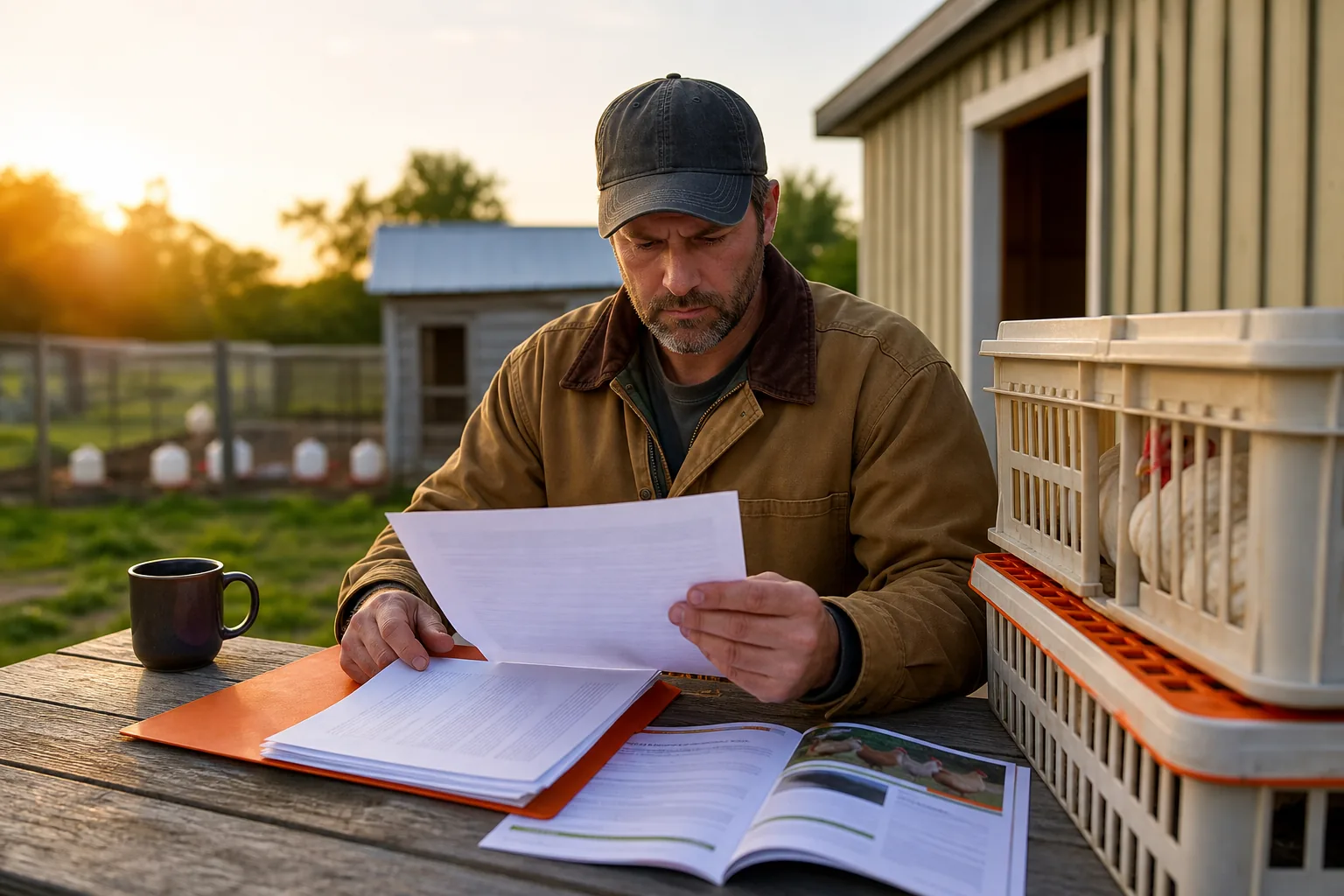
- What labels, crates, and arrival times do you require?
The Easy Homestead helps you search for local meat processors by ZIP code or county. Use the directory to build a short list, then confirm inspection status and availability with each processor. A listing saves research time. It does not replace your duty to verify the rules.
Book early. Small plants often fill their calendar months ahead, especially during fall and holiday seasons.
 Save
Step 2: Plan the animals, supplies, and processing date
Good small batch meat processing begins with a batch plan that matches your freezer, labor, and chosen processor.
Write down the number of animals, target finish date, expected carcass size, and storage space. Then work backward. Your processing day should not arrive before your packaging supplies, ice, fuel, clean water, crates, knives, and freezer space are ready.
For a chicken batch, feed is often the largest running cost. One documented small-scale example used 16 to 20 pounds of feed per bird. That flock’s feed bill reached $520. The same example bought 60 Freedom Ranger chicks at $2.15 each, for a total of $130.
Those figures are a planning reference, not a promise. Feed prices, losses, breed, finish weight, and local supply will change your result. Track your own feed use by batch. That record will help you decide if a second round fits your farm.
Budget the equipment separately from the animals. A used chest freezer cost $75 in the cited example. Packaging supplies and propane are separate line items, with propane costing $20. A chicken tractor with a metal roof cost $600. Some equipment may serve other farm jobs, which changes its value to you.
Research across 52 collected items found a median equipment cost of $302, but the average was much higher because one premium setup reached $8,461. That gap matters. A basic line can work, while a higher-capacity plucker can swallow the budget.
Before processing day, make a supply list in four groups:
- Live-animal handling: crates, shade, straps, and a clean holding area.
- Processing: kill cones, scalder, plucker, knives, tables, and containers.
- Cold control: ice, chill tubs, refrigerator space, and a freezer.
- Pack-out: shrink bags or vacuum bags, labels, markers, and a way to record each batch.
Plan labor by task, not by head count alone. One person can handle a small amount of work, but the line slows when the same person must scald, pluck, gut, wash, chill, and pack. Assign one person to watch temperatures and sanitation. That role catches problems early.
Use small farm meat processing planning guidance when you need to match the inspection level, booking date, cut sheet, transport plan, and freezer space.
Set a rain plan too. Wet crates, muddy floors, and poor lighting turn a sound plan into a hard day.
Step 3: Set up a clean, humane processing workflow
Your small batch meat processing line should move in one direction, from live handling to finished cold product.
Clean the work area before animals arrive. Set up separate zones for dirty work, plucking, evisceration, chilling, and packing. Keep clean bags away from feathers, blood, gut contents, and used tools.
Handle birds during cool hours when possible. Catch them at night or early morning. Pick each bird up by its sides. Avoid carrying too many in one hand, since rough handling can cause injury and bruising.
Keep crates shaded and avoid long waits. Wash and sanitize reusable crates after each use. If you transport birds, protect them from harsh weather and secure the load so the crates cannot shift.
The basic poultry sequence is:
- Place the bird in a correctly sized kill cone.
- Use the humane killing method required by your training, faith practice, and local rules.
- Allow full bleeding before scalding.
- Scald until feathers release without cooking the skin.
- Run the bird through a drum plucker or remove feathers by hand.
- Eviscerate without cutting the gut or contaminating the body cavity.
- Trim and inspect the carcass.
- Chill it promptly before packing.
Research sources commonly cite a scald range of 130 to 170 degrees Fahrenheit. Your exact method needs a controlled temperature, a consistent dip time, and a test bird before the full batch. A cold scald leaves feathers behind. An overly hot scald damages the skin.
The small-scale poultry processing resource covers handling, slaughter, equipment, waste, packaging, and carcass quality. Small plants can be hard to find because large plants often cannot make small custom batches pay.
Do not improvise the humane step from a short video. Learn the method before processing day, and make sure every worker knows who is responsible for each animal.
Waste needs a plan as well. Decide where feathers, blood, offal, wastewater, and damaged packaging will go. Your county may regulate disposal. If the drain, soil, or compost system cannot handle the load, hire a processor instead.
Key Takeaway: A clean line protects carcass quality, while a calm handling plan protects the animals and the people doing the work.
Step 4: Choose between home processing, hired help, and a facility
There are three workable paths for small batch meat processing: do the work yourself, hire help for a home setup, or use a processing facility.
Choose by checking your legal status first. Then compare labor, equipment access, travel time, cold storage, and the kind of product you want back.
| Setup | Best fit | Main strength | Main risk |
|---|---|---|---|
| Home processing | A farm that qualifies for exemptions | You control the pace and workflow | You carry the sanitation, waste, labeling, and equipment burden |
| Home processing with hired help | A batch that needs more hands | Lower equipment cost if you already own or borrow gear | Labor must be trained and scheduled |
| State inspected facility | In-state sales within the allowed rules | Less on-farm setup and a clearer handoff | Slots may fill months ahead |
| USDA inspected facility | Broader sales or resale needs | More flexibility for approved marketing channels | Distance, minimums, and fees may make small batches hard |
| Mobile unit | A farm with a suitable work area | Less live-animal travel | Service area, permits, and scheduling vary by provider |
One small-scale chicken example spent $150 on three helpers. The same example found a local facility charging $4.50 per bird at a bulk rate. Your smaller batch may cost more, so ask about minimum charges and extra fees before choosing.
Home processing can make sense when you already have a freezer, clean water, safe drainage, and trained help. It makes less sense when you need to buy every major tool for one batch.
A facility may also give you better consistency. Ask how they chill birds, what packaging they return, how they label products, and how they handle custom instructions. If they will not explain the handoff, keep looking.
Use custom meat processing search tips when comparing local plants, mobile units, and custom butchers. The Easy Homestead can help you find listings by county, but you still need to ask the inspection and service questions yourself.
Pick the setup you can run safely on your busiest day, not the setup that looks cheapest on paper.
Step 5: Chill, age, package, and freeze the meat safely
Cold control is the final test of small batch meat processing. A clean carcass can still suffer if it sits warm or enters the freezer with trapped air.
Move finished meat into a cold bath or refrigerator as soon as the carcass is ready. Keep dirty water out of the chill area. Replace ice when needed, and check the actual temperature rather than guessing from touch.
Poultry usually needs prompt chilling rather than a long aging period. Follow the instructions from your processor or extension service for the species and cut. If the meat smells wrong, feels slimy, or warms beyond your safe control plan, do not pack it for the freezer.
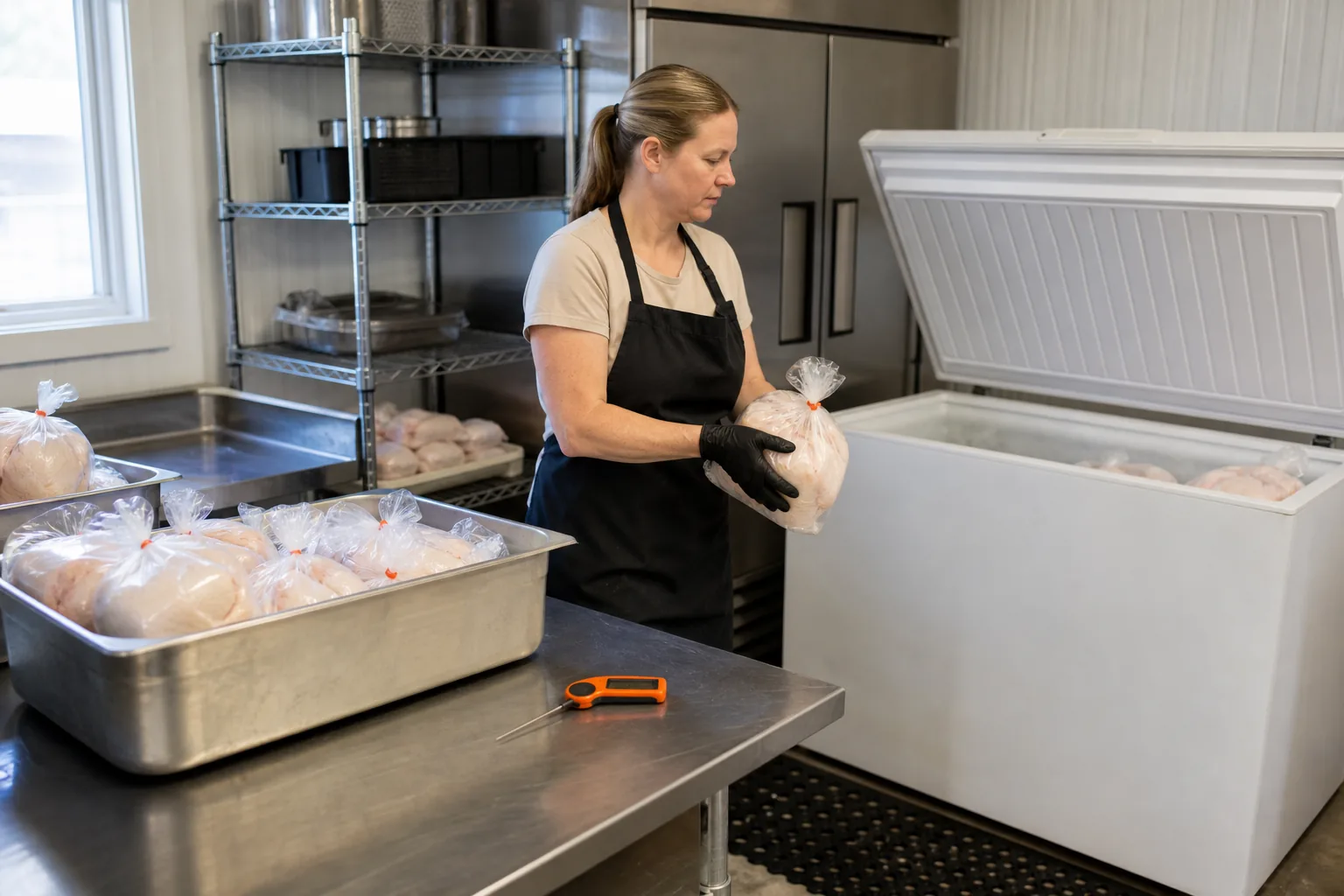
Choose packaging based on storage time and freezer space. Shrink bags can hold whole birds tightly after hot-water shrinking. Vacuum bags reduce air around smaller cuts. Leave enough room for a secure seal and check every seal before stacking packages.
Label each package with the animal type, cut, weight if you track it, and processing date. A batch code helps when several processing days look alike. Freeze packages flat first if space allows. Once solid, stack them so air can move around the freezer.
A used chest freezer cost $75 in one small-farm cost example. That price is not a current market promise, but it shows why cold storage belongs in the first budget, not the last.
Pro Tip: Freeze a test package first. Check the seal after a day, then inspect it again after thawing before you pack the full batch the same way.
Keep a short record of chill temperature, pack date, freezer location, and any damaged seals. That record will tell you where the line needs work next time.
 Save
FAQ
What is small batch meat processing?
Small batch meat processing is the slaughter, dressing, cutting, chilling, packaging, and freezing of a limited number of farm animals. The work may happen on your farm, with hired help, through a mobile unit, or at a custom facility. The legal path depends on species, volume, sales, inspection status, and state rules.
Do I need a license to process meat at home?
You may need permits or licenses, even when a federal inspection exemption applies. Small batch meat processing can still fall under state and local rules for zoning, water, waste, labeling, sales, and worker safety. Ask your county extension office and relevant local and state offices before processing or selling meat.
Is it cheaper to process chickens at home?
Home processing can cost less when you already own or can borrow the main equipment. A batch may incur costs for packaging supplies, propane, and labor, while a facility charged $4.50 per bird at a bulk rate. Your result will depend on batch size, equipment rental, labor, travel, freezer space, and local fees.
What equipment do I need for a small poultry batch?
Small batch meat processing usually needs crates, kill cones, a scalder, a plucker or hand-plucking tools, sharp knives, clean tables, chill containers, ice, packaging, labels, and freezer space. Start with your batch size. A plucker may cost far more than the rest of your setup, so borrow or rent before buying.
How do I find a meat processor near me?
You can find a meat processor through your state directory, county extension contacts, farm networks, and The Easy Homestead. Search by ZIP code or county, then ask each listing about inspection status, species, minimum batch size, booking lead time, packaging, and pickup rules. Confirm every answer before transporting live animals.
Conclusion
For most homesteads, the best first move is to find and verify a local processor before buying major equipment. Search The Easy Homestead by county, confirm the legal path with your state or county office, then book a date and build your supply list backward from it.