Small farm meat processing gets costly when you book first and ask questions later. Inspection status, cut options, lead time, pickup rules, and freezer space all need a plan before the animal leaves your farm. Our directory review found USDA inspection listed for only 6 of 14 processors, while 13 listed no minimum animal count. That means small orders may be welcome, but you still need to verify the details yourself.
Step 1: Decide how you will use the meat
Start by deciding who will own and use the meat after processing. Your answer sets the inspection and sales rules before you compare butcher shops.
If the meat is for your household, you may use a custom-exempt processor, subject to your state’s rules. Custom-exempt meat is for the owner, the owner’s household, and certain nonpaying guests or workers. It must be marked “not for sale.” You can’t take custom-exempt cuts to a farmers market or sell individual packages later.
If you plan to sell finished cuts, choose a state-inspected or USDA-inspected plant. State-inspected meat is generally limited to sales within that state. USDA-inspected meat can enter interstate commerce. State rules can differ, so check your agriculture department before you accept deposits or promise delivery.
Review the difference between federal inspection, state inspection, and custom exemption before you put a live-animal sale in writing.
Write down your model in one sentence. For example: “I’m keeping this hog for our freezer,” or “I’m selling inspected retail cuts to customers in this state.” That sentence will guide every call and form that follows.
Also decide if you need a mobile unit. On-farm slaughter can reduce hauling for large animals, but it brings rules for the site, waste, access, and carcass transport. A mobile butcher is not automatically a custom-exempt operator, so ask what license and inspection status apply.
By now you should have a clear use case, a sales plan, and the inspection level you need. If you’re still unsure, pause the booking and ask your state agriculture office.
Step 2: Find a processor that handles your animals and volume
For small farm meat processing, search by species first. A shop that handles beef may not take goats, poultry, rabbits, or wild game.
Make a short list with these fields:
- Species accepted.
- Inspection status.
- Custom or retail work.
- Mobile or fixed-site service.
- Minimum animal count.
- Estimated booking window.
- Cutting and value-added services.
- Distance from your farm.
The Easy Homestead helps you search local processors by ZIP code or county. That matters when the closest suitable shop is several hours away. Search the directory first, then cross-check each listing with the processor before you commit.
Our August 2026 review showed why this work takes care. Only 43% of the 14 listed processors had USDA inspection recorded. Nearly all gave no minimum order, but most also gave no public lead time or price structure.
Limited processing access can be a bottleneck for small producers.
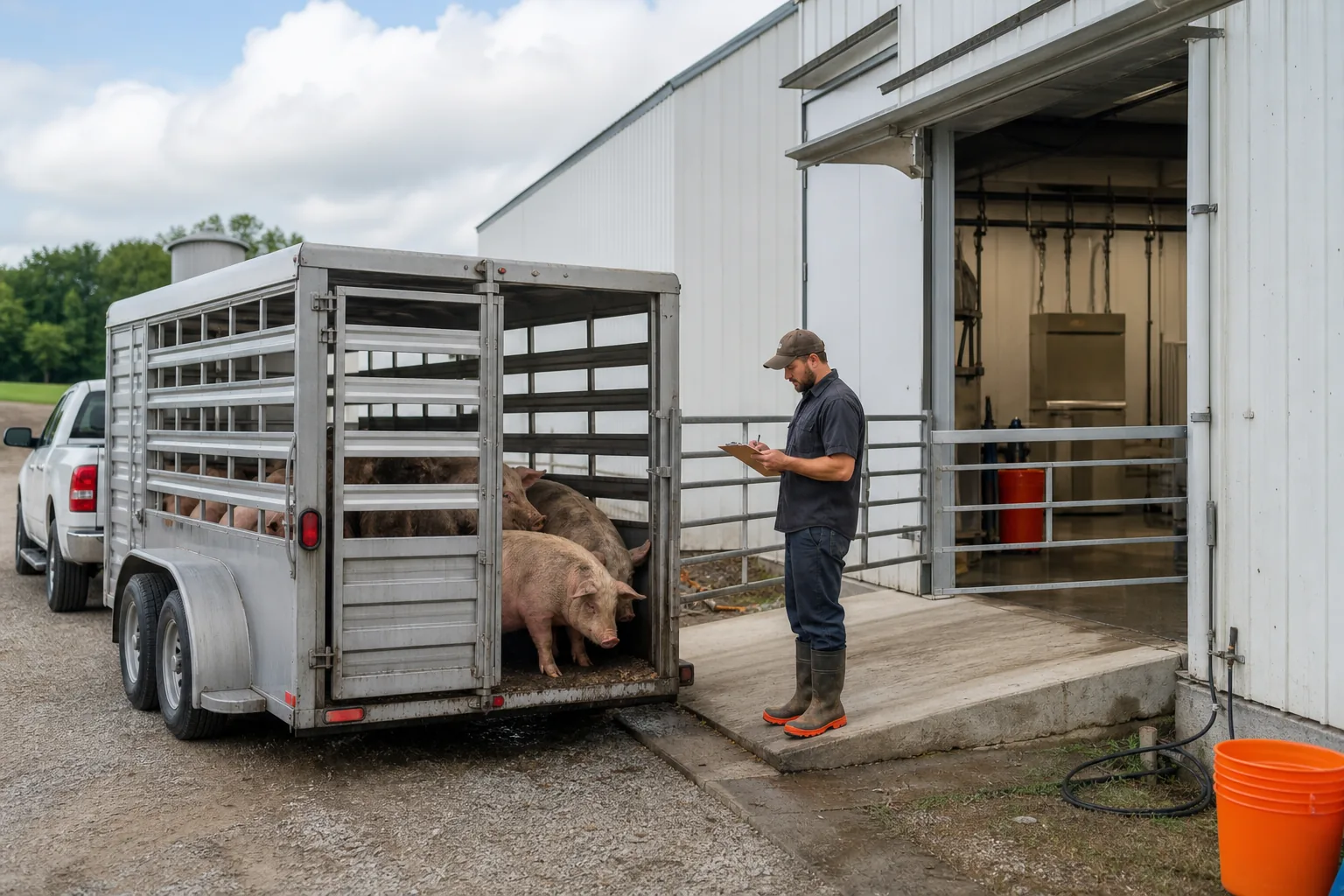
Ask nearby farmers who handles their animals, but don’t stop with one recommendation. A good processor for a neighbor’s two beef cattle may not fit your four goats or your poultry schedule.
Use The Easy Homestead when Facebook posts turn into a three-week hunt. The directory is built for the service gaps that working farms face, including processors, local butchers, mobile farm services, and large-animal care.
By now you should have three to five plausible options. Keep one backup. Processors book out, and a backup is worth more than a perfect plan with no open date.
Step 3: Ask the processor the questions that prevent costly surprises
Good questions turn a vague quote into a usable processing plan. Send the same short list to every processor so you can compare answers.
Confirm the legal fit
- Are you USDA inspected, state inspected, custom exempt, or more than one?
- Can you process meat for my intended sales channel?
- Can the product cross state lines?
- What records or ownership forms do you need?
Do not treat “inspected” as a complete answer. Ask which inspection program applies to the exact product you want made. Inspection can differ by species, slaughter work, processing work, and sales route.
Confirm the shop’s work
- Do you accept my species and breed size?
- Do you handle one animal at a time?
- Can you make sausage, bacon, smoked items, patties, or cured products?
- Do you provide vacuum sealing or another package style?
- Who supplies labels and cartons?
Ask how the shop identifies your animal and order during cutting. This matters when several farm orders enter the same room. It also matters when you split one animal among household members.
Pricing deserves its own call. Ask if the charge uses live weight, hanging weight, carcass weight, pounds processed, a flat slaughter fee, or separate fees for cutting and packaging. Ask about storage fees, missed appointments, extra cuts, smoking, curing, and pickup delays.
Published prices are rare in this market. In our review, only one processor listed detailed per-pound charges, while most gave no public cost structure. Get the quote in writing, even if the shop only gives a range.
You can also review this resource for terms to use when discussing direct sales and processing arrangements. It won’t replace your state’s rules, but it may help organize the conversation.
Lead time is another weak spot. Ask for the slaughter date, expected ready date, pickup hours, and what happens if the shop falls behind. If the answer is “we’ll let you know,” ask when you should check back.
By now you should have a written answer on inspection, species, cost method, services, and timing. If a processor won’t answer basic questions, keep looking.
Step 4: Book the date and prepare the animal and paperwork
Book as soon as you know your target harvest window. Small processors often fill dates months ahead, and some appointments may be made about a year in advance.
Ask what counts as a confirmed booking. Some shops require a deposit. Others may hold a date only after they receive animal details or a signed form. Write down the appointment, arrival time, contact method, deposit terms, and cancellation rule.
Record the animal’s tag number, species, sex, breed, owner, and target weight. Add any health notes the processor needs. If you’re selling live animals under a custom arrangement, keep ownership records that match your state’s rules.
Prepare the animal without adding avoidable stress. Check gates, trailer floors, ramps, and tie points before loading day. Make sure the truck can tow the loaded trailer. Poor handling can lead to bruising or injury, which may lower carcass value or cause the processor to reject the animal.
For on-farm work, confirm the mobile unit’s access route. Mark low branches, soft ground, narrow turns, and places where a truck may need to back. Ask who handles water, power, waste, carcass loading, and cleanup.
For fixed-site slaughter, ask where you unload and whether you need to arrive with an empty trailer. Bring the exact paperwork the shop requested. Put a printed copy in the truck and keep a photo on your phone, but don’t rely on a phone signal at a rural plant.
Rules can change by state and species. Review applicable requirements on custom arrangements, ownership, and sales before making plans.
By now you should have a confirmed date, a prepared route, matching animal records, and a clear plan for delays. Keep the processor’s instructions in the same farm file as your breeding and health records.
Step 5: Build a cut sheet that matches how your household cooks
A cut sheet turns one animal into the meals you’ll actually use. Don’t copy a standard order if your freezer and kitchen work differently.
Start with your most-used meals. If you cook ground meat twice a week, reserve enough trim for that. If you make stew in winter, ask for stew portions that fit your pot. If you smoke pork, confirm which cuts can be cured and whether that service costs more.
Then set package sizes. A large family may want bigger ground-meat packs. A household of two may prefer smaller packs that thaw fast. Ask how many pieces go in each package and how the shop labels weight and cut.
Talk through every unfamiliar term. “Bone-in,” “boneless,” “roast,” “steak,” “chop,” “trim,” and “ground” can mean different things to different people. Point to the processor’s form and write notes beside each choice.
Value-added work can change both cost and timing. Sausage, smoked meat, cured items, and specialty cuts may take longer than fresh cuts. In our review, listed services ranged from sausage and charcuterie to wild-game work and lamb harvesting, but capacity details were often missing.
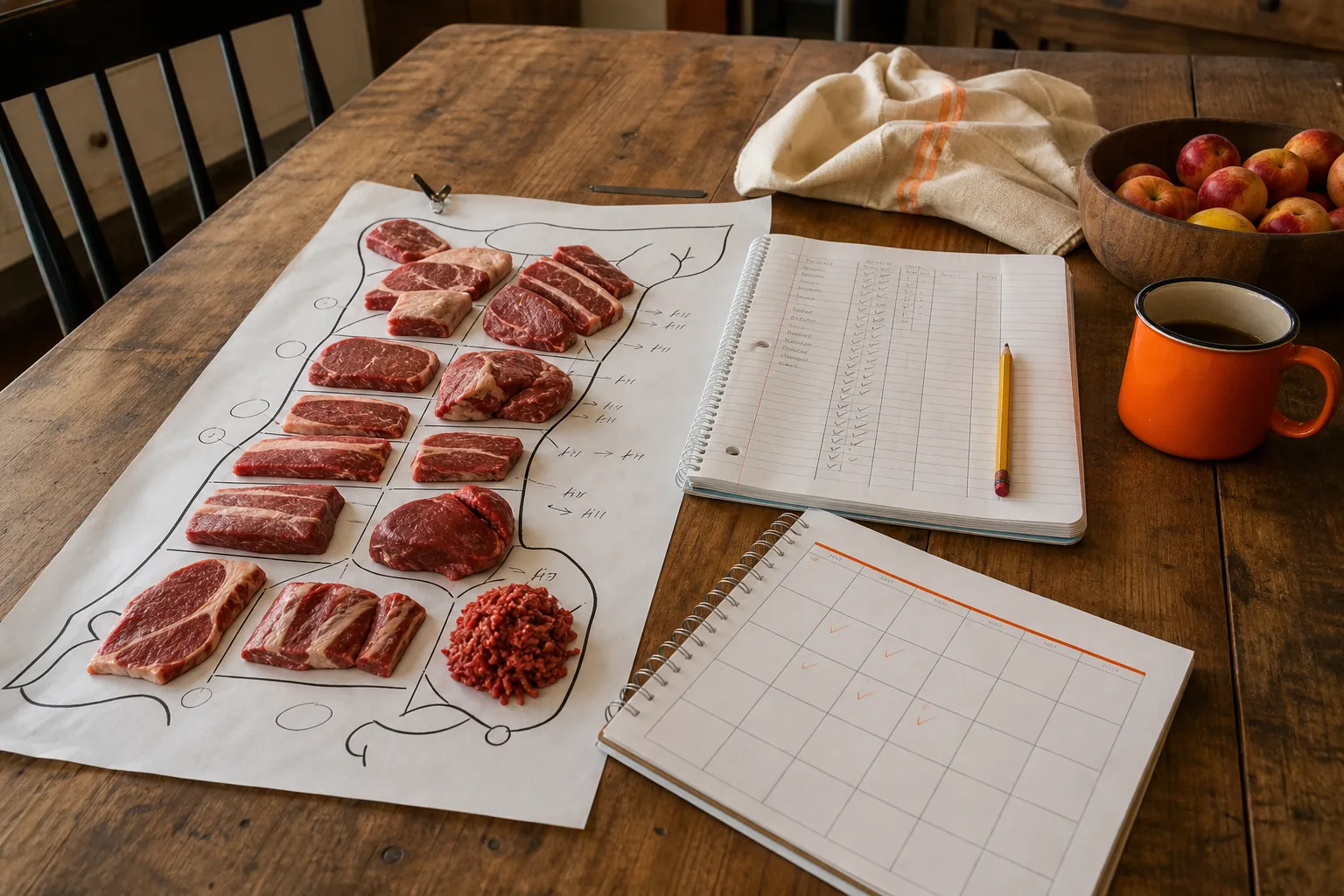
Keep a backup choice for scarce cuts. For example, if the shop can’t make a certain sausage, direct the trim to ground meat or a different sausage blend. Ask which choices create extra fees before you sign the form.
Keep one copy of the final cut sheet. The processor may note actual weights, sausage batch details, freezer location, or changes made during cutting. Those notes help when the invoice arrives and when you plan the next animal.
A written tracking system can help processors follow orders through cutting, value-added work, invoices, and pickup. You can adapt the same habit on your farm with a paper folder or spreadsheet.
By now you should have an approved cut sheet, package sizes, backup choices, and a cost question for every special request. The best cut sheet is the one your freezer can hold and your household will finish.
Step 6: Plan transport, freezer space, and pickup before processing day
Processing isn’t finished when the butcher says your order is ready. Small farm meat processing ends with a cold, organized handoff.
Ask how many boxes to expect and whether the order will be frozen solid at pickup. Measure your vehicle space before the day arrives. Use clean coolers or insulated containers for the trip, especially when the processor is far from your farm.
Make freezer room before slaughter. Remove old stock, check the door seal, and test the temperature. Leave space for air to move around new boxes instead of packing every gap.
Set up zones in the freezer. Keep new stock in one area until you log it. Store older stock where you can reach it first. Mark each box with the species, cut date, package type, and batch or order note.
A temperature alarm can warn you about a failed freezer or power outage. A generator or backup power plan adds another layer of protection. Choose a system you’ll test before you need it.
Use first-in, first-out rotation. The box that entered first should leave first. Keep a freezer list on paper or in a shared sheet, then update it after every pickup and sale.
If you run a farm business, separate household stock from customer stock. Give each customer an order code. That prevents a ground-beef pack from the wrong animal landing in the wrong delivery box.
Cleaning matters too. Small processors and on-farm units need a sanitary work area before and after handling carcasses. A commercial cleaning supplier can provide equipment and cleaning supplies for farms and processing sites.
Use The Easy Homestead when you need to replace the processor, find a mobile unit, or build a better local service list. We’re here to reduce the search time, not to tell you which processor to trust without checking.
By now you should have a confirmed pickup slot, cold transport, open freezer space, labels, and an inventory plan. If any one of those is missing, reschedule pickup before the meat is ready.
FAQ: small farm meat processing
How far in advance should I book a meat processor?
Book as soon as you know your target harvest window, because small processors may fill dates months ahead. Ask for the next open slaughter date and the expected pickup date. If you raise animals seasonally, contact the shop before the animals reach finishing weight. Keep a backup processor in case weather, capacity, or equipment changes affect the first booking.
What is the difference between USDA-inspected and custom-exempt meat?
USDA-inspected meat can enter interstate commerce, while custom-exempt meat is for the animal owner’s personal use and is marked “not for sale.” State-inspected meat usually stays within the state unless a special federal program applies. Confirm the exact status for your species, product, and sales plan before processing.
Can a small farm process only one animal?
Yes, one-animal processing may be available, but you must ask each processor. Treat missing data as an unanswered question. Ask about minimum fees even when there is no minimum animal count.
What should I ask a local butcher before booking?
Ask about inspection status, species, booking time, price method, cut options, packaging, value-added work, storage, pickup, and cancellation terms. Also ask how the shop tracks your animal through slaughter and cutting. Written answers help you compare processors and avoid a surprise charge when the order is ready.
How do I find a processor near my farm?
Search by county or ZIP code, then verify each listing directly with the processor. The Easy Homestead helps working homesteaders find local meat processors, but listings don’t replace your own inspection and scheduling check. Ask at the feed store and compare notes with nearby farms when directory coverage is thin.
Choose the processor that fits your legal sales plan, species, volume, cut needs, and pickup route. Then write down the open questions and search by county on The Easy Homestead’s local meat processor guide before you book.
For related farm planning, our How to Find Fresh Eggs Near You | The Easy Homestead article shows the same local-search approach for poultry suppliers. You can also browse poultry processing near you when chickens are part of your farm plan.
Keep your search focused on services you’ll use. Our Do People Eat Roosters | Yes, How to Cook | The Easy Homestead article may help when you’re deciding how poultry fits your freezer plan.
Farm work also creates nearby needs beyond meat. The English Shepherd | The original farm dog | The Easy Homestead article covers a working farm dog breed, while our Best Chicken Coop for Laying Hens | The Easy Homestead page focuses on poultry housing.
Some of our older seasonal and farm posts remain in the Blog - Page 7 | The Easy Homestead archive. You can also browse the wider Blog - Page 13 | The Easy Homestead archive when you need another farm planning idea.
Find a verified meat processor near you on The Easy Homestead. Search listings by county, confirm the details, and book before the open dates disappear.