
State-inspected processors can be hard to compare because availability changes by county, animal type, and inspection status. The best choice depends on whether you need custom processing for your freezer or inspected meat for sale. Here are the strongest places to start when you need a processor near your farm.
1. State-inspected custom meat processors for local farm animals
State-inspected custom meat processors fit farms that need inspected processing within state sales rules. They are often the strongest match for a small farm selling meat inside its state, but the exact rules come from the state program.
Before you read reviews, confirm what the processor’s inspection status lets you do. State inspection usually relates to meat sold within that state. It does not automatically give you the same sales reach as federal inspection. A processor may also accept custom work, where the meat belongs to the animal owner and is not sold through normal retail channels.
Ask the processor how labels work. Ask who supplies the inspection mark. Ask if the plant handles slaughter, cutting, wrapping, smoking, curing, or only some of those jobs. A five-star review means little if the shop cannot make the cuts or labels you need.
State programs also differ in how they license plants and review sanitation. For example, official state program pages describe plant licensing, inspection, and processing requirements in different ways. That is why a review should support your questions, not replace them.
Our comparison of USDA and state-inspected meat explains the main inspection paths before you book. Read it alongside the listing details, then verify the current status with the processor and state agency.
Best fit
Choose this category when you sell meat within your state and need a plant that can handle inspected processing. It also fits farms that want a local relationship with a shop instead of shipping animals far away.
What reviews should tell you
- How well the shop follows the agreed cut sheet.
- How the shop handles changes or missing items.
- Whether pickup dates match the promised schedule.
- How clearly staff explain inspection and labeling limits.
The caveat is capacity. A good state-inspected plant may still have a long wait, especially during fall harvest season. Ask about the next open slot before you arrange transport.
2. Mobile meat processing units for farms with limited local options
Mobile meat processing units bring approved equipment to the farm or another permitted site. They can be a strong option when the nearest fixed plant is too far away, but state inspected meat processor reviews should include the unit’s license and inspection limits.
Mobile work can reduce animal transport and help a farm coordinate several animals at once. It also shifts more planning onto you. The site needs enough room for the unit, clean water, power or fuel access, waste handling, drainage, and safe movement around livestock.
Do not assume that every mobile butcher can process meat for resale. Some mobile services work under custom rules only. In that case, the meat may be for the owner’s personal use and marked as not for resale. That distinction matters if you plan to sell cuts, supply a restaurant, or fill customer orders.
Licensing requirements can be specific for mobile operations. See the official custom meat licensing requirements for an example.
Ask which unit will arrive at your farm, not only which company name appears in a review.
Best fit
Mobile processing fits farms with suitable space, several animals, or limited access to fixed plants. It may also help when animal transport creates a safety or welfare problem.
Questions to ask before booking
- Is the service custom, state inspected, or USDA inspected?
- What products can the unit make on site?
- Who handles chilling and final storage?
- What must the farm provide before arrival?
- How does the operator handle waste and cleanup?
Reviews can tell you whether an operator arrives prepared and communicates well. They cannot prove that a current license covers your planned sale. Confirm that point in writing.
3. Local butcher shops with state inspection access
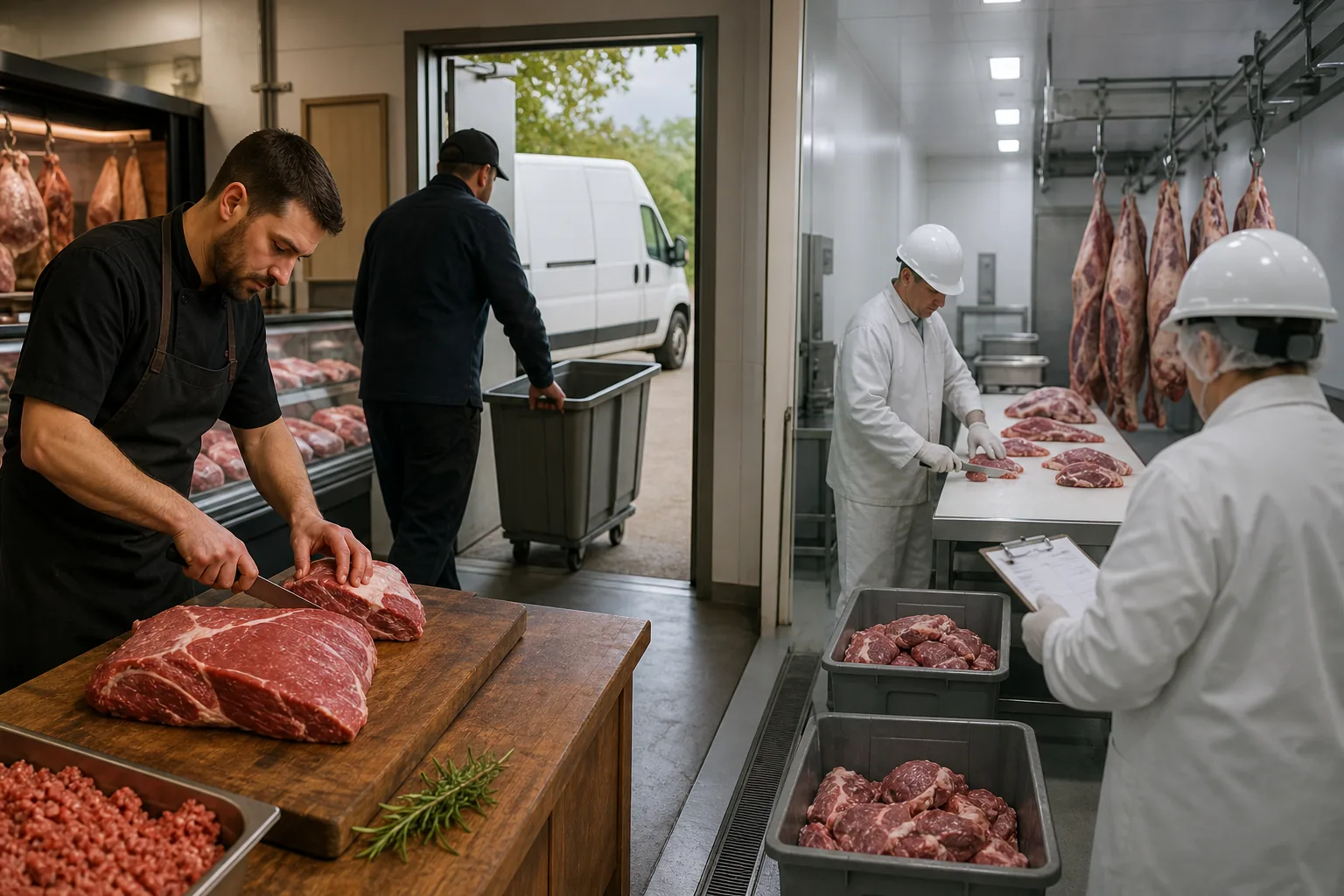
Local butcher shops with state inspection access are useful when you want a nearby handoff for cutting, wrapping, smoking, or curing. They may not all handle slaughter, so state inspected meat processor reviews should make that split clear.
 Save
Some shops accept a carcass from a licensed slaughter facility. Others manage the full process. A shop may also work with state inspectors on certain products while handling custom orders under a different rule. The name on the sign does not tell you which service you are buying.
Ask where slaughter happens and where cutting happens. Confirm who owns the meat during each stage. If you plan to sell it, ask how the label will show the inspection mark and whether the shop can meet your package or weight needs.
A local shop can be a good fit for a farm that needs personal communication. You can often discuss a cut sheet face to face, which helps prevent costly errors. But proximity does not guarantee open capacity. A shop near you may still be booked through the next season.
Best fit
Choose this category when you value a nearby shop and need custom cutting or finished products. It works well for farms that already have a slaughter plan or use a separate inspected facility.
Review signals worth trusting
- Customers mention accurate weights or package counts.
- Reviews explain how the shop handled a missed instruction.
- The business states which animals and services it accepts.
- Recent reviews describe the same service you need.
Be wary of reviews that praise only taste or friendliness. Those details help, but your main risk is a mismatch between the shop’s inspection status and your sales plan.
4. USDA-inspected processors when you need broader sales options
USDA-inspected processors are the right category when you need meat that can move across state lines or enter broader retail channels. They often have stricter scheduling limits because farms, restaurants, and other sellers compete for the same plant capacity.
State inspected meat processor reviews can help you compare local options, but they should not blur the difference between state and federal inspection. If your customers live outside your state, or if a buyer requires federal inspection, ask for USDA status before you discuss cut details.
USDA inspection also does not mean every plant provides the same service. One processor may handle beef but not poultry. Another may cut whole animals but decline custom smoking. Ask about species, minimums, packaging, labels, storage, and pickup windows.
For farms selling direct, the inspection level should match the sales plan. A processor that looks impressive on paper may be the wrong choice if it sits too far away or cannot meet your harvest window. Distance affects freight, animal stress, freezer planning, and your time.
| Decision point | State-inspected plant | USDA-inspected plant | Custom processor |
|---|---|---|---|
| Typical sales reach | Within the state, subject to state rules | Broader sales reach, subject to federal rules | Owner’s use, not normal resale |
| Best use | Local farm sales | Retail, wholesale, or cross-state sales | Personal freezer supply |
| Review focus | State status and local capacity | Federal status and buyer requirements | Clear not-for-resale terms |
| Main risk | Sales limits or long booking times | Distance and limited slots | Using meat for resale when rules prohibit it |
If you need help comparing federal facilities, our guide to finding a USDA-inspected butcher near you gives you more places to search and questions to ask.
Pick USDA inspection because your buyer or sales route requires it. Do not pick it only because the label sounds more suitable. The correct facility is the one that matches your market and your farm’s schedule.
FAQ
What does state inspected mean for meat processors?
State inspected means a state meat inspection program oversees the plant under that state’s rules. Meat from the plant may have limits on where it can be sold. State inspected meat processor reviews can help you find candidates, but you still need to confirm the current license and sales reach with the processor.
Can I sell meat from a custom processor?
Usually, custom processing is for the owner’s personal use and the meat is marked not for resale. That means a custom processor may not fit a farm selling cuts to customers. Ask the processor which inspection status applies before booking, then check your state’s rules for the exact sales limits.
Are mobile meat processors state inspected?
Some mobile meat processors are state inspected, while others work under custom rules only. The unit, operator, location, and service may each have approval requirements. State inspected meat processor reviews should mention inspection status, but you should confirm which vehicle will arrive and what products it can legally produce.
How far ahead should I book a meat processor?
You should contact processors before your animals reach finished weight because many plants book months ahead. Start with your target harvest window, then ask about species capacity, deposits, transport, and freezer pickup. Reviews can reveal booking problems, but only the processor can confirm an open date.
What should I look for in processor reviews?
Look for recent reviews that discuss the exact service you need. Pay attention to cut-sheet accuracy, communication, pickup timing, package quality, and how the shop handled mistakes. A review that only praises flavor or friendly staff gives less help than one that explains the full handoff.
Conclusion
Start with The Easy Homestead when you need a processor near your farm, then confirm inspection status and sales limits before you reserve a date. Search by ZIP code or county, compare the closest workable options, and ask each processor the same questions about species, labels, timing, and ownership. That is the fastest way to turn scattered reviews into a booking you can trust.