A sudden drop in goat milk usually has a cause you can find. Start by confirming the drop, then check the udder before changing feed or reaching for a dewormer.
Health problems make up most reported causes, but nutrition and management issues often give you the clearest first steps. Work through this order so you don’t miss a sick doe while chasing a feed problem.
Step 1: Confirm that milk production has actually dropped
Troubleshooting low milk production in goats starts with good records, not a guess based on how full the udder feels. A doe can seem low one morning because she kidded recently, fed a kid overnight, or had a longer gap between milkings.
Write down the amount from each milking for several days. Use the same container and measure at the same points in the routine. Note which kids are nursing, when they last nursed, and whether the doe was milked fully.
Compare the current amount with that doe’s own recent pattern. Don’t compare a first freshener with a mature doe. Breed, stage of lactation, litter size, body condition, heat, and pregnancy can all change the expected yield.
| What you notice | First check | What it may tell you |
|---|---|---|
| One low milking | Timing and kid access | The udder may not have had time to refill. |
| Lower output for several milkings | Feed, water, stress, and udder health | A lasting change needs a closer check. |
| Less milk from one half | Udder symmetry and teat flow | Think local udder trouble before changing the ration. |
Keep the sample separate if one side looks abnormal. Label it with the doe’s name and the date. That record helps a livestock vet see whether the problem is steady, getting worse, or linked to one teat.
Records help show whether a change is steady or limited to one milking. For additional background, see this review.
Key Takeaway: Measure the change across several comparable milkings before you decide that production has truly fallen.
Step 2: Check the udder and rule out mastitis or injury
Udder trouble can cut milk output fast, so this step comes before a major feed change. Look at each half on its own. Compare heat, swelling, firmness, color, and how easily milk moves through each teat.
Wash your hands before milking. Strip the first few streams into a clean cup, not onto the ground. Look for flakes, clots, a pink or red tint, watery milk, or an unusual smell. A doe may also kick, flinch, stand stiff, or refuse to let down milk when the udder hurts.
Mastitis can be mild at first. A doe may still eat and act normal while one half produces less milk. A hot, hard, painful quarter or a doe that seems sick is more urgent. Don’t massage a painful udder hard, and don’t put leftover medicine into the teat without veterinary direction.
Check for a blocked teat too. A small injury, dried milk plug, scab, or swelling near the teat end can slow flow. Use clean technique and stop if the doe shows pain. If milk changes, swelling worsens, or the doe has a fever or poor appetite, contact a livestock vet promptly.
Keep the doe’s milk separate until you know what’s wrong. Clean the milking gear after use. If you need a provider who works with goats, our guide to finding a goat vet near you explains what to ask before you book a farm visit.
One firm rule helps here: an uneven udder or abnormal milk is a health problem until a vet rules it out. Feed can wait while you check the animal.
Step 3: Correct feed, water, and body-condition problems
Nutrition is a common place to look during troubleshooting low milk production in goats because you can inspect the ration today. A doe needs enough usable energy, protein, minerals, and vitamins to support milk. Poor browse or a sudden drop in forage can show up as lower output.
Start with the forage. Check whether the hay is stemmy, dusty, moldy, or simply running short before the next feeding. Make sure the doe can eat without being pushed away by stronger goats. Watch her chew and ruminate. A full feeder does not prove that she is getting enough.
Then review grain. A high-grain, low-fiber diet can lower milk fat and upset the rumen. Don’t double the grain because production fell. Make changes in small steps, keep forage available, and watch manure, appetite, and rumen activity.
Water is easy to miss. Empty or dirty buckets can cut intake, especially in warm weather. Refresh water and check that timid does can reach it. A doe that drinks less because water tastes foul or sits in a dirty trough may eat less too.
Feel body condition over the ribs and loin. A doe that is losing weight while milking needs a closer health and ration review. A doe carrying too much condition may also have a diet problem, but the answer is not the same as feeding a thin doe more grain.
A balanced diet of energy, protein, minerals, and vitamins is a key response to inadequate nutrition. Use that principle, then ask a livestock vet or qualified nutrition adviser to review the actual ration.
Our goat feed guide can help you review hay, browse, minerals, grain, and pellets without changing five things at once. Change one major input, record the date, and watch the doe for several days.
Pro Tip: Write down feed changes beside the milk record. A drop that follows a hay switch tells you more than a feed change made at the same time as three other changes.
Step 4: Standardize milking and manage kid access
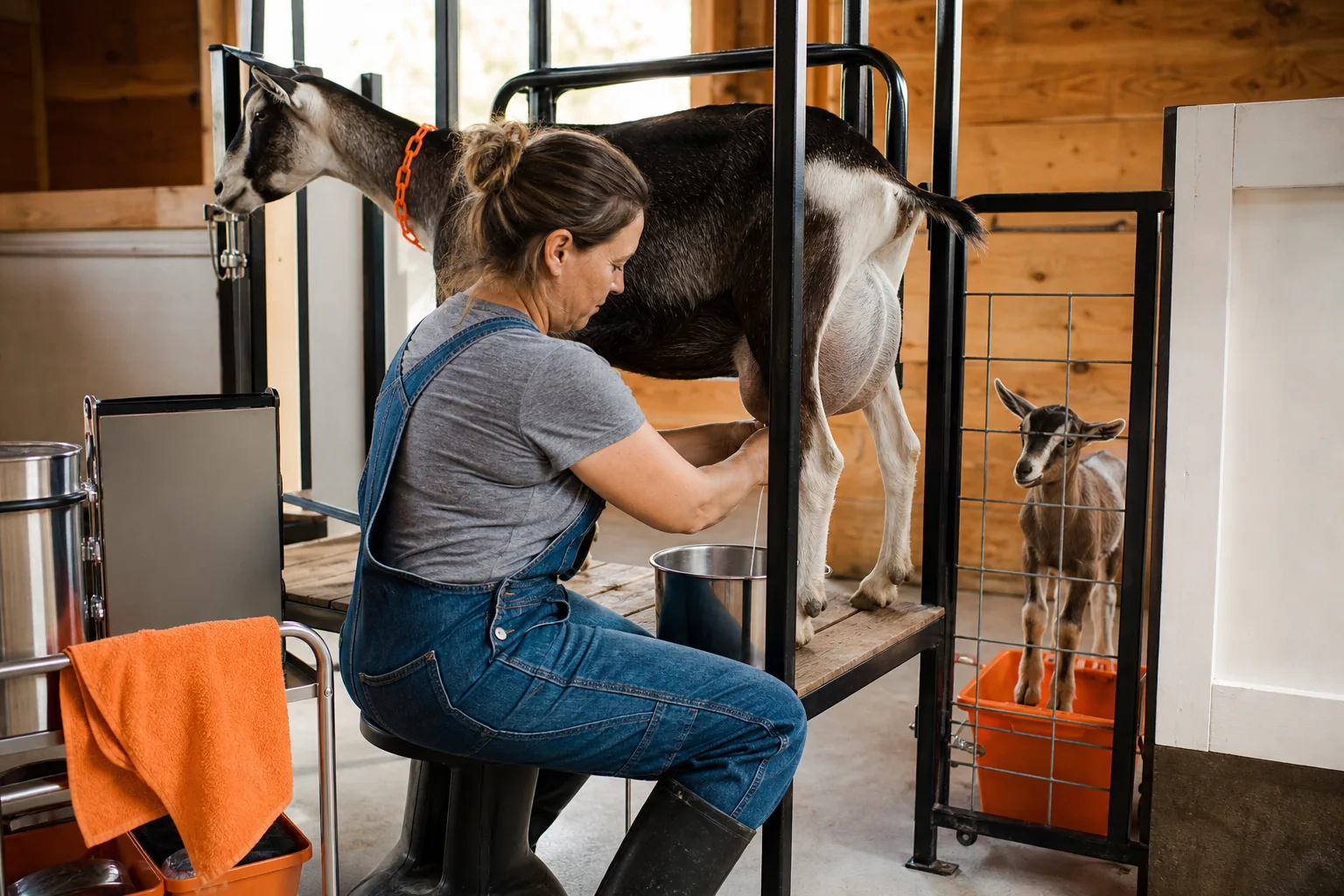
Milking routine can make a healthy doe look unproductive. During this step, keep the time, order, equipment, and kid separation as steady as you can.
Milk at the same times each day. Give the doe a calm place to stand. Use the same hand position and avoid rushing the first few minutes. Stress can hold milk back, so yelling, chasing, or changing her pen right before milking can affect the amount in the pail.
Check whether kids are taking more milk than you think. A doe that nurses freely overnight may have a soft udder by morning. If you separate kids, keep the schedule consistent. Note when they last nursed before you compare yields.
Some farms milk once daily while kids nurse at other times. Others separate kids for set periods. Either system can work if you compare like with like. A morning milking after all-night access is not a fair match for a morning milking after overnight separation.
Use clean, dry equipment. Replace cracked liners or worn parts if your setup uses a machine. Hand milkers should check that the teat is not being pinched. Empty both halves without repeated rough stripping, then inspect the milk before combining it.
 Save
Watch the doe’s response. If she lets milk down well on one day but holds back when a certain goat crowds her, the setting may be part of the problem. Give her enough room and keep the sequence familiar.
Don’t judge a routine by one pail. Track it for several days. A stable schedule makes the next health or feed check much more useful.
Step 5: Investigate parasites, illness, stress, and reproductive changes
When feed and milking checks look sound, investigate the doe herself. Parasites, illness, heat stress, injury, transport, social pressure, and pregnancy can all reduce output. The right next step depends on the signs in front of you.
Check the doe’s weight and coat. Weight loss, a rough hair coat, diarrhea, pale eyelids, weakness, or a swollen jaw raise concern for parasites or another illness. Don’t repeat the same dewormer on a schedule without a plan. A vet can help choose testing and treatment based on the herd and local parasite pressure.
Watch for less obvious changes. A doe may eat more slowly, lie apart from the herd, cough, grind her teeth, or show a change in manure before milk falls sharply. Take her temperature if you know how to do so safely, and record the result for the vet.
Stress can be physical or social. Heat, poor airflow, muddy footing, a new pen mate, a dog in the lot, or a long trip can change intake and milk letdown. Fix the clear stressor first. Give the doe shade, clean bedding, room to rest, and steady access to water.
Reproductive status matters too. Milk normally changes as lactation advances. A doe that is pregnant may taper sooner than expected. A doe that has recently kidded may still be settling into her production pattern. If the change does not fit her stage, treat it as a problem to assess rather than an expected decline.
Write down the timeline before you seek help. Include the last normal milking, feed changes, kid access, manure changes, temperature, udder findings, and any treatment already given. That short record can prevent a long chain of guesses.
The Easy Homestead helps working homesteaders find large-animal vets by county or ZIP code. Search the directory when you need a provider who can assess the goat in person, especially if milk changes come with pain, fever, weight loss, or weakness.
FAQ
Why is my goat suddenly producing less milk?
A sudden drop often comes from udder pain, illness, stress, reduced feed or water intake, or a change in kid access. Measure the next few milkings first. Then check each udder half and review recent changes in feed, weather, housing, and routine. Abnormal milk or a sick-looking doe needs prompt veterinary advice.
How can I tell if my goat has mastitis?
Mastitis may cause a hot, firm, swollen, or painful udder half and milk with flakes, clots, blood, wateriness, or an odd smell. Some does show few outward signs. Strip each side into a separate clean cup and keep suspect milk apart. Ask a livestock vet about testing and treatment.
Can too much grain lower goat milk production?
Yes, too much grain with too little fiber can upset rumen function and lower milk fat. Don’t respond by adding more grain when output falls. Check forage quality first, keep fiber available, and change the ration in small steps. A ration review is safer when the doe is losing weight or has abnormal manure.
Do parasites cause low milk production in goats?
Yes, parasites can reduce milk when they cause weight loss, a rough coat, diarrhea, weakness, or poor feed use. Those signs can overlap with other illnesses, so don’t assume the cause from milk output alone. Record body condition and manure changes, then ask a vet about testing and a control plan.
When should I call a goat vet about low milk?
Call a goat vet when the drop lasts across several milkings, one udder half is painful or swollen, milk looks abnormal, or the doe has fever, weakness, weight loss, or poor appetite. Seek help sooner when a kid depends on that milk. Bring your production notes and treatment history.
Conclusion
Start with a short milk record, then inspect the udder before changing the ration. If the cause is still unclear, find a large-animal vet through The Easy Homestead and share the timeline you kept. That turns a vague drop in output into a useful medical and management question.