A half cow gives you far more than a stack of steaks. Your freezer may hold several 2 to 3 pound roasts, a 5 to 9 pound brisket, and a large share of ground beef. The exact mix depends on the animal and your cut sheet, so here’s how the main cuts fit together and what to request from your processor.
What a half cow includes, from primals to freezer cuts
When people ask what cuts of beef come from a half cow, they often picture retail cuts first. A processor starts higher up the chain, with a side of beef that gets divided into major primal areas. Those areas include the chuck, rib, loin, sirloin, brisket, plate, flank, and round.
The front quarter gives you cuts such as chuck, brisket, rib, and plate meat. The hindquarter supplies the loin, sirloin, flank, and round. Each primal then gets split into smaller cuts based on your instructions.
That choice affects both the cuts you receive and the amount of packaged beef in your freezer. For example, asking for a whole brisket leaves less trim for ground beef. Turning shanks into osso bucco gives you cross-cut pieces instead of stew meat or burger.
The freezer weight also differs from the animal’s live weight. Dressing percentage measures the hot carcass weight against live weight, but that figure still includes bone, fat, and moisture. Chilling, aging, trimming, and cutting reduce the final take-home weight.
That distinction matters when you plan freezer space. A half cow is a side of a dressed carcass, not half of the animal’s live weight. The animal’s breed, finish, fat level, and the processor’s cutting choices all affect your final boxes.
Most cut sheets leave yield percentages blank. That isn’t a promise of a fixed amount. It means you should ask the farm or processor for an estimated hanging weight, packaged weight, and likely ground-beef amount before you place the order.
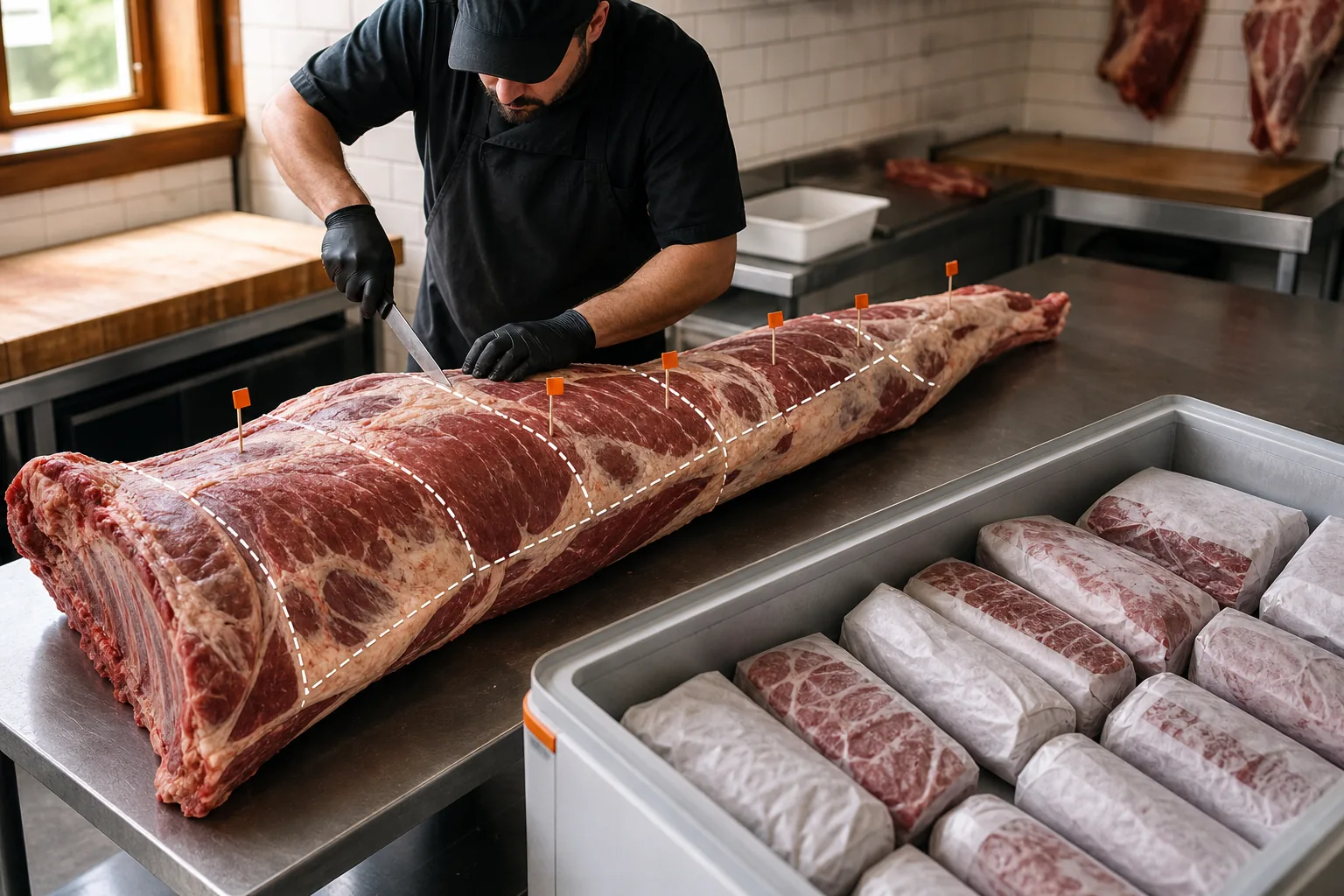
Key Takeaway: Your cut sheet controls the mix, while the animal’s carcass size and trim level control the final freezer weight.
Steak cuts you can request from a half cow
The steak cuts from a half cow usually come from the rib, loin, sirloin, flank, and plate. These areas contain the cuts most people reserve for quick meals, but every steak choice has a tradeoff in thickness, package size, and total quantity.
Ribeye is a common request from the rib section. It has more marbling than many lean cuts, so it suits a hot pan or grill. Prime rib comes from the same general area but stays as a roast. It makes more sense when you want a larger meal for a holiday gathering.
The loin gives you high-value choices such as filet mignon, strip steaks, and T-bone or porterhouse-style cuts, depending on how the processor splits the bone. You can’t get every possible loin cut from the same piece of beef. If you ask for T-bones, you give up some separate tenderloin and strip steaks.
Bone-in sirloin steaks can weigh more than a pound each. That may work well for a meal shared at the table, but it can be less useful if you cook for two people and prefer smaller portions. Ask whether your processor can cut thinner steaks or package them one per pack.
Flank steak is a lean, flat cut. It works well when you marinate it before grilling, then slice it across the grain. Skirt steak has a similar role in quick cooking. It is often a strong choice for fajitas, though availability can be limited because each animal supplies only a small amount.
Tri tip is another grilling cut. It stays larger than a normal steak, so you can cook it whole and slice it after resting. Kabob meat gives you smaller pieces, with a typical package near one pound in the available cut-sheet data.
Shaved beef takes a different path. A processor can slice it thin for cheesesteaks or stir-fry. That option can be useful when you want fast meals during planting season, since the meat needs little prep before it hits a hot pan.
Before you check every steak box, look at how your household cooks. A freezer full of premium steaks sounds good until the roasts and ground beef run out first. We suggest keeping enough familiar cuts for weekday meals before adding specialty requests.
If you still need to find a processor who handles custom cutting, our guide to where to get a cow butchered near you covers inspection status and the difference between mobile and fixed-site service.
Roasts and braising cuts for everyday cooking
Roasts are often the workhorse cuts in a half-cow order. The most common listed weights cluster around 2 to 3 pounds, which fits a family meal without requiring a whole weekend of leftovers.
Chuck roast is the main example. It has enough connective tissue to benefit from low, slow cooking. You can braise it in a covered pot, cook it in a slow cooker, or cut it into stew pieces before freezing.
English roast comes from the shoulder area and also suits moist, slow cooking. It may fit the same meal plan as chuck roast, but the shape can change how it cooks. Ask your processor how the cut is wrapped so you know what to expect when it comes out of the freezer.
Rump roast and sirloin tip roast are leaner options. They can work as sliced roast beef, but they need more care than chuck. Overcooking can make them dry. A thermometer helps you pull them at the right point, then a rest lets the juices settle before slicing.
Round cuts come from muscles that the animal uses often. That makes them lean, but usually less tender than rib or loin cuts. You can keep round as roast, request steaks that the processor tenderizes, or send some of it to the grinder.
Brisket is the large outlier among the listed roasts. Hayfield Farm places a typical brisket at 5 to 9 pounds. That size makes it a good fit for smoking or slow-roasting, but it also takes planning. You need freezer room for the package and enough people to eat it, or a plan for leftovers.
Shanks give you another useful choice. Keep them as cross-cut osso bucco pieces when you want a rich braise with marrow in the center. You can also request stew meat or ground beef instead.
Short ribs need slow heat because the cut contains connective tissue. They can be braised in a covered pan or cooked until tender over low heat. Since short ribs take up freezer space without giving you a large boneless yield, decide if you value that style of meal before selecting them.
A useful cut sheet balances fast meals with cuts that need time. If your household cooks on busy weeknights, keep the chuck and round roast count reasonable, then use specialty cuts as a smaller part of the order.
Ground beef and specialty cuts that fill the freezer
Ground beef is often the largest single part of a half-cow order. The available cut-sheet research lists about 40 pounds from trimmings, while another half-beef breakdown lists about 70 pounds. Those figures aren’t universal. They show why your processor’s estimate matters more than a generic online list.
Ground beef comes from trim left after steaks and roasts are cut. The amount rises when you choose to grind brisket, shanks, round, or other cuts instead of keeping them whole. You can also ask for a leaner or fattier grind, but the processor may have limits based on the trim available.
Think about package size before you place the order. Smaller packs suit quick family meals. Larger packs may reduce wrapping but require you to thaw more meat at once. If you cook for a crowd or freeze cooked meals, larger packs may fit your routine better.
Specialty cuts help turn less familiar parts of the animal into useful food. Kabob meat works on skewers. Shaved beef suits a fast stir-fry. Osso bucco gives you a braise with a different texture from chuck roast.
Soup bones can support stock, while short ribs give you a slow-cooked meal with bones included. These choices may not look as efficient on a cut sheet, but they can fit a household that cooks stock or broth on a regular schedule.
Recipe planning helps here. For meal ideas aimed at foodies and home cooks, a recipe resource can be another place to look while you decide how specialty cuts fit your kitchen habits. Choose the cut first, then check that you have a cooking plan for it.
The best freezer isn’t the one with the most premium steaks. It’s the one that matches the meals you already cook.
How to choose cuts on your half-cow cut sheet
Choosing cuts on a half-cow sheet is a planning task, not a test of beef knowledge. Start with your meals, then work backward to the sections of the carcass that support them.
Set your weekly pattern first
Write down the beef meals you cook in a normal month. Count how often you make burgers, tacos, roasts, steak, soup, or stir-fry. This gives you a better guide than picking every cut that sounds good.
If burgers carry your weeknight meals, protect enough trim for ground beef. If you smoke meat often, keep the brisket whole. If you rarely cook large roasts, ask whether some round or chuck should become burger instead.
Choose between cuts that compete
Some choices come from the same section, so selecting one reduces another. A processor can’t give you every T-bone, strip steak, tenderloin steak, and boneless loin option from the same piece.
The same issue applies to brisket and ground beef. Keeping brisket whole means less trim enters the grinder. Turning shanks into osso bucco means you won’t receive those pounds as stew meat.
Match package size to your freezer
Ask how the processor packages each cut. A 2 to 3 pound roast may fit your meal plan, but several packages still add up quickly. Brisket can weigh 5 to 9 pounds, so measure shelf space before you request it whole.
Also ask whether steaks come two per package or one per package. Package size affects thawing, meal planning, and the amount of paper or plastic in your freezer. These details can matter more than the cut name.
Ask the questions cut sheets leave blank
Many lists name cuts without giving a cooking method or yield. Grill appeared for flank, kabob meat, and tri tip, while stir-fry appeared for shaved beef.
Ask your farm or processor:
- What hanging weight do you expect?
- What packaged weight range is typical?
- How much ground beef should I plan for?
- How long will the beef age?
- Which cuts can replace one another?
- What inspection status applies to this order?
Inspection status matters when you buy beef for your household or sell meat through a permitted channel. State-inspected and USDA-inspected processing follow different rules, so ask which one applies to your order.
The Easy Homestead helps you find local meat processors and butchers by location, which cuts down the time spent asking scattered groups for a recommendation. Use the directory to compare nearby options, then ask each processor these questions before booking.
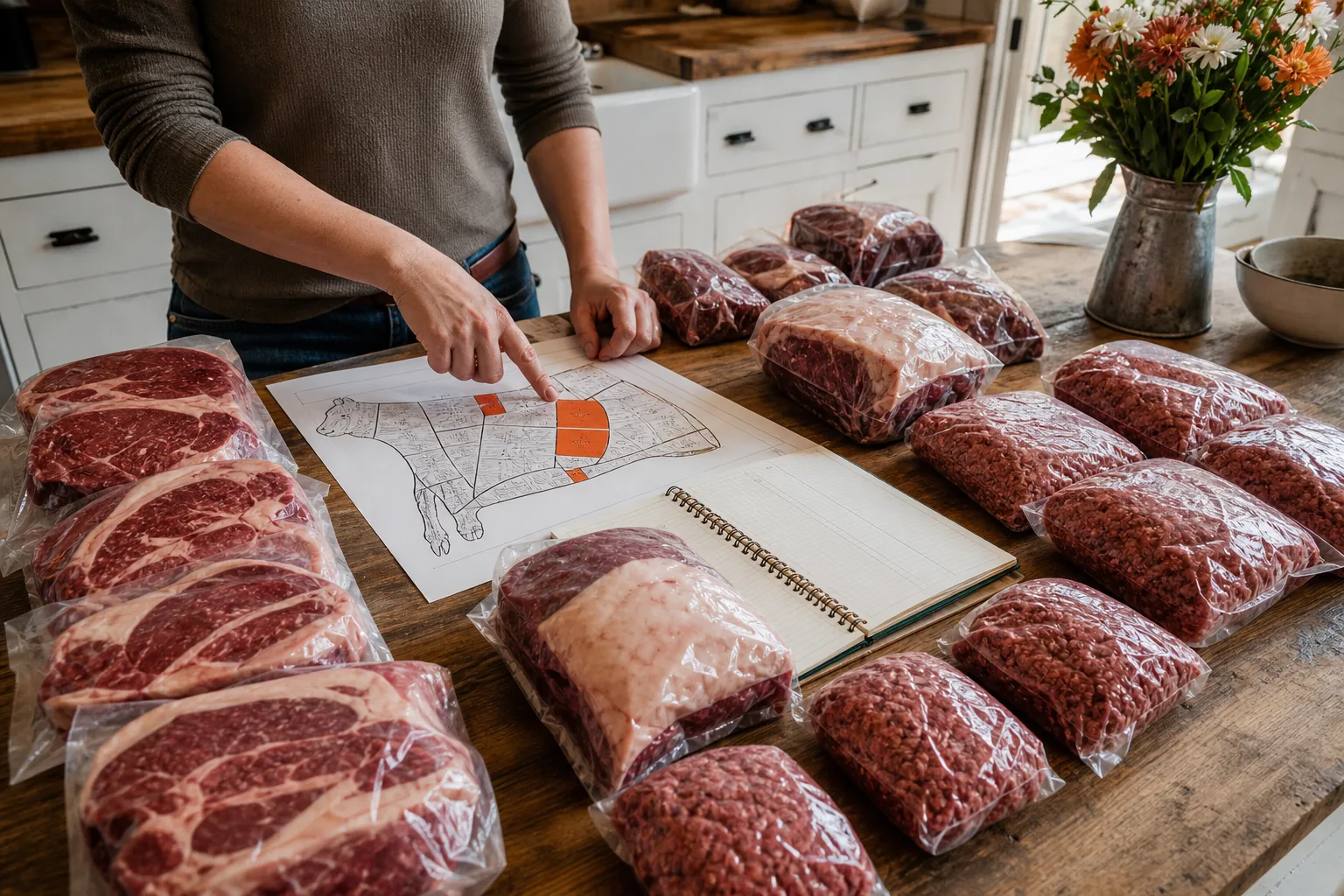
Pro Tip: Mark each cut as weekly, monthly, or special occasion food before you submit the sheet. If a cut has no clear place in your meal plan, send it to ground beef or choose a more useful substitute.
For help comparing local shops that handle farm orders, our list of local butchers for small farms can help you narrow the search by service type.
FAQ
What cuts of beef come from a half cow?
A half cow can include steaks such as ribeye, filet mignon, flank, skirt, sirloin, and tri tip. It can also include chuck roast, rump roast, brisket, short ribs, shanks, stew meat, and ground beef. Your processor turns the carcass into these cuts based on the animal and the cut sheet you approve.
How much ground beef do you get from a half cow?
A half cow may give you a large amount of ground beef, but the total varies by animal and cutting choices. The research used here lists examples near 40 pounds and 70 pounds. Choosing more roasts or keeping brisket whole leaves less trim for the grinder.
What is the best cut to request from a half cow?
The best cut depends on how you cook. Chuck roast suits slow meals, ground beef handles frequent weeknight dishes, and brisket fits smoking. Ribeye or filet mignon may suit special meals. Start with your normal menu instead of choosing cuts based on price or reputation alone.
Does a half cow include brisket?
A half cow can include brisket if you request it on the cut sheet. One listed source gives a typical brisket weight of 5 to 9 pounds. You can keep it whole, split it into flat and point sections, or ask the processor to grind it, depending on your freezer space and cooking plans.
How do I choose cuts for a half cow?
Choose cuts by matching them to your meals, freezer space, and cooking time. Protect enough ground beef for routine meals, then choose roasts or steaks that fill a clear role. Ask about package size, expected weight, aging, inspection status, and which cuts compete for the same section.
Make the cut sheet fit your farm
A good half-cow order gives you food you’ll use, not a freezer full of unfamiliar packages. Build your sheet around your weekly meals, then find a processor who will explain the tradeoffs clearly. The Easy Homestead can help you search for a local butcher or processor by county or ZIP code, so find a local butcher near you before your preferred booking window closes.