Most meat chickens need less feed than many keepers assume. Across the growth stages, the typical daily amount stays near 0.28 pound per bird, while protein drops from about 21 to 23% in starter feed to 18 to 19.5% in finisher feed.
The key is to match a complete broiler ration to the bird’s age. Feed too much, use layer feed, or miss the medication withdrawal period, and the flock can pay for it in leg problems, excess fat, or unsafe meat.
We pulled feeding guidance from 5 university extension publications: Alabama, Maine, Mississippi State, Penn State, and Maryland. Alabama and Maine both list starter protein at 20 to 23%, grower at 19 to 20%, and finisher at 15 to 18%. Mississippi State’s tables drop from 23% starter protein to 10% finisher, and Maryland extension warns a layer diet can cause kidney failure in young chickens. Across 5 sources, protein falls in stages, and layer feed is flagged unsafe for meat birds, backing a staged ration over a single feed.
Step 1: Choose a complete broiler ration for the bird’s age
To decide what to feed meat chickens, start with a feed made for broilers, not layers. Broilers grow for meat in a short window, so their ration needs the right protein, energy, amino acids, vitamins, and minerals for fast muscle growth.
Look for the words broiler feed , meat bird feed , or complete broiler ration on the tag. Do not make layer feed your main ration. Layer feed has extra calcium for egg shells, and that calcium does not fit the needs of growing meat birds.
Phase feeding means you change the ration as the flock grows. The broad pattern is clear:
| Feed stage | Typical age | Protein range | What to check |
|---|---|---|---|
| Starter | Day 0 to 10 | 21 to 23% | Small crumbles with little dust |
| Grower | Day 11 to 25 | 19 to 21% | Broiler label and clean feed |
| Finisher | Day 26 to processing | 18 to 19.5% | Medication status and withdrawal rules |
Some programs use a 23% pre-starter crumble for the first four days. That higher protein level has a place early, when chicks build muscle and bone. It does not mean the flock needs the same protein level until processing.
Feed form matters, too. Young chicks handle a fine crumble better than a large pellet. Poorly pressed crumble creates dust and waste, so check the bottom of the bag before buying. If the feed looks mostly like powder, choose a better batch.
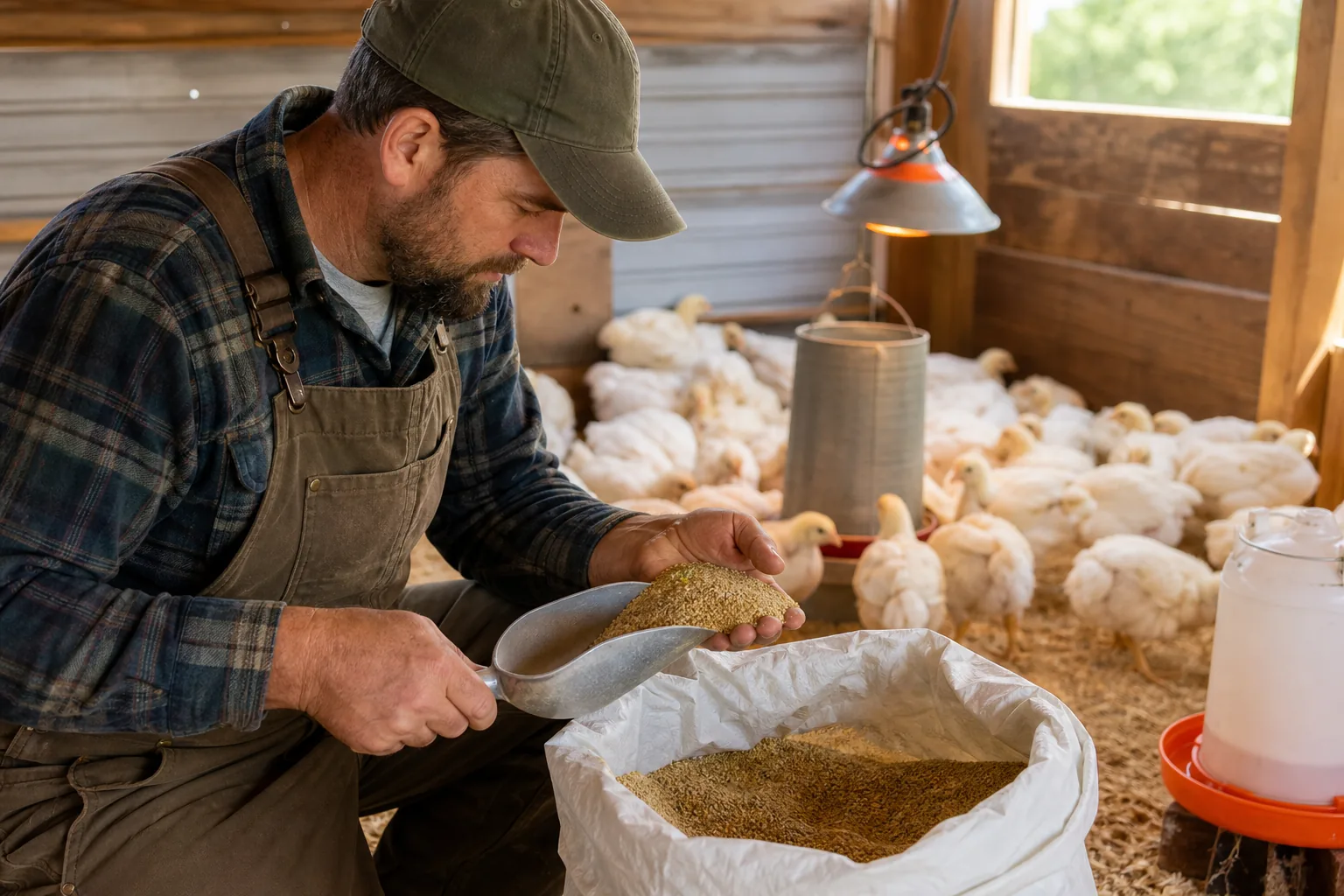
Feed costs can make up a large share of broiler costs, which makes the right ration a budget choice as much as a health choice. Our meat chicken cost breakdown can help you map feed against chick, housing, labor, and processing costs.
Write the hatch date on the feed bin. That small habit keeps the stage change tied to the birds’ age instead of guesswork.
Step 2: Feed starter ration from hatch through day 10
Starter ration is what to feed meat chickens from hatch through about day 10. Choose a complete broiler starter with roughly 21 to 23% protein, then keep it available while the chicks learn to eat and drink.
Use crumbles sized for chicks. Fill feeders so the birds can reach the feed without climbing into it. Keep the lip near the birds’ back height as they grow, and clean out wet or caked feed before it turns sour.
Put feed and water close to the heat zone during the first hours. After the chicks settle, watch the flock rather than relying on one bird. If several chicks have empty crops after they should have eaten, check feeder access, temperature, and water placement.
Starter feed must be complete. Grain, peas, kitchen scraps, or scratch cannot replace the amino acids and mineral balance in a formulated ration. Use a commercially prepared complete starter ration rather than grain-based mixes.
Medicated starter needs careful reading. Some feeds contain a coccidiostat, a medication used to help control coccidiosis. The feed tag should tell you which birds may eat it and whether a withdrawal period applies. If you raise turkeys, horses, or other animals nearby, ask the feed supplier whether the medication can harm them.
Do not add calcium supplements for broilers at this stage. Oyster shell belongs with laying hens, not a young meat flock. Extra supplements can also dilute the ration and make it harder to know what the birds are actually eating.
Water is part of the starter ration plan. A chick that cannot drink will not use the nutrients in its feed. Check drinkers several times each day, especially after bedding shifts or a brooder move.
For background on nutrient intake and broiler diets, see this broiler nutrition resource. It explains that nutrient intake depends on both the feed’s nutrient level and the amount the bird consumes.
By day 10, you should have chicks with steady growth, clean feathers, full crops after feeding, and ready access to water. That is your cue to plan the grower switch.
Step 3: Switch to grower feed around days 11 to 25
Grower feed is what to feed meat chickens after the starter phase, usually from day 11 through about day 25. Choose a broiler grower near 19 to 21% protein, then switch based on age and flock condition.
The protein drops because the birds no longer need the same early-chick concentration. They still need a balanced amino acid profile, but the ration now supports a larger frame and fast muscle gain.
Make the change over a day if the feed mill’s directions allow it. Mix the last starter with the first grower, then increase the grower portion. A sudden change can reduce intake in a flock that already faces heat, transport, or bedding stress.
Do not confuse grower feed with a low-protein general poultry ration. A feed made for layers can carry too much calcium. Scratch grain can lower the protein density of the whole diet. Both choices may leave the birds eating while gaining less useful weight.
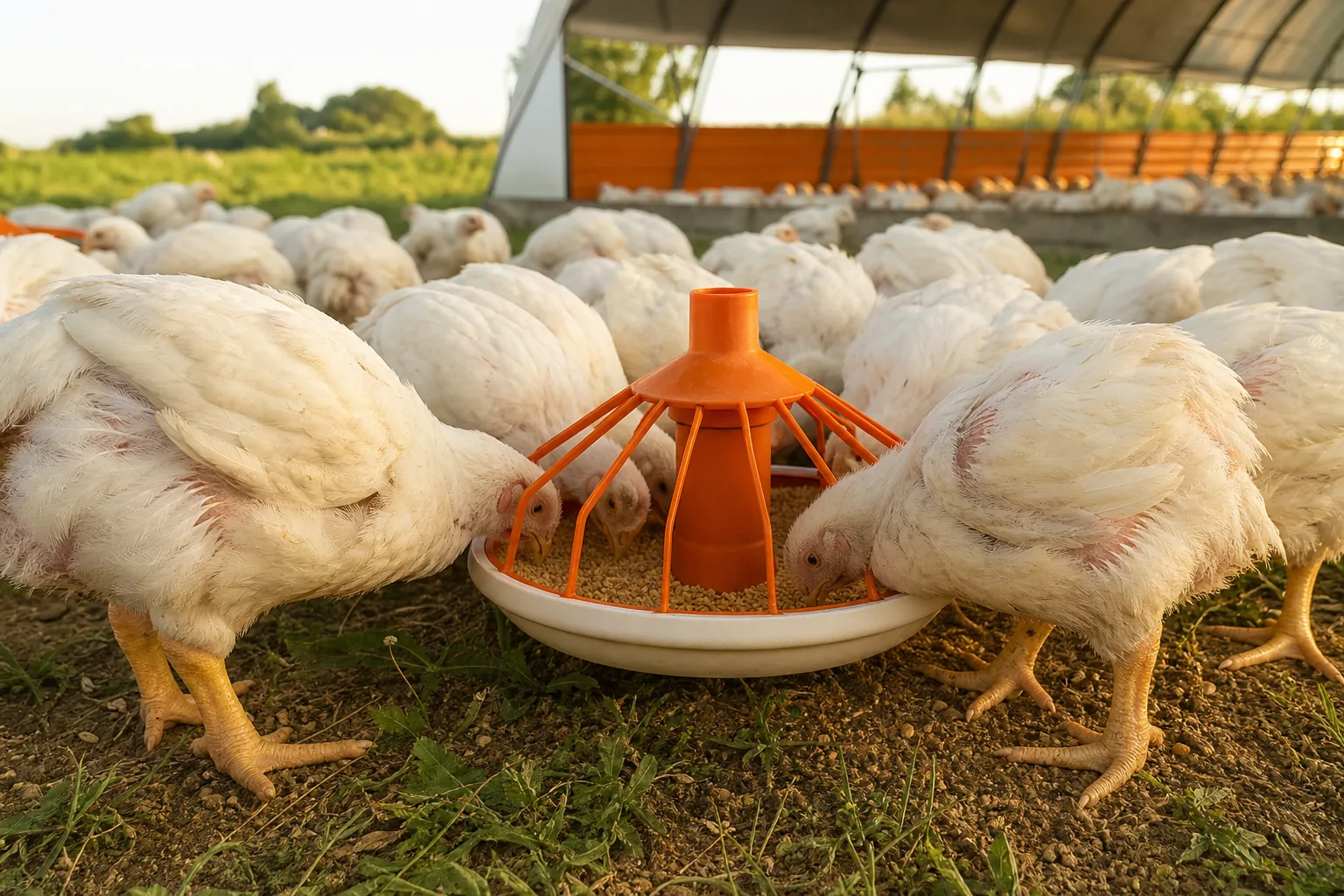
Fast-growing Cornish Cross birds need close watching during this stage. Look for birds that struggle to walk, sit away from the flock, or pant when the weather is mild. These signs need attention, because weight gain can outpace the legs and heart.
Feed weight does not need to rise as sharply as many people expect. A review of the supplied feed data found 0.28 pound per bird per day in five entries, including conventional, organic, no-GMO, and broiler or grower feed. One source listed 0.5 pound, so use the feed tag and flock condition rather than treating any single number as law.
Keep a weekly note with the flock age, feed used, water use, and any birds that fall behind. You will spot a feed or health problem sooner when you can compare this week with last week.
By the end of this phase, the flock should be active and filling out without a sharp rise in leg weakness. If the birds are growing too fast, ask your hatchery or poultry vet about a controlled feeding plan before changing protein on your own.
Step 4: Use finisher feed from day 26 until processing
Finisher feed is what to feed meat chickens from about day 26 until processing. It usually contains 18 to 19.5% protein, with more emphasis on energy for final weight gain.
Check the feed tag before you pour it into the bin. The most important question is medication status. If the flock received a coccidiostat earlier, the finisher may need to be free of that medication for the required withdrawal period.
Never guess about withdrawal. Read the label and ask your feed supplier or veterinarian when the product directions are unclear. Confirm whether a coccidiostat must be removed before market, since the answer depends on the medication.
Finisher feed should remain complete. Do not bulk it out with large amounts of corn, oats, or scratch grain. That lowers the nutrient level and makes the flock’s final growth less predictable.
Watch body condition each day. A healthy flock should move to water and feed without struggling. Birds with a waddling gait, repeated sitting, or heavy breathing need a closer check. Overfeeding can add stress to the legs and organs, especially in fast-growing strains.
Heavier birds may need a longer grow-out plan than a standard broiler schedule. If you raise a slower-growing strain or want roaster-size birds, follow the hatchery’s feeding plan rather than forcing a 42-day timetable.
Processing plans belong here, too. Book the processor before the flock reaches the target date. If you need help finding a local poultry butcher, The Easy Homestead lets you search local suppliers and service providers by ZIP code or county. That matters when nearby processors fill their calendar weeks or months ahead.
Keep the finisher dry and protected from rodents. A torn bag can lose feed quality before the birds ever eat it. Store only what you can use within the supplier’s recommended window, and rotate old feed first.
Step 5: Manage portions, water, treats, and flock condition
Portion control is the part many keepers miss when deciding what to feed meat chickens. Use any daily amount as a starting point. Breed, age, weather, feed waste, and access to pasture can change the number. Weigh feed and leftovers for several days so your flock’s actual use guides the plan.
Measure feed for several days. Put out the planned amount, then weigh leftovers and spilled feed at the next check. A feeder full of scattered mash can make consumption look higher than it is.
Fast-growing broilers may do well with full access under the right program, but scheduled feeding can help limit excessive growth. Some experienced growers use a feed-free rest period after the first week, especially when artificial light keeps birds eating through the night. Ask the hatchery for strain-specific guidance before using a measured ration.
Water must stay available at all times. Place enough drinker space for the flock, raise the drinkers as the birds grow, and scrub slime from the container. In hot weather, check water more often because a tipped drinker can leave a whole flock without water.
Treats should stay small. A meat flock needs complete broiler feed as its main diet. Greens or scraps can dilute the ration, add moisture to droppings, and make intake harder to track.
Do not feed moldy food. Avoid onion, garlic, chocolate, caffeine, and avocado pits or skin. Our guide to foods chickens should avoid covers those risks in more detail.
If you give grain or other solid treats, provide suitable insoluble grit separately. Grit helps the gizzard grind food, but it does not replace protein or minerals in broiler feed.
Check the flock at the same time each day. Note birds that lag behind, lie down often, or cannot reach the feeder. Weighing a sample of birds can help you see the trend, but the group pattern matters more than one unusually large or small bird.
Feed quality deserves one last check. Crumbles should not be mostly dust. Finisher feed should match the medication plan. The ration should stay fresh and dry. Those three checks prevent more trouble than adding another supplement.
For local feed access, The Easy Homestead can help you find an animal feed store near you. Ask whether the store carries broiler starter, grower, and non-medicated finisher feed before making the trip.
FAQ
What is the best feed for meat chickens?
The best feed for meat chickens is a complete broiler ration matched to their age. Use starter near 21 to 23% protein early, grower near 19 to 21% during the middle phase, and finisher near 18 to 19.5% until processing. Avoid layer feed because its calcium level suits egg production rather than fast meat growth.
How much feed does a meat chicken eat per day?
Use any daily amount as a starting point. Breed, age, weather, feed waste, and access to pasture can change the number. Weigh feed and leftovers for several days so your flock’s actual use guides the plan.
When do meat chickens switch from starter to grower feed?
Most meat chickens switch from starter to grower feed around day 11. Some hatchery programs use slightly different dates, so follow the strain’s instructions when they differ. A grower ration commonly contains about 19 to 21% protein, which supports continued growth after the highest early protein need has passed.
Can meat chickens eat layer feed?
Meat chickens can eat layer feed briefly, but it should not be their main ration. Layer feed contains extra calcium for egg production, and that level does not fit a growing broiler’s needs. Use a complete broiler feed instead, then ask a poultry vet if a flock has already eaten layer feed for an extended period.
Should broiler finisher feed be medicated?
Broiler finisher feed may need to be unmedicated, depending on the medication used earlier. Read the label for the coccidiostat and its withdrawal period before processing. If the instructions are unclear, ask the feed supplier or veterinarian. Never assume that every medicated starter has the same removal date.
Conclusion
Choose a complete broiler ration, step the protein down with age, and watch portions instead of filling feeders by guesswork. Before your next batch arrives, write the switch dates on your feed bin and book processing early. If you need a nearby feed supplier or poultry service, search The Easy Homestead by county or ZIP code.